

Clients want quick answers and well-finished work. But when you don’t know who’s in charge, teams waste time, and quality suffers.
I've seen designers wait days for creative approval simply because the chain of command wasn’t clear. Projects stalled, and trust slipped away.
Once roles were defined, everything fell into place. We didn’t need new hires for clarity.
Here, I'll explain the digital agency organizational structure. You’ll also learn how to build an org chart easily to keep growing teams aligned.

In This Article
Digital Agency Organizational Structures
A typical digital agency organizational structure has three working layers.
- Executives define the vision and rules.
- Project managers manage plans and people.
- Specialists produce the final output.
This clear hierarchy unifies decision-making, timelines, and feedback. When every step follows one process, collaboration improves naturally.
Traditional Structure


This structure forms a pyramid with a CEO at its peak.
Department heads remain under the CEO. Managers collect work from specialists and pass it upward. Communication uses fixed channels.
Enterprise organizations often opt for this approach for clear approval lines and reliable processes.
Flat Structure

Fewer layers, with leaders working directly with specialists.
Best suited for small teams of 10–20, where team members are familiar with the clients.
The tradeoff is more coordination work for leaders.
Pod Structure

Cross-functional pods aligned to clients or products.
A cluster diagram shows an account lead at the center, surrounded by design, development, and media teams.
Top-Level Roles
CEO or Agency Director
- Owns vision, Profit and Loss, and major accounts
- Approves budgets and hiring plans
- Sets governance for pitches, scopes, and risk
Chief Creative Officer or Managing Partner
- Sets creative standards and review gates
- Assigns senior talent to high‑impact work
- Signs off on brand‑level concepts and campaigns
Chief Marketing Officer or Strategy Head
- Defines the planning framework and measurement model
- Oversees briefs, channel mix, and testing plans
- Aligns positioning across paid, owned, and earned
Mid-Level Management
Account Managers
- Own client relationships and scope control
- Build account plans and forecast revenue
- Route feedback to the right owners and track decisions
Project Managers
- Build timelines, budgets, and resourcing plans
- Run standups, track risks, and manage changes
- Confirm acceptance criteria before handoff
Team Leads
- Lead a function such as design, development, or media
- Set standards, mentor staff, and review work in stage gates
- Report capacity and skill gaps to PMs and leadership
Operational Level
Designers and Copywriters
- Translate briefs into assets and copy that meet specs
- Make revisions, label files, and prep final deliverables
Developers
- Build sites, apps, and integrations from approved specs
- Maintain code standards, branches, and release notes
SEO and PPC Specialists
- Run audits, keyword work, and account structures
- Manage bids, budgets, and tracking set up
Social Media Managers
- Plan calendars, publish content, and moderate channels
- Coordinate creator assets and community replies
Key Departments in a Digital Agency
Agencies divide their staff into teams, each of which handles a specific part of client work.
- Strategy & Planning: Figure out what the client wants to achieve. They study the market, check what competitors are doing, and craft plans that show exactly what success looks like.
- Creative Department: Crafts everything that the clients show to their customers. Designers create logos and graphics. Copywriters write the words for ads, websites, and emails.
- Marketing & Performance: Attracts visitors and measures the effectiveness of campaigns. SEO teams focus on improving their search engine rankings. PPC teams buy ads on Google or Facebook. Everyone watches the data.
- Client Services: Communicates with clients and ensures projects stay on track. Account managers answer questions. Project managers ensure that everyone completes their tasks on time and according to schedule.
- Development Department: Builds websites and ensures they function correctly. They write code, fix bugs, and ensure sites load quickly on phones and computers.
Clients achieve better results when teams collaborate in these departments.
Digital Agency Operating Models
Full-Service Model
These digital agencies handle everything, from strategy to final delivery. Their teams tend to be large because clients often require revisions.
One client might request a website this week and a video campaign the next. Staff members move between projects as needed based on the current requirements.
Specialized Model
Specialized firms keep their focus narrow. They might work only on SEO or branding. Every team member works in the same domain, which builds strong expertise but limits the variety of tasks they can handle. Clients seek them out for that single kind of expertise.
Remote or Hybrid Model
Remote agencies rely on digital tools rather than office meetings. Their members may work from different cities or even countries. They connect through Slack, Zoom, and project boards.
Hybrid setups mix remote and office work, so clear schedules help teams know when to meet in person.
Why a Clear Agency Structure Matters
- Accountability improves when one person is responsible for each client interaction. Questions don't get lost. Updates arrive on time. Clients feel heard because their primary contact actually tracks their needs.
- Productivity rises when tasks don't overlap. If five people know their specific duties, work finishes in less time than when everyone does a little of everything.
- Ideas flow better when different experts contribute in sequence. A planner researches. A creative conceptualizes. A specialist executes. Each phase uses the right brain for the right task.
- Expansion follows a pattern. When client load increases, you identify which role is stretched thin and hire for that spot. Growth stops feeling random and begins to follow a logical pattern.
Create Your Own Organizational Chart Now
Creating org charts without templates means starting from zero every time. A professional diagramming tool eliminates that repetitive effort with premade templates. Here's the simple process I follow:
 Try the app & get 500 free AI tokens


Step1 Find an Org Chart Template
Open a professional diagramming software like Edrawmind.
Search the template library. Look for "Organizational chart". Select an option with three to four levels that includes department groupings already built in.
Step2 Add Agency Roles
Replace placeholder titles with your own roles.
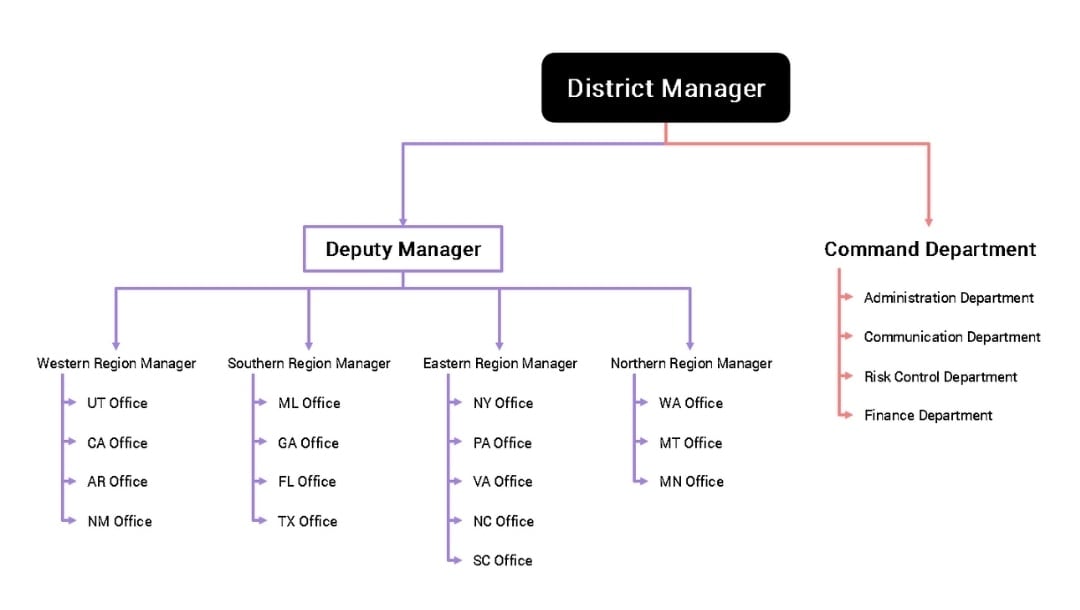
Start with the Agency Director at the top. Add C-level executives in the second row.
Place managers in the third row. Put specialists like designers and developers at the bottom.

Step3 Customize the Structure and Design
Remove unused branches. It reduces visual clutter.
Copy existing boxes to add multiple people sharing one role. Paste them side-by-side. Adjust the spacing so that departments remain visually separated and properly organized. Select a color palette with three to four distinct colors.
For instance, apply one color to the leadership boxes. Use another for management. Use a third for specialists. Check font size stays above 10pt.
Step4 Save and Export
Save the file in an editable format, including the version, owner, and date.
Export as PDF with high resolution for printing on large paper. Download as PNG or JPG image files for PowerPoint or Google Slides.
Final Words
A better org structure keeps a digital agency steady. Clear roles let people focus on their work and meet deadlines efficiently.
Defined review points help teams stay aligned and make collaboration effortless. Leaders can notice problems forming and address them quickly.
EdrawMind lets you plan your team layout in minutes. Its templates make building org charts for marketing or creative teams quick and simple. Try it for free now.
FAQs
-
What span of control works for agency managers?
Aim for five to ten direct reports in creative and content; six to eight in development or media. Add a team lead layer when reviews or one‑on‑ones slip. -
When should we use dotted‑line reporting in an Org chart?
Use it when borrowing skills across teams. Maintain a single formal manager for performance and compensation. Route daily direction through the dotted line and escalate to both. -
How often should I update an org chart?
Update after any leadership or team change and set a monthly check. Add an “as of” date to the chart, keep a shared copy, and test print once to confirm the text is readable. -
How do I show succession plans?
Do not publish successors on a public chart. Keep a private copy for leaders. The public chart should show only current roles.
 EdrawMind
AppsEdrawMind Online
EdrawMind
AppsEdrawMind Online