

“None of us can do it alone." This quote shows why firms should have a clear roadmap on how to organize employees and work. An organizational structure depicts how, what, and who makes decisions.
In the past, companies used to have a single type of structure, such as a top-down hierarchy or flat set-up. But nowadays, hybrid organizational structures are more prevalent. A hybrid organizational structure combines two or more types of structures to suit the needs of a company and also provide direction as well as flexibility.
In this guide, you’ll see how hybrid organizational structures work and why they’re effective. At the end, you’ll also learn how to create a similar organizational chart for your team.
In this article
- What Is a Hybrid Organizational Structure?
- Examples of Hybrid Organizational Structure
- Advantages of the Hybrid Organizational Structure
- Disadvantages/Challenges of the Hybrid Structure
- Best Practices/Tips for Implementing a Hybrid Structure
- How to Make a Hybrid Organizational Chart in EdrawMind?
- Closing Remarks
What Is a Hybrid Organizational Structure?
The word hybrid means a combination of two or more things. A hybrid organizational structure is a combination of two or more different types of organizational structures. It is designed to take advantage of the strengths of each structure and create a setup that fits the organization's needs.
In a hybrid structure, different departments or divisions within the company may follow different approaches. For example, one department may use a functional structure, where employees are grouped by their skills or roles. Another department may use a divisional structure, where employees are grouped by products, services, or geographic areas.
The goal of a hybrid structure is to build a flexible and adaptable organization that can respond well to the changing business environment. It helps the organization balance the benefits of specialization and coordination, while also encouraging innovation and teamwork across different units.


Key Characteristics
Some of the most important characteristics of a hybrid structure include
- Versatility: Hybrid organizations change their structure based on business priorities and strategies. This allows them to manage work across different functions and divisions at the same time.
- Decentralized decision-making: By using elements of divisional structures, hybrid organizations allow local teams or divisions to make their own decisions.
- Centralized oversight: While some areas use decentralized decision-making, hybrid organizations keep central control in areas like strategic planning and resource allocation.
- Collaboration across units: Hybrid structures promote teamwork and cooperation to manage tasks between different parts of the organization.
Examples of Hybrid Organizational Structure
Many companies manage multiple products and operate in different countries. To stay organized and flexible, they use a hybrid structure. Here are some examples of how it works in real companies.
Starbucks Hybrid Organizational Structure
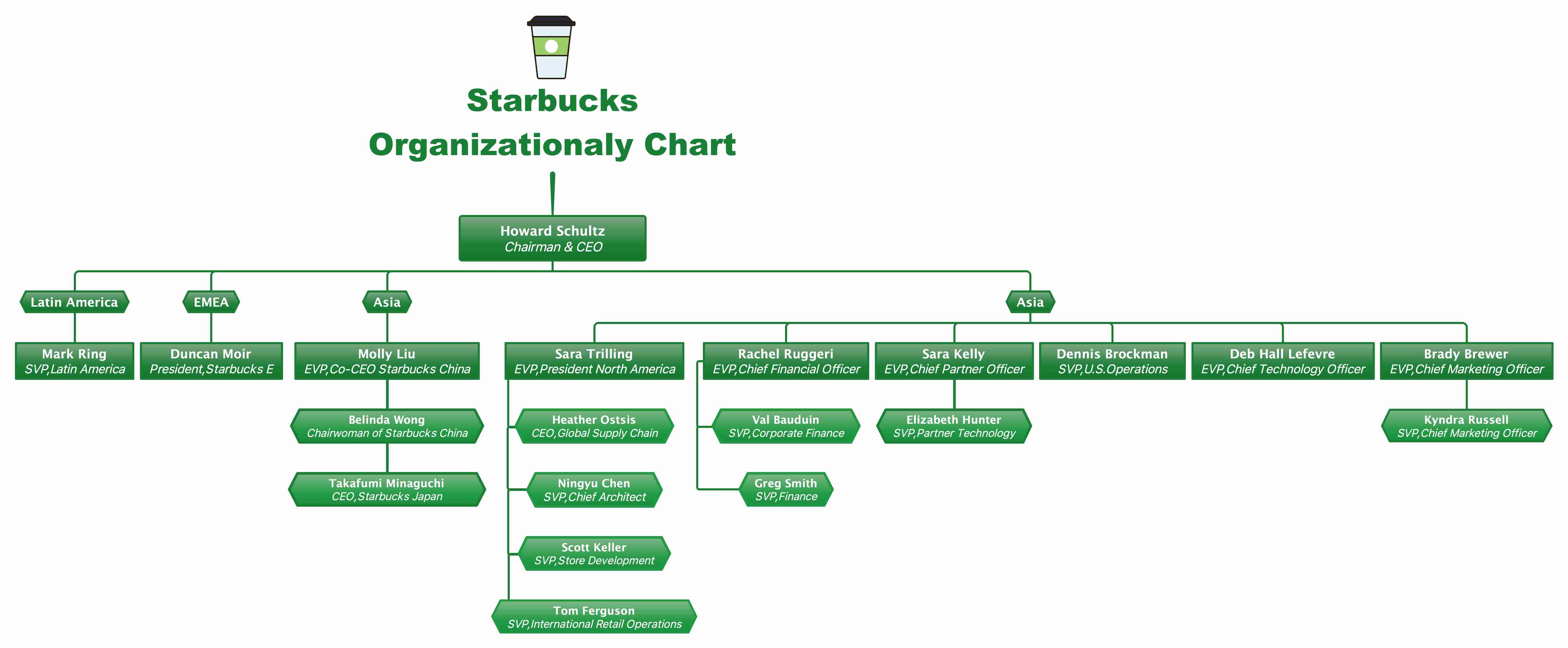
Probably, you are familiar with Starbucks, its coffee, and its delicious treats. But have you ever thought about how it manages teams all over the globe? Starbucks uses a hybrid organizational structure.
It has functional departments such as marketing, finance, and HR to lead the entire corporation. Product teams manage coffee and snacks. Geographic divisions deal with markets such as the USA, Europe, and Asia. They also make and adjust plans for local customers.
Together, these groups work as a team. This approach helps Starbucks remain flexible and serve customers all over the world.
Google Hybrid Organizational Structure

Google is everywhere, whether it is in Search, YouTube, or Maps. It is not easy to deal with such a large number of products simultaneously. That’s why Google uses a hybrid structure.
Functional groups like engineering, HR, and finance keep the company organized and oversee the daily work. Product teams manage one service at a time.
Both teams include employees from different departments. They collaborate in order to enhance their product. Through merging these teams, Google remains in order and operates fast.
Advantages of the Hybrid Organizational Structure
Hybrid structures make it easier for teams to work together. They keep roles clear and allow for changes when needed. Some of the most important advantages of a hybrid organizational structure are:
- Focus on core and project work: Employees handle their main tasks and also contribute to project teams, so nothing gets neglected.
- Improved teamwork: Departments and project teams work together, which makes completing goals easier.
- Faster response: Teams respond quickly to changes in the market or customer needs.
- Efficient use of resources: Employees and teams share tools and information across projects, which reduces waste.
- Skill development: Employees learn new skills and take on different responsibilities while working on projects.
- Better oversight: Managers supervise daily operations and project work at the same time, keeping everything organized.
Disadvantages/Challenges of the Hybrid Structure
Hybrid structures offer many benefits, but they also bring challenges. Managing multiple teams and reporting lines can create confusion. Clear communication and strong management are essential to make the structure work effectively.
Here are some of the main challenges organizations face with a hybrid structure:
- Complex reporting: Employees may report to more than one manager, which can lead to misunderstandings.
- Higher management workload: Managers must handle both regular operations and project tasks, increasing their responsibilities.
- Risk of duplicated work: Teams might repeat tasks if coordination is weak.
- Communication demands: Teams need constant updates to avoid conflicts and errors.
Best Practices/Tips for Implementing a Hybrid Structure
A hybrid organizational structure works best when everyone is aware of their role and communication remains clear. Organizations must strategize and direct both the managers and employees. To put this approach into action effectively, here are some key practices you can follow:
- Clearly define roles: make sure employees know their duties in their departments as well as the project teams they join.
- Explain lines of reporting: Clearly show who supervises each employee for various tasks and projects.
- Use management tools: Use simple tools or software to track tasks, deadlines, and responsibilities.
- Check workflows: Reassign and reallocate tasks as projects or priorities evolve.
- Train managers: Support managers in handling dual reporting and coordinating work between teams.
- Establish specific goals: Align departmental and project objectives with the overall plans of the organization.
- Open up the feedback channels: Let employees express concerns and suggest ways to improve processes.
How to Make a Hybrid Organizational Chart in EdrawMind?
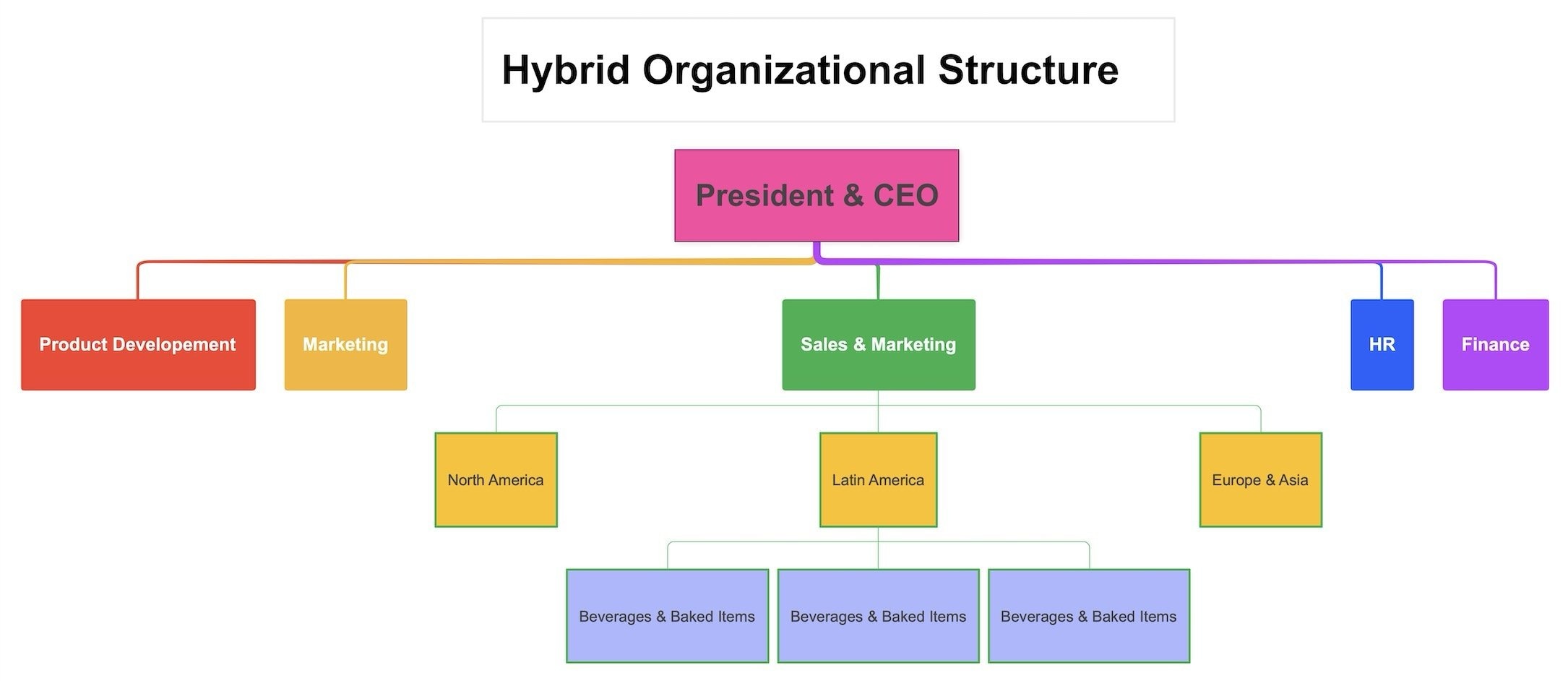
Now that we’ve covered how to design an effective hybrid chart, we can start creating one. I’m using EdrawMind because it’s easy to use. The best part is that you get free org chart templates to get a head start. Follow along to make your hybrid chart in a few simple steps.
 Try the app & get 500 free AI tokens


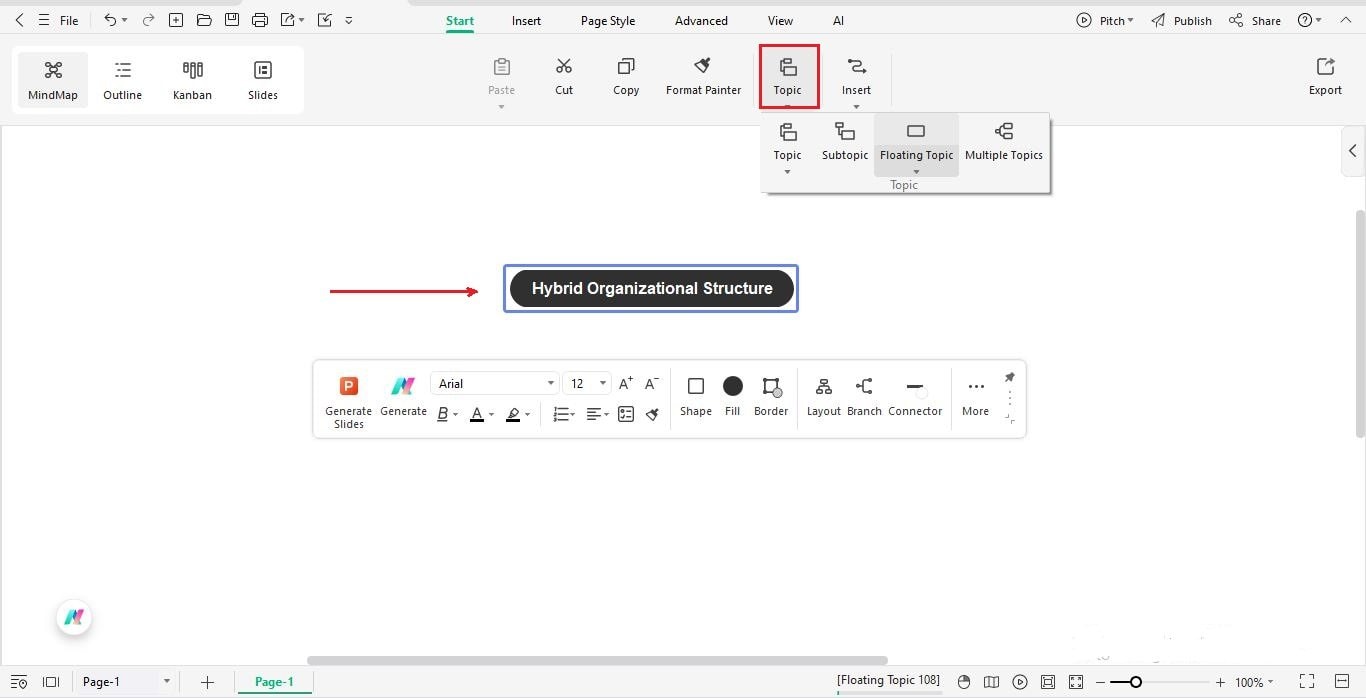
Step 1 Start a New File and Add a Title
- Open EdrawMind and start with a blank workspace.
- Add the title Hybrid Organizational Structure so the chart has a clear heading.
Step 2 Add the President and CEO
- Place the main node at the top and label it President and CEO.
- This shows the highest authority in the organisation.

Step 3 Add Functional Departments
- Add nodes under the President and CEO for Product Development, Marketing, Sales and Marketing, Human Resources, and Finance.
- Arrange them in a single row to show the functional level.

Step 4 Add Regional Groups
- Create another row under the functional groups.
- Add nodes for North America, Latin America and the Caribbean, and Europe and Central Asia.
- Place them in a clear horizontal line.

Step 5 Add Product Groups
- Add a third row under the regional groups.
- Place nodes for Beverages and Baked Items under each region to show product lines for all areas.

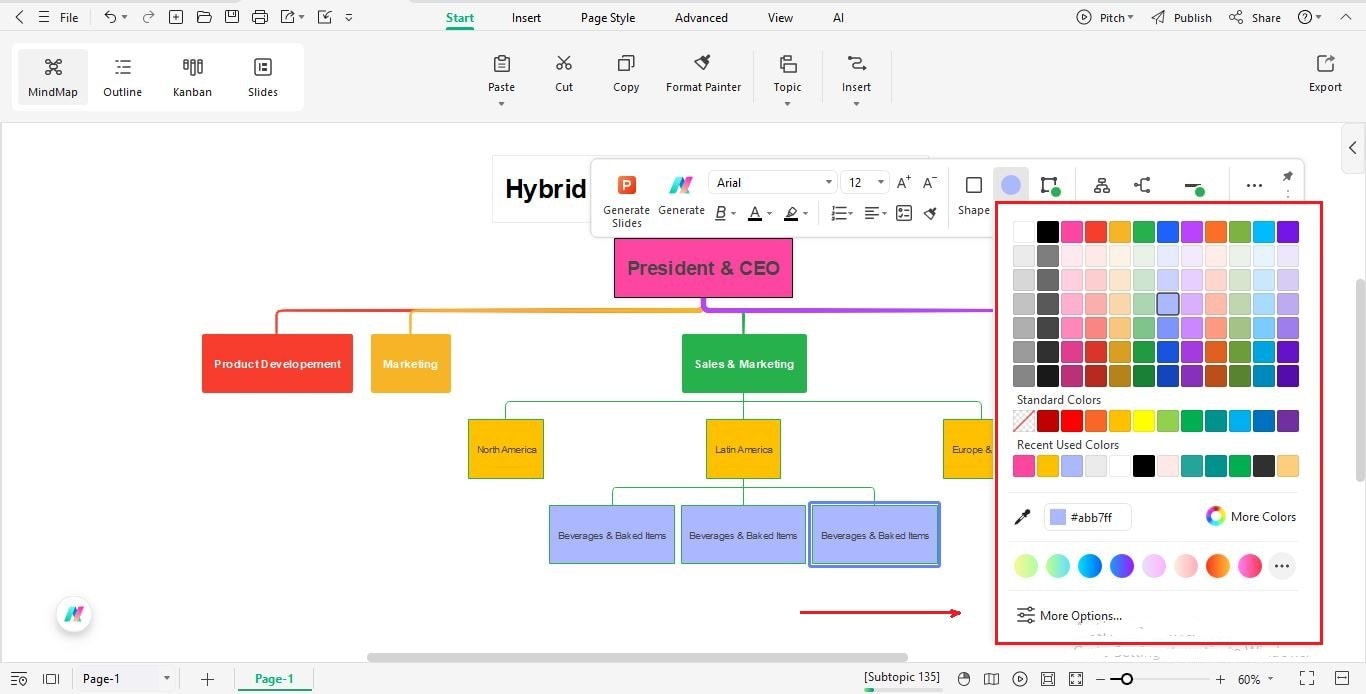
Step 6 Customize the Chart
- Adjust colors, spacing, and shapes to make each level easy to understand.
- Use one color for functional groups, one for regions, and one for product groups.
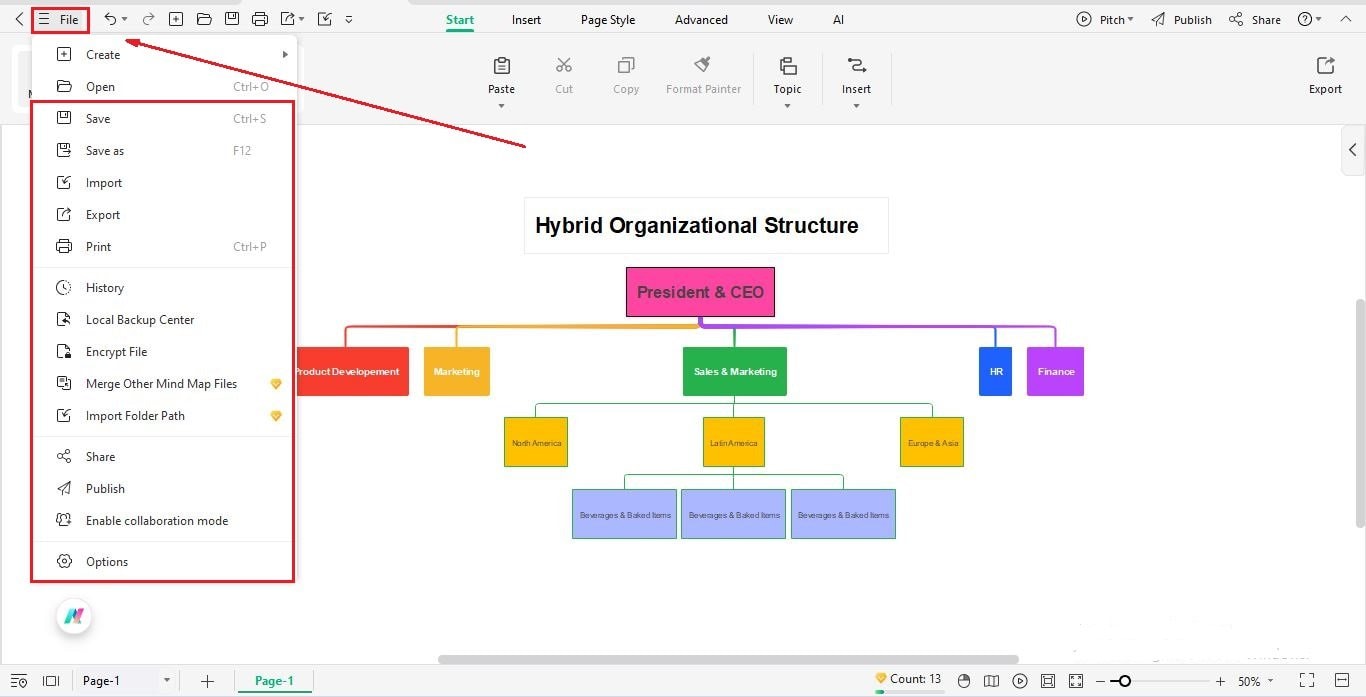
Step 7 Save and Export the Chart
- Review the structure to confirm that all levels are correct.
- Save the file and export it in the format you prefer.
Closing Remarks
A hybrid organizational structure makes it easier for teams to work together and stay organized. Employees can manage their main jobs and join projects at the same time. This keeps companies flexible and efficient.
If you want to make your own hybrid chart easily, EdrawMind is a great tool. You can use ready templates, change colors and shapes, and export your chart in different formats
 EdrawMind
AppsEdrawMind Online
EdrawMind
AppsEdrawMind Online