


Do you sometimes feel that your office needs a little more teamwork and a little less chaos? Well, many companies do. A team-based organizational structure involves a group of employees who work together in small and focused teams to address projects. Every person contributes using their skills, and decisions are made as a group. This effective method improves collaboration, speeds up work, and sparks new ideas.
In this article, we will explain what a team-based structure is. We'll discuss how it works, its advantages, and challenges. You will also see examples and practical tips for creating a team-based org chart for your team.
In this article
- What Is a Team-Based Organizational Structure?
- Real-Life Examples of Team-Based Organizational Structure
- Advantages of the Team-Based Organizational Structure
- Disadvantages/Challenges of the Team-Based Organizational Structure
- Best Practices for Implementing a Team-Based Org Structure
- How to Make a Team-Based Organizational Chart in EdrawMind?
- Summing Up
What is a Team-Based Organizational Structure?
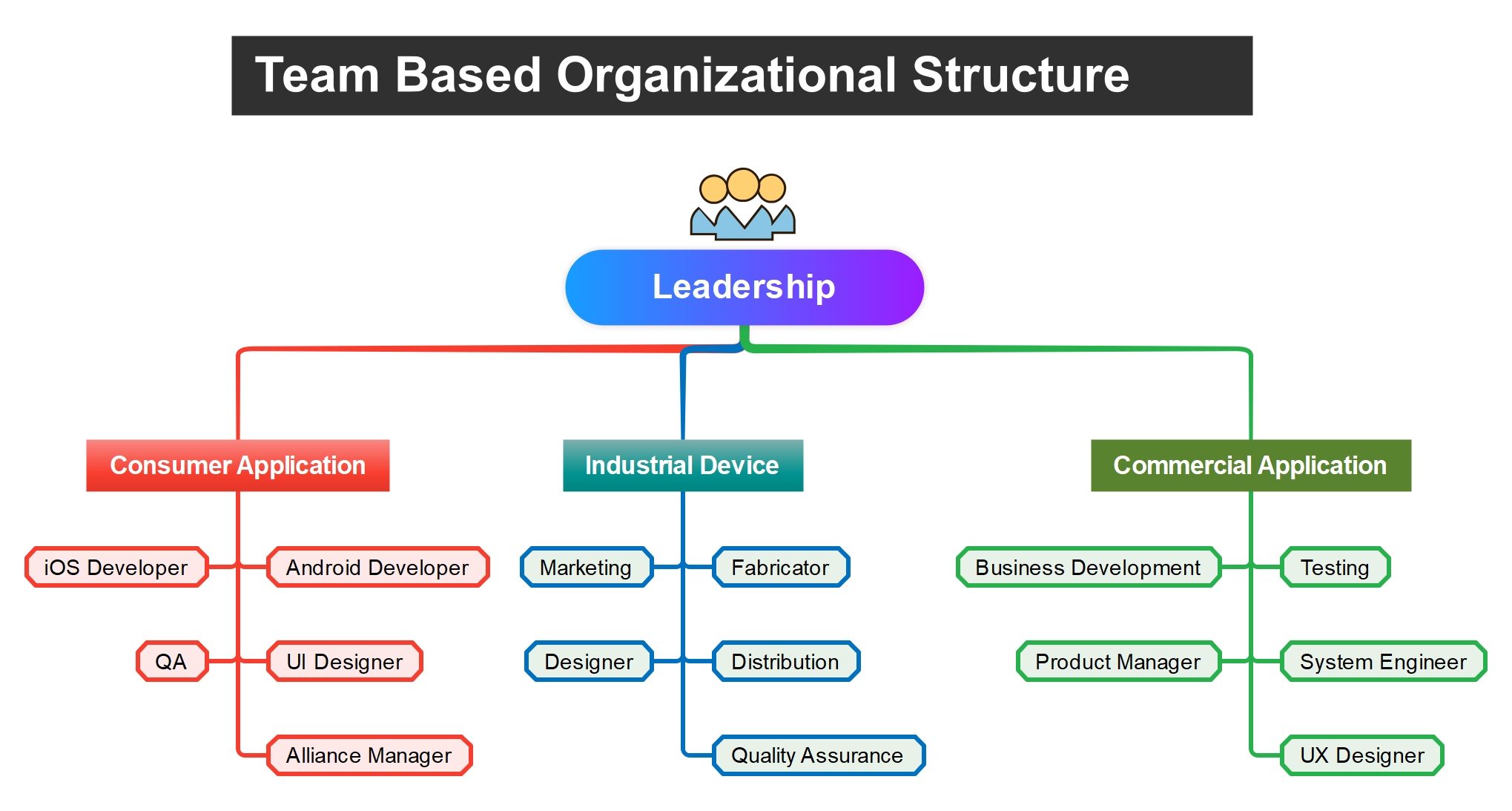


The team-based organizational structure is a way of organizing employees into small groups known as teams. Every team is dedicated to a particular goal or project. The teams usually have individuals of varying skills, like a designer, marketer, or developer. Leadership exists, but decisions are shared among team members.
This model is effective in organizations that require flexibility, fast decision-making, and collaboration. It is commonly used by startups, creative agencies, and organizations with project-based work. Teams break down silos and allow people from different areas to work closely together. They encourage communication, problem-solving, and shared responsibility.
Key Characteristics
In order to have an idea of why team structures are so effective, we must examine some of the characteristics that make them effective. The following are some of the most important characteristics of a team-based organizational structure:
- Empowerment and autonomy: Team-based structure empowers the members to decide on their own and control their work. They are self-responsible and can address challenges fast without seeking approval all the time.
- Cross-functional collaboration: A team with different skills and backgrounds is formed, including marketing, design, and engineering. This combination encourages creativity and helps solve problems effectively.
- Shared responsibility: Members have a collective responsibility. Achievement and struggles are shared, which strengthens engagement and builds a sense of community.
- Open communication: There is open communication between teams. Members can exchange ideas, post questions, and provide feedback. This reduces misunderstandings and prevents information from being trapped in separate departments.
Real-Life Examples of Team-Based Organizational Structure
Now that you know how team-based organizational structures work, let's have a look at how companies apply them in real life:
Multi-Product Tech Company Org Structure
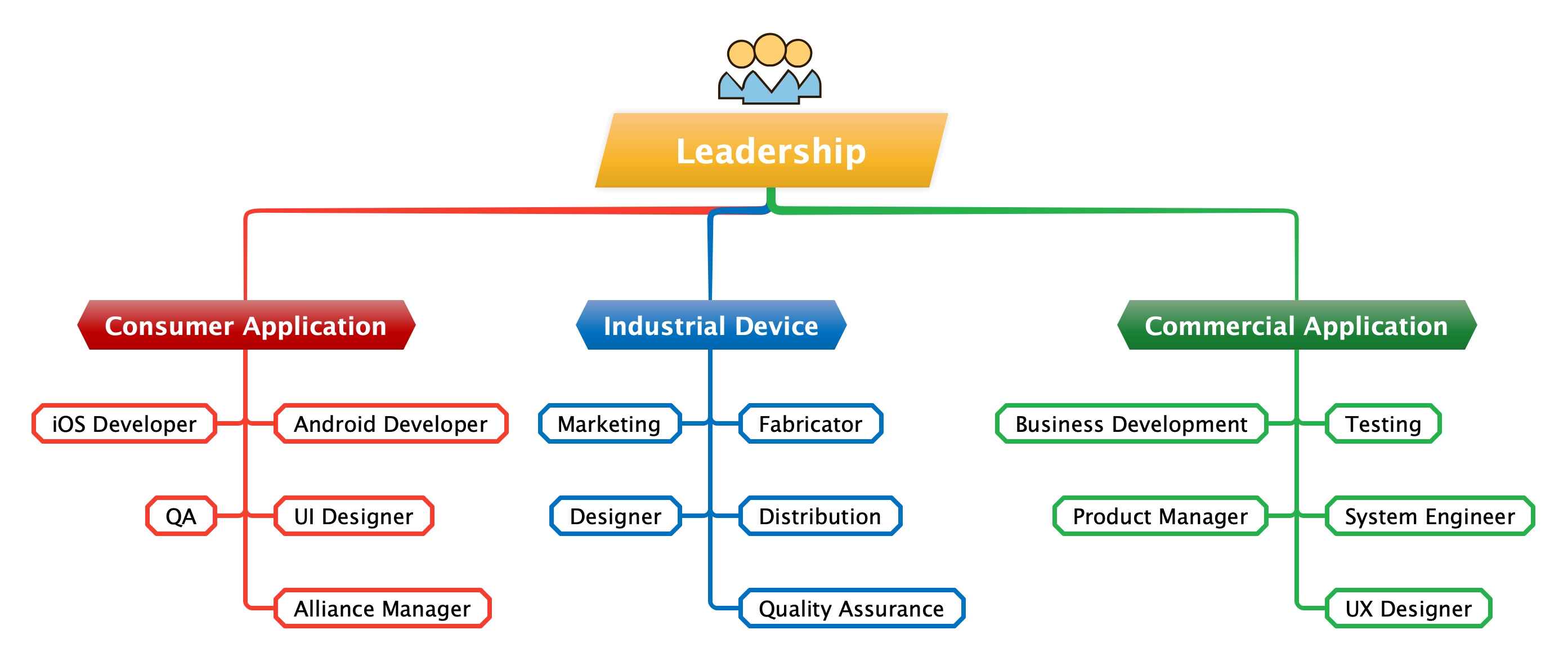
This chart demonstrates how a multi-product technological company can organize its work with the help of a team-based structure. The company does not have regular departments, but three major teams: Consumer Application, Industrial Device, and Commercial Application.
Every team has various experts, such as developers, designers, engineers, QA, and business, and all of them are directed to the same product objectives. Such arrangements help the company move faster, improve communication, and deliver better results.
Administrative Department Organizational Structure

This example shows how an administrative department can organize its teams to keep responsibilities clear and manageable. The chart separates the team into three primary groups: Administrative Services, Human Resources, and Legal and Compliance.
Each group focuses on specific activities, such as office support, employee management, or legal guidance. Through teamwork, these groups help the department run smoothly, improve communication, and support the daily operations of the organization.
Advantages of the Team-Based Organizational Structure
The benefits of moving to a team-based model are great, especially in dynamic environments. Some of the most important advantages of a team-based organizational structure are:
- Encourage innovation and creativity: Working with people from different backgrounds encourages new ideas and better decision-making.
- Enhance flexibility and adaptability: Small teams can notice changes or problems quickly and adjust their work immediately.
- Higher employee engagement and satisfaction: Being part of a team and having control over work increases motivation and job satisfaction.
- Better efficiency and productivity: Well-functioning teams share work effectively. Joint efforts usually result in greater outcomes than working individually.
Disadvantages/Challenges of the Team-Based Organizational Structure
While a team-based structure has many advantages, it also has some challenges:
- Risk of conflict: Different personalities and work styles may cause differences. Conflicts may drag down progress if not managed carefully.
- Coordination costs: Dealing with a number of independent teams requires excellent coordination. As the organization expands, it becomes more difficult to make sure that goals are in line with the company's objectives.
- Social loafing: It is possible that some members may put in less effort in a team than they would individually. This is what is referred to as social loafing or free-riding.
- Loss of responsibility: In case roles and accountability are not clear, then employees may feel confused. Some tasks might be overlooked or not completed properly.
Best Practices for Implementing a Team-Based Org Structure
A team-based organizational structure works better when you plan it properly. The correct strategy is very important for teams to work in order, motivate each other, and fulfill their objectives. Here are some simple tips that can help you make the change smoother and help your teams work better together:
- Design teams carefully: Keep team size suitable for tasks, usually 3 to 6 members. Include people with different skills and perspectives.
- Define clear goals and roles: Set clear goals and clarify the responsibilities of each group member. This reduces confusion and ensures accountability.
- Foster psychological safety: Create an environment where members feel safe to contribute ideas, take risks, and admit mistakes. This encourages innovation, creativity, and honest communication.
- Provide training and support: Train team members and leaders in the skills of conflict resolution, communication, and co-operation.
- Adapt to hybrid or remote work: Establish clear rules for digital communications. Connect and make teams operational even when they are in different locations.
How to Make a Team-Based Organizational Chart in EdrawMind?
Once you understand how the teams are arranged, you can easily build this kind of chart in EdrawMind. Follow these simple steps to create your own team-based chart.
 Try the app & get 500 free AI tokens


Step 1 Start a New File and Add a Title
- Open EdrawMind and start with a blank workspace.
- Add the title Team-Based Organizational Structure to clearly label your chart.
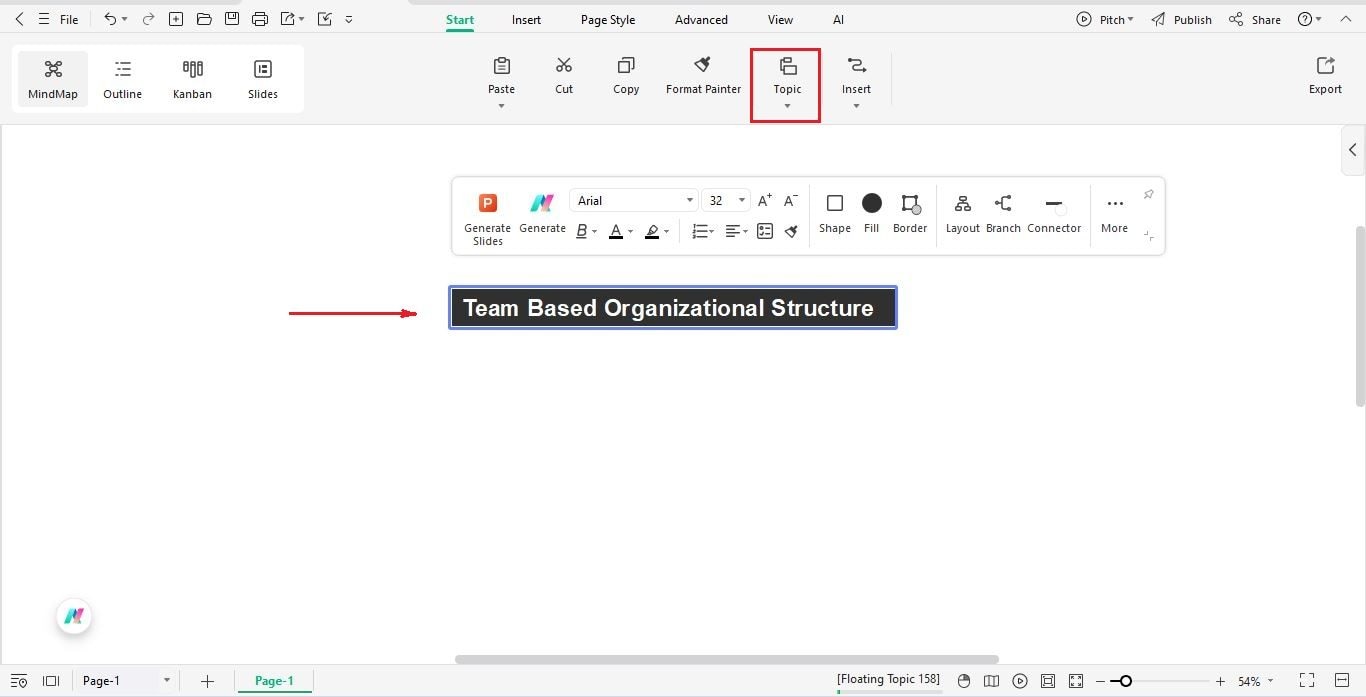
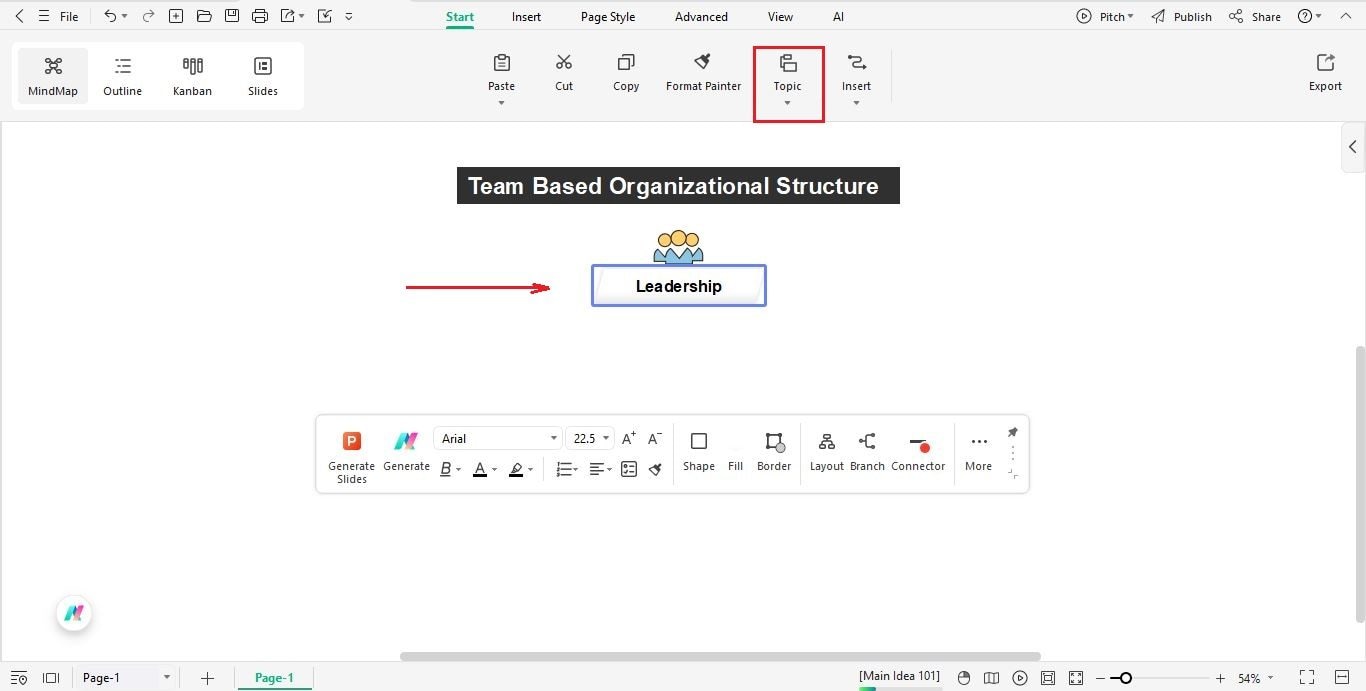
Step 2 Add the Central Leader or Department Head
- Place the main node at the top of the chart.
- Label it with the role of the person who oversees all teams. This helps define the overall leadership.
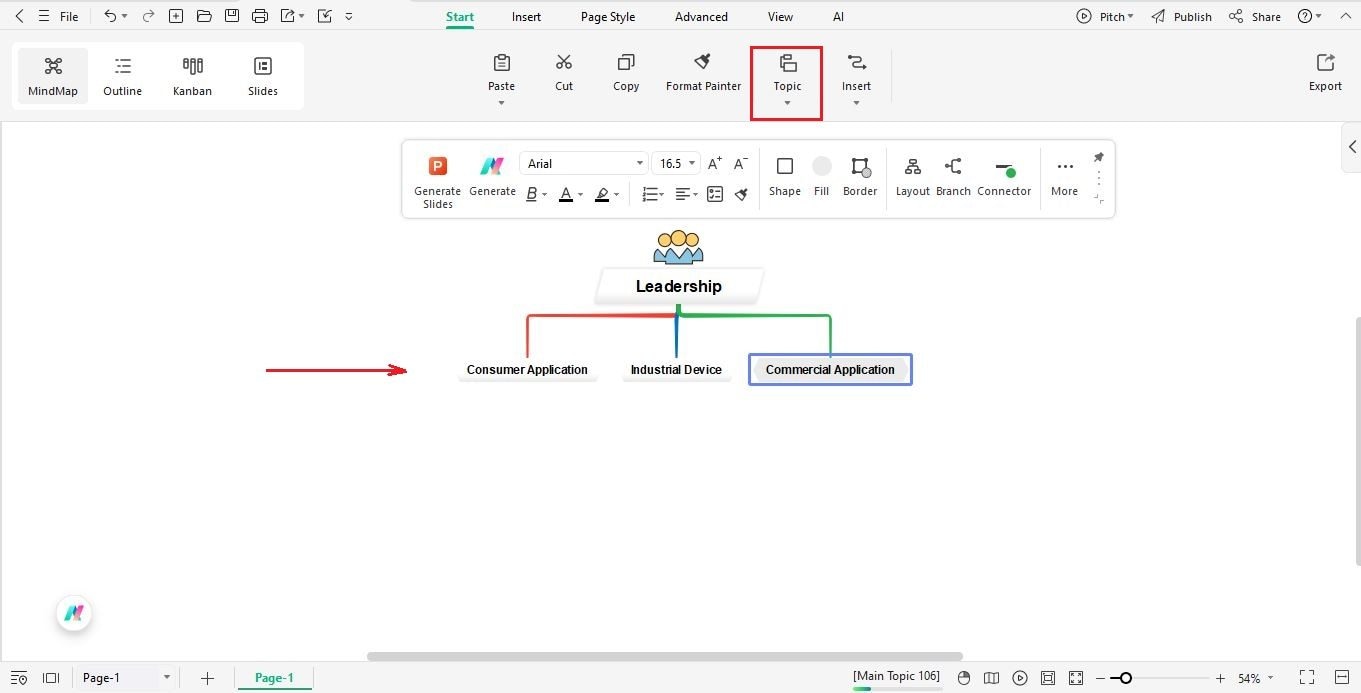
Step 3 Add the Core Team Leaders
- Create several nodes directly below the central leader.
- These represent the heads of the main teams or units.
- Arrange them horizontally to show equal responsibility and direct reporting.
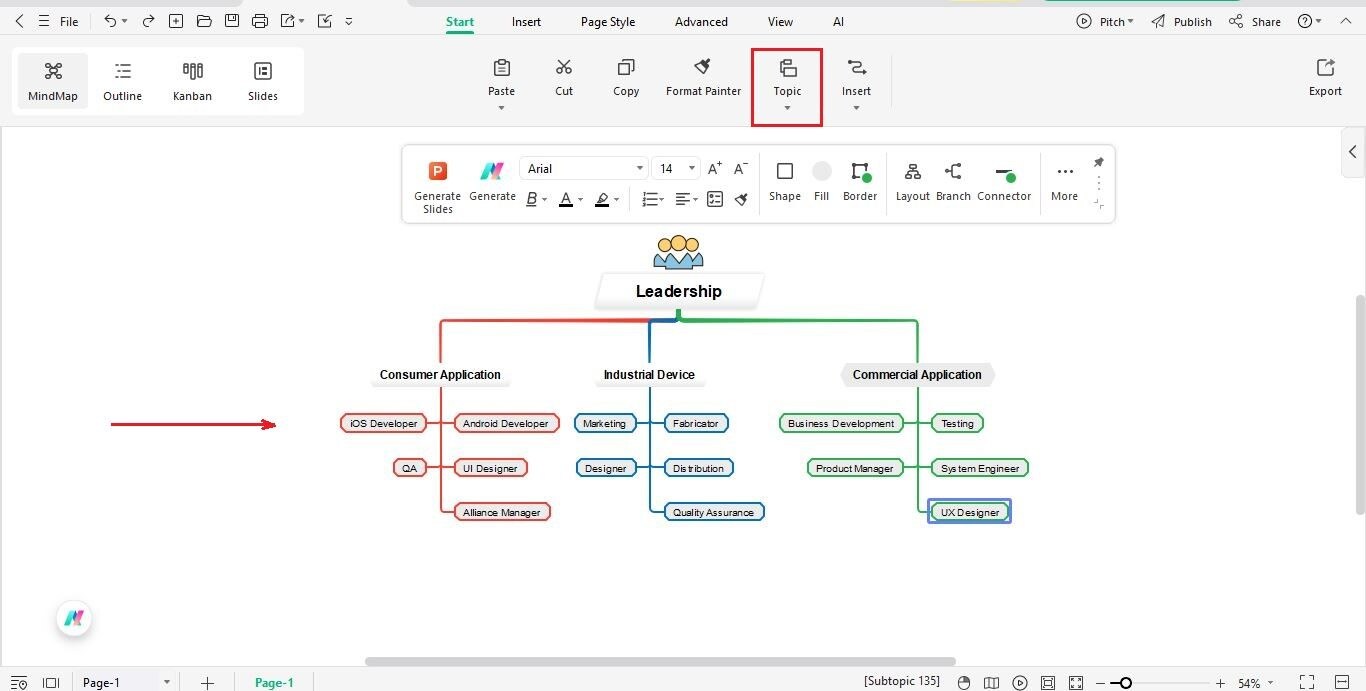
Step 4 Add Team Members Under Each Leader
- Below each team leader, add nodes for the individual team members.
- Group them clearly under their respective leader to show how each team is structured.
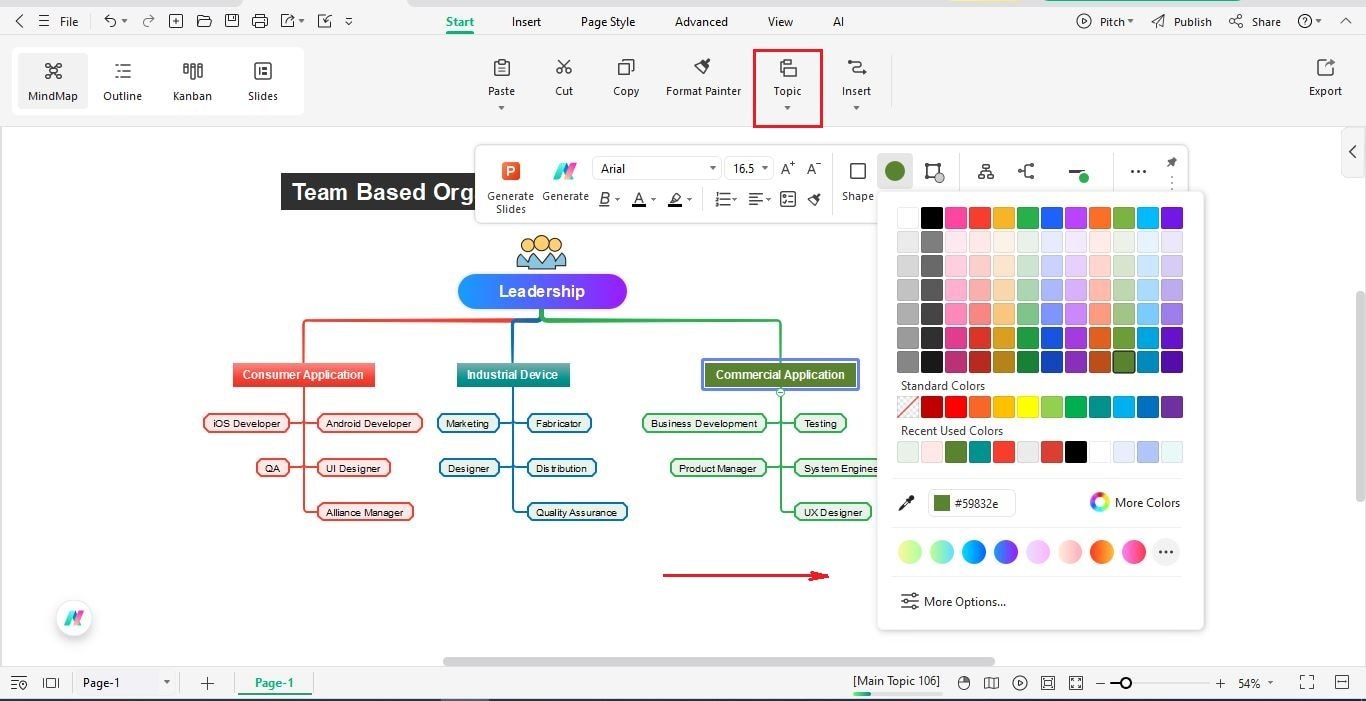
Step 5 Customize Colors and Layout
- Use different colors or shapes to distinguish between teams.
- This makes the chart easier to understand at a glance and gives it a polished look.
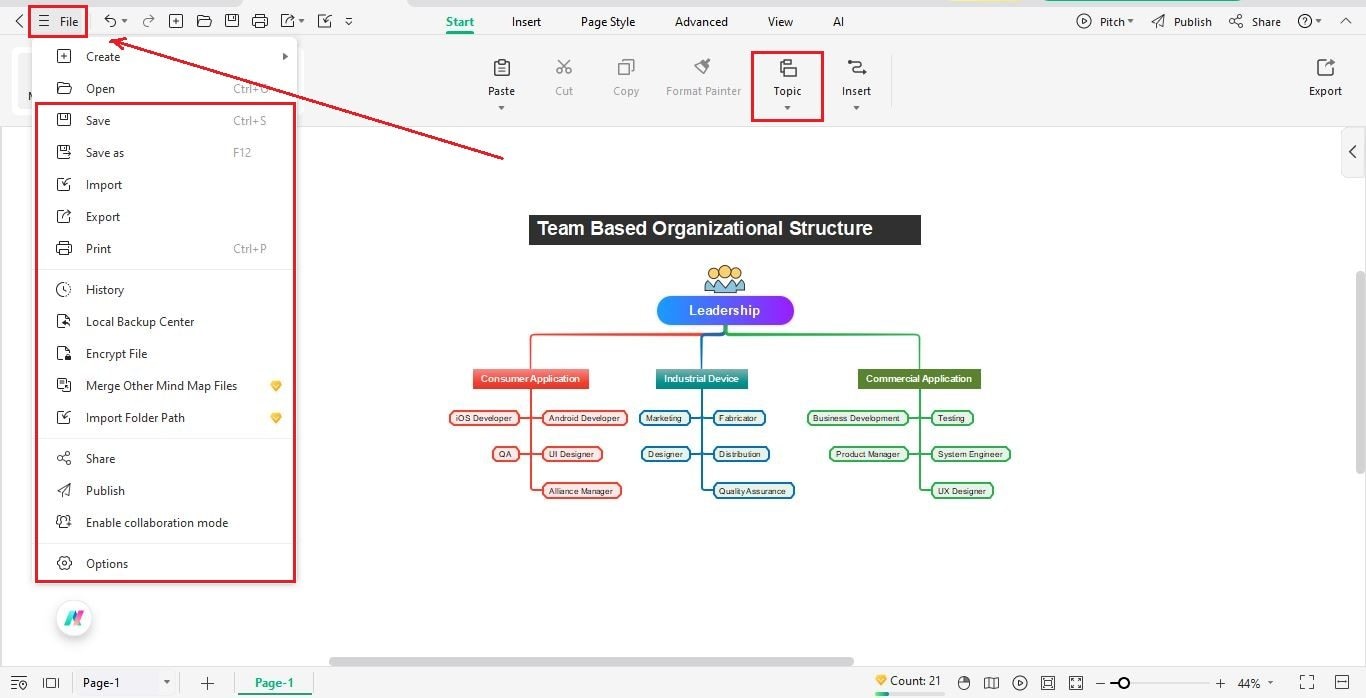
Step 6 Save and Export Your Chart
- Review everything and make sure everything is correct.
- Save the chart and export it in your preferred format, such as PNG, PDF, or SVG.
Conclusion
The team-based organization structure can indeed revolutionize the way a firm operates. It unites individuals and makes them make quicker decisions as well as build a more natural exchange of ideas. Of course, it also comes with challenges, but with careful planning and the right tools, teams can remain on track and be productive.
If you want to make a team-based organizational chart, try EdrawMind. It offers ready templates, allows you to change colors and shapes, and exports your chart in different formats.
Try EdrawMind today and start creating your professional charts online for free.
 EdrawMind
AppsEdrawMind Online
EdrawMind
AppsEdrawMind Online