
Curriculum planning has been used from primary education to higher education to coordinate, schedule, and view information for whole classes, courses, and topics. This article will explore how to use mind maps and examples of mind maps for curriculum planning.
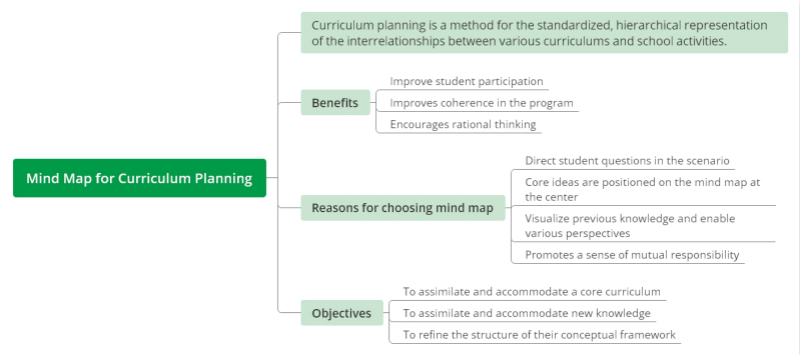
Curriculum planning is a method for the standardized, hierarchical representation of the interrelationships between various curriculums and school activities. A mind map displays the complex network of these partnerships and illustrates essential concepts or domains.
Mind maps show the main areas that can be addressed across grade levels, from sport and wellness to various activities. Mind maps can help decide which activities to keep or delete at specific grade levels in a curriculum plan. While also researching and establish
Curriculum planning is used to coordinate, schedule, and view information for whole classes. The article will explore how to use mind maps and examples of mind maps for curriculum planning.
In this article
Why Choose a Mind Map for Curriculum Planning
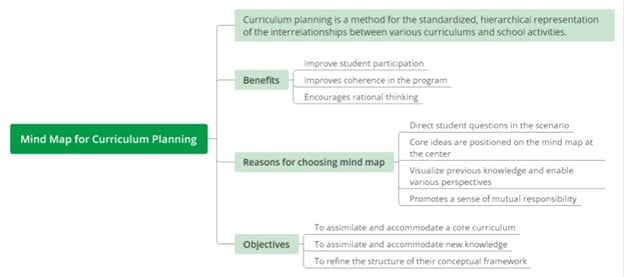
Curriculum planning is a method for the standardized, hierarchical representation of the interrelationships between various curricula and school activities. A mind map displays the complex network of these partnerships and illustrates essential concepts or domains.
Mind maps show the main areas that can be addressed across grade levels, from sport and wellness to various activities. Mind maps can help decide which activities to keep or delete at specific grade levels in a curriculum plan.
While also researching and establishing the critical ideas that will raise concerns regarding the mechanism and structure. Curriculum planning can be an entertaining and imaginative activity for some teachers. In contrast, the exact opposite is true for some teachers.
Whether they love it, dislike it, or are utterly frustrated and exhausted by the idea of it, they would certainly all understand that designing a program is a time-consuming task that needs a lot of thinking and effort.
The Benefits of Curriculum Mapping
- Improve student participation
- Develop and review standard-compliant curricula. Curriculum mapping program is a versatile tool built for teachers to allow ongoing learning progress and maximize students’ success.
- Improves coherence in the program
- It helps in developing a holistic program for the students, rather than an only focused on study focussed environment.
- Encourages rational thinking
- It also helps in developing a better understanding of the student’s time. Therefore, minimizing the burden on them through assignments and tests, and creating an appropriate learning environment.
Reasons for Selecting Mind Map As a Visual Tool
Mind mapping can be selected as the visual method to direct student questions in the scenario. Mind maps can be described as radial structures that allow for the graphic organization of concepts in divisions.
Core ideas are positioned on the mind map at the center as they represent the highest level within the hierarchical system. Subordinate principles are placed on sub-branches, reflecting the next step of the hierarchy of ideas.
Concepts representing information and illustrations will be put in the mind maps in subsequent stages. Mind mapping facilitates the development of questions by visualizing previous knowledge and enabling various perspectives.
Mind mapping promotes a sense of mutual responsibility by visualizing the collective creation of awareness among the students. Within a typical mind map, all student questions can be visualized either as a section or as a hypertext reference.
They also help visualize how and to what degree the student questioning was successful and the impact of the core curriculum.
Measuring Curriculum Objectives in Mind Maps
The curriculum objectives can be:
- To assimilate and accommodate a core curriculum as a conceptual framework of understanding;
- To assimilate and accommodate new knowledge produced by all classroom questions within this conceptual framework of understanding;
- To refine the structure of their conceptual framework of understanding as an indication of the growth of expertise.
The measurement of these curriculum objectives can be defined as the extent and impact of curriculum planning. The measure can then lead:
- Studying a core curriculum;
- Improving this core curriculum;
- Enhancing the logical basis of their awareness as teachers directs student questions through a scenario guided by a mind map.
Best Mind Mapping Tool for Curriculum Planning
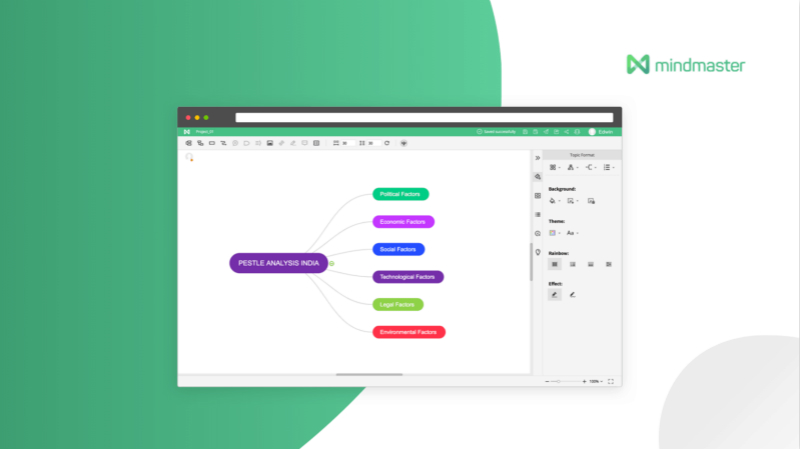
An example of a mind mapping tool for curriculum planning is EdrawMind, with its easy-to-use software interface.
Presentation
Visualisation is the most powerful way to explain ideas and to communicate information. With EdrawMind's built-in display feature, you can turn mind maps into stunning, immersive slideshows.
When you have finished the process, you can export the slides as an editable PPT or PDF format.
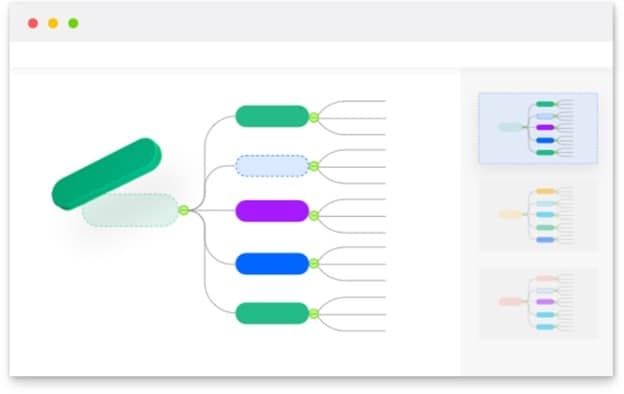
Team Collaboration
The curriculum plans can be communicated to all dynamically and in real-time when collaborating with a group or external collaborators. It is at the discretion of who can edit, view, or comment on the mind map.

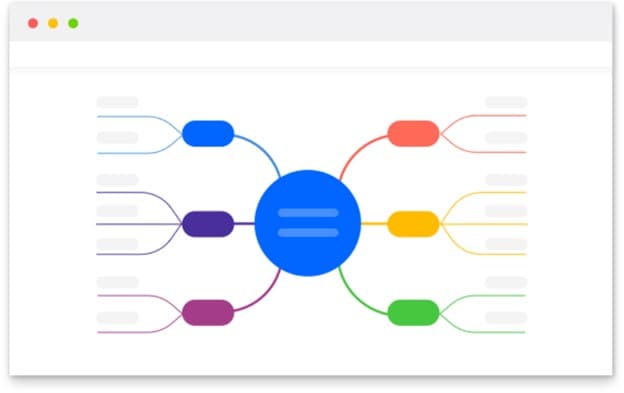
Smart Layout
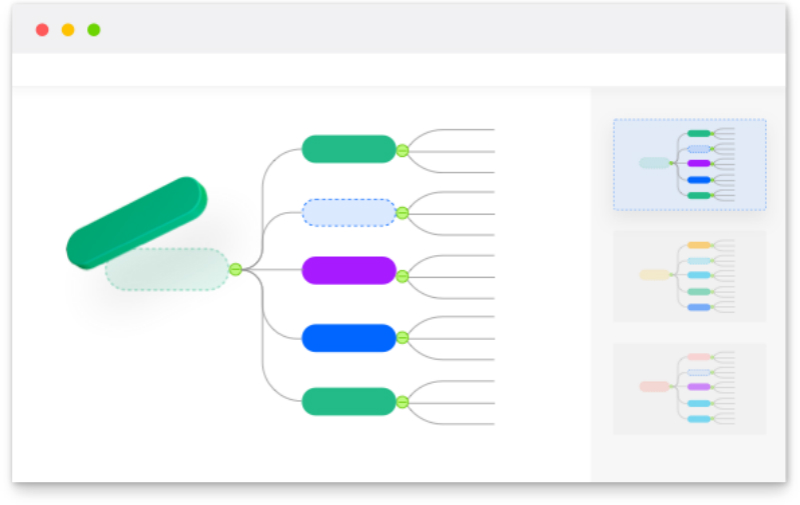
EdrawMind does the rest while you concentrate on the thought process. The intelligent interface keeps all the divisions in place.
Mind Map Examples for Curriculum Planning
It’s easy to ask you to create mind maps for your curriculum planning. However, starting one can be a bit hard without examples to take inspiration from. You might be new to mind maps or how they work.
This part will explore some examples from the Mind Map Gallery of EdrawMind. If you’re unfamiliar, EdrawMind is a mind-mapping tool with several AI tools, 210+ diagram types, and a symbols Library with around 700 elements.
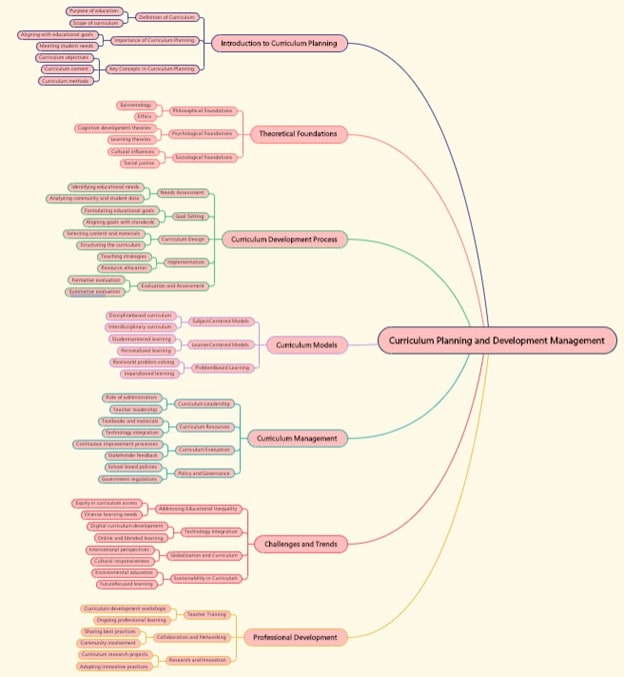
Curriculum Planning and Development Management
The first example is a general curriculum planning mind map. This can be easily edited for any purpose. For example, you can use either for a specific college course or a high school subject.
This is great because it already has the core principles written down: the Theoretical Foundations, Process, and Models. As such, you can customize it to fit almost any subject or course.


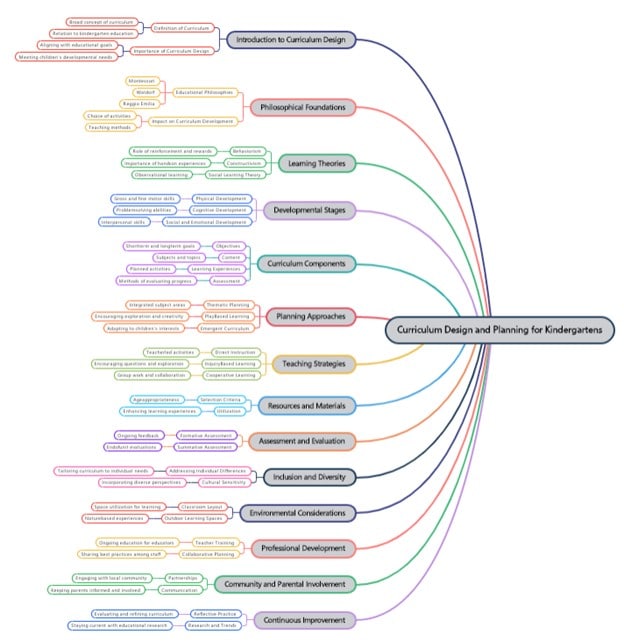
Curriculum Design and Planning for Kindergartens
Here is the curriculum design specifically for kindergarten. If you notice, it follows the same format as the previous example this article showed you. It has the introduction, foundation, theory, and stages that you’d need.
If you’re a kindergarten teacher and you’re looking to develop a new curriculum for your students, this is the perfect mind map to start from.
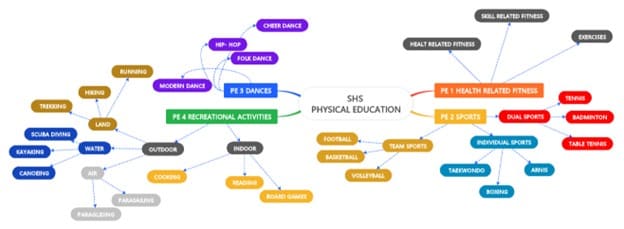
SHS Physical Education Curriculum Breakdown
Lastly, here’s a sort of different approach to the curriculum planning mind map. This is more of a web map, but it works the same way. Basically, you’ll develop the main branches and give out the subtopics under each.
Specifically, this is one for SHS physical education. Hence, you’ll see the different physical fitness avenues such as running, outdoors, water, and more. IT also has different fitness aspects such as health, skill, and others.
Explore More Examples or Make One for Free Now
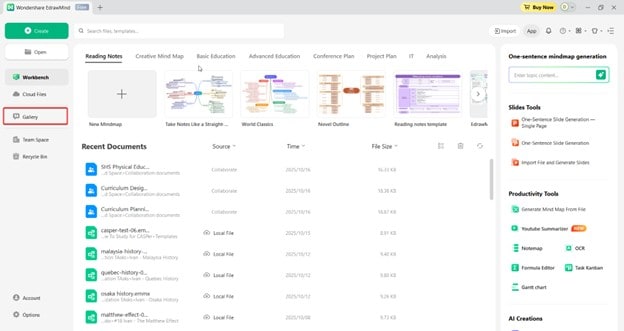
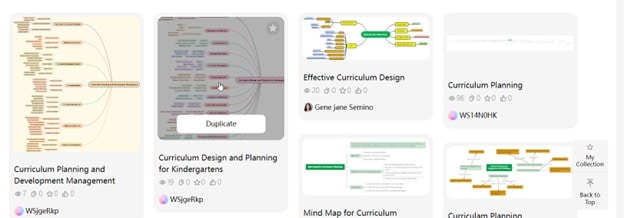
If you’d like to see more mind maps for curriculum planning, head to EdrawMind’s Mind Map Gallery. Simply open Wondershare EdrawMind and click Gallery from the left panel.
From there, type “curriculum planning” or any related topic in the search bar. You’ll instantly see dozens of user-created templates, ranging from lesson outlines to full academic roadmaps.
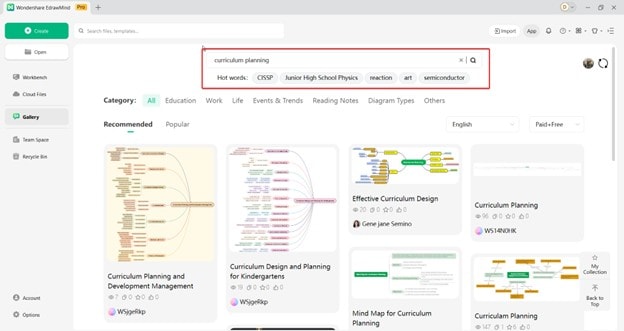
Each template can be previewed before downloading. Once you find one that fits your needs, click Duplicate to open and edit it right away.
How To Make a Mind Map for Curriculum Planning
Now, if you prefer to make one from scratch, EdrawMind makes it easy to create a mind map for curriculum planning. After all, you’ve already seen some examples, and you’re good to go and make your own.
Still, if you need some guidance, read through these steps:
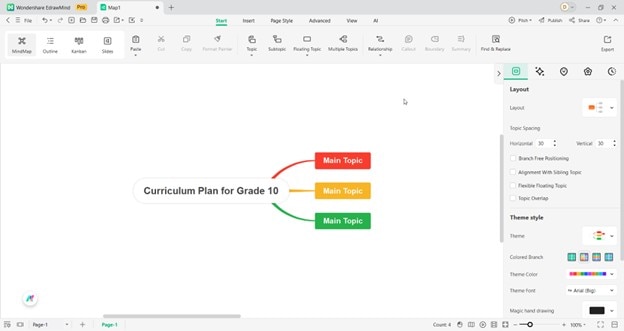
Step 1:
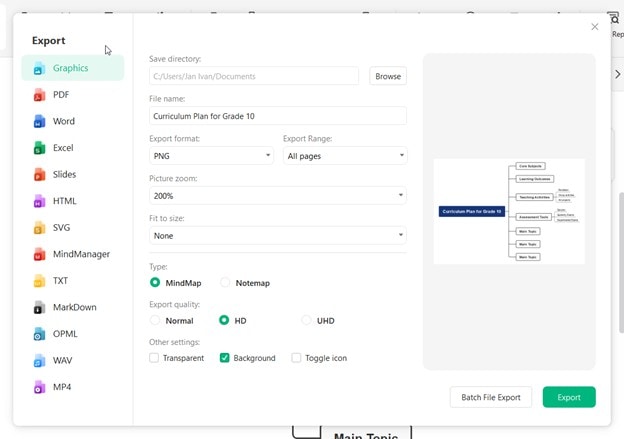
Start with a central idea such as “Curriculum Plan for Grade 10.” This is the Main Idea by default in EdrawMind, so double-click to edit it.
 Try the app & get 500 free AI tokens


Step 2:
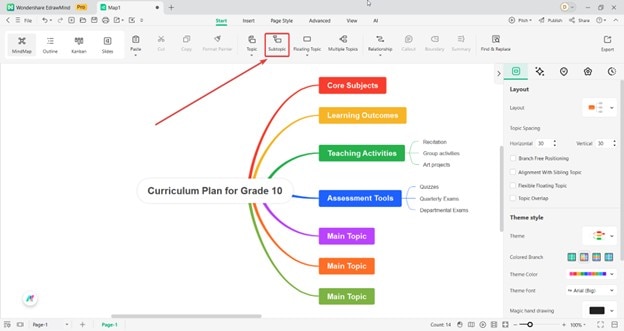
Then, edit the Main Topic nodes. This could include parts like Core Subjects, Learning Outcomes, Teaching Activities, and Assessment Tools. You can also add more Subtopics to add specific details/methods.
Step 3:
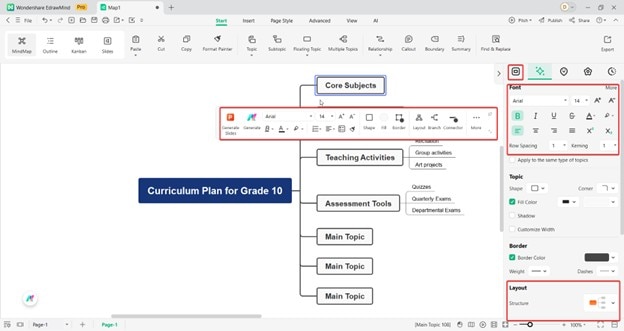
Next, you can design the curriculum planning mind map by editing the layout, colors, or shapes used, or by adding images. For example, it’s a good idea to add images for the activities under the “Teaching Activities.”
Step 4:
Once done, simply export the content to print or share it with your co-teachers.
Curriculum planning can be an entertaining and imaginative activity for some teachers. Whereas the exact opposite for some teachers. Whether they love it, dislike it, or are utterly frustrated and exhausted by the idea of it, they would certainly all understand that designing a program is a time-consuming task that needs a lot of thinking and effort.
Source: EdrawMind
1.1 The Benefits of Curriculum Mapping
- Improve student participation
Develop and review standard-compliant curriculums. Curriculum mapping program is a versatile tool built for teachers to allow ongoing learning progress and maximize student’s success.
- Improves coherence in the program
It helps in developing a holistic program for the students, rather than an only study focussed environment.
- Encourages rational thinking
It also helps in developing a better understanding of the student’s time. Therefore minimizing burdening them under assignments and tests and creating an appropriate learning environment.
1.2 Reasons for Selecting Mind Map as The Visual Tool
Mind mapping can be selected as the visual method to direct student questions in the scenario. Mind maps can be described as radial structures that allow for the graphic organizing of concepts in divisions.
Core ideas are positioned on the mind map at the center as they represent the highest level within the hierarchical system. Subordinate principles are placed on sub-branches, reflecting the next step of the hierarchy of ideas. Concepts representing information and illustrations will be put in the mind maps on subsequent stages.
Mind mapping facilitates the development of questions by visualizing previous knowledge and enabling various perspectives. Mind mapping is ideal for prior knowledge simulation, as it facilitates brainstorming and information sharing.
Mind mapping promotes a sense of mutual responsibility by visualizing the collective creation of awareness of the students. Within a typical mind map, all student questions can be visualized either as a section or as a hypertext reference in a digital mind map.
They also help visualize how and to what degree the student questioning was successful and the impact of the core curriculum. Teachers should use mind maps to track and assess individual knowledge creation, since creating a mind map involves remembering the principles of the student’s awareness in a visual context of the subject.
1.3 Measuring Curriculum Objectives in Mind Maps
The curriculum objectives can be:
- To assimilate and accommodate a core curriculum as a conceptual framework of understanding;
- To assimilate and accommodate new knowledge produced by all classroom questions within this conceptual framework of understanding;
- To refine the structure of their conceptual framework of understanding as an indication of the growth of expertise.
The measurement of these curriculum objectives can be defined as the extent and impact of curriculum planning. The measure can then lead:
- Studying a core curriculum;
- Improving this core curriculum;
- Enhancing the logical basis of their awareness as teachers direct student questions through a scenario guided by a mind map.
An example of a mind mapping tool for curriculum planning is EdrawMind, with its easy-to-use software interface.
Source: EdrawMind
- Presentation
Visualisation is the most powerful way to explain ideas and to communicate information. With EdrawMind's built-in display feature, you can turn mind maps into stunning, immersive slideshows. When you have finished the process, you can export the slides as an editable PPT or PDF format.
Source: EdrawMind
- Team ,amp; Collaboration
The curriculum plans can be communicated to all dynamically and in real-time when collaborating with a group or external collaborators. It is at the discretion who can edit, view, or comment on the mind map.

Source: EdrawMind
- Smart Layout
EdrawMind does the rest while you concentrate on the thought process. The intelligent interface keeps all the divisions in place.
Source: EdrawMind
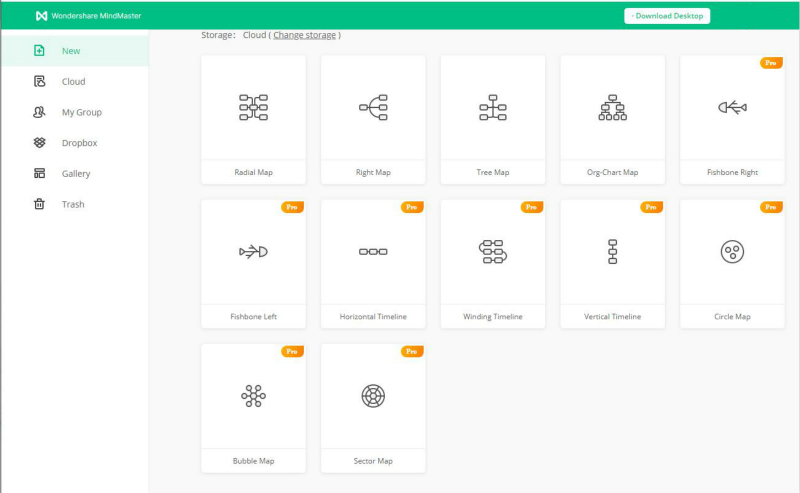
Step 1 Open EdrawMind on your desktop or laptop, and select a blank canvas.
Source: EdrawMind
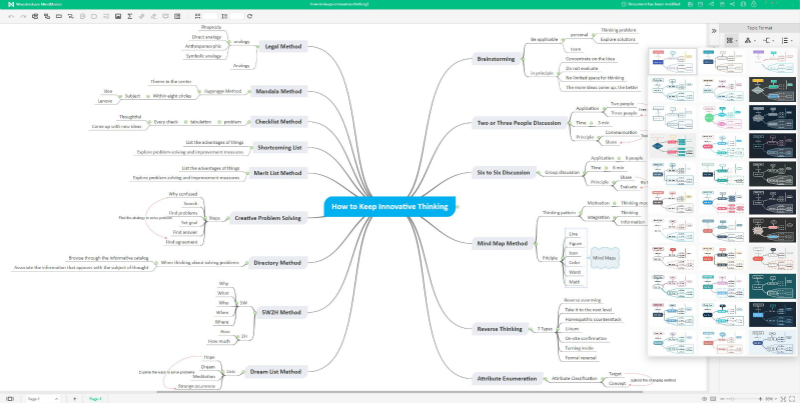
Step 2 Type your context and use the wide range of symbols from the libraries available to create your curriculum plan mind map.
Source: EdrawMind
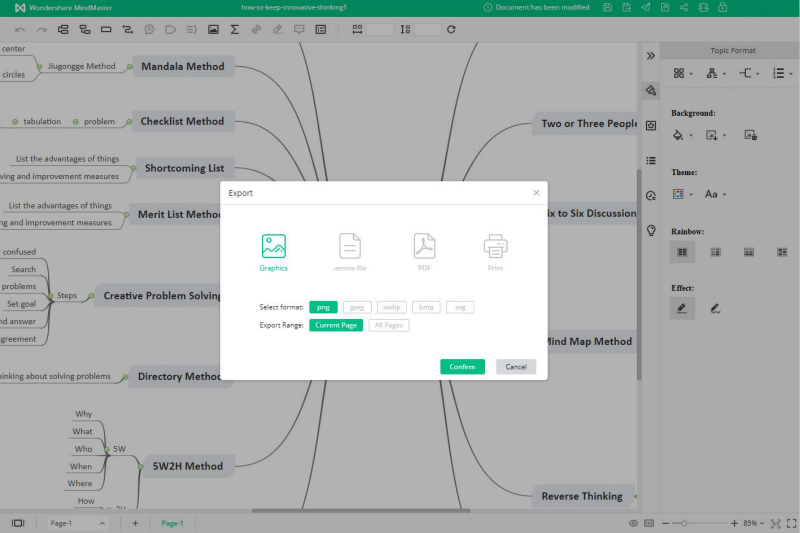
Step 3 Save and export your diagram to any file type you wish to. EdrawMind is compatible with multiple file types like Office, PDF, Evernote, and graphic files.
Source: EdrawMind
Source: EdrawMind
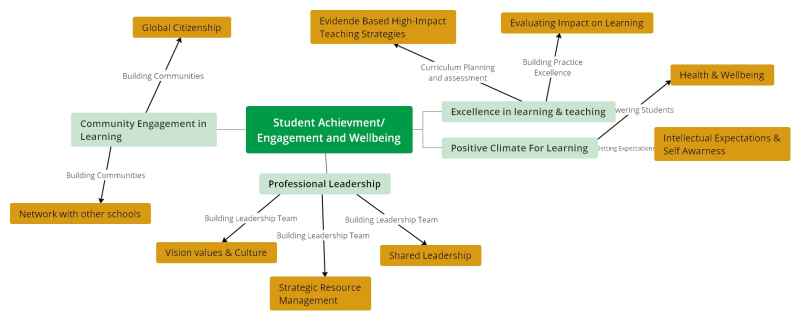
This example of a mind map for curriculum planning, student achievement, engagement, and well-being is the core idea. The curriculum covers critical sectors like a positive climate for learning, professional leadership, community engagement in direction, and excellence in learning and teaching.
The curriculum plan is a mechanism of continuous development and change. It requires a lot of experimentation and trial and error. Since what may perform well for one group of students will miserably fail for another, and the strategies effectively implemented by one instructor may not be a suitable match for another class.
Using mind mapping to check the understanding of a program for students is a relatively recent approach.
EdrawMind is an easy-to-use, flexible mind mapping tool designed to help you generate modern, fresh visuals and mind maps. By combining the bullet points into a mind map on a project, EdrawMind lets you organize the thoughts or concepts visually appealing and detailed-oriented.
 EdrawMind
AppsEdrawMind Online
EdrawMind
AppsEdrawMind Online