

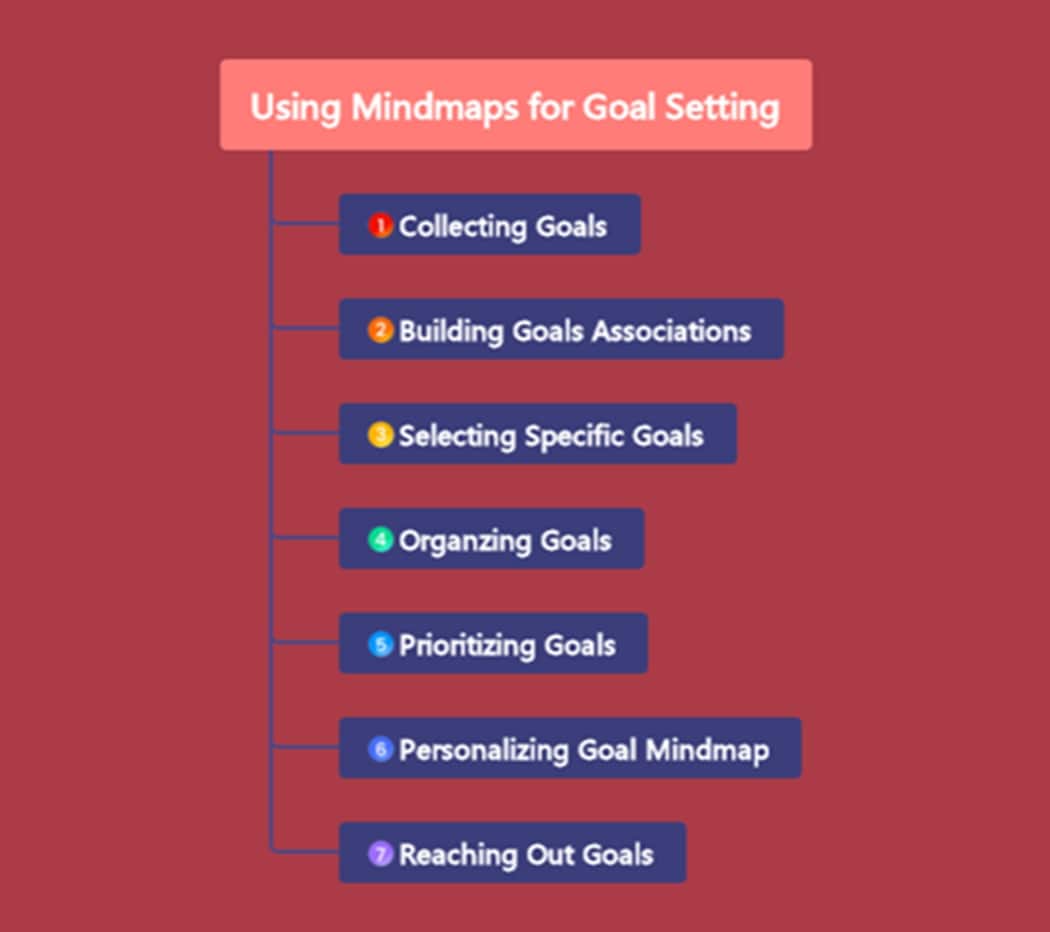
Mind mapping can assist in efficient goal setting, providing appropriate direction to your interests, plans, and aspirations.
People often feel overwhelmed by the gush of ideas emerging in our minds.
Most of the time, they don't reach a productive outcome due to an unsystematic perception of our goals, forgetting or neglecting some of the most important ones.
This article profoundly explains how you can use the mind-mapping technique for effective goal-setting, including some excellent goal mind map examples.
In this article
How Does a Mind Map Work

The mind-mapping technique operates on the exact principle of our brain's cognitive process. You don't cognize linearly, but rather radiantly, to associate our thoughts.
Similarly, a mindmap is structured in a diverging way to relate our ideas, build associations, and trigger arousal & exude other subordinate ideas.
Why Should You Use Mind Maps
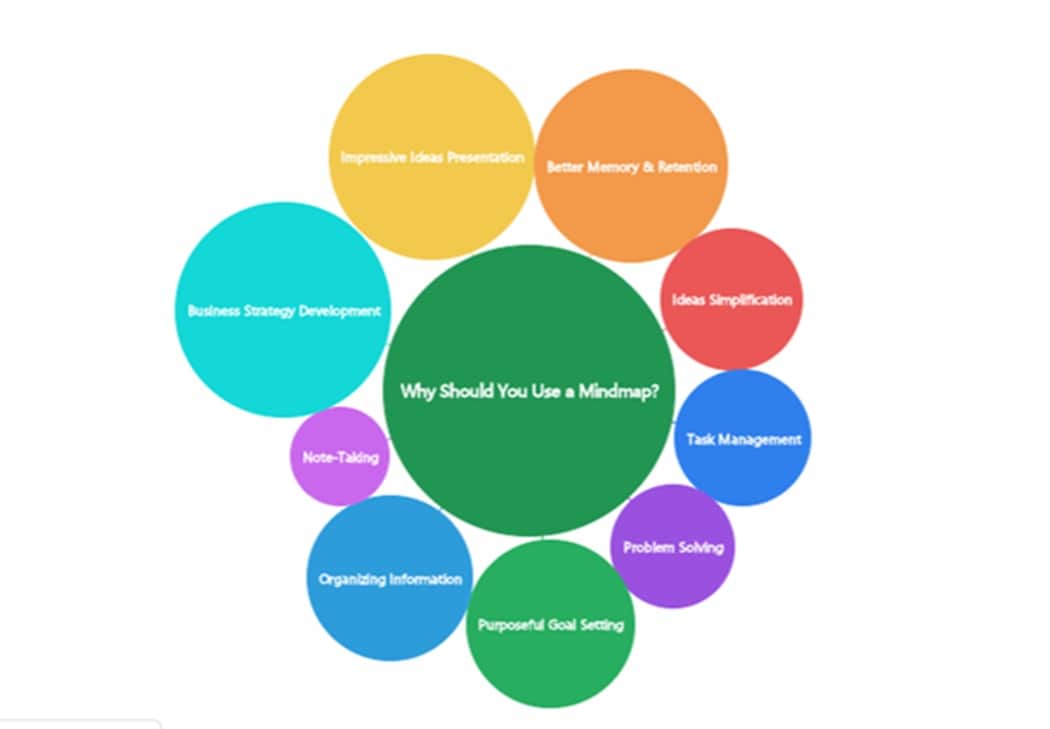
Mindmaps visualize your abstract thoughts into an observable reality, facilitating better perception and understanding. The following benefits are attributed to utilizing mind maps in your personal, educational, or business life.
Ideas Simplification
The information feels boring when it is long-winded and unattractively presented unless you simplify it. Luckily, the mind-mapping technique among us is instrumental in fostering swift understanding through simplifying concepts.
Rather than composing long phrases or paragraphs, a mindmap comprises concise keywords or phrases that are easy to grasp. Even a keyword can trigger a visual summary of the whole topic, which might not be described in long sentences.
Ideas simplification is also credited to the organizing ability of the mind-mapping approach. When concepts are organized and well-coordinated, their comprehension becomes astonishingly convenient.
Better Memory & Retention
Long chunks of information are always challenging to digest and almost impossible to retain for a prolonged span.
On the other hand, the information represented in a mindmap is categorized and sub-categorized, which enables our mind to navigate and overview the information conveniently.
Additionally, Colors elevate our learning spirit by developing a significant amount of interest & curiosity in us.
Therefore, mindmaps encourage ideas by associating them with images, colors, and keywords, promoting sound cognitive stimuli. As a result, when you look at a mindmap, you formulate a complete framework for the topic.
Impressive Ideas' Presentation
If you present your idea in a boring or unimpressive way, nobody will seem interested in it. Draping your thoughts in an attire of creativity, innovation, and artistic appeal augments the chances of audience attraction & better comprehension.
Generally, our left hemisphere is responsible for processing textual information, whereas the right hemisphere is responsible for visual processing.
Hence, when you incorporate textual and visual elements in your mindmap, both hemispheres participate in cognitive & interpretive processes, resulting in enhanced insight & elevated viewers' interest.
Task Management & Problem-Solving
Task management and mind mapping are inseparable entities, if stated. The mind mapping approach is beneficial, especially if you want to stand out as a successful project manager.
From the stage of project conceptualization to strategizing to plan execution, you can generate a breakdown of all your objectives, priorities, and resources.
Additionally, a mindmap will assist you in creating project milestones and monitoring your task progress, offering a visualized version of your updated project figures that you can share with other project stakeholders.
Effective & Purposeful Goal Setting
Aimless working yields no prolific outcomes, especially when you have no clear vision of your goals or prospects. To maximize productivity, it is essential to have crystal-clear objectives in mind to avoid undesirable consequences.
Mind-mapping approach helps demarcate your goals and prioritize them based on your situations and preferences. Thus, you will stay motivated and focused on your eventual target, alongside keeping track of your resources.
Mind Map Examples for Goal Setting
Mind map examples from Wondershare EdrawMind’s Gallery illustrate goal setting in a clear, visual way. These diagrams help you organize objectives, track progress, prioritize tasks, and stay motivated for more effective personal and professional achievement.
Simple Goal Setting Mind Map
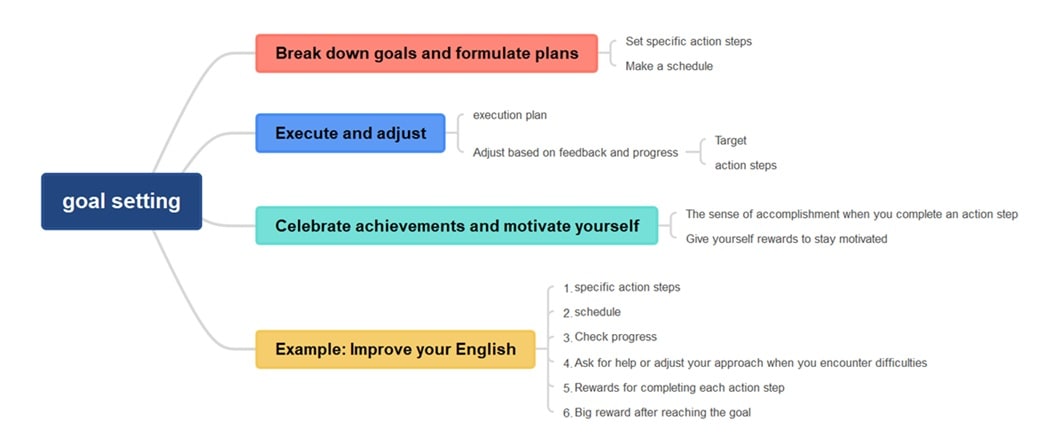


The Goal Setting Mind Map shows how to turn big ambitions into clear, actionable steps. It starts with breaking down goals into smaller tasks, setting specific actions, and creating a practical schedule for progress.
The next section focuses on execution and adjustment. It encourages reviewing results, gathering feedback, and making changes to stay aligned with targets. Flexibility helps maintain steady improvement and momentum.
The map highlights the importance of celebrating achievements. Recognizing progress and rewarding yourself builds motivation and confidence. For example, improving your English becomes easier with milestones, feedback, and meaningful rewards along the journey.
Work Goal Setting
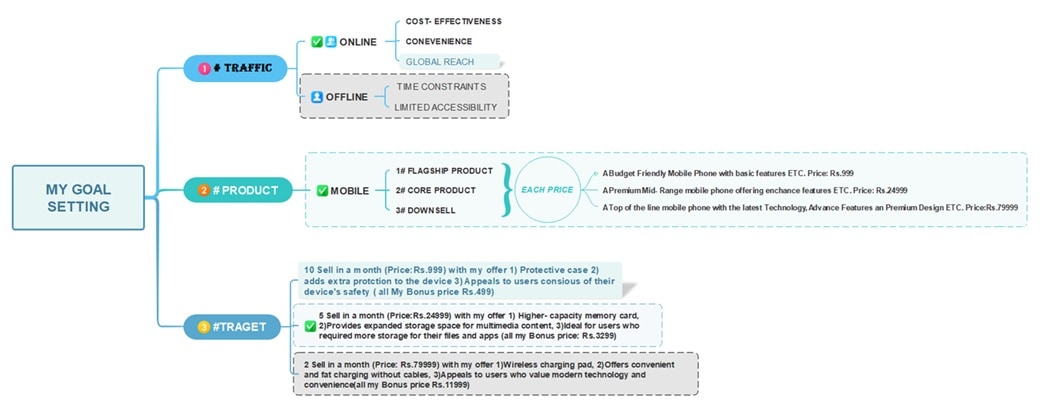
The Work Goal Setting Mind Map shows a clear plan for sales and marketing. It begins by comparing online and offline traffic. Online platforms provide global reach and cost efficiency, whereas offline efforts face time and access limitations.
It then groups products into three mobile levels: flagship, core, and downsell. Each has a set price range, from budget to premium, to define customer segments and pricing.
The last part highlights monthly sales goals with special offers like protective cases, memory cards, and wireless chargers that add value and help increase conversions.
Student Goal Setting and Implementation
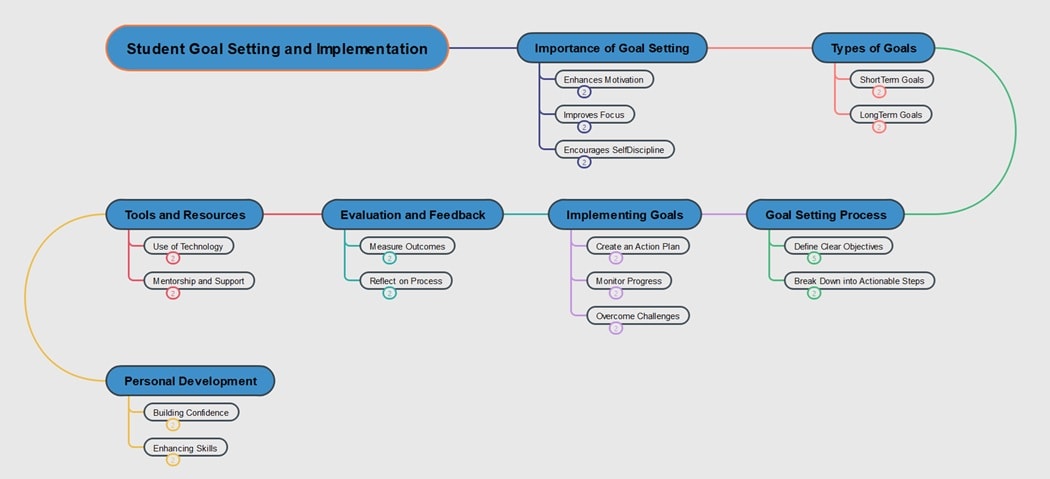
The Student Goal Setting and Implementation Mind Map explains how planning supports academic growth and self-improvement. It begins with the importance of goal setting, showing how motivation, focus, and self-discipline help students stay engaged and consistent in their studies.
The next part introduces short-term and long-term goals. Short-term goals provide quick feedback, while long-term goals develop vision and lasting commitment. The map also includes the SMART framework for defining objectives and breaking them into actionable steps.
The final part focuses on implementation, monitoring, and reflection. It highlights the value of using tools, seeking mentorship, and building confidence through personal development.
Smart Goal Setting
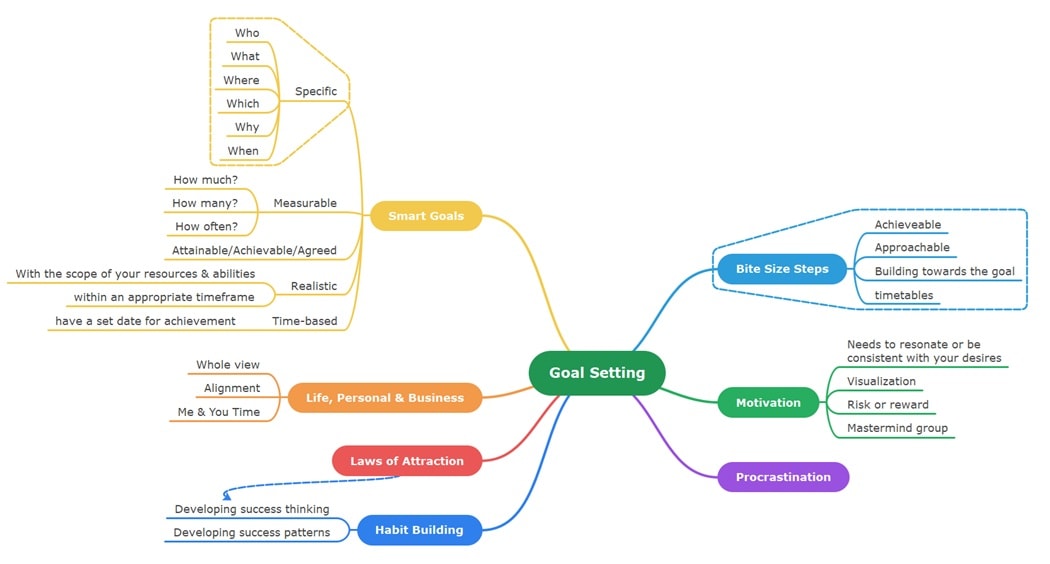
The Goal Setting Mind Map explores how SMART goals help people create clear, measurable, and realistic plans for success. It begins with defining each SMART element, including specific actions, quantifiable outcomes, achievable steps, realistic limits, and time-based deadlines.
The next section expands on life, personal, and business goals, emphasizing balance, alignment, and time management. It also introduces supporting concepts such as the law of attraction, habit building, and motivation through visualization, rewards, and supportive communities.
The final part highlights the importance of taking bite-sized steps. These smaller, practical actions make goals more achievable, build confidence, and encourage steady progress.
Six Steps of Goal Setting
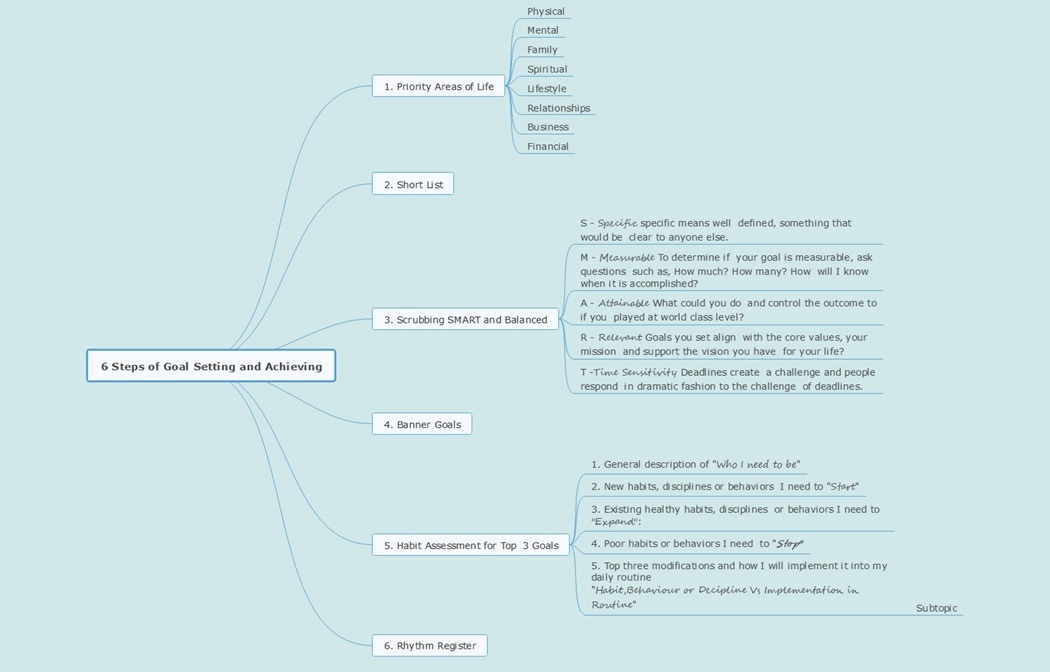
The six steps of goal setting and achieving mind map outlines a complete framework for personal and professional growth. It starts by identifying priority areas of life, including physical, mental, family, and financial well-being, to ensure a balanced focus.
The middle part refines goals through shortlisting and applying the SMART method. It defines goals that are specific, measurable, attainable, relevant, and time-bound, encouraging realistic planning aligned with one’s mission and vision.
The final section emphasizes continuous improvement through habit assessment and rhythm tracking. It helps users build positive habits, eliminate poor ones, and sustain progress toward long-term success.
Explore More Mind Maps or Make One for Free Now
EdrawMind makes goal-setting mind maps simple and actionable. You can plan objectives, organize priorities, and track your progress through one clear and visual structure.

Explore templates from EdrawMind’s Gallery to create goal-setting diagrams for personal, academic, or professional growth. These templates help you define focus areas, measure progress, and stay consistent with your plans.
Choose a layout that fits your purpose. Each template includes editable branches for short-term targets, long-term goals, and motivation tracking.
Here’s how to create your goal-setting mind map using EdrawMind:
Step 1: Add Your Core Topic
 Try the app & get 500 free AI tokens


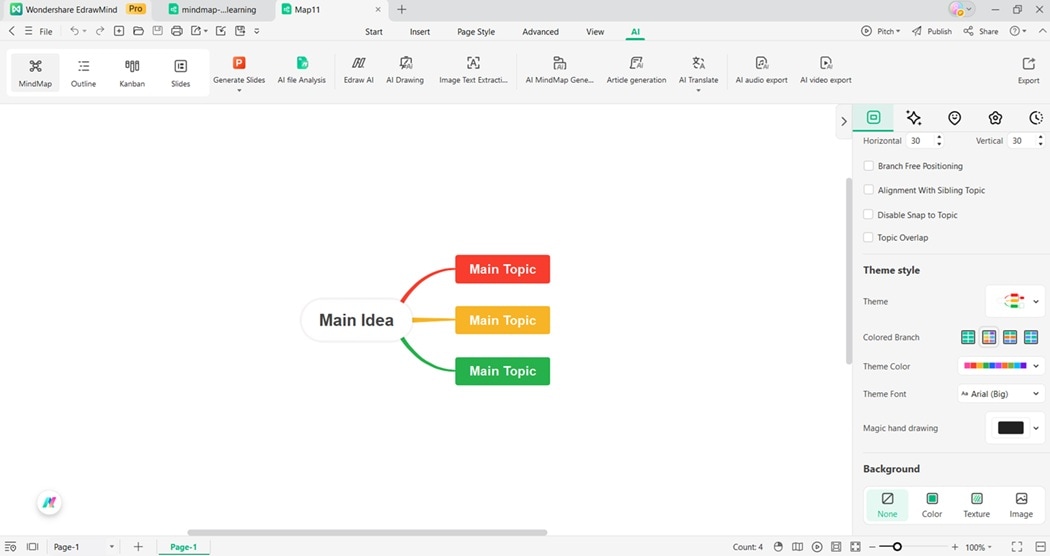
Start with “Goal Setting” as your main idea. This central topic helps you organize all your objectives and planning steps in one place.
Step 2: Build Key Branches
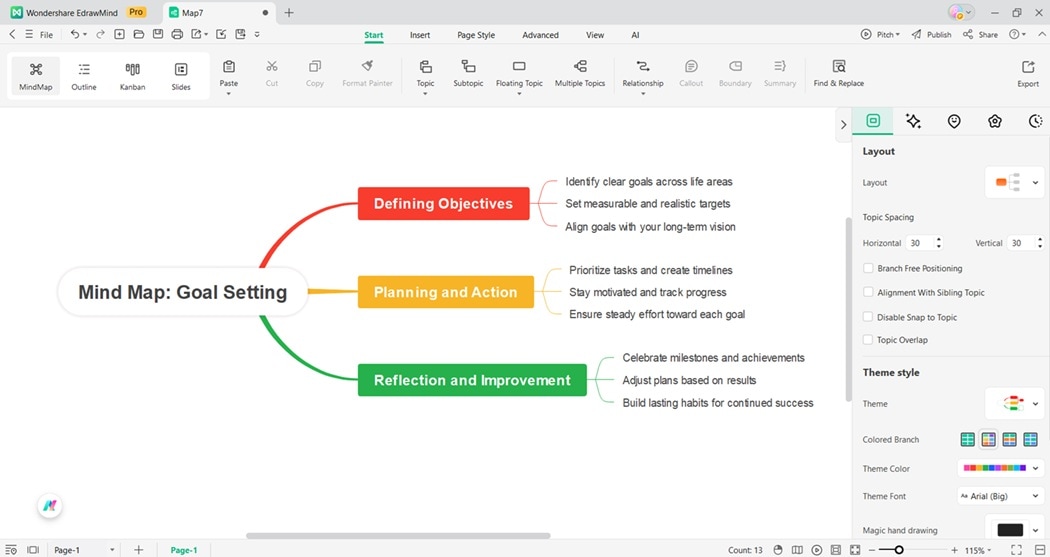
Add branches for categories such as Personal Goals, Academic Goals, or Career Goals. This helps you divide big ambitions into manageable sections.
Step 3: Customize With Visuals
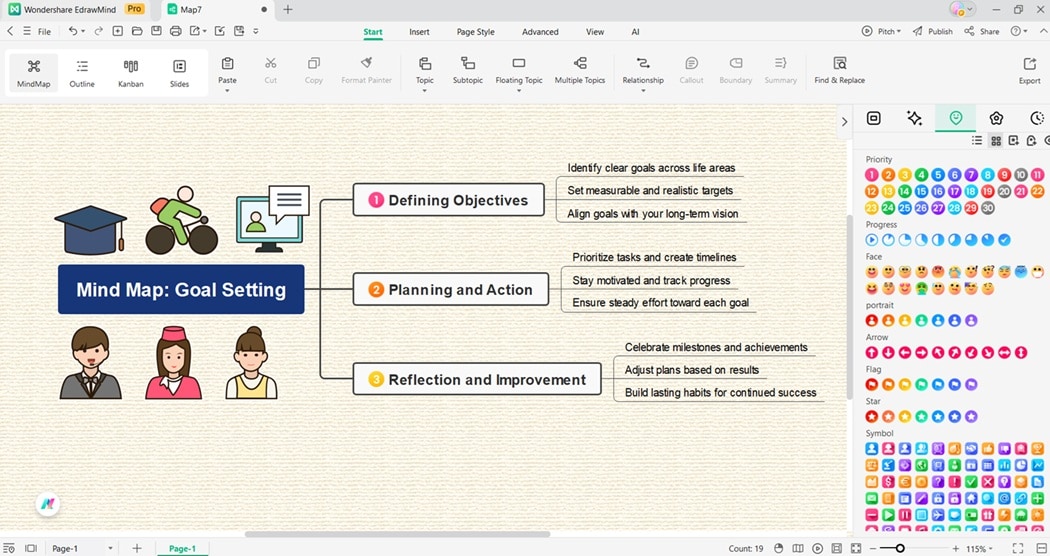
Use icons, colors, and shapes to represent milestones or motivation levels. Highlight priority goals to keep your focus clear and progress visible.
Step 4: Improve With AI Assistance
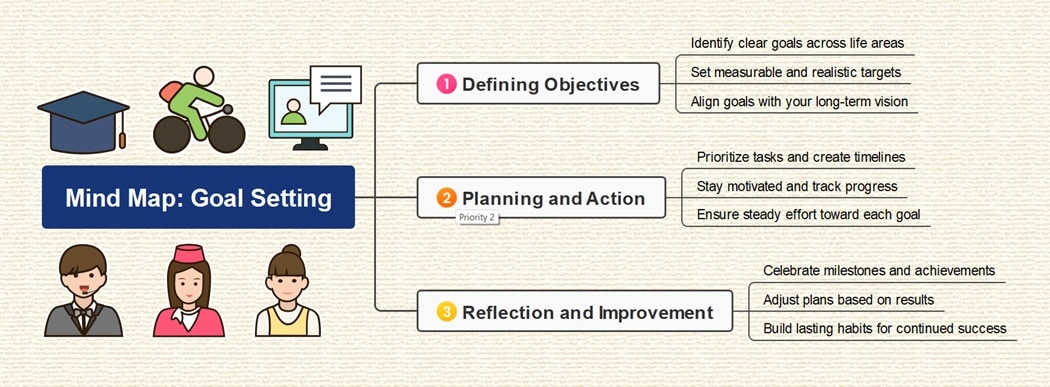
With EdrawMind AI, you can generate SMART goals, evaluate your performance, or get motivational insights. It helps you refine plans and achieve results faster. The Goal Setting Mind Map begins by defining clear objectives across different areas of life. It helps you set measurable and realistic targets that align with your vision.
The next part focuses on prioritizing actions, creating timelines, and staying motivated. This section ensures consistent effort and progress tracking.
The final part emphasizes reflection and improvement. It helps you celebrate achievements, adjust plans when needed, and continue building habits that lead to lasting success.
 EdrawMind
AppsEdrawMind Online
EdrawMind
AppsEdrawMind Online