
SEO writing or content optimization is a skill that’s thriving in the freelancing world these days. If you want to upskill and learn more about it, you can start with this article.
In This Article
Principles of SEO
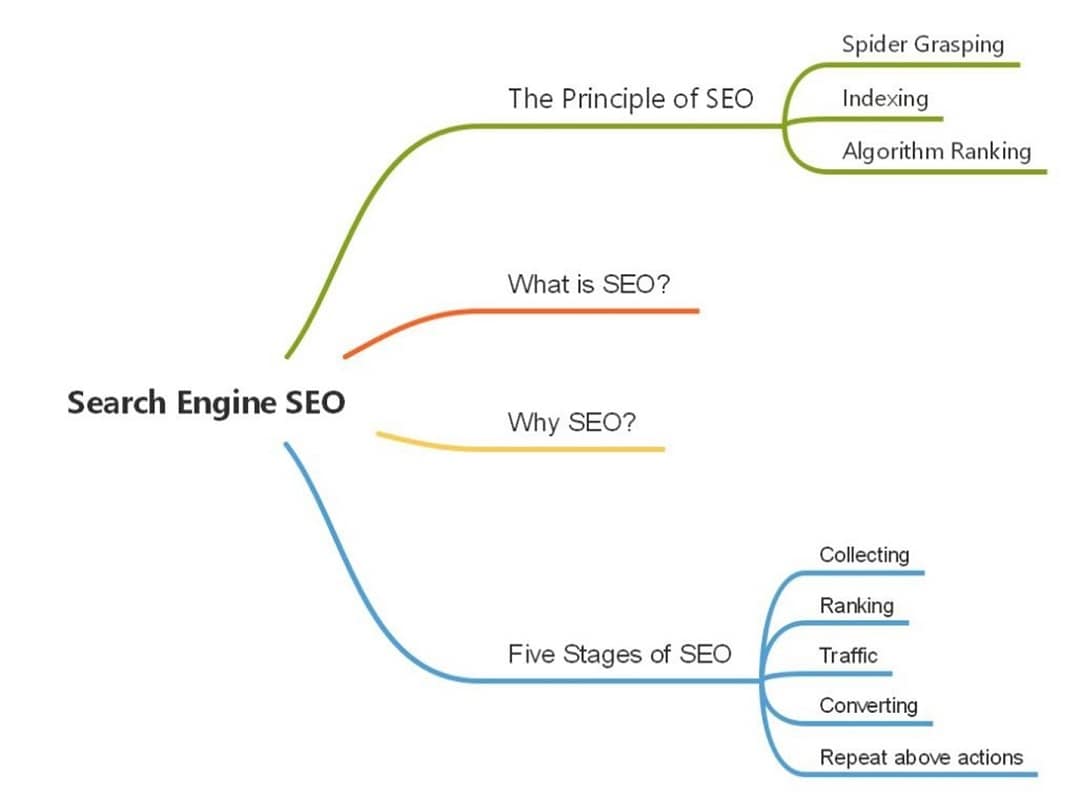
SEO focuses on the working principle of the search engine. What is SEO? Why SEO? And what are the five stages of SEO? How much do you know about these pieces of knowledge?
The working principle of SEO is that the Spider gathers website information, builds the index, and sorts the contents based on the search engine's computation.
At the same time, SEO is divided into five stages: collection, ranking, traffic, conversion, and repeating the above behaviors.
Preparations Before SEO
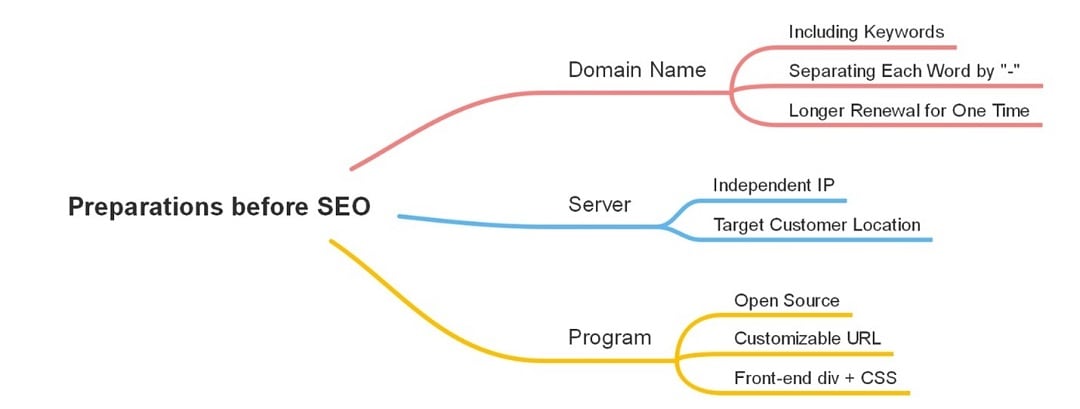
Maybe many of you don't know that before you do SEO, you need to prepare the Domain Name, the Server, and the Website Programs, which are necessary factors for SEO search engines.
Operation Process
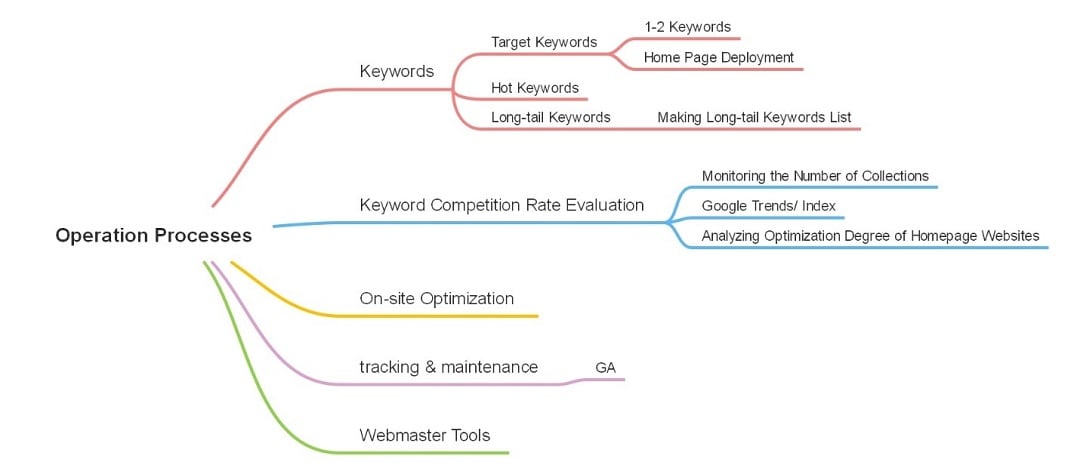
First, you can take a look at the operation processes of SEO.
In this chapter, the author divides the operation processes into searching for keywords, evaluating keyword competition rate, on-site and off-site optimization of the website, website tracking, maintenance, and using webmaster tools to manage sites.
Keywords Research
In search engine optimization, keywords are the gist. Users find the website through keywords, and you can identify them by finding these keywords.
In this chapter, the author shares the argument forms of keyword identification and tools for keyword expansion.

On-Site Optimization
When it comes to SEO and search engine marketing, many people first think about how to optimize their website ranking, because a higher ranking will lead to more traffic and exposure.
So when doing search engine optimization, it is mainly divided into on-site optimization and off-site optimization.
What this chapter shares is the on-site optimization, and what are the key points of the on-site optimization? Just look at the detailed mind map below.

Off-Site Optimization
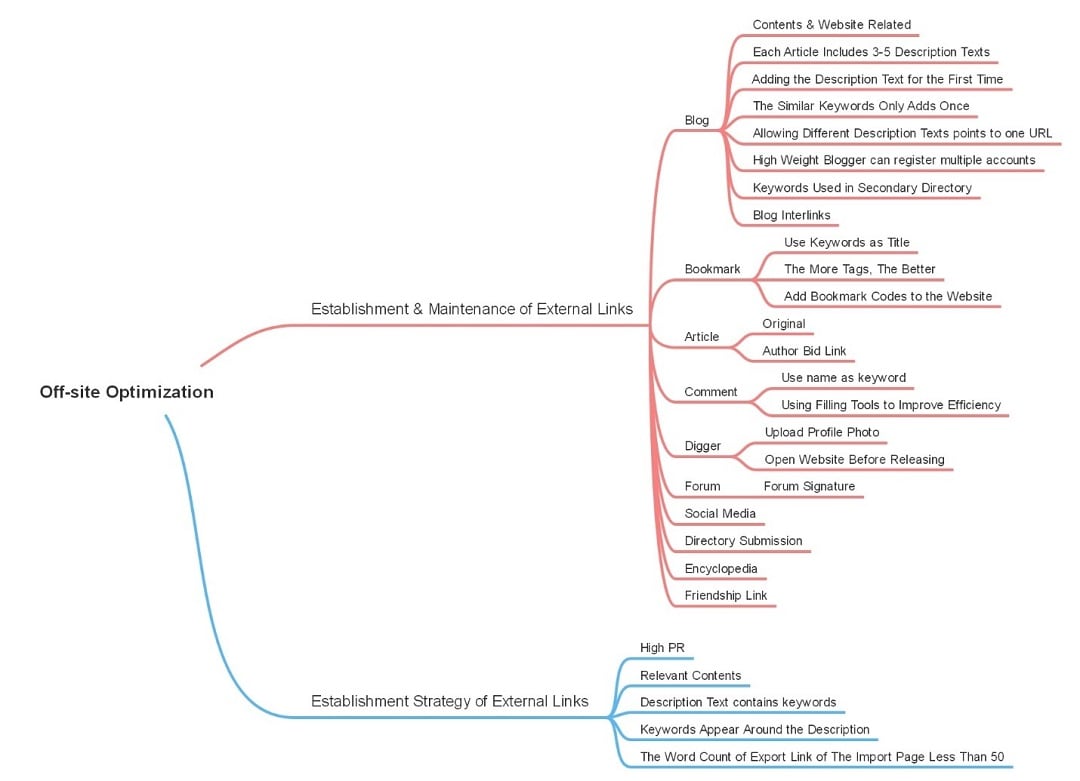
The off-site optimization is mainly divided into the establishment & maintenance of the external link and its strategy. To do an excellent job on off-site optimization, you should focus on these two points.
In the mind map of this chapter, the author also shares the establishment of the external links on blog, bookmark, article, comment, and digger.
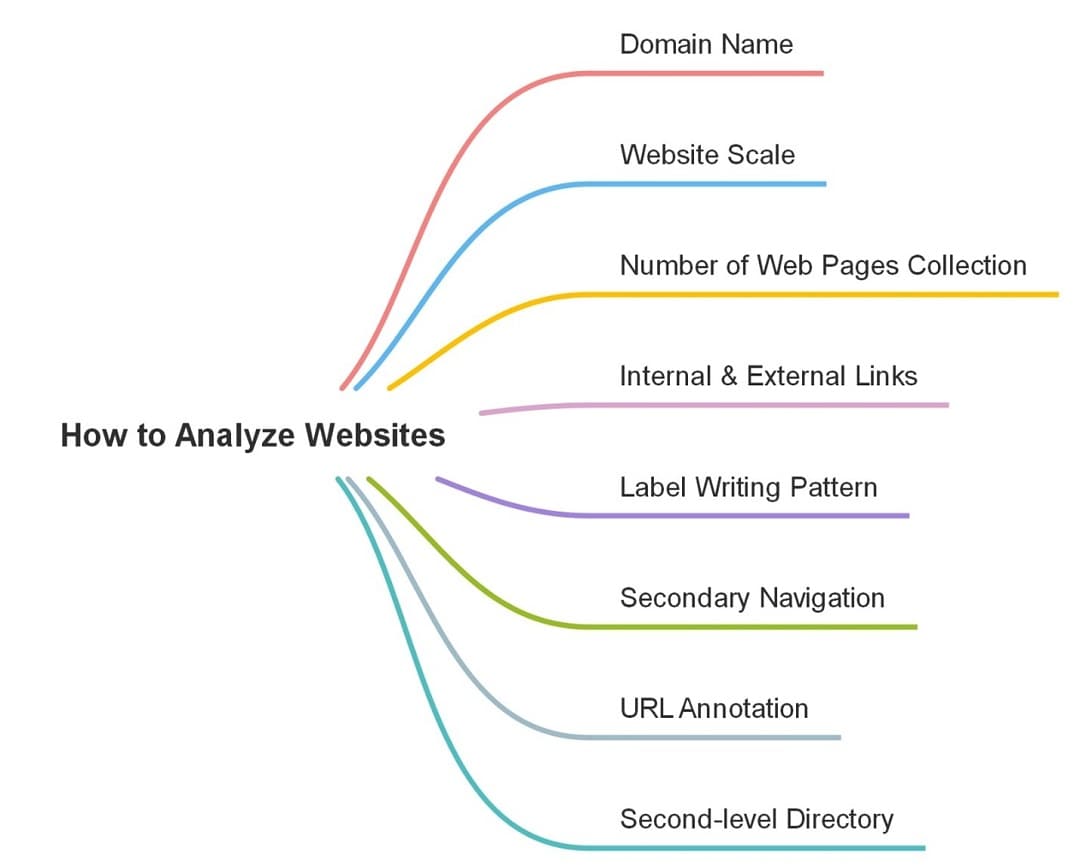
How To Analyze Websites?
The author says that you should not only learn search engine optimization but also how to analyze websites to determine if they are of high quality.
You can analyze it from the domain name, website scale, the number of web pages collected, internal and external links, etc.
Examples of SEO Mind Maps
This article has used mind maps to explain key ideas in SEO writing. From the examples, you’ve probably had an idea of the benefits of a mind map – they allow you to see the key details in an instant.
So, in this section, you can try seeing some examples of how mind maps can be used as you do the actual work of SEO writing.
These may range from concept maps or actual SEO workflow charts that can serve as a checklist.
These are mostly taken from the Mind Map Gallery of Wondershare EdrawMind – a platform where you can take inspiration from mind maps created by other SEO writers like you who need visual tools to speed up work.
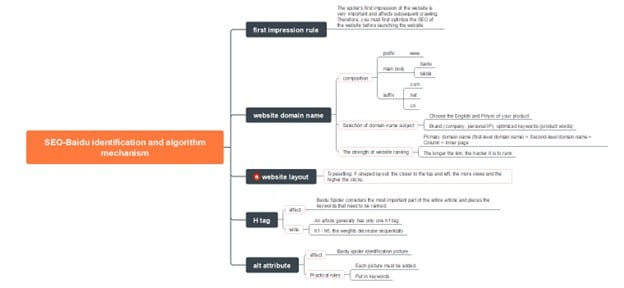
SEO Front End Optimization Mind Map
First on our example list is this sort of SEO workflow mind map specifically for the front-end experience. For writers tasked with improving website copy, this can be a big help because it’s already a guide on its own.
As you can see, it’s complete with the necessary copies you need to fill out on a website, like H tags and alt attributes. You can edit it to add the actual copy and show it to your clients.


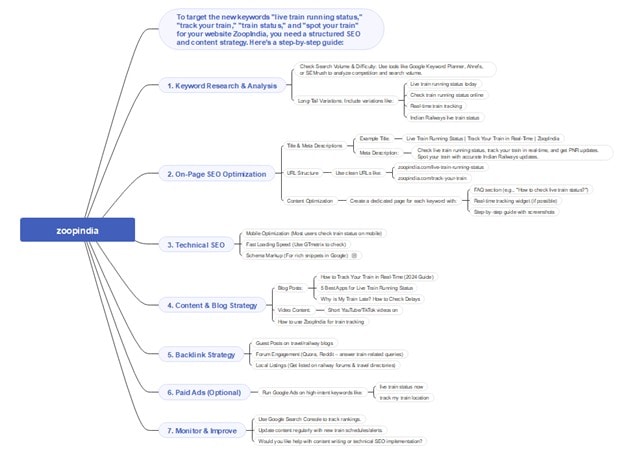
SEO Writing Guide Mind Map
Second is an actual SEO writing guide from a team called Zoopindia. It has tried and tested techniques for different SEO contexts such as On-Page, Technical, Content, and more.
This is great for making presentations, especially if you’re pitching an SEO proposal or package to a client. You can add all your ideas for a certain brand inside the mind map, depending on the context.
SEO User Experience Mind Map
Lastly, here’s an SEO user experience mind map with the actual content you have to do. For example, it starts with the Column, the results sought, the actual article, and more.
If you’re starting as an SEO writer, this is a great place to start. You can review this and adopt the techniques, tips and tricks provided throughout the mind map.

Explore More Examples or Make One for Free
If you’d like to explore more mind maps related to SEO writing and optimization, try checking out the Mind Map Gallery of EdrawMind.
First, you’ll have to open EdrawMind and go to the Gallery on the left panel.
 Try the app & get 500 free AI tokens


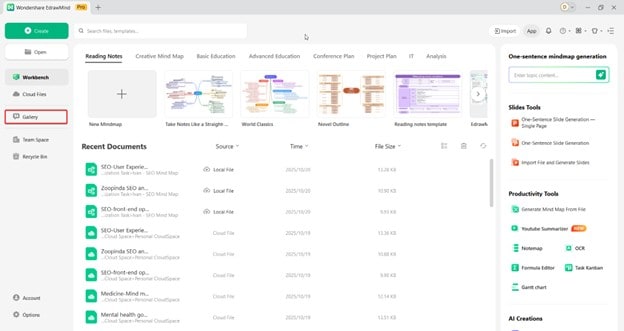
In the search bar, type “SEO,” “content strategy,” or “website optimization.”
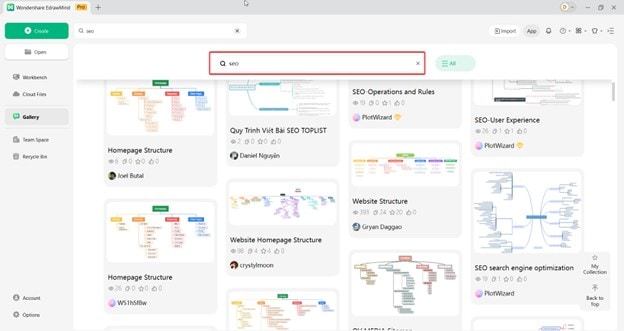
You’ll find numerous templates made by SEO writers, marketers, and digital strategists.. If you see a map that matches your workflow, click Duplicate to open and customize it immediately.

You can modify headings, colors, and layouts to fit your own process. For example, if you’re managing on-page SEO, link-building, or keyword mapping, you can use the templates by editing them.
How To Make an SEO Writing Mind Map for Free
If you prefer building your own from scratch, you can easily do so using EdrawMind’s creative tools. With its wide range of symbols, themes, and AI assistance, structuring your SEO process becomes more efficient.
Step 1:
Double-click the Main Idea node and name it according to your topic. For example, “SEO Content Strategy” or “Client Content Strategy.”
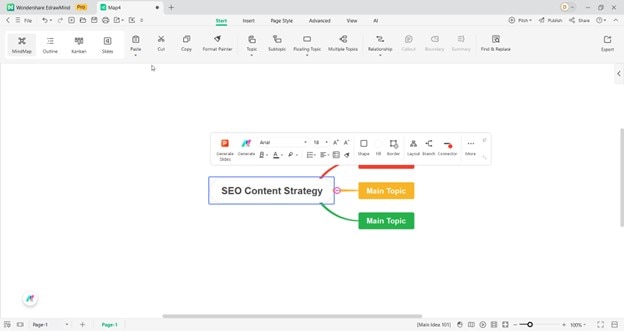
Step 2:
Add Main Topics such as Keyword Research, On-Page Optimization, Content Plan, and Performance Tracking. Under each, create Subtopics like Meta Tags, Alt Texts, or Target Keywords.
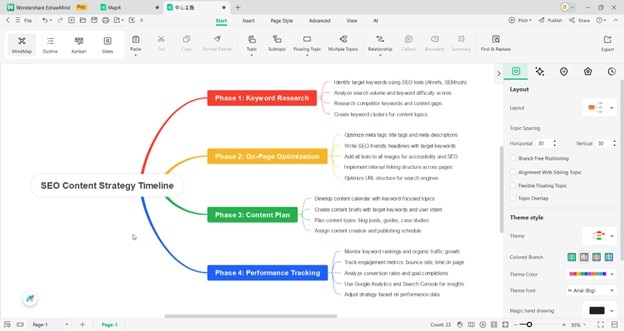
Step 3:
Once the structure is complete, enhance it with design tools. Change fonts, lines, or colors, and add icons to distinguish tasks. You can also import your SEO checklist directly into nodes.

Step 4:
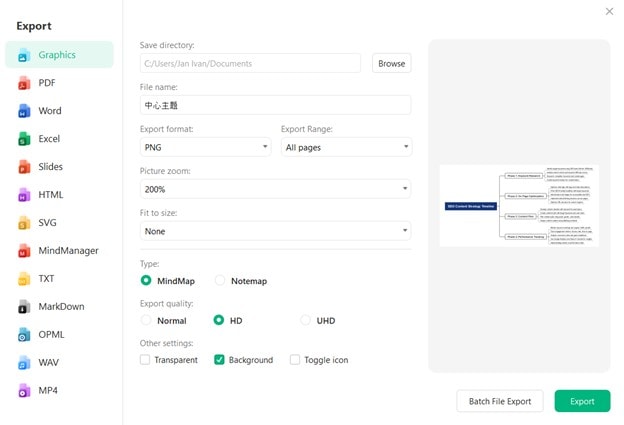
Finally, export your finished SEO mind map as a PDF, image, or editable PPT to include in your reports or team presentations.
 EdrawMind
AppsEdrawMind Online
EdrawMind
AppsEdrawMind Online