
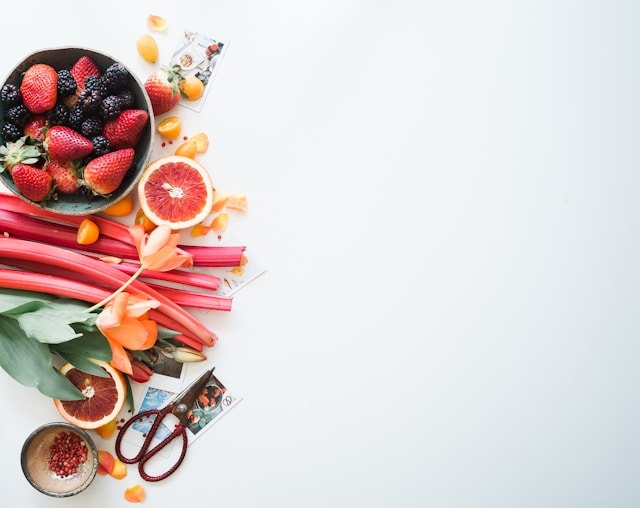
Food is the primary source of energy to sustain on planet Earth. What if all available kinds of food are healthy?
Well, this is not true, as you know, each meal has different components in terms of proteins, fats, minerals, vitamins, and carbohydrates.
Hence, here are the top 10 food mind map examples for a healthy diet in this article.
In this article
Calories vs. Nutrition: What Is More Important for a Healthy Diet?
The unit of energy is defined as a calorie, which can raise the temperature of 1 g of water by 1˚C. Nutrition refers to the various components a food provides, such as proteins, fats, carbohydrates, minerals, and vitamins.
Usually, the short term ‘calorie’ is taken for the purpose. But, kcal (kilocalorie) is the general term used on food packages to indicate that it can raise the temperature by 1˚C for 1kg of water.
Every food contains a specific amount of calories, i.e., energy. Even you can get empty calories from food that has zero nutritional value.
Depending on age, sex, and activity levels, you need a certain number of calories as part of your regular diet, exceeding which can lead to weight gain. Thus, reduced calorie intake helps in weight loss.
So, the nutritional value intake via means of calories is more important. Foods that provide empty calories, such as added sugars and solid fats, are also high-fat options that can have a drastic impact on your measurements.
For a healthy diet, consider taking food rich in the required amount of calories, while the thermic effect is not equivalent for all foods. Take, for instance, fructose and glucose.
Both of them have the same number of calories, but the way the hormones process them is entirely different. Fructose lets you stimulate the Ghrelin hunger hormone, which is not the case with glucose.
Thus, a high intake of fructose will make you feel hungrier.
Similarly, other healthy facts are described below through representation on a food mind map. A mind map helps you provide the most straightforward way of indicating complex ideas very quickly.
Food Mind Maps
Check out these top 10 food mind map examples for reference on getting health information.
Types of Food
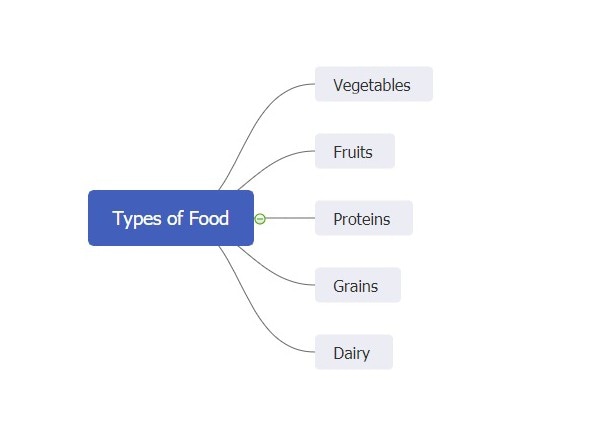
The types of food include both drinks and solid material taken by living things. This food is a combination of components that serve as its energy sources, including proteins, fats, carbohydrates, and vitamins.
As per USDA MyPlate or MyPyramid diagrams, you can categorize food into five major groups: vegetables, fruits, proteins, dairy, and grains.
Healthy Diet Daily Plan

You should consider the daily eating plan for a healthy diet. Well, you need to switch over to some clean eating foods containing the required amount of calories and nutrition.
It should include all types of food that have been mentioned in Example 1. Based on your age, activity levels, and sex, you can decide on or consult for a daily meal plan.
For reference to what a healthy diet looks like daily, this guide showed a one-day sturdy food mind map.
Nutrition of Different Foods
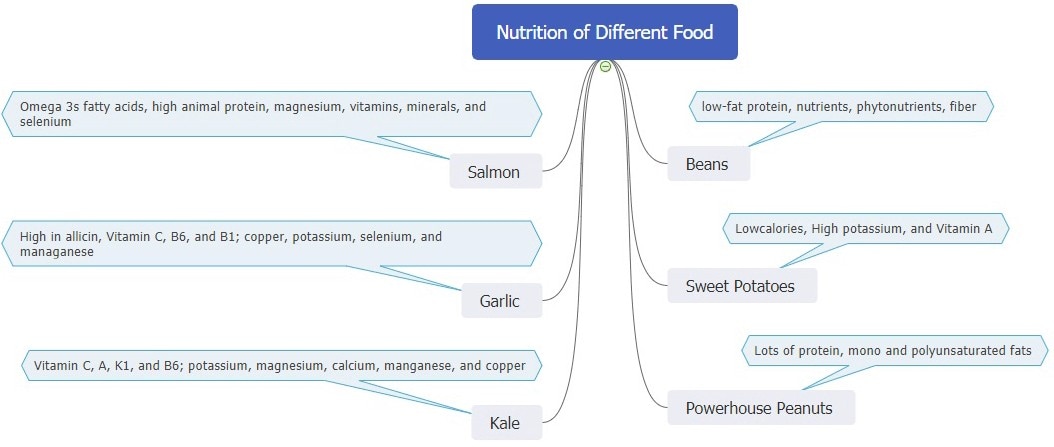
There is a mixed intake of food nutrition. Proper nutrition means a balanced diet and vice versa. Given the above, the article has listed six nutrition-rich foods with their brief nutritional content.
The meals mentioned above are not only delicious but also super easy to prepare if you are looking to start with a nutrition-packed diet. You can also call them nutritionists’ favorite foods.
As you increase the number of nutrients in your diet, it further makes sense to live on a calorie budget wisely.
Calories of Different Foods
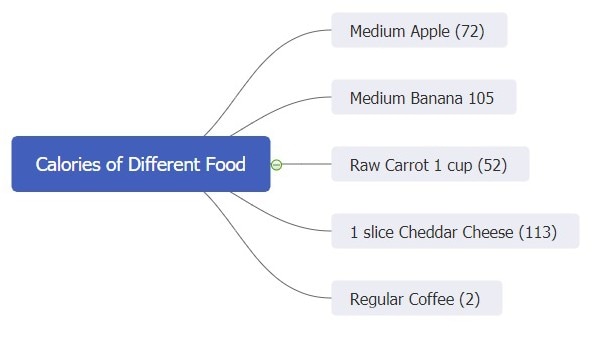
Different foods have different calorie counts, which will be illustrated using this food mind map example. This chart of calorie intake is especially for weight loss programs.
Various food calculator apps are also available in the market, where you can easily find out information about the number of calories a particular food item contains.
Salad Recipe
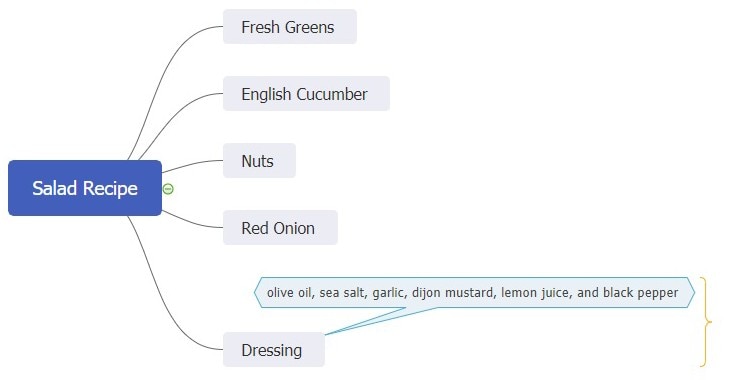
Salad is a regular and tasty recipe you can have with any meal. Some veggies, fruits, and grains combined can make a whole lot of nutrient-packed foods rich in good fats, vitamins, minerals, and other components.
The salad recipe should be your priority in meal preparation. The above mind map lists some ingredients you can use to make a great salad.
Fitness Recipe
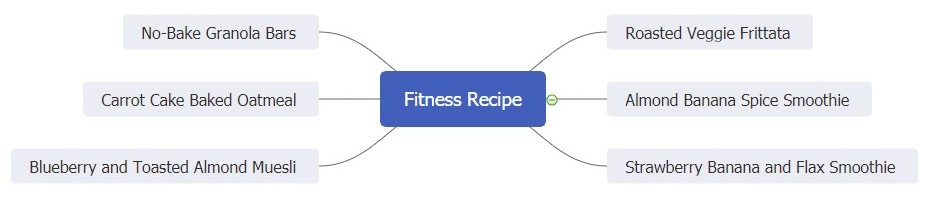
There are lots of fitness recipes available that can help you achieve different goals, such as weight loss, muscle gain, or skin-related problem treatment. You should start the day with the fresh fitness recipes listed above.
Different Cuisines
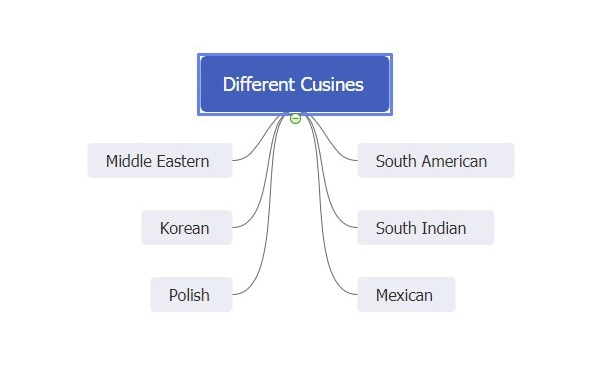
When talking about cuisines, Britain is known as the top place for delicious foods. If you are food-loving and adventurous enough, try these new and different cuisines listed in the above food mind map.
For a healthy diet, you should try out various cuisines rich in nutrients.
French Cuisine
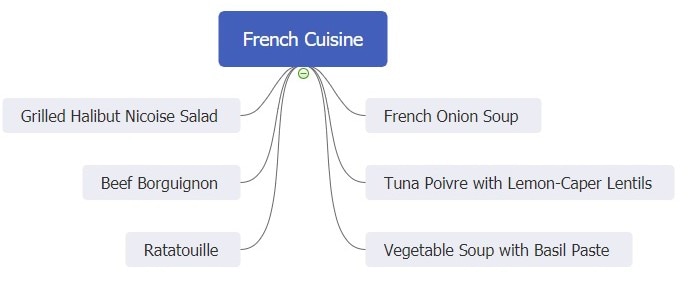
French Cuisine is one of the most famous cuisines you should try for healthy recipes. Well, the cuisine is also discouraged because of the high amount of calories and butter.
But, there is more to the cuisine that lets you shift over the French cuisine healthy recipes, as stated above.
Different Dessert
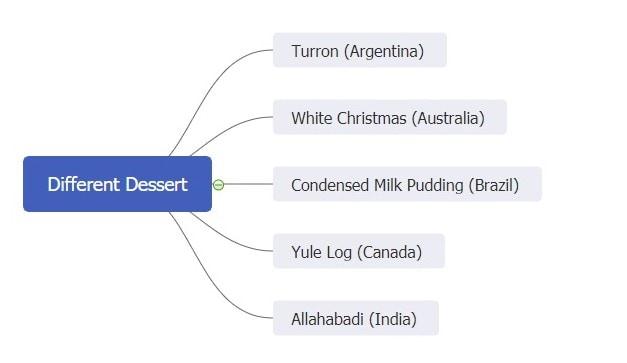
Desserts are one of the special foods to complete your meal. No food is ever complete without a dessert. These healthy desserts, as shown above, get the most appreciation and laud at the big events.
Popular Snacks
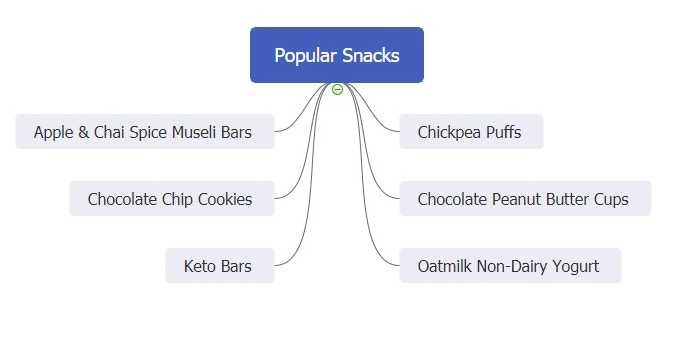
You should make popular healthy snacks this New Year and make it a habit to cut down on those sugary or spicy snacks.
On the other hand, dairy products should also be avoided if you want to lose weight while adopting a healthy diet.
Mind Map Examples for Food Topics
Wondershare EdrawMind is an AI-powered mind mapping tool for brainstorming ideas, planning, team collaboration, and note-taking. Inside its Mind Map Gallery, you’ll find hundreds of templates shared by users, educators, and professionals.
Each one highlights the tool’s flexibility in various contexts, including food science, branding, and restaurant studies. The gallery isn’t just for inspiration. You can edit any template, switch colors, or build on an idea to fit your project.
Below are a few food-related mind maps from EdrawMind:
Food Additive Advantages Mind Map
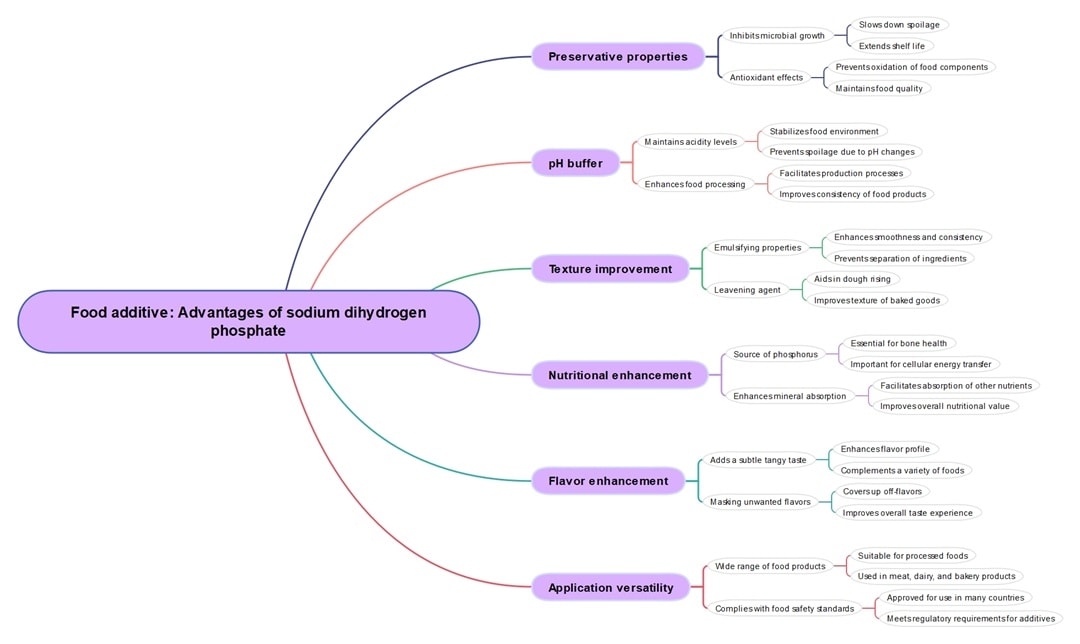


If you study food science, this mind map template is a good start. It breaks down the uses of sodium dihydrogen phosphate, yes, that long-named additive in processed foods.
You’ll see exactly how it helps with pH balance, texture, flavor, and shelf life. The best part is how it separates every role, allowing you to connect cause and effect quickly.
Use this when you’re building lab reports, preparing for a presentation, or comparing additives in a paper.
Vegan Diet Benefits Mind Map
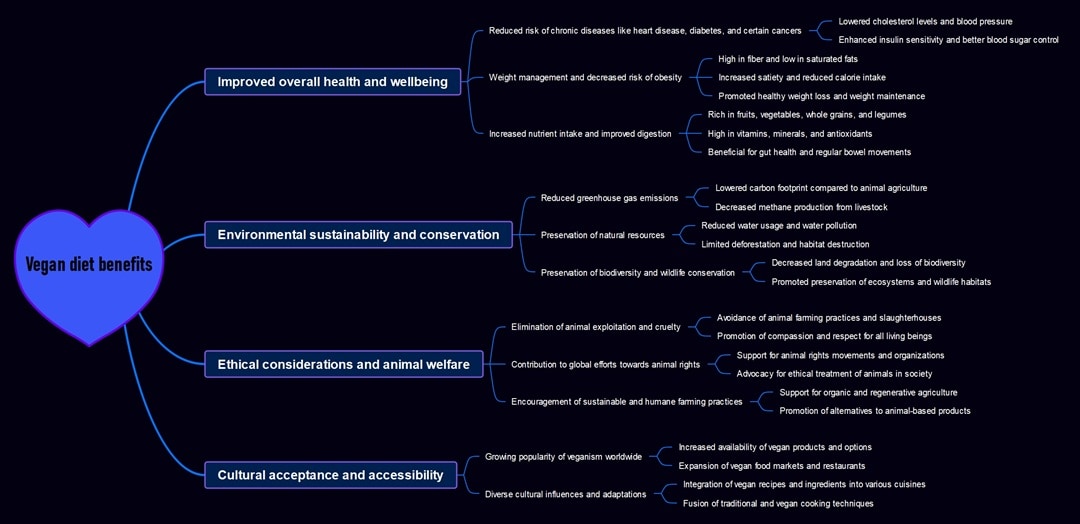
More than a reminder that “plants are good for you,” this vegan diet benefits mind map shows how health, sustainability, and culture come together.
You can see how factors like lower cholesterol are linked to bigger outcomes, such as reduced carbon emissions and better animal welfare.
The layout uses colors to separate ideas while showing their relationships. It fits projects like wellness blogs, school papers, or eco campaigns.
Botanical Classification of Fruits Mind Map
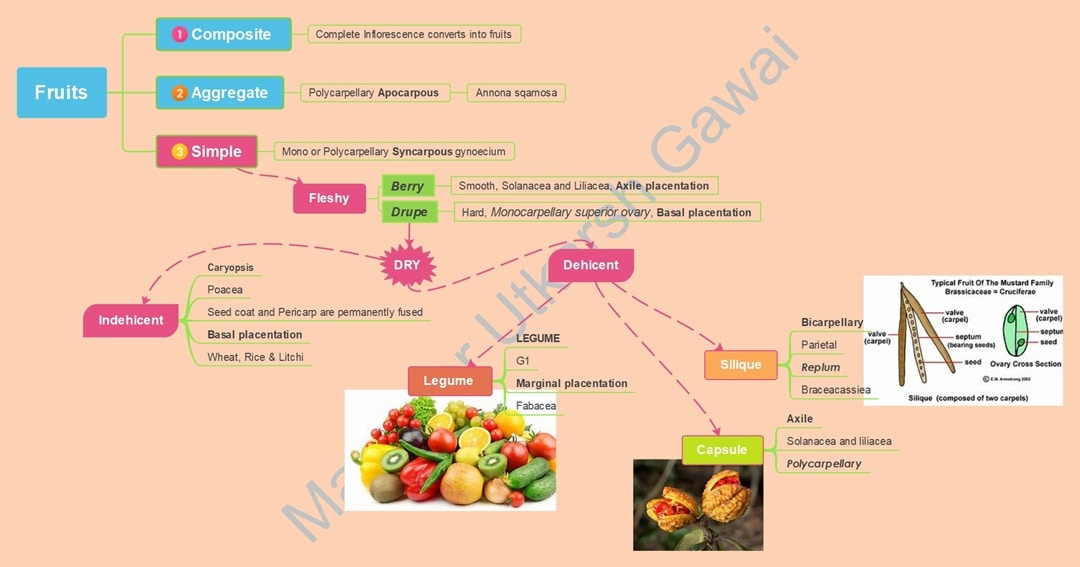
Studying plant science? This mind map template makes fruit classification feel logical instead of memorized. It starts broadly, Composite, Aggregate, and Simple, and branches out into details.
The visuals make it easy to follow how each type connects to real fruit examples, such as rice or litchi. It’s an ideal study aid for biology students or teachers who want something that sticks in memory.
Organic Food Brand Mind Map
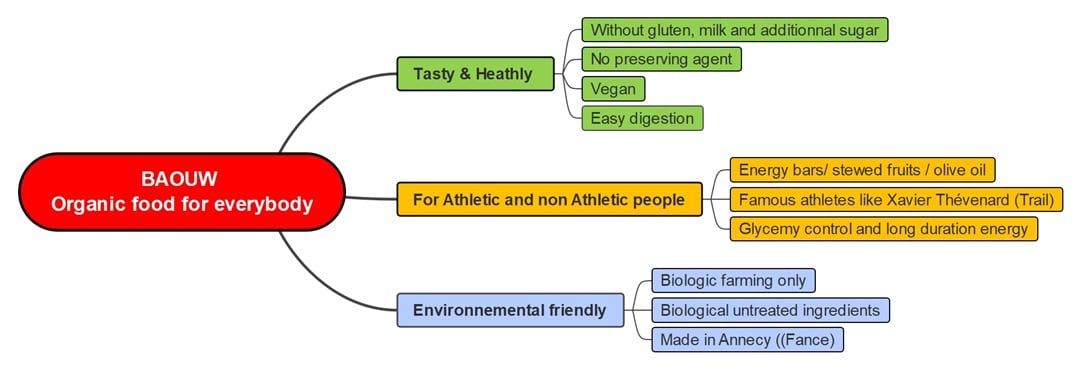
Marketing meets nutrition in this brand analysis for BAOUW Organic Food. Branches emphasize the company’s key values: clean ingredients, vegan recipes, and eco-aware practices.
They also illustrate who the products serve, from athletes to regular consumers. For marketers or entrepreneurs, it’s a smart reference for mapping out product identity and brand positioning.
Restaurant Classification Matrix Map
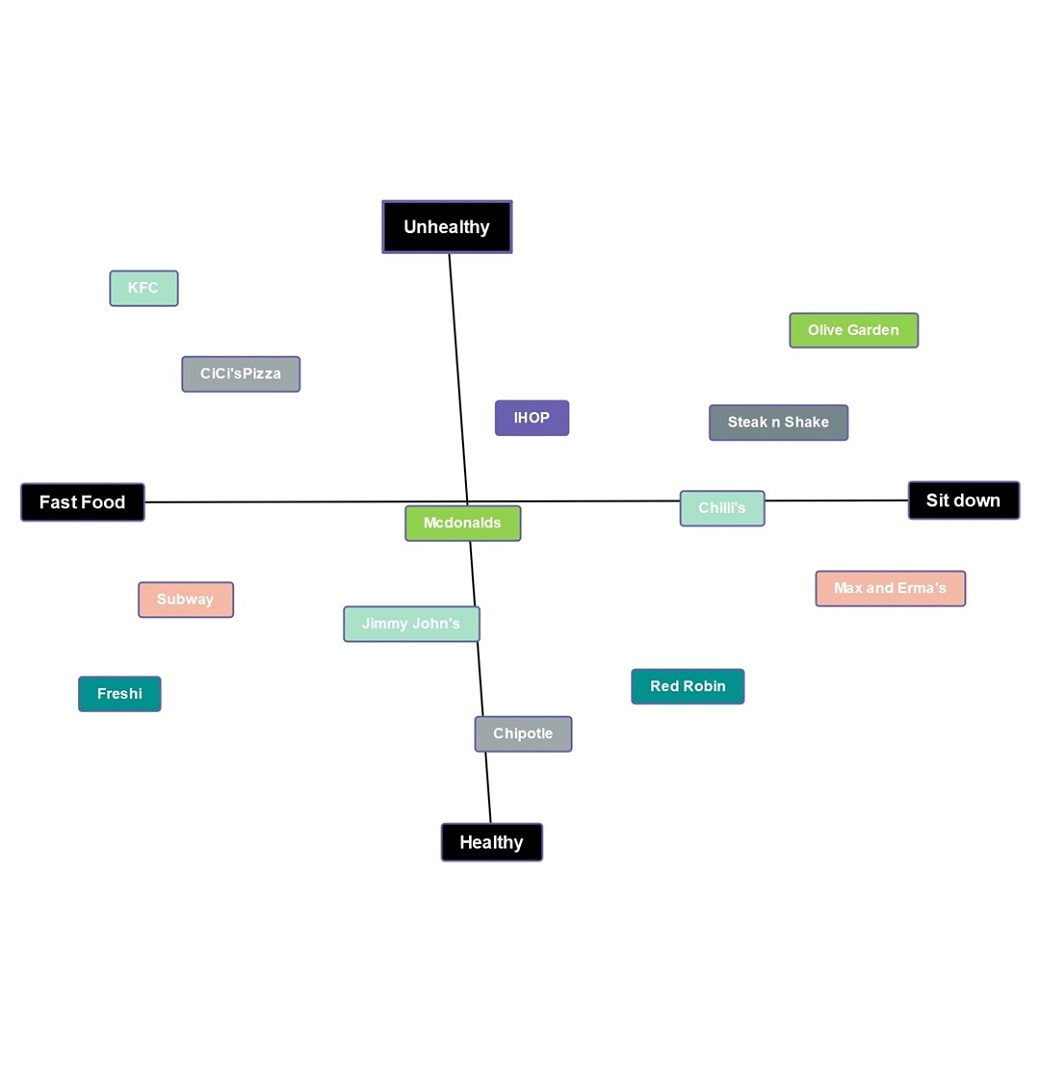
Unlike traditional mind maps, this one uses a matrix layout to compare fast-food and sit-down restaurants. The horizontal axis shows service style, while the vertical axis shows nutritional value.
You can spot where brands like McDonald’s, Chipotle, and Olive Garden land between “Fast Food” and “Sit Down,” or “Healthy” and “Unhealthy.” It’s a clever way to visualize market positioning, especially for food business analysis or restaurant research.
How to Explore More Food Mind Map Templates on EdrawMind?
If you want to explore more designs like the ones above, head to the Mind Map Gallery in EdrawMind. You can browse by categories, preview the layouts, and duplicate any mind map to make it your own.
Step 1
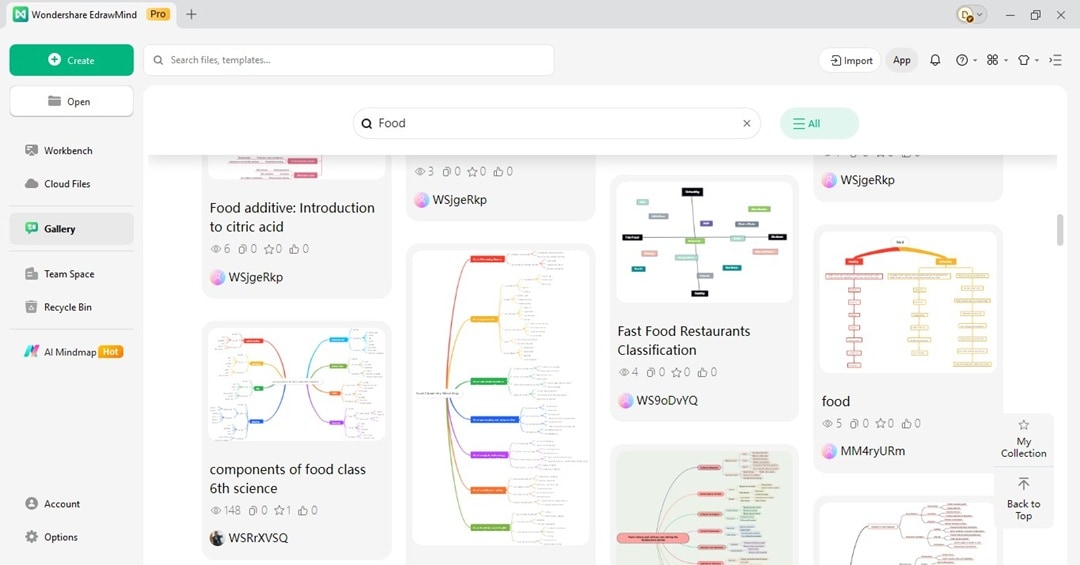
Go to the Gallery menu on the left side.
 Try the app & get 500 free AI tokens


Step 2
In the search bar, type keywords like food science, nutrition, or culinary research.
Step 3
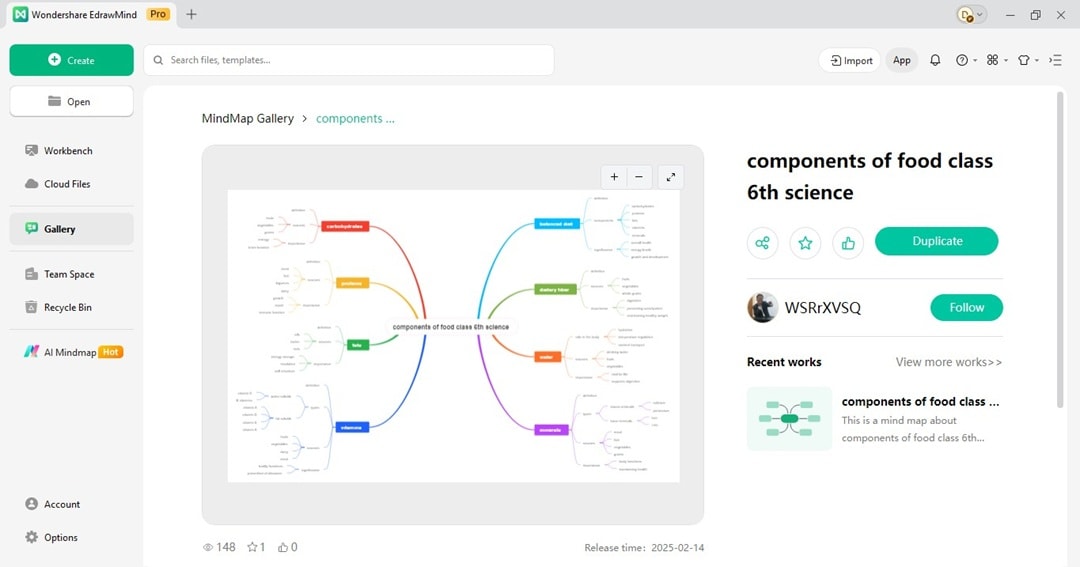
Duplicate on any template that catches your eye to open it in the EdrawMind canvas editor and begin customizing it.
How To Plan Food Content Using a Mind Map
For anyone who writes, teaches, or manages food-related content, creating a mind map in EdrawMind makes planning more efficient. Follow these steps to make a mind map for food content:
Step 1
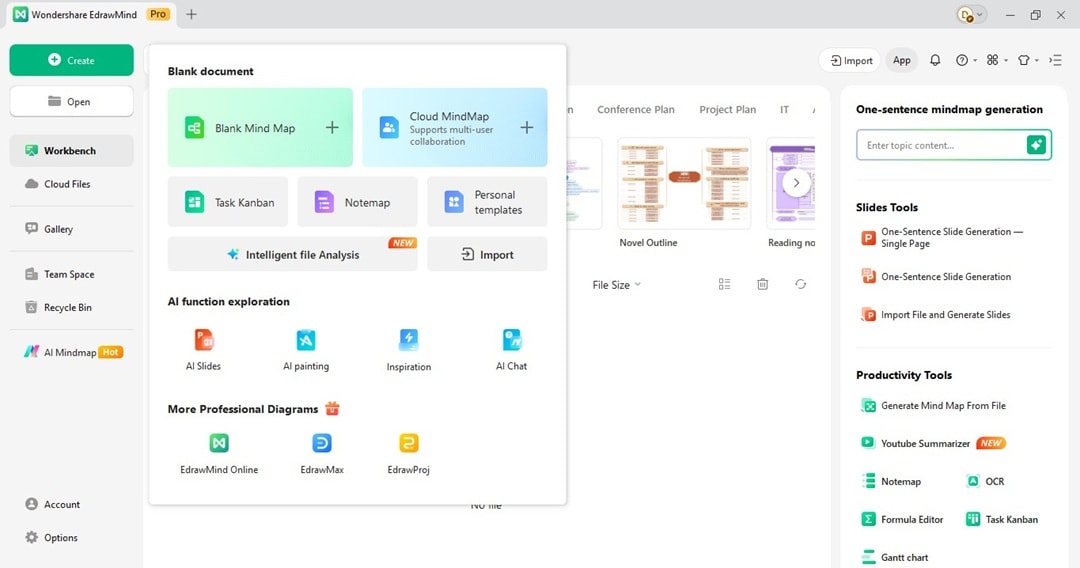
Click Create on the top left side navigation pane, then choose Blank Mind Map to start from scratch.
You can also upload an existing file or use AI to generate a mind map from a text prompt.
Step 2
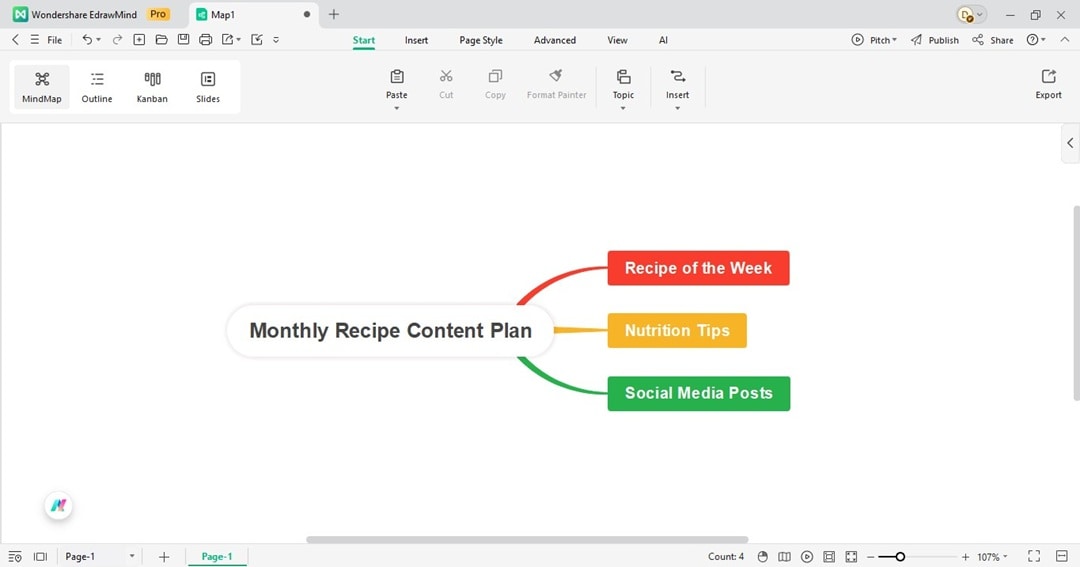
Add the main idea and input the main topics for your primary content types.
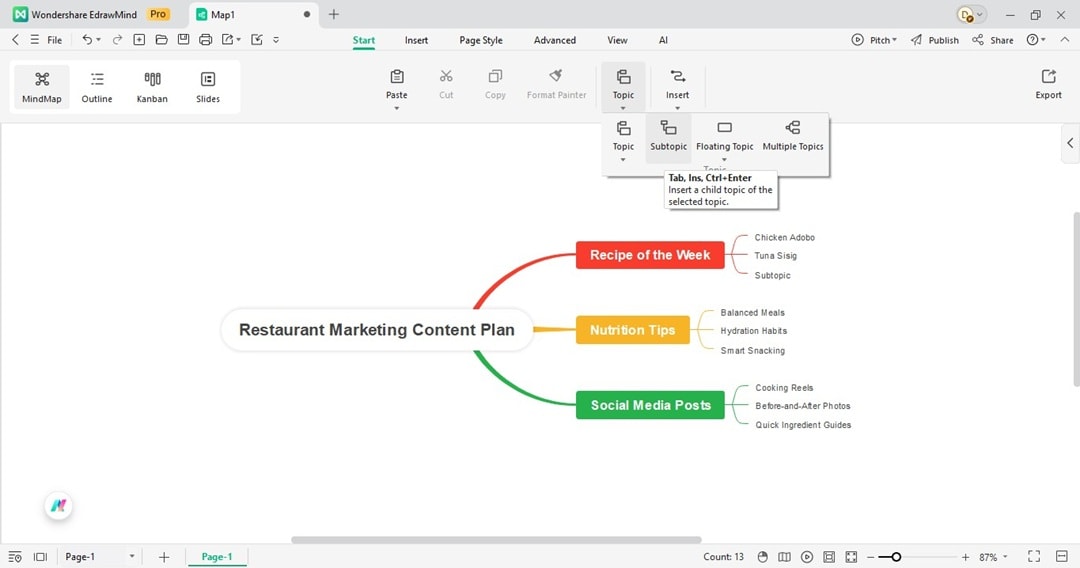
Example: Recipe of the Week, Nutrition Tips, and Social Media Posts
Step 3
Add more details by placing subtopics under each branch. Click on a topic, navigate to the top menu, and choose Topic, then Subtopic from the dropdown list.
- Under Recipe of the Week: add Chicken Adobo, Tuna Sisig, and Garlic Fried Rice.
- Under Nutrition Tips: add Balanced Meals, Hydration Habits, Smart Snacking.
- Under Social Media Posts: add Cooking Reels, Before-and-After Photos, Quick Ingredient Guides.
Step 4
Mark recipes by category (breakfast, dinner, dessert) or track which ones are published.
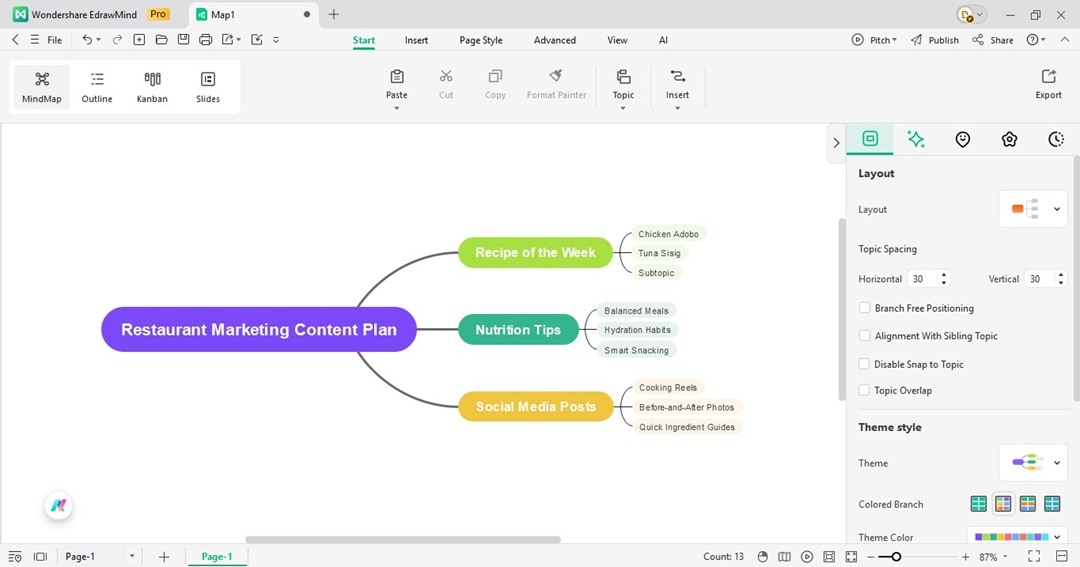
Open the right panel and from here, customize the mind map's Layout, Theme Style, Font, and more.
You can also insert icons to show Priority, Progress, and Week.
Tip: Use EdrawMind AI to brainstorm content angles, suggest titles, or group related recipes. To do this, select a topic or subtopic on the mind map, right-click, and then go to AI-generated content.
Step 5
Once finished, export your mind map as an image, PDF, or editable file to share with your team or publish online.
 EdrawMind
AppsEdrawMind Online
EdrawMind
AppsEdrawMind Online