


What exactly keeps British Petroleum (BP) running as one of the world’s most powerful energy giants? Think of it like this, it’s not just because of its oil rigs or refineries, but rather the way the company is structured. Behind each big decision is a team that works together like clockwork, whether they are top executives or engineers in the field.
Our British Petroleum organisational chart shows exactly how this teamwork happens. It takes a look at how the company balances its traditional oil business with new investments in cleaner energy. In this guide, we’ll break down British Petroleum’s organisational structure and see how it helps one of the best names in energy stay ready for the future! Let’s get started.
In this article
British Petroleum Organisational Chart
British Petroleum is one of the largest energy companies in the world. It is known for its global presence and long history in oil, gas, and renewable energy. Founded in 1909, it has evolved from a traditional petroleum company into a modern energy powerhouse.
British Petroleum (BP) operates strictly through a clearly defined hierarchy for the BP company that ensures accountability and transparency are guaranteed across its operations. The company’s organisational chart clearly reflects how different departments and officers work together to bring together BP’s core values.
With thousands of employees operating across more than 70 countries, BP uses a matrix-style system that merges leadership into its various regions. This system allows the company to stay adaptable to any changes.


The Leadership Structure of BP
The BP company hierarchy makes sure that all responsibilities are well distributed across the organisation. The Board of Directors includes the Chairman, Managing Director, and several Directors who come together to make various strategic decisions and supervise the company’s overall performance.
Several independent units play a crucial role and support the brand from beneath. These include the Compliance Unit, Risk Control Unit, and Internal Audit Unit, all of which help BP maintain ethical accountability.
The Director General is positioned directly below the board and leads the company’s main day-to-day operations. This role connects high-level decision-making with execution, which means that smooth communication is guaranteed between the departments.
Executive Team Composition
The executive framework at BP is specially designed to keep risk management and honesty at its core. Here is the structure, which features several key leadership roles:
Board of Directors:
- Elaine Skinner-Reid (Director)
- Maria Fernandez-Arguelles Velasco (Managing Director)
- Andres Guevara de la Vega (Chairman)
- Vicente Mut (Director)
- Arnaud Cruizit (Director)
Director General:
- Maria Fernandez-Arguelles Velasco
Compliance and Control Units:
- Compliance Unit: Graciela Gonzalez Camero
- Risk Control Unit: Jordi Valeri Basolo
- Internal Audit Unit: Independent
This layout provides BP with a well-managed team that is masterful at decision-making.
Leadership of the Department
Under the Director General, the British Petroleum organisational structure is divided into several main departments. Each one will independently focus on a specific area that keeps the company running smoothly. This setup will help BP stay organised and compliant with both business and environmental standards. Here’s how the main BP departments work:
- Legal department: This team makes sure BP follows all local and international laws. It directly handles contracts and legal advice for daily operations. This part of the management structure at BP protects the company.
- Corporate legal: It handles the internal matters for BP, such as contracts, governance, and company rules.
- Regulatory legal: It focuses on making sure BP follows all environmental and energy regulations. It works closely with various government agencies to maintain all kinds of transparency.
- Commercial department: This team manages BP’s business activities. It will work with different clients, build partnerships, and help the company grow. It’s one of the key parts of the BP leadership team that keeps BP connected to its customers.
- Investment advice department: This department mainly studies market trends and gives advice on where BP should invest.
- Finance and Account (ARC) Compliant: This team manages BP’s money. They will handle financial reports, budgets, and audits to make sure everything stays transparent.
Also, BP has a few other important roles, like:
- The AML Compliance Officer prevents any money laundering from occurring within BP.
- The Complaints Service/Client Defence Unit listens to customers and resolves their issues.
- The Internal Control Unit will end up checking that all departments follow BP’s internal rules and maintain high standards.
Co-Founder Leadership Model
BP wasn’t founded by just one person (we know!). It was built through the teamwork and shared vision of many leaders who came together to shape the company’s future. Today, the company still follows this same process. Each department, whether it’s compliance, audit, legal, or finance, will work closely together under one system.
Why Does British Petroleum’s Structure Work?
The British Petroleum organisational structure works because it’s purely built around teamwork and clear communication. Through that, each department clearly knows its role and how it will end up connecting to the company’s bigger goals. This clear chain of command will help BP stay efficient, and it doesn’t really matter how large its operations are.
The BP company hierarchy also encourages complete and utter collaboration. Instead of the departments working separately, everyone shares ideas and information across the teams. This makes it a whole lot easier to solve problems and can help it adapt to market changes.
Another reason that the BP management structure is so effective is that it perfectly balances leadership and accountability. In simple words, each department leader has the freedom to make decisions, but still follows the core strategies set by BP.
The BP leadership team also focuses on long-term goals rather than getting short-term profits. By combining the ideas of each team, BP’s structure keeps the company strong and ready for the ever-changing market.
How to Make a Similar Organisational Chart?
Creating an organisational chart like the British Petroleum organisational structure helps you to understand just how departments, roles, and leadership connect within a company. Here’s how you too can design one:
- Collect company information: You should start by gathering the basic details such as key departments, leadership titles and reporting lines. Take note of who manages what area, like finance or marketing.
- Identify the different levels of hierarchy: Just like the company hierarchy at BP, you need to outline the top executives first, then move your way down to department heads and team members.
- Create a simple layout: Choose a layout that fits the company size perfectly. A top-down chart would work best for large organisations.
- Add names and positions: Start filling in the chart with leadership roles and team titles. You should use connecting lines to show who is reporting to whom.
- Include visual elements: Try to add logos, department colours, or photos of the BP leadership team so that your chart is easy to read.
Steps to Make an Organisational Chart
Most people will find themselves stuck when drawing organisational charts by hand. Firstly, it is really time-consuming. Secondly, it needs regular updates. You can rely on various organisational chart makers for help. Here, I have used EdrawMind to create a British Petroleum organisational chart.
 Try the app & get 500 free AI tokens


Step1 Open the Tool and Get Started
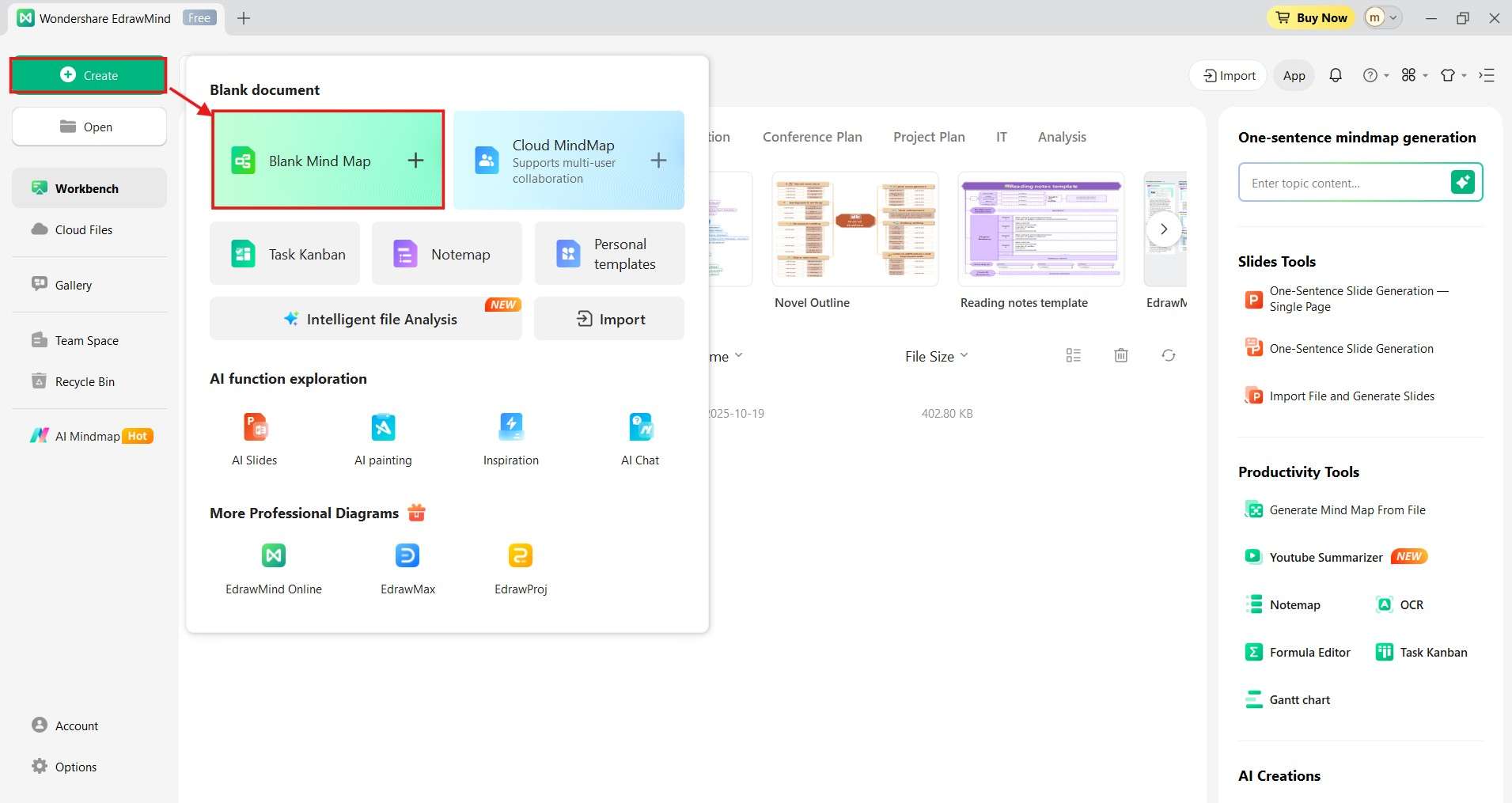
Start by launching the application. Click Create and then select the Blank Mind Map option.
You can also start from a template by selecting the Gallery button. There, you will come across various templates that you can choose from.
Search for an Organisational Chart and select a pre-made template to get started. For this guide, we will start from scratch.
Step2 Select Shape and Colours
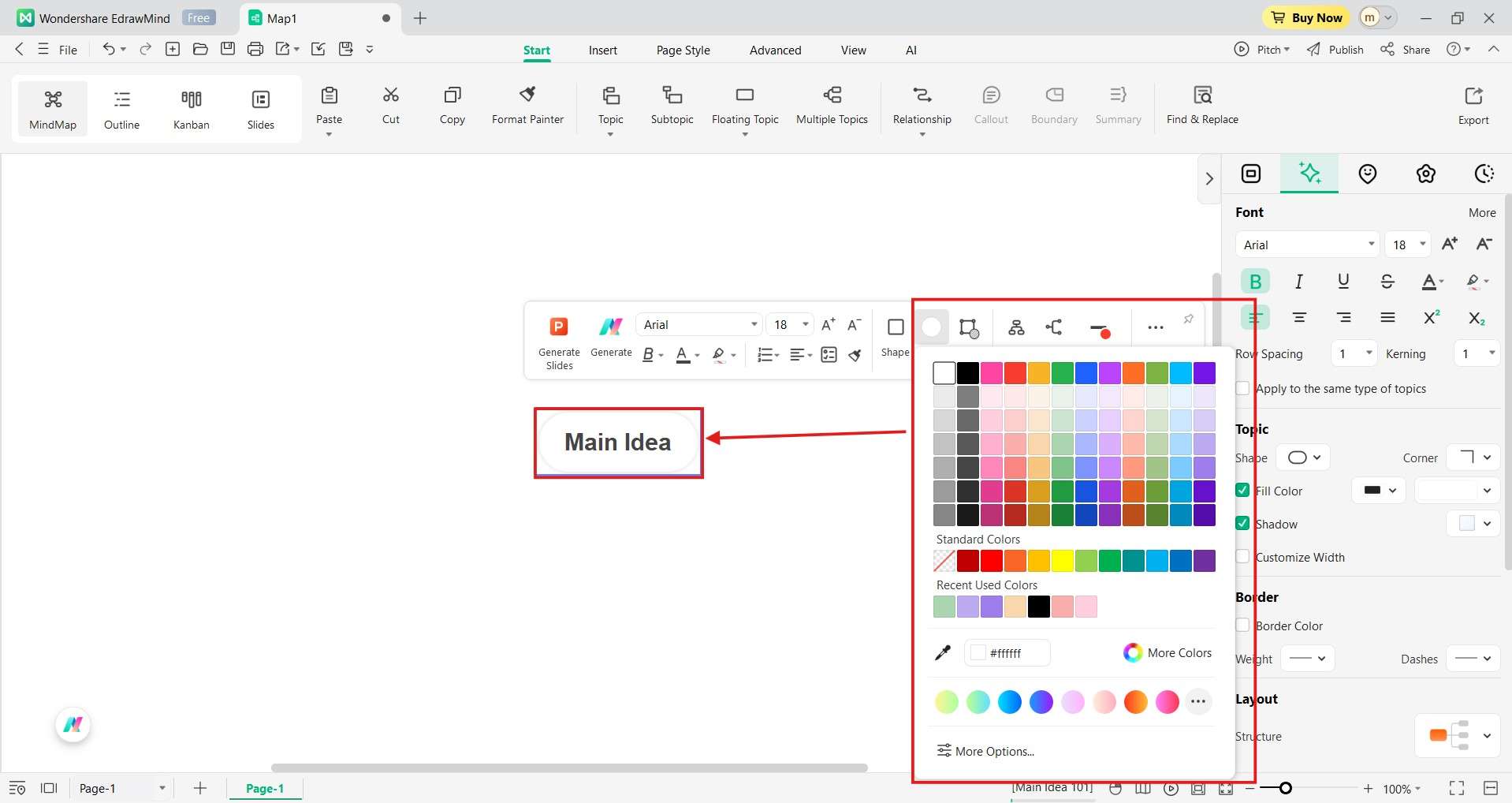
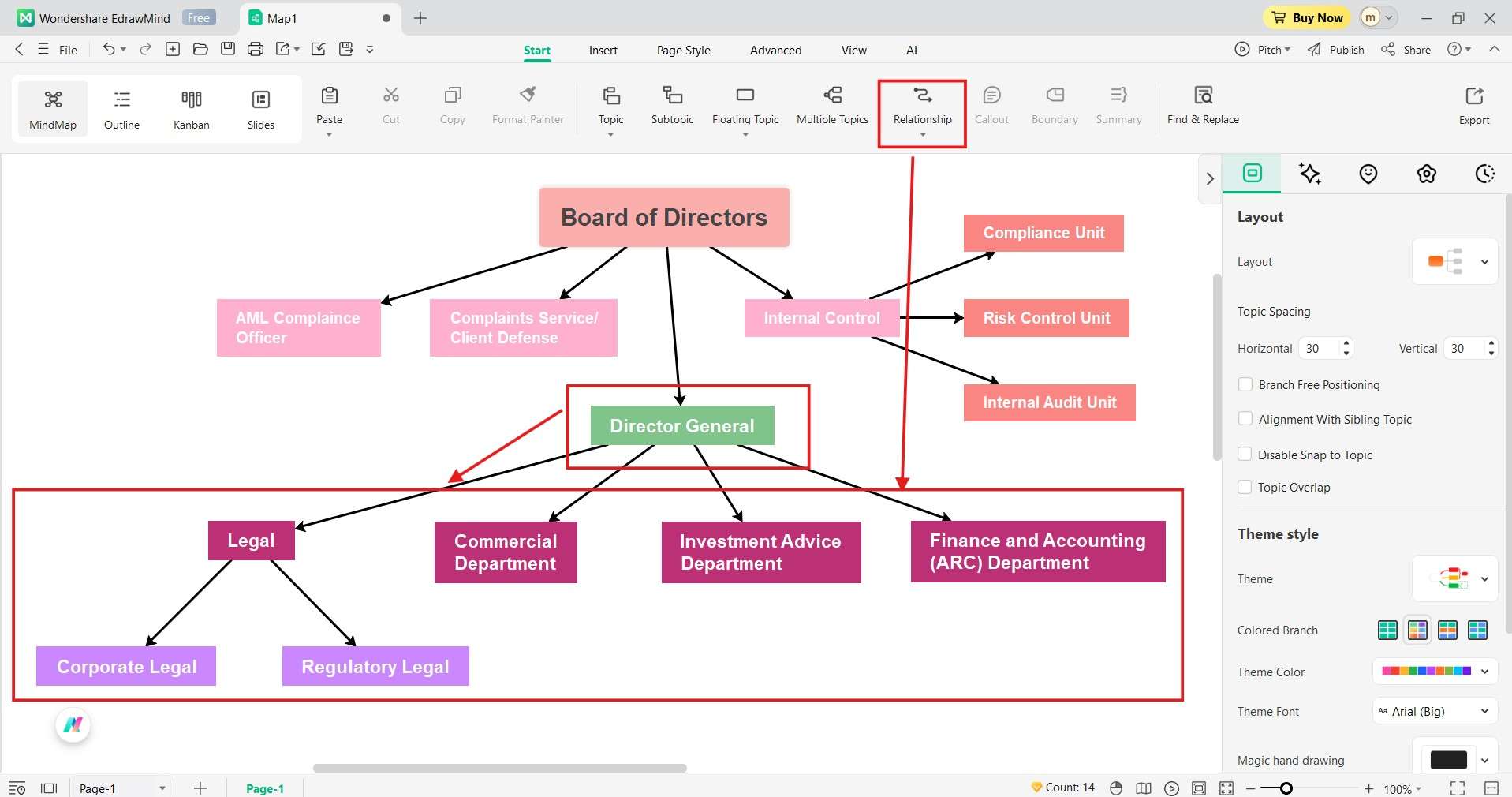
Select your shape and place it right in the centre. This will be our main Board of Directors focus box.
Right next to the shape button, click the Fill button and select a colour to help highlight it. Write Board of Directors in the box.
Step3 Placing the Units
Now that we’ve placed down the main focus box, we can move on to the other boxes.
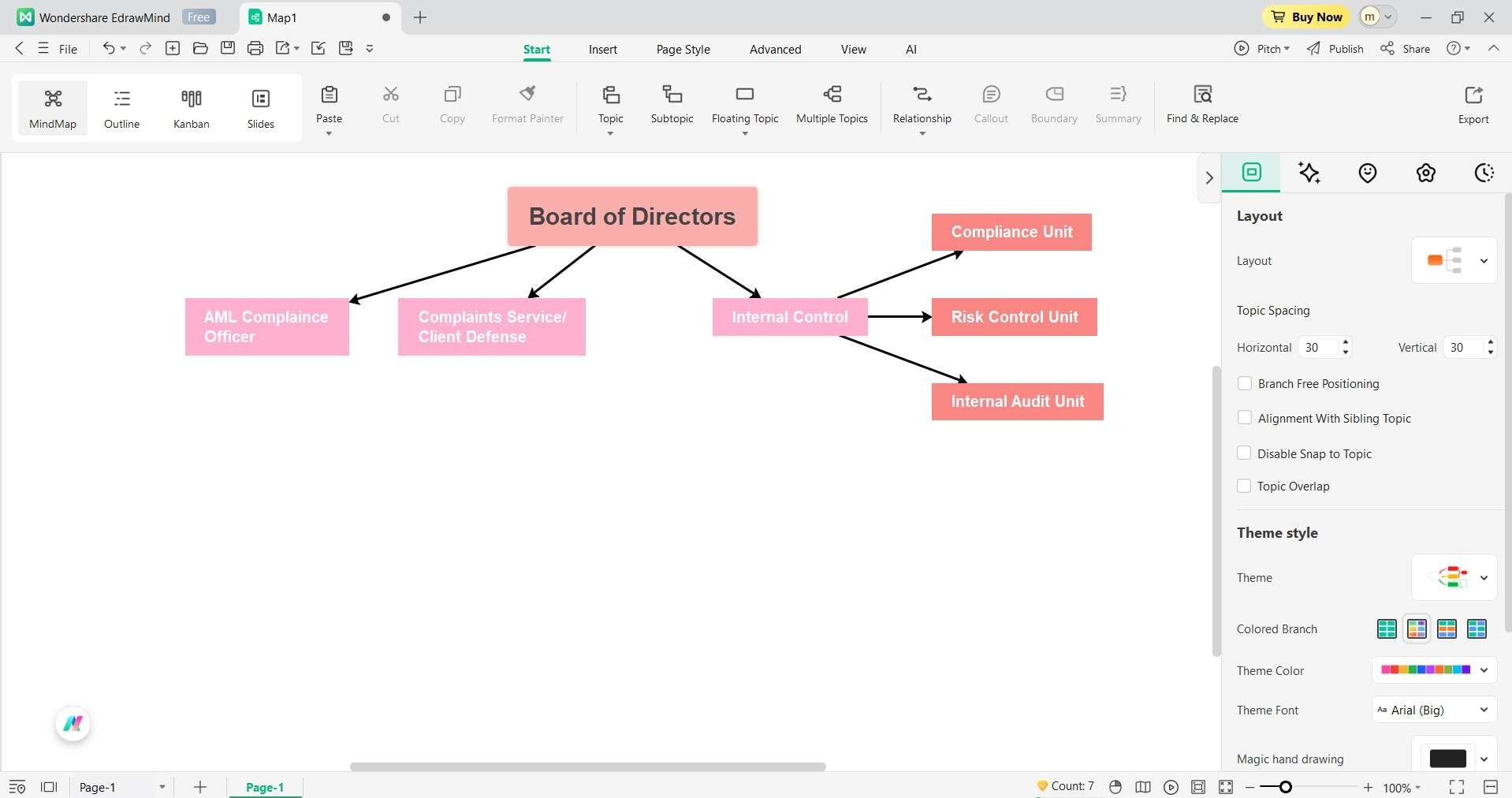
Select another shape and place three of them below the Board of Directors’ box.
Write
- AML Compliance Officer:
- Complaints Service/Client Defence
- Internal Control in the boxes (from left to right, respectively).

Step4 Internal Control Expansion
Place three boxes to the right of the Internal Control box.
Write Compliance Unit, Risk Control Unit, and Internal Audit Unit, respectively, from top to bottom.
Step5 Director General
Place a small box a couple of spaces below the Board of Directors’ box and write Director General in it.
Expand it out below to four boxes and write:
- Legal
- Commercial Department
- Investment Advice Department
- Finance and Accounting (ARC) Department (From left to right)

Step6 Connecting the Boxes
From the toolbar above, select Relationships. Try to select a straight line relationship option.
Connect the boxes as we have explained above.
Step7 Exporting the File
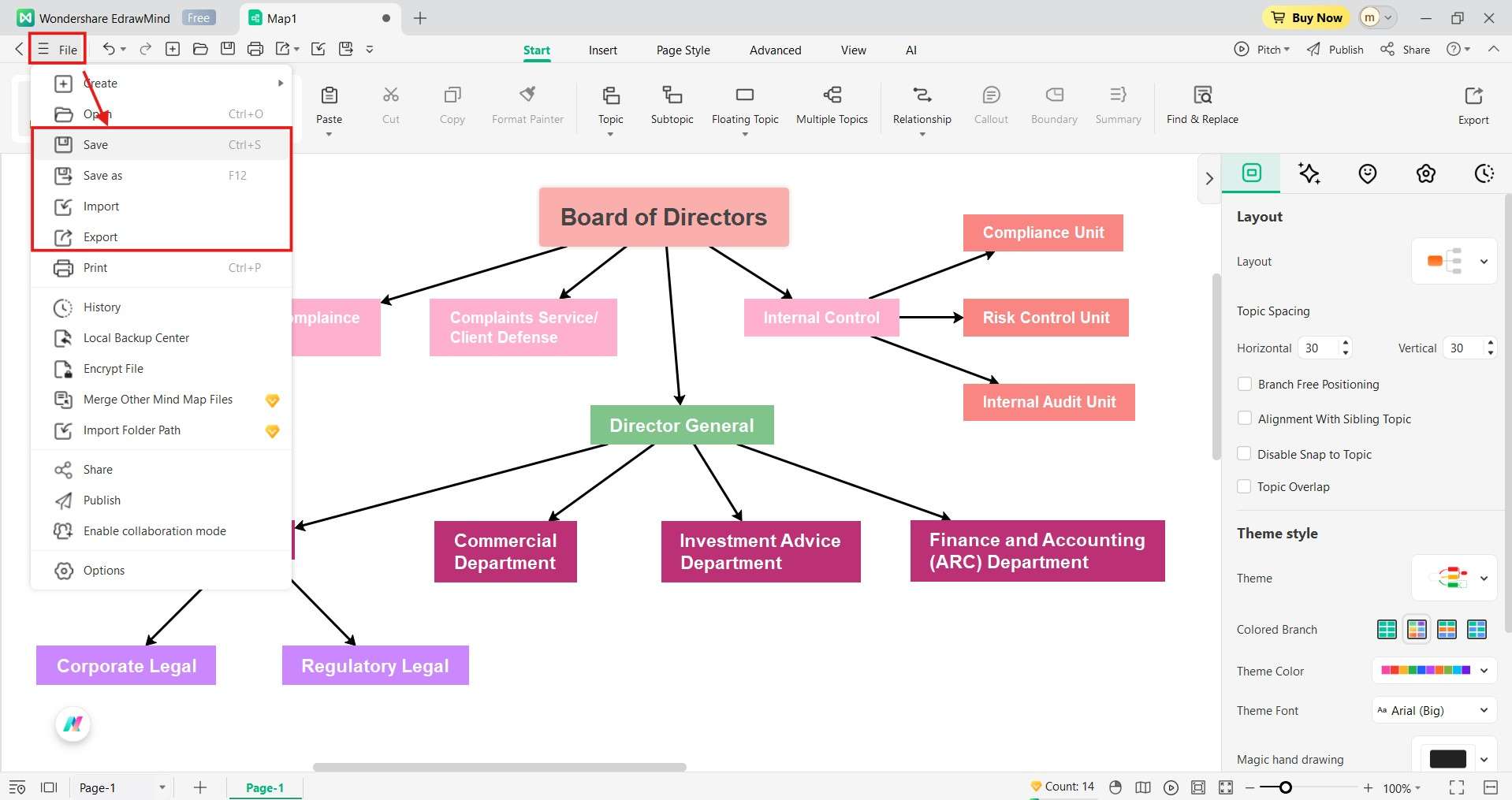
Click the File option from the top left corner
Click Save so you can keep an editable version.
To share, select Export and choose from different formats such as Word, Excel, PowerPoint, PDF, JPG, or PNG.
Wrapping Up
The British Petroleum organisational chart shows how a clear structure and collaboration with departments are key to succeeding in these industries. Looking at this structure makes you realise how a company like BP is structured to remain evergreen.
Whether you’re learning how to grow your own business or creating your own organisational chart, the approach followed by British Petroleum gives some expert tips on how to combine leadership and execution.
 EdrawMind
AppsEdrawMind Online
EdrawMind
AppsEdrawMind Online