


A public library is one of the most important services for the community. It used to be just a place to borrow books, but now it's a place to learn, use technology, and have community events.
Libraries help people read, learn new things, and meet new people every day. They have a clear organizational structure that helps everything run smoothly. This structure shows who runs the library, how teams work together, and how the library helps the public.
This guide will show you how a public library is set up and why it works so well. You’ll also learn how to create a library org chart in EdrawMind.
In this article
Public Library Organizational Structure
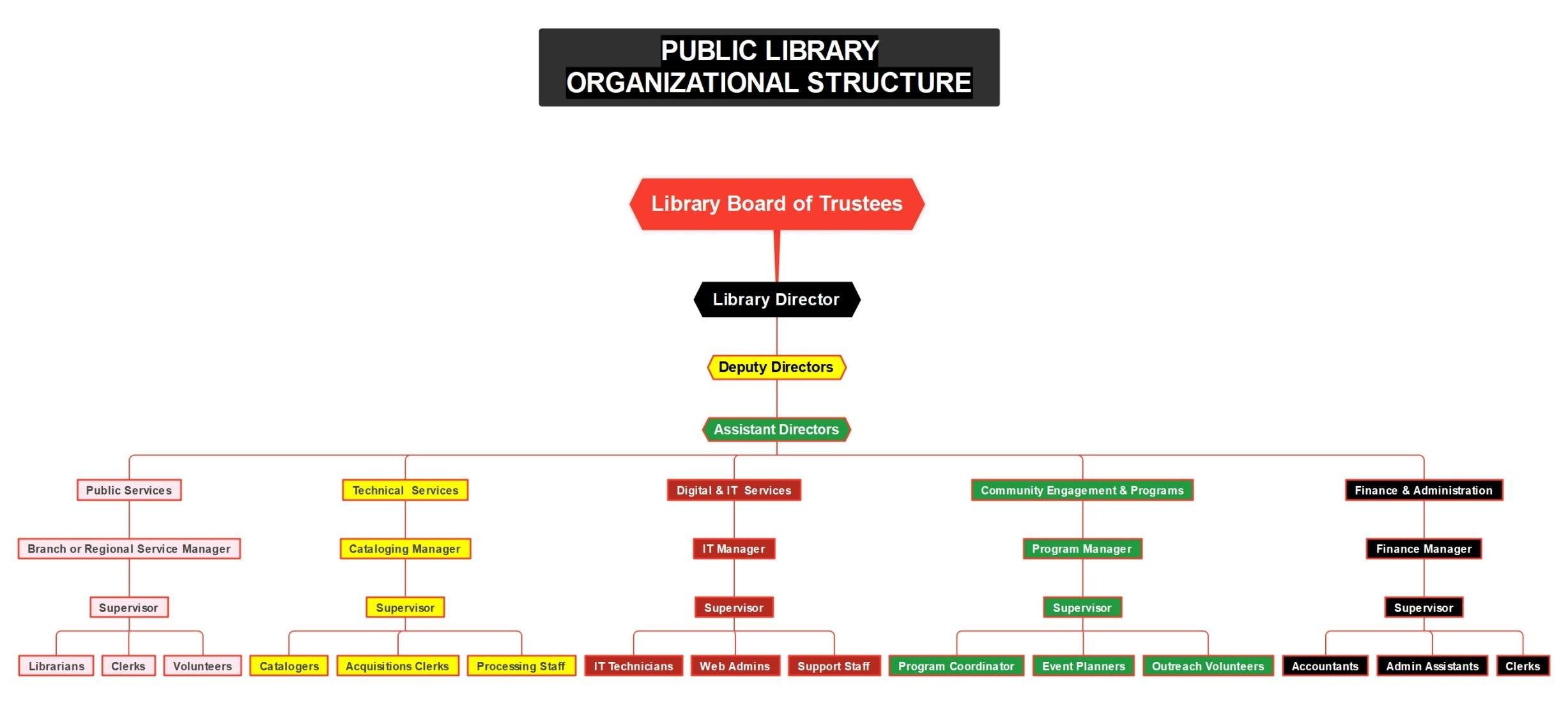


Public libraries are complex institutions that work like large organizations. They manage collections, technology, community programs, and multiple branches simultaneously. Let's discuss this structure in more detail.
Structure Type
The public library's organizational chart is a mix of functional and hybrid styles. It combines both centralized and decentralized models to run things well. The central administration sets the rules, budgets, and goals that local branches must follow. They change them to fit the needs of the community
Functional Divisions
Public libraries are divided into divisions that handle specific operations, such as:
- Acquisitions: Deals with books and material purchases.
- Cataloging: Organizes and classifies materials.
- Public services: Takes care of circulation and reader assistants.
- Digital services: Manages databases and e-resources online.
- Outreach: Connect libraries to schools and communities.
Geographic Divisions
Many libraries also divide operations by region. A city library system might be split into north, south, east, and west zones. Each region has a branch manager who reports to the main library director.
Project-Based Teams
Libraries often form temporary cross-functional teams for new projects, such as:
- Literacy campaigns
- Digital learning programs
- Community outreach events
These teams include staff from IT, marketing, and education. They work together until the project ends.
Number of Employees
The number of employees at a public library depends on the community it serves. There may only be a few dozen employees at smaller local libraries. Large city libraries, however, may have thousands. Thousands of librarians, IT staff, and assistants work for public libraries across the country. Public libraries give their employees various roles to ensure that every task is completed on time:
- Librarians are in charge of user support and collection development.
- Library clerks and assistants manage circulation desks and shelves.
- Archivists and catalogers keep records and metadata for collections.
- IT professionals look after digital catalogs and computer systems.
- Workshops, cultural events, and educational activities are organized by program coordinators.
Libraries also depend on volunteers and part-time employees. They hire temporary workers to assist during special events or renovations.
Key Executives of a Public Library
The Library Board of Trustees is the highest in the hierarchy. This group consists of elected or appointed officers who manage policies, long-term plans, and funds. They also make sure the library stays valuable to citizens. Their work helps the library achieve its community objectives.
Library Director (CEO)
The Chief Executive Officer, who is also called the Library Director, carries out the operations. The CEO also formulates strategic plans for the library. They also represent the library in community and governmental issues. The director is answerable to the board and manages the division heads.
Deputy Directors
The Deputy Directors control particular fields, such as operations, technology, or public services. They also control the day-to-day activities.
Assistant Directors and Divisions
Assistant Directors are in charge of departments like:
- Public services: Oversees branch libraries, information desks, and circulation.
- Technical services: Look after cataloging, interlibrary loans, and acquisitions.
- IT and digital services: Oversees online databases, digital catalogs, and library websites.
- Community engagement and programs: Creates partnerships, events, and educational initiatives.
- Finance and administration: Control human resources, procurement, and budgets.
Branch and Department Managers
There may also be Branch or Regional Managers in large library systems. They make sure each location runs smoothly and stays in touch with the headquarters. Each branch adheres to the central guidelines while operating in a somewhat autonomous manner.
Supervisors, Coordinators & Department Heads
Supervisors, coordinators, and department heads are in charge of smaller groups. They manage particular tasks or ongoing services, such as digital literacy training or children's programming.
Adaptivity of the Structure
The structure of a public library is designed to adapt and offer better services to the people. Libraries should respond to the emerging technology and the growing demands of society. When technology changes, they create digital teams. When interests shift, staff move to programs or online learning.
Libraries operate on a team and feedback basis. IT personnel assist the program managers in developing online tools. The records are maintained by the catalogers and service teams. They even hear the needs of people by conducting surveys and meetings. In case additional technological courses or activities are required, they restructure staff. This equilibrium makes libraries helpful and friendly to all.
Why Does Public Library Structure Work?
Public Library Organizational Structure works well because its structure combines clarity, flexibility, and collaboration. Although each department knows its purpose but still connects with others for shared goals. Some of the reasons why this structure is so effective:
- Well-defined roles: Each department, such as the programs, IT, cataloging, and the public services, has clear responsibilities and reporting lines.
- Divisions of functionalities: Work is divided based upon expertise, and each unit performs what they do best.
- Cross-functional teams: Employees from different departments work together on special projects. These include mobile library services and digital literacy programs.
- Centralized leadership: To prevent redundancy or confusion, the leadership receives clear guidance. The board and the director provide this oversight.
- Flexibility: The system can quickly reallocate personnel or resources. It adapts to new technologies and community trends very quickly.
How to Create an Org Chart for a Public Library?
The public library structure may look complex when you look at it. But once you understand how it works, you can create a similar one for your own company.
Here’s how you can do it step by step:
- Identify key roles and departments: List main services like circulation, programs, and digital access.
- Define responsibilities clearly: Explain what each role does, who they report to, and how performance is measured.
- Establish reporting lines: Create a clear chain of command from the Library Director to assistants. This makes sure everyone knows who they report to.
- Choose the right structure: Select a setup that fits your library’s size and community. Smaller libraries may use flat structures, while bigger ones need more layers.
- Make and update your org chart: Use tools like EdrawMind, Canva, or Lucidchart to create a clear org chart.
Steps to Make the Org Chart
The point of making org charts is to make them flexible. Organizations change employees, and even the executive staff changes. Therefore, the chart must be flexible to add and remove members. In order to achieve this flexibility and ease of making, I have used Wondershare EdrawMind to create an org chart.
 Try the app & get 500 free AI tokens


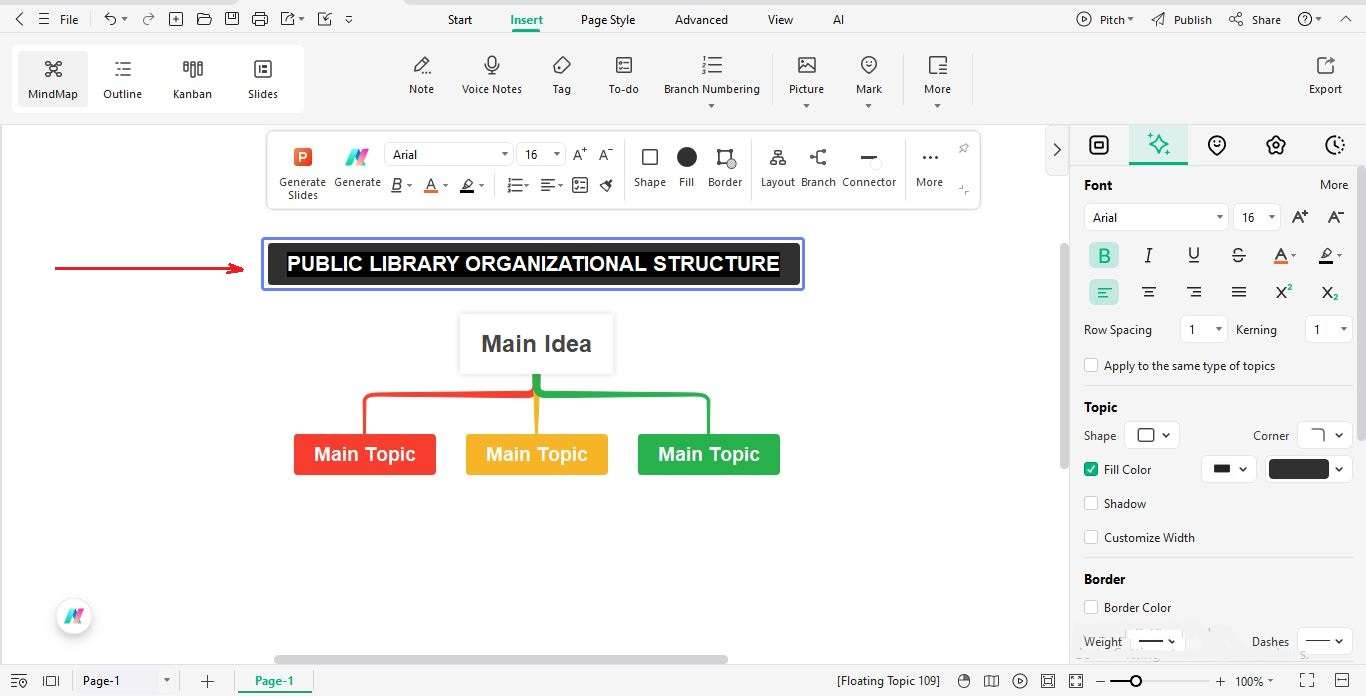
Step1 Start a New File & Add a Title
- Open Wondershare EdrawMind and start a blank mind map.
- Choose org layout and add a title.
Step2 Add Top Roles
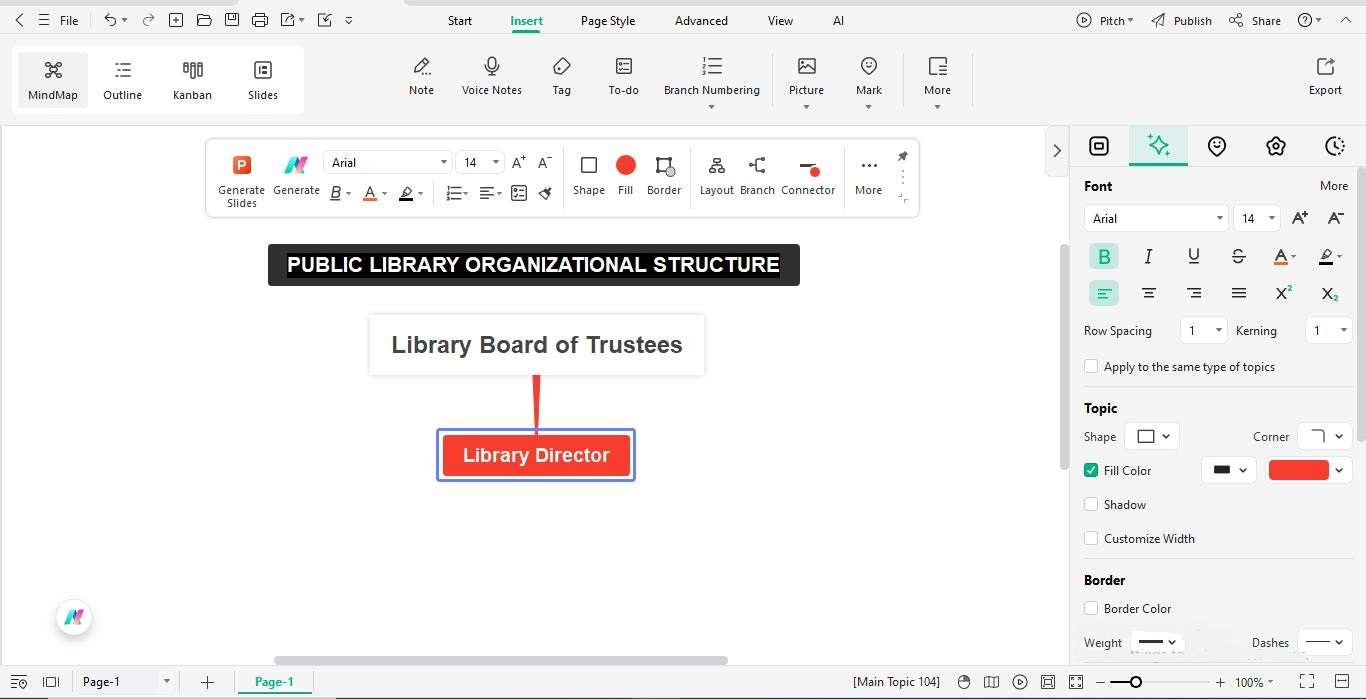
- Place the Library Board of Trustees at the top.
- Add the Library Director below the Board.
Step3 Add Deputy and Assistant Directors
- Add Deputy Directors under the Director.
- Below them, add Assistant Directors.
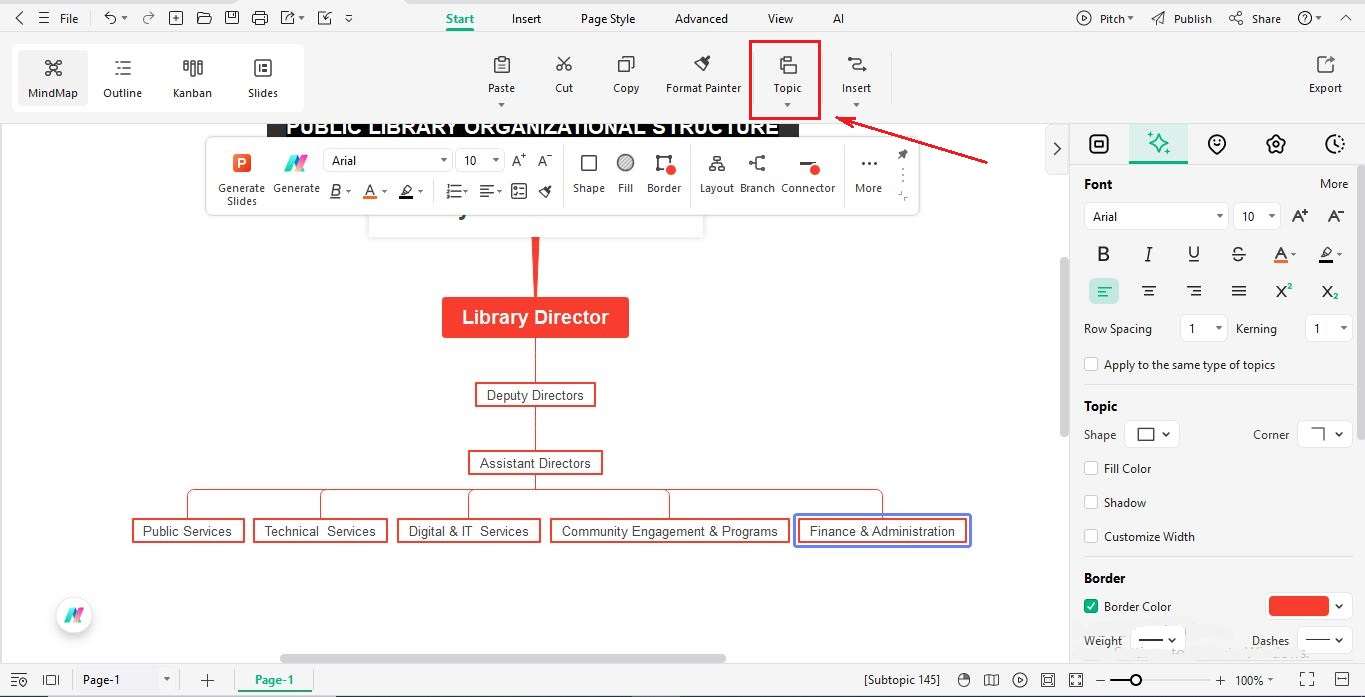
Step4 Add Managers and Departments
- Add Department Managers under each Assistant Director.
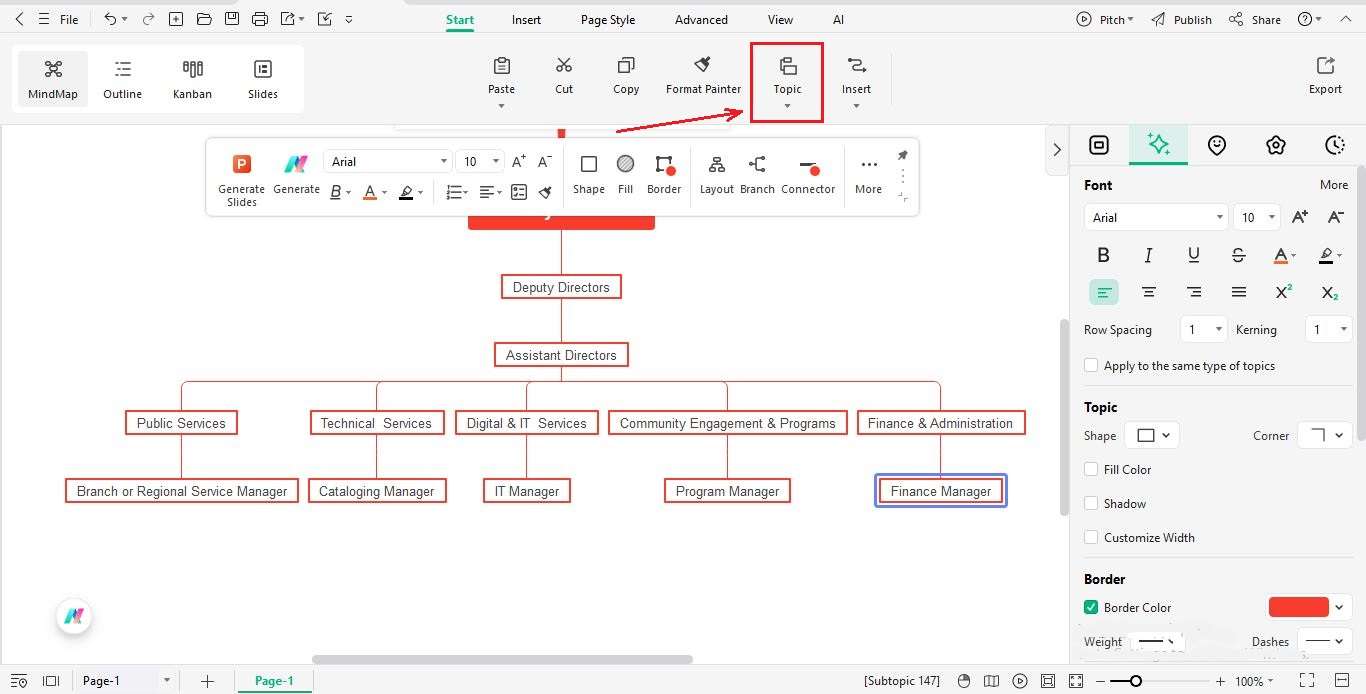
Step5 Add Supervisors and Staff
- Add Supervisors and Coordinators under Managers.
- Place Librarians, Clerks, IT staff, and Volunteers under their supervisors.
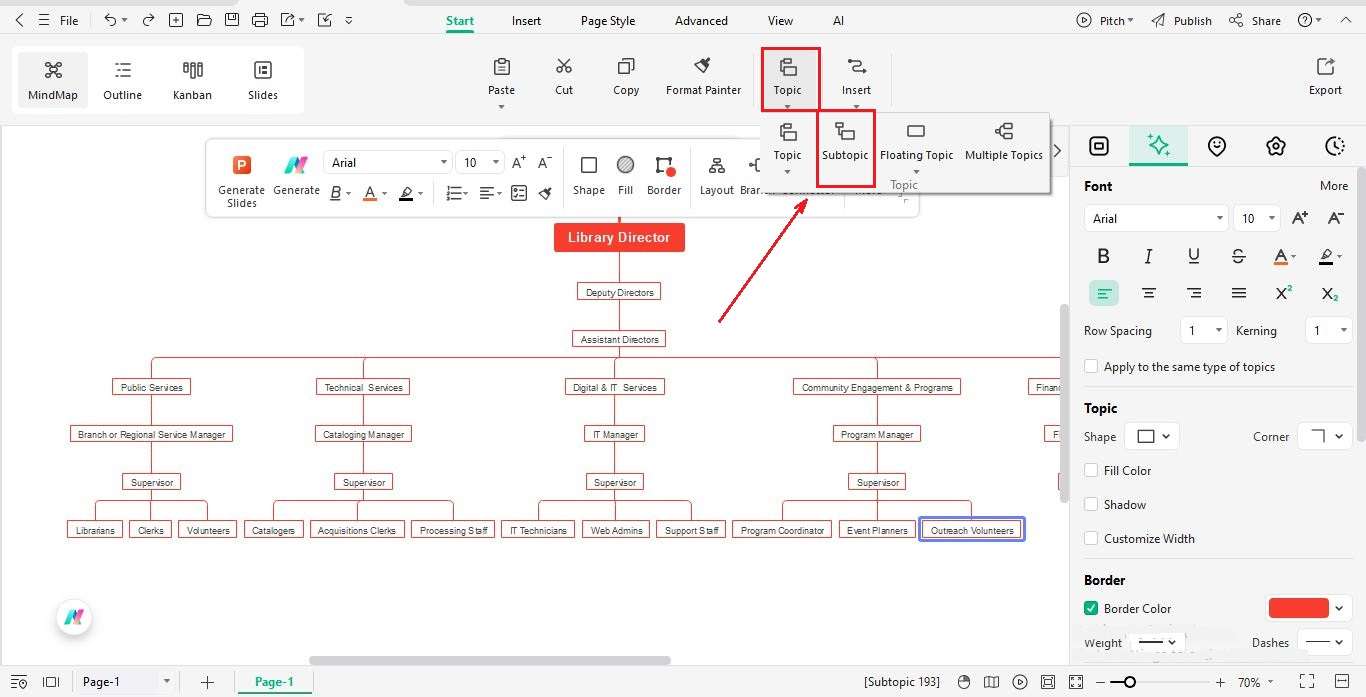
Step6 Customize
- Use different colors for each department.
- Adjust shapes and spacing for easy reading.
- Highlight key leadership roles.
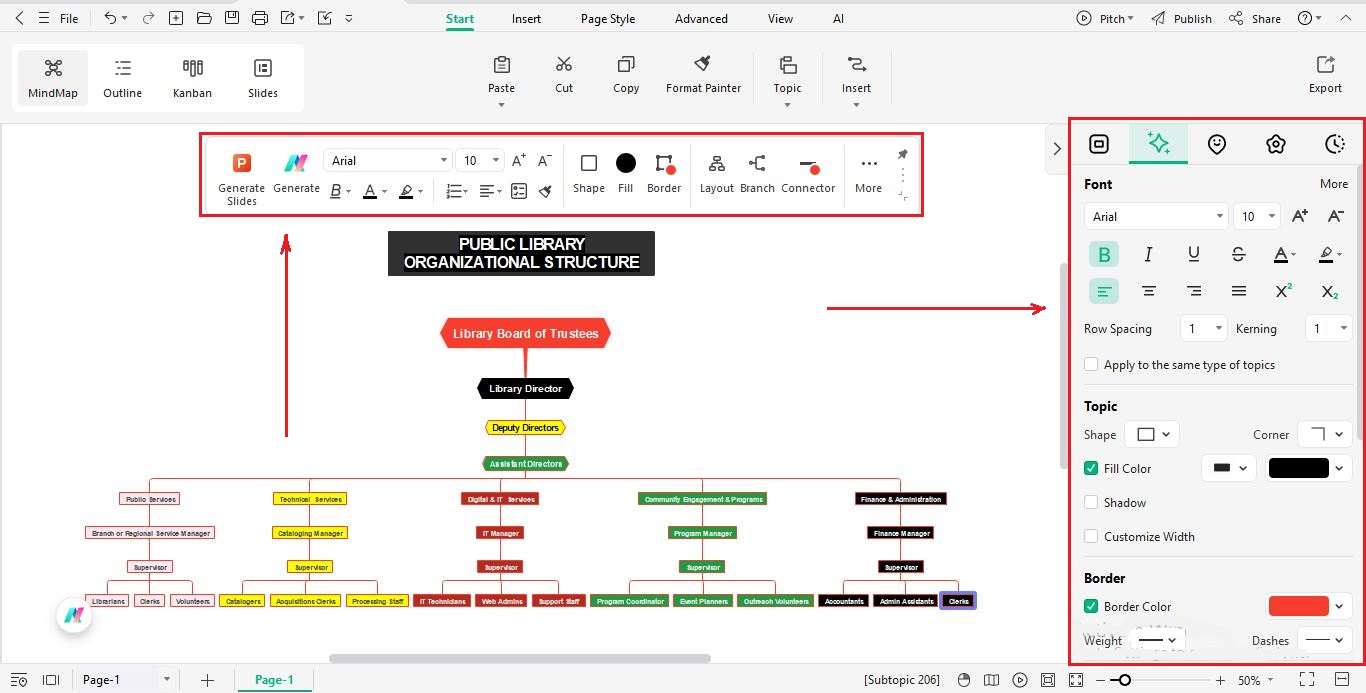
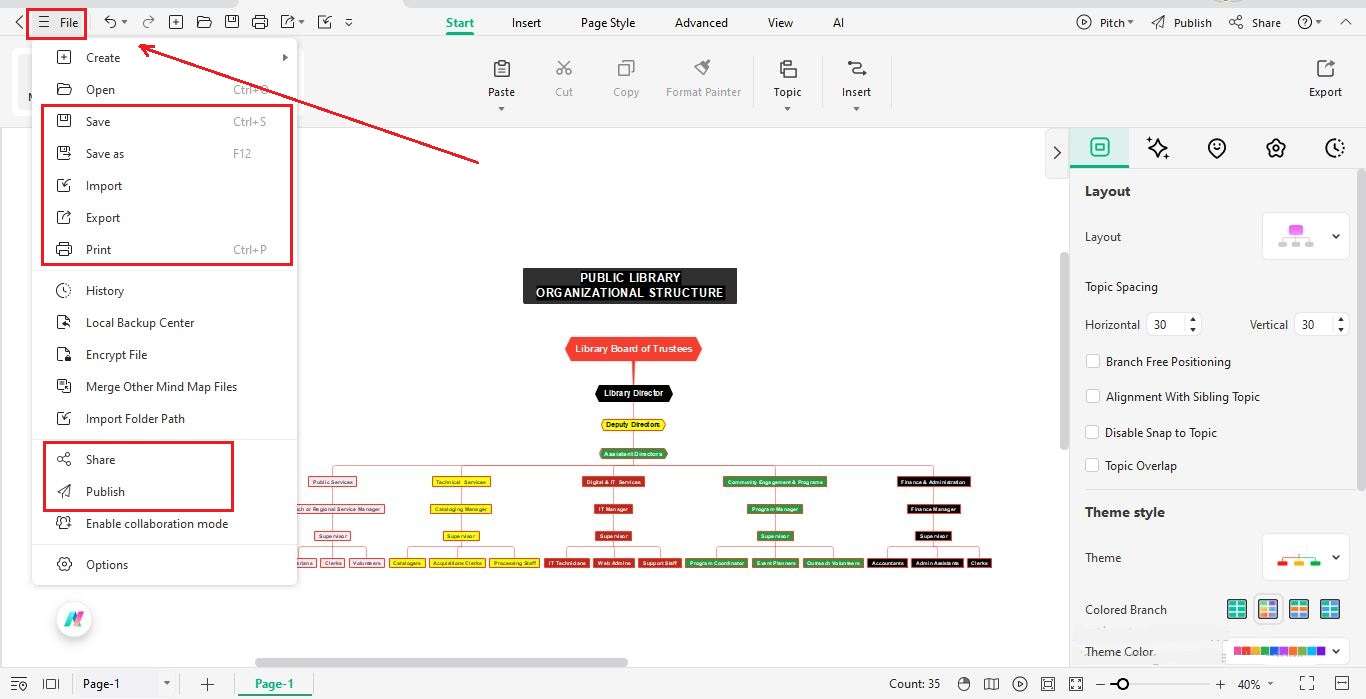
Step7 Review and Share
- Check the chart carefully to ensure all roles and reporting lines are accurate.
- Save or export your final chart as a PDF, PNG, or PowerPoint file.
Final Thoughts
The organizational structure of a public library combines flexibility, teamwork, and leadership. Every position, from volunteers and librarians to the board and director, plays an important role.
Together, they support the goals of community service and open knowledge. Visualizing this structure with EdrawMind makes it easier to understand. Its simple tools turn complex hierarchies into clear visuals.
Start making your own org chart today and see how organized planning keeps every library system running smoothly.
 EdrawMind
AppsEdrawMind Online
EdrawMind
AppsEdrawMind Online