



A tall organizational structure is a system where a company has multiple management levels, and each manager is responsible for overseeing only a small number of people. This setup maintains close supervision and clear authority at every stage. You’ll often find it in high-revenue companies, schools, or government offices where order and control really matter.
In this guide, we’ll explore how the tall organizational structure works. We’ll see why it helps maintain order and efficiency across departments. At the end, you’ll also learn how to create a similar organizational chart.
In this article
Tall Organizational Chart
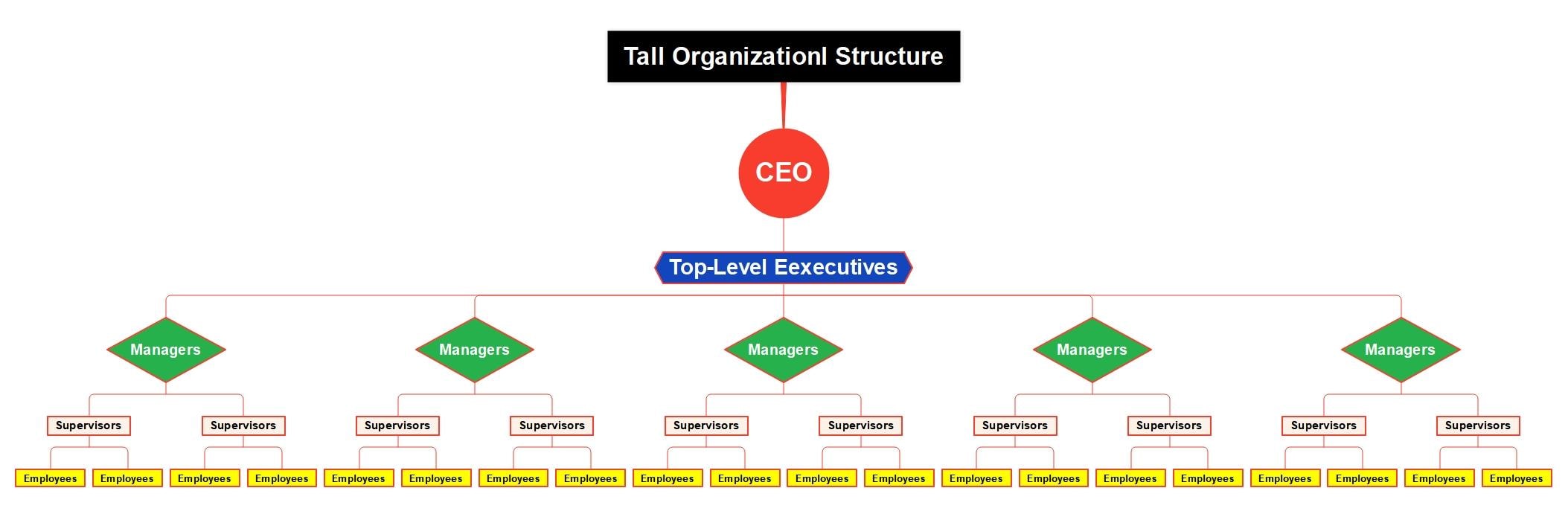


A tall organizational structure is built in the shape of a pyramid. It is narrow at the top with few decision-makers and wide at the base with many employees. This system is perfect for large organizations that require control and coordination among thousands of employees.
Structure Type and Hierarchical Flow
Power in a tall organization moves from the top executives to the lowest-level employees. At every level, managers oversee a small team of employees. Managers at each level oversee smaller groups of workers. This ensures that everyone gets enough supervision and guidance.
Formal and structured communication is the norm in tall organizational structures. The Vice President receives communications from the CEO. The VP gives instructions to the Manager, Supervisor, Director, and Employee. This detailed plan keeps everything organized. Everyone is aware of whom to report to and who to listen to. Additionally, it helps leaders maintain control and lead their teams.
Large corporations, government buildings, hospitals, and the military all have tall organizational structures.
Number of Employees in Tall Organizations
Most of the time, companies with tall organizational structures have thousands or even hundreds of thousands of workers. There are so many people that's why the top leaders cannot talk directly to every employee.
Tall structures depend on middle managers and supervisors to handle this situation. Each department or branch is split into smaller teams so that work is easier to manage.
For example:
- A big car company might have more than 10,000 workers, organized under many layers of managers.
- A government office might have regional centers, district heads, and local officers who all report step by step to higher leaders.
This setup keeps things organized, even when there are many workers in different places.
Key Executives and Management Levels
There are numerous executive positions in a tall organizational structure. Each of them is in charge of a particular area. Among the key roles are:
- Chief Executive Officer (CEO): The top leader. The boss. The CEO is responsible for the overall direction and company strategy.
- Chief Operating Officer (COO): Manages day-to-day operations. His main job is to make sure departments follow company goals.
- Chief Financial Officer (CFO): The CFO's job is to control budgeting, accounting, and financial planning.
- Chief Human Resources Officer (CHRO): Oversees recruitment, employee development, and compliance.
- Chief Marketing Officer (CMO): The CMO is responsible for marketing campaigns, branding, and global promotion.
- Chief Technology Officer (CTO): Handles innovation, IT infrastructure, and product development.
- Regional or Division Heads: They manage specific areas such as North America, Europe, or Asia-Pacific.
- Departmental Managers: Control teams for finance, operations, HR, logistics, or R&D.
- Supervisors: They're the ones to monitor individual employees and report performance to higher management.
There is a clear chain of command from the CEO to operational personnel, with each role supporting the one above it.
Why Does the Tall Organizational Structure Work?
The tall organizational structure works because it allows for distinct lines of authority, strong oversight, and effective communication. Although it can seem complex at first, tall organizational structures are a great way for large organizations to establish and retain internal discipline and organization.
A few of the reasons why it works so well:
- Multiple layers of hierarchy: There are many levels of hierarchy. The organization starts with the CEO, the Vice Presidents, then department Managers, and just below Managers are Supervisors. At the bottom of the organization are the Employees. This layering allows for appropriate supervision and an organized workflow.
- Clear chain of command: Everyone knows who they report to and who they receive directions and tasks from. So there are no mixed messages, and everyone knows their responsibility.
- Focused supervision: Managers supervise only a small number of their employees. This allows Managers to supervise employees closely and provide supervision as needed.
- Centralized decision making: Most activity in large organizations comes from upper management. This allows for consistency, limits mistakes, and ensures that everyone is in line with the mission and goals of the company.
- Promotion opportunities: Employees will find more opportunities for promotion with many managers and layers of hierarchy. Whether a large organization or small, this gives everyone something to work toward and helps keep them motivated.
- Low burden on one person: In these organizational structures, you can share responsibilities with many different managers and employees. No one Manager or employee feels completely overwhelmed or stressed.
How to Make a Similar Org Chart?
A tall organizational chart is easy to make once you understand your company’s structure. You only need a clear plan to place everyone in the right order and show who reports to whom.
Follow these simple steps:
- Start by gathering information: Write down the names, job titles, and departments of everyone in your organization.
- Organize the hierarchy: Arrange people according to their positions. Begin with the top leaders, then add vice presidents, managers, supervisors, and employees in order.
- Choose a tall layout: Use a vertical design that clearly shows the many layers of management from top to bottom.
- Group people by department: Place each person under the correct department, such as HR, Finance, Marketing, or Operations, so the chart looks neat and easy to follow.
- Connect the levels: Add lines between managers and their teams to show reporting relationships clearly.
- Design and review the chart: Use Wondershare EdrawMind to create and style your chart. Apply colors, adjust spacing, and check all details for accuracy.
Steps to Make a Tall Org Chart
After gathering information and choosing a layout, it’s time to make your chart. Here’s how I create an org chart using EdrawMind.
 Try the app & get 500 free AI tokens


Step1 Open a New File & Add Title
- Launch Wondershare EdrawMind.
- Click Create > Blank Mind Map to begin a new chart.
- Add title “ Tall Organizational Structure"
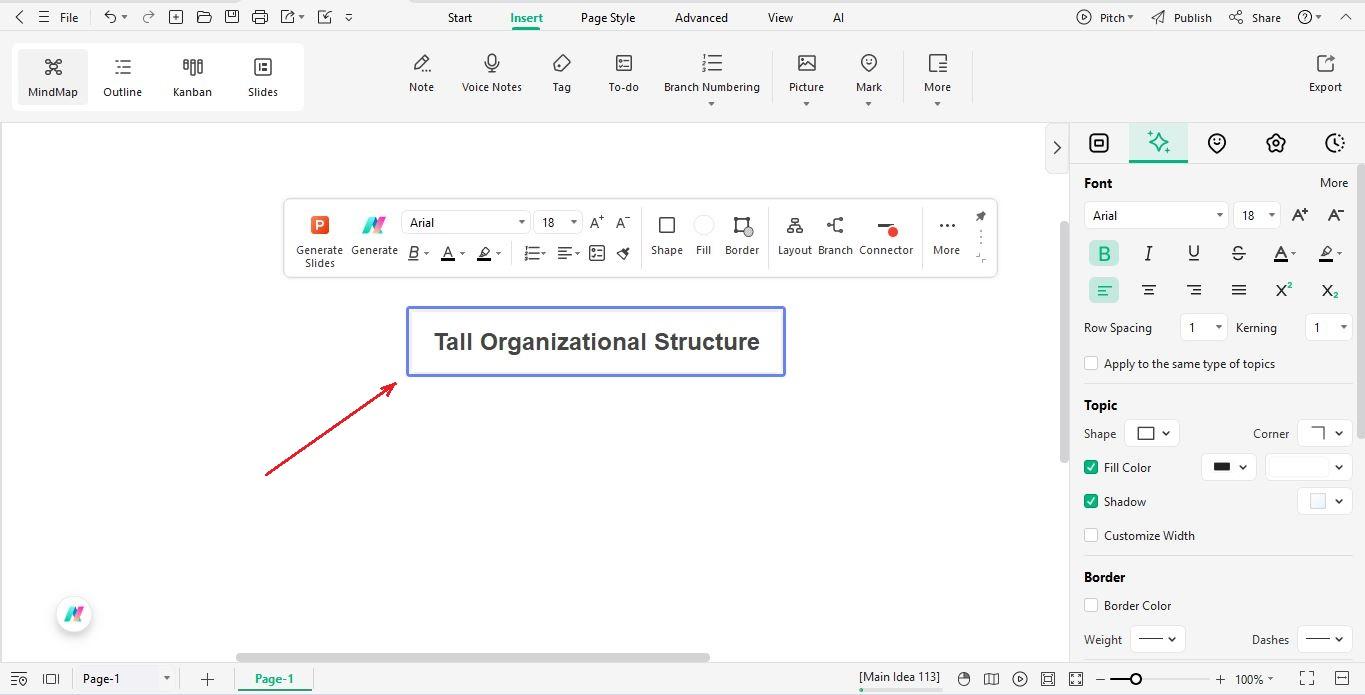
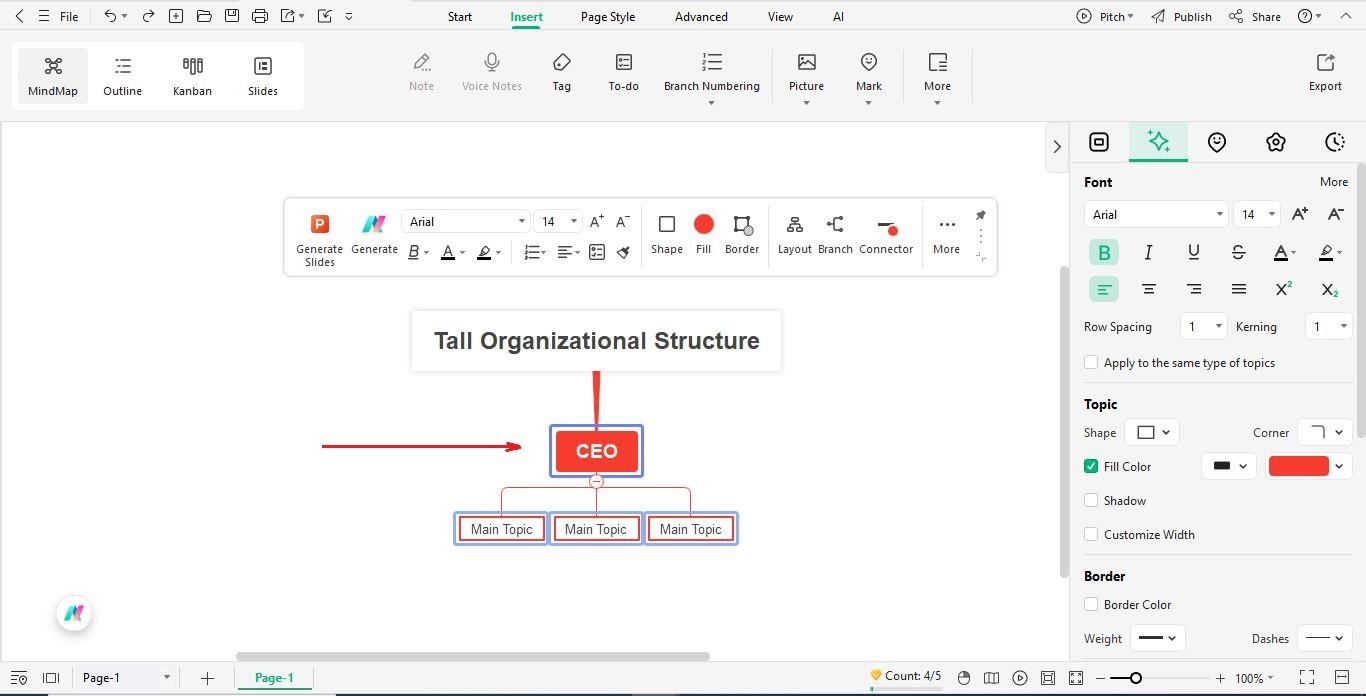
Step2 Add the CEO at the Top
- Click the main node and label it Chief Executive Officer (CEO).
- This represents the highest authority in the company.
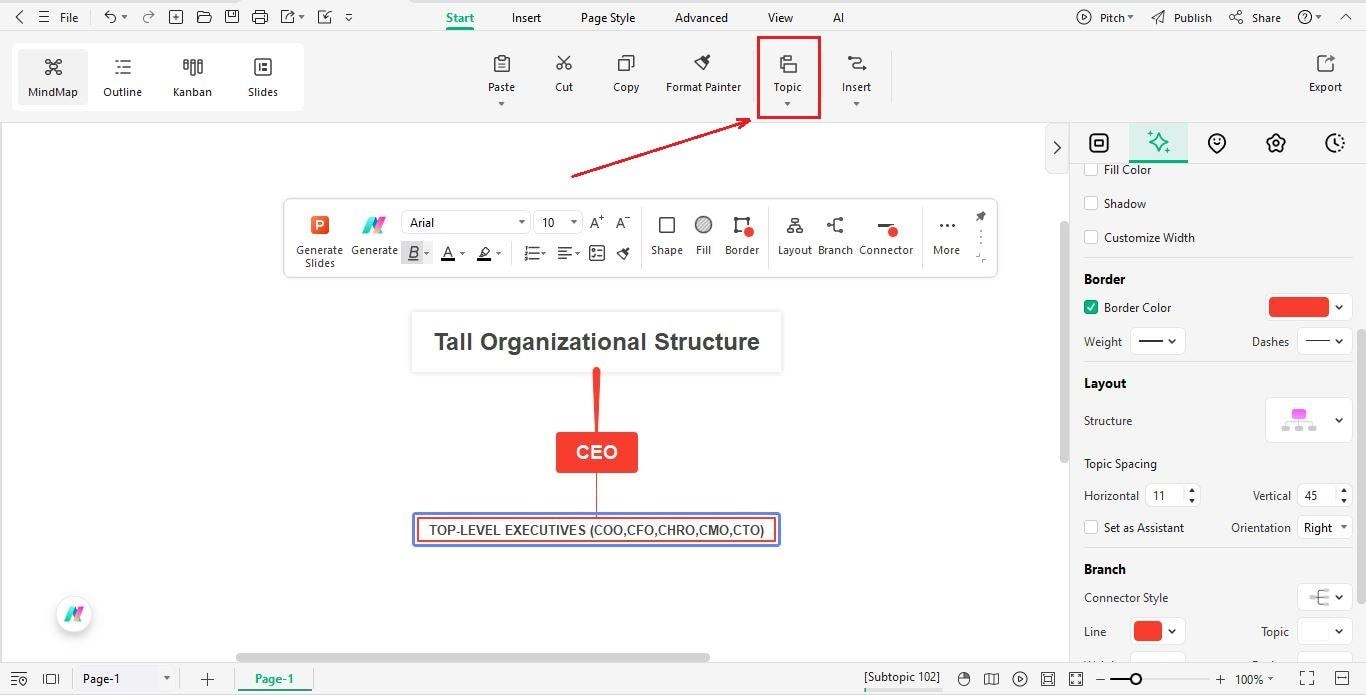
Step3 Add the Top-Level Executives
- Use the Subtopic to add roles like COO, CFO, CHRO, CMO, and CTO.
- Arrange them horizontally just below the CEO.
Step4 Add Departmental Managers
- Add another layer below to represent Departmental Managers for key areas like Finance, HR, Operations, or Marketing.
- Use consistent spacing to maintain a tall, vertical flow.
Step5 Add Supervisors and Employees
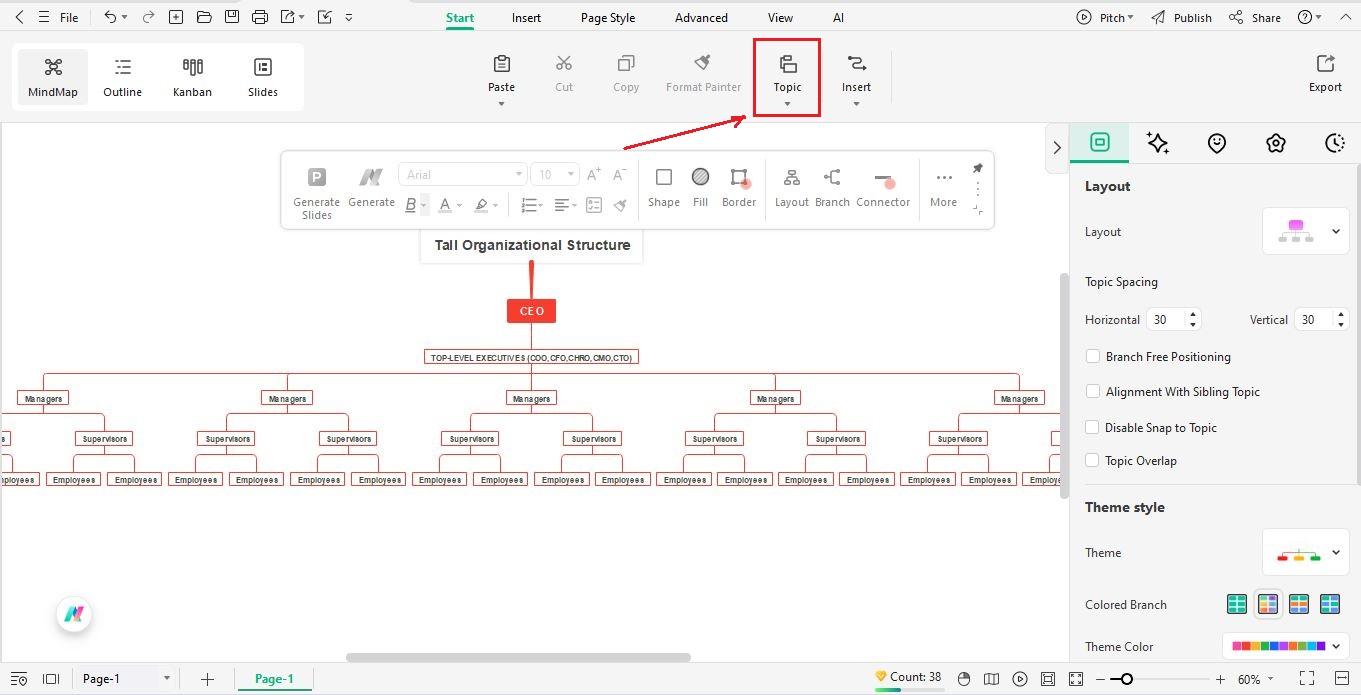
- Continue adding Supervisors under managers and General Employees below them.
- This completes the operational level of the organization.
Step6 Customize the Chart
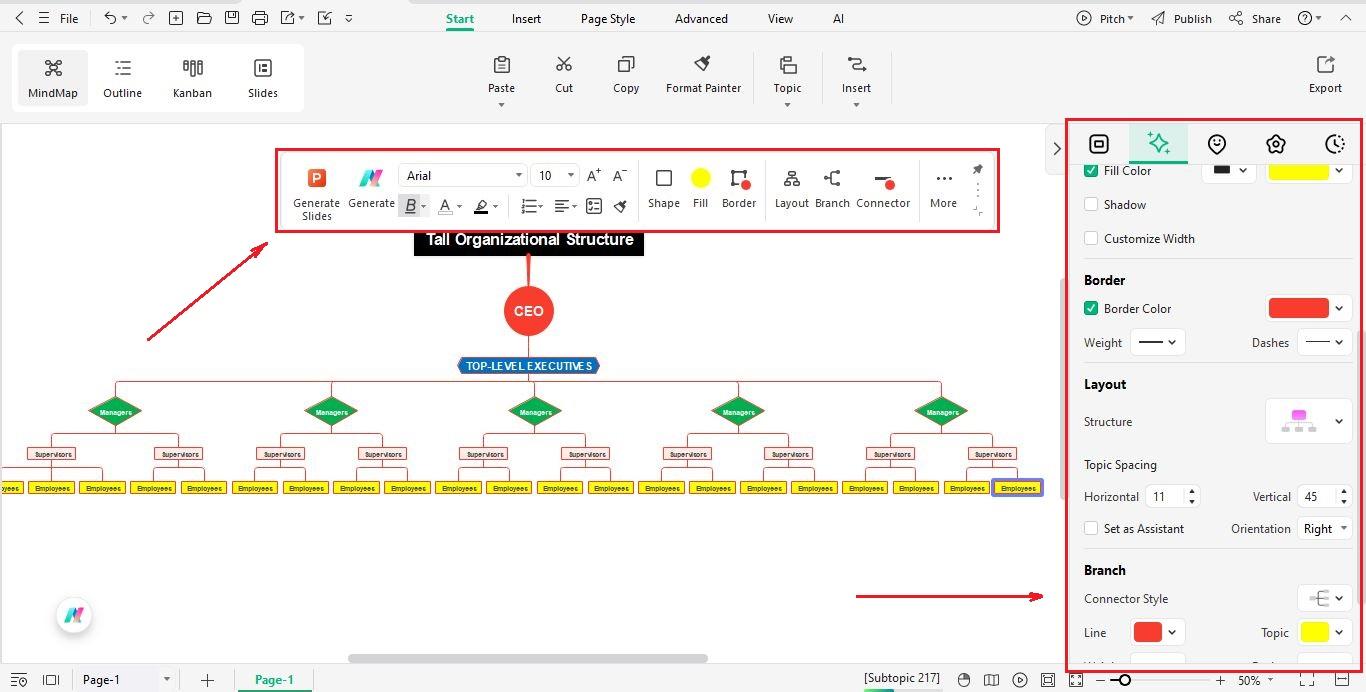
- Customize your chart using the floating toolbar or right side panel.
- Use distinct colors for each hierarchy level (e.g., blue for executives, green for managers, yellow for employees).
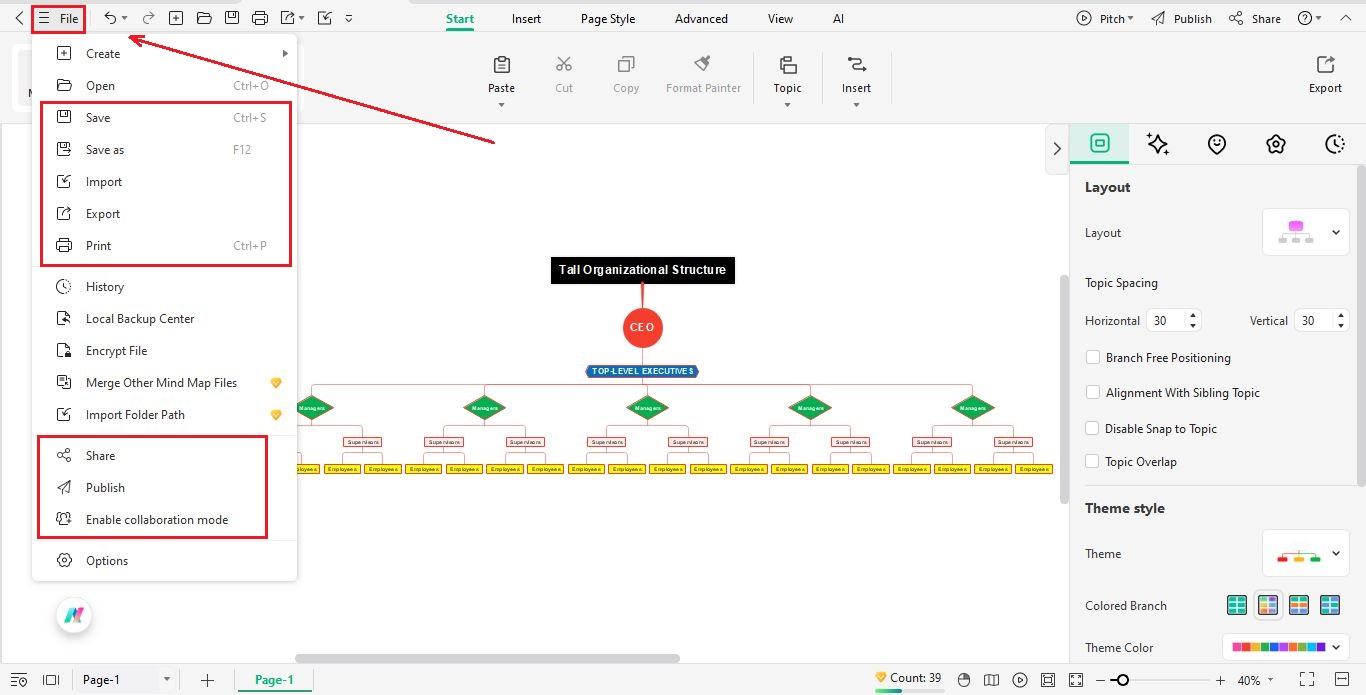
Step7 Save and Export Your Chart
- Once finished, check the chart carefully to ensure all roles and reporting lines are accurate.
- Save or export your final chart as a PDF, PNG, or PowerPoint file.
Closing Remarks
A tall organizational structure builds stability through its many layers of control, specialized divisions, and detailed supervision. It is ideal for large or global organizations where clarity, order, and accountability are essential.
With Wondershare EdrawMind, you can easily visualize this complex structure, customize it for your company, and keep it professional and easy to read.
 EdrawMind
AppsEdrawMind Online
EdrawMind
AppsEdrawMind Online