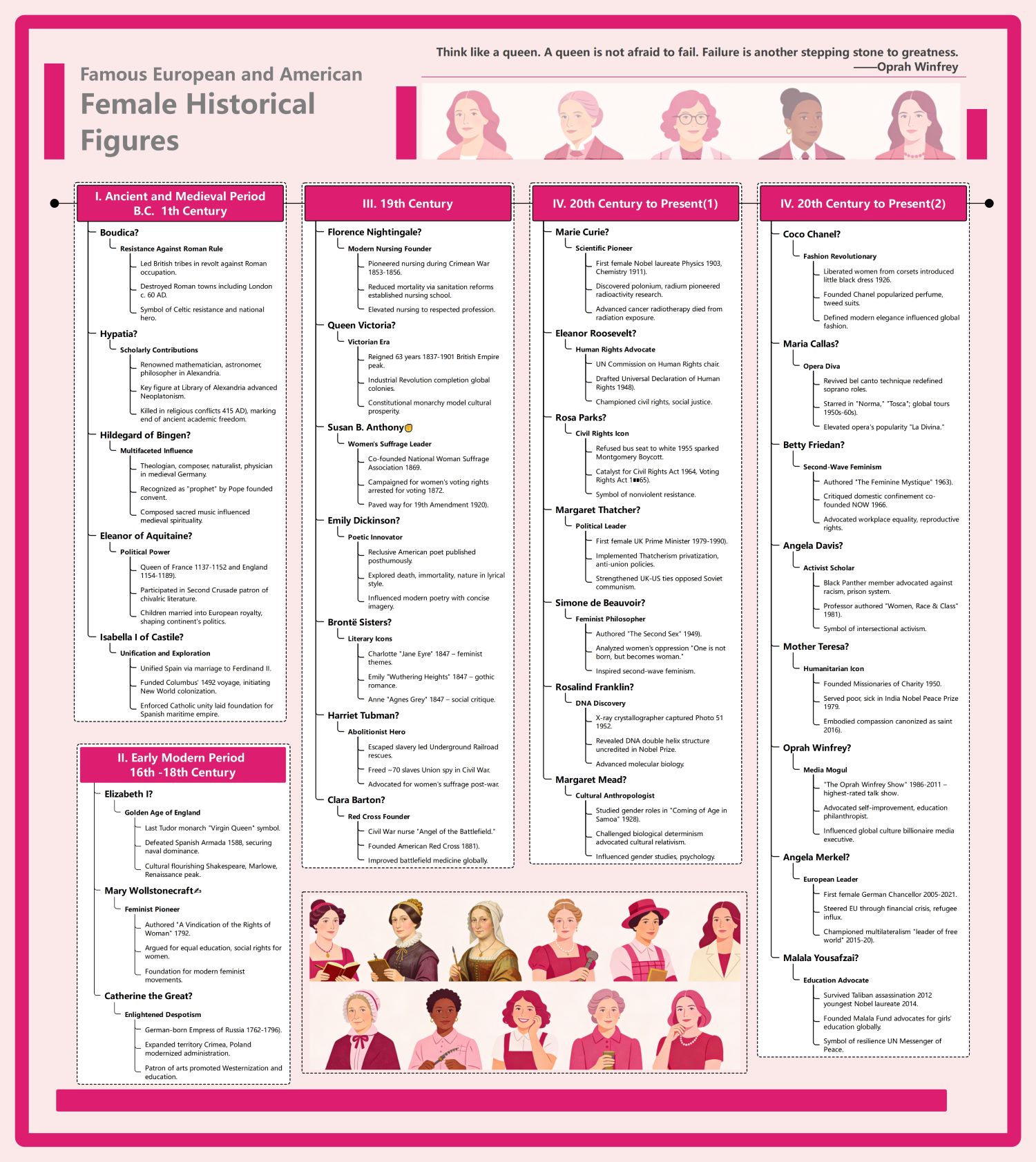
About this women's rights history template
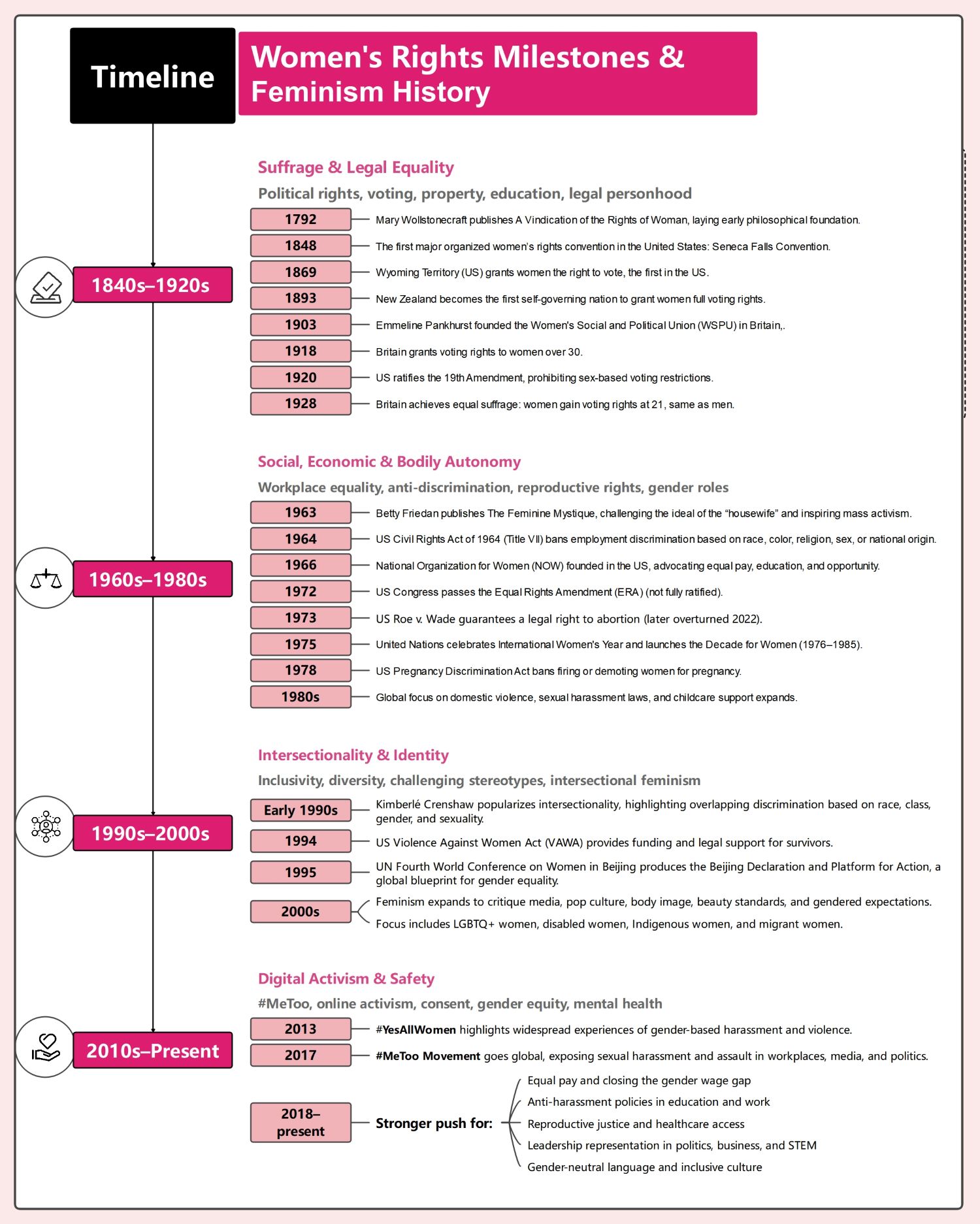
This template provides a clear visual timeline of the major feminist movements. It covers essential eras from the 1840s to the present day. You can use this guide to teach history, plan social studies lessons, or study the evolution of global gender equality laws and social norms.
Suffrage and Legal Equality (1840s–1920s)
This early era focused on gaining basic political rights and legal personhood for women. Pioneers fought for the right to vote, own property, and access higher education. These milestones laid the philosophical and legal foundation for modern equality.
- 1792: Mary Wollstonecraft publishes A Vindication of the Rights of Woman.
- 1848: The Seneca Falls Convention is held in the United States.
- 1869: Wyoming Territory grants women the right to vote.
- 1893: New Zealand becomes the first nation to grant full voting rights.
- 1903: Emmeline Pankhurst founds the WSPU in Britain.
- 1920: The US ratifies the 19th Amendment for sex-based voting.
- 1928: Britain achieves equal suffrage for women at age 21.
Social, Economic, and Bodily Autonomy (1960s–1980s)
During this period, the movement expanded to include workplace rights and reproductive freedom. Activists challenged traditional gender roles and pushed for laws against discrimination. This era saw significant progress in healthcare access and legal protections for working women.
- 1963: Betty Friedan publishes The Feminine Mystique.
- 1964: US Civil Rights Act bans employment discrimination.
- 1966: National Organization for Women (NOW) is founded.
- 1973: Roe v. Wade guarantees a legal right to abortion.
- 1975: UN launches the Decade for Women.
- 1978: US Pregnancy Discrimination Act protects pregnant workers.
- 1980s: Global focus on domestic violence and sexual harassment laws.
Intersectionality and Identity (1990s–2000s)
The late 20th century introduced intersectionality to acknowledge diverse experiences based on race and class. The movement began critiquing media representation and beauty standards. This inclusive approach aimed to support LGBTQ+ women, Indigenous women, and those in marginalized communities.
- Early 1990s: Kimberlé Crenshaw popularizes the concept of intersectionality.
- 1994: US Violence Against Women Act (VAWA) provides survivor support.
- 1995: UN Fourth World Conference produces the Beijing Declaration.
- 2000s: Feminism expands to critique pop culture and body image.
- Focus: Inclusion of disabled, Indigenous, and migrant women.
Digital Activism and Safety (2010s–Present)
The current era uses social media to build global awareness and demand safety. Online movements highlight widespread harassment and advocate for equal pay. Today, there is a stronger push for reproductive justice, leadership representation, and inclusive, gender-neutral language in culture.
- 2013: #YesAllWomen highlights gender-based harassment and violence.
- 2017: The #MeToo movement goes global to expose workplace assault.
- 2018-present: Advocacy for closing the gender wage gap.
- Modern goals: Anti-harassment policies in education and work.
- Modern goals: Leadership representation in STEM and politics.
FAQs about this Template
-
What was the significance of the 1848 Seneca Falls Convention?
The Seneca Falls Convention was the first major organized meeting for women's rights in the United States. It produced the Declaration of Sentiments, which demanded equal social status and legal rights, including the right to vote. This historic event officially launched the organized suffrage movement. It brought women together to challenge the systemic inequalities that limited their political and personal freedoms.
-
How did intersectionality change the feminist movement in the 1990s?
Intersectionality, popularized by Kimberlé Crenshaw, helped the movement realize that women experience discrimination differently based on their race, class, and identity. It moved feminism beyond a one-size-fits-all approach. By acknowledging these overlapping layers of oppression, the movement became more inclusive. This change allowed activists to address the specific needs of marginalized groups, including LGBTQ+ women and women of color, more effectively.
-
What are the primary goals of the modern #MeToo movement?
The #MeToo movement focuses on exposing and ending sexual harassment and assault, particularly in professional environments. It empowers survivors to share their stories and hold powerful individuals accountable for their actions. Beyond awareness, the movement seeks to change workplace cultures and laws. It advocates for safer environments, better reporting systems, and a culture of consent to prevent future abuse and gender-based violence.