About this African American Heritage template
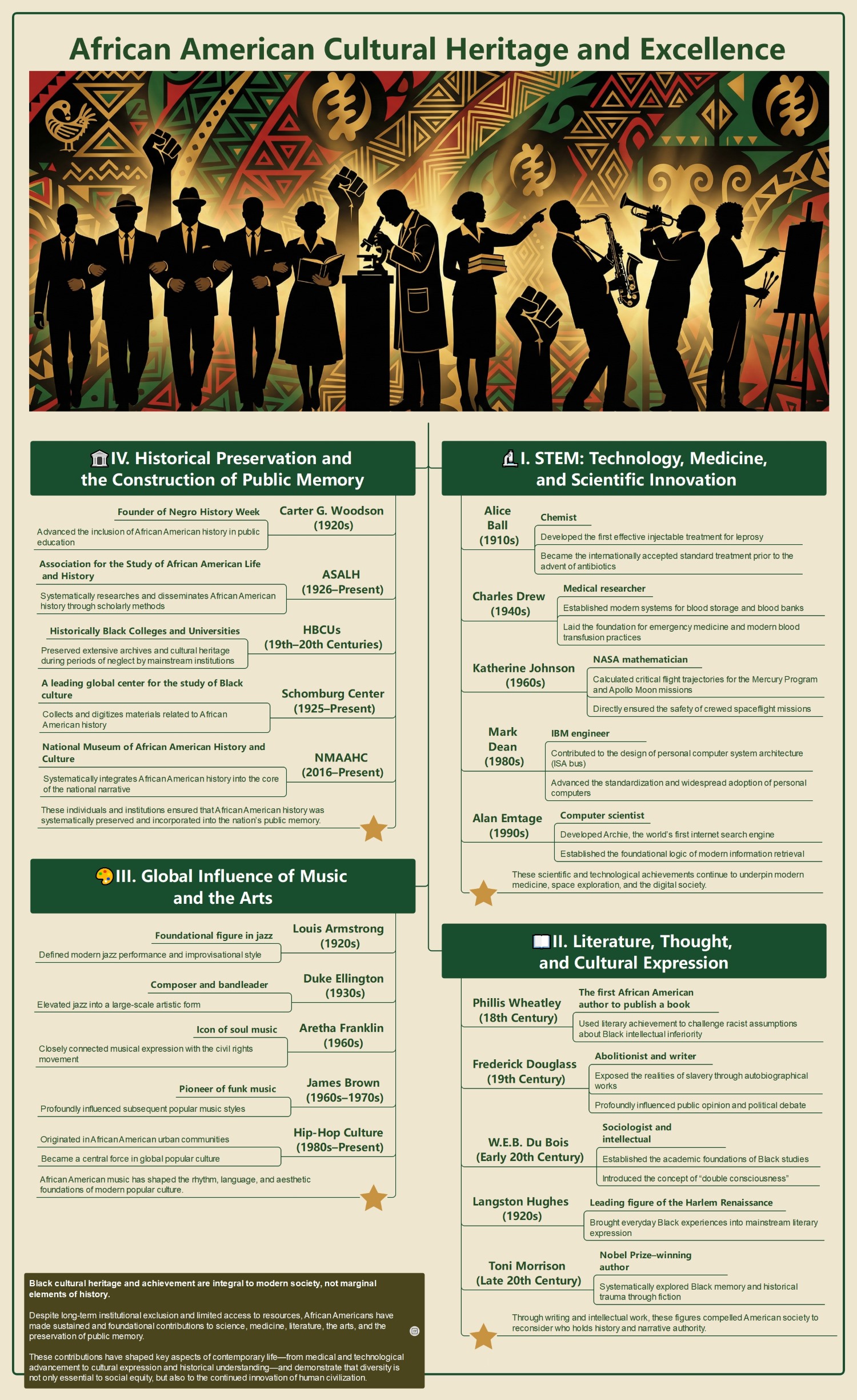
This template highlights the profound impact of African American leaders across science, arts, and history. It provides a visual roadmap of key figures and organizations that have shaped the cultural and intellectual landscape of the United States.
STEM: Technology, Medicine, and Scientific Innovation
This section explores the pioneers who revolutionized science and technology. From life-saving medical treatments to the birth of the internet, these innovators overcame barriers to advance human knowledge and ensure safety in global space exploration.
- Alice Ball: Developed the first effective injectable leprosy treatment.
- Charles Drew: Established modern systems for blood storage and banking.
- Katherine Johnson: Calculated flight trajectories for NASA's crewed space missions.
- Mark Dean: Contributed to the design of the personal computer system architecture.
- Alan Emtage: Developed the world's first internet search engine, Archie.
Literature, Thought, and Cultural Expression
Through powerful writing and intellectual leadership, these figures challenged societal norms. They used literature to document the Black experience and influence public opinion, establishing academic foundations that continue to shape how we understand history and identity today.
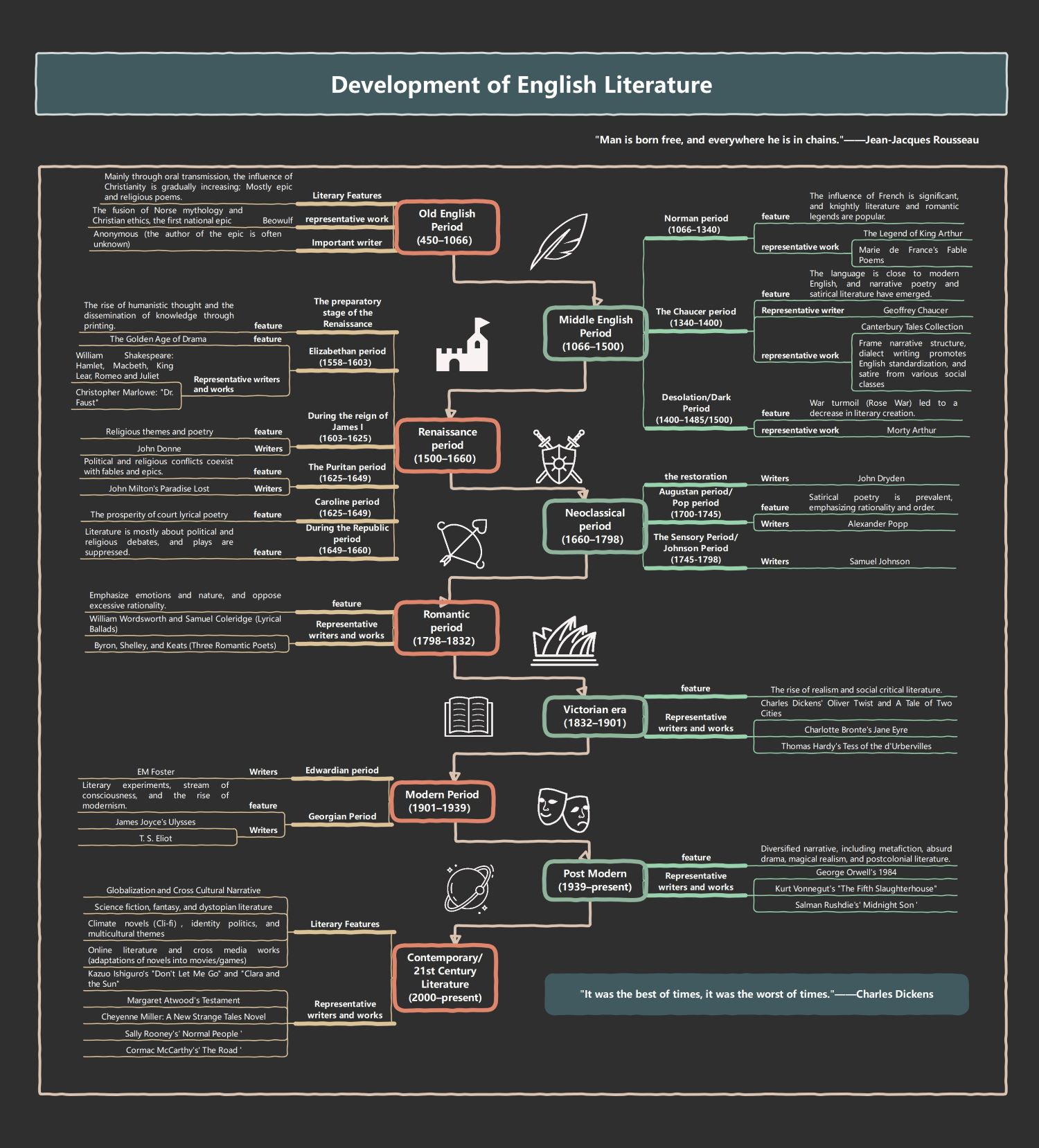
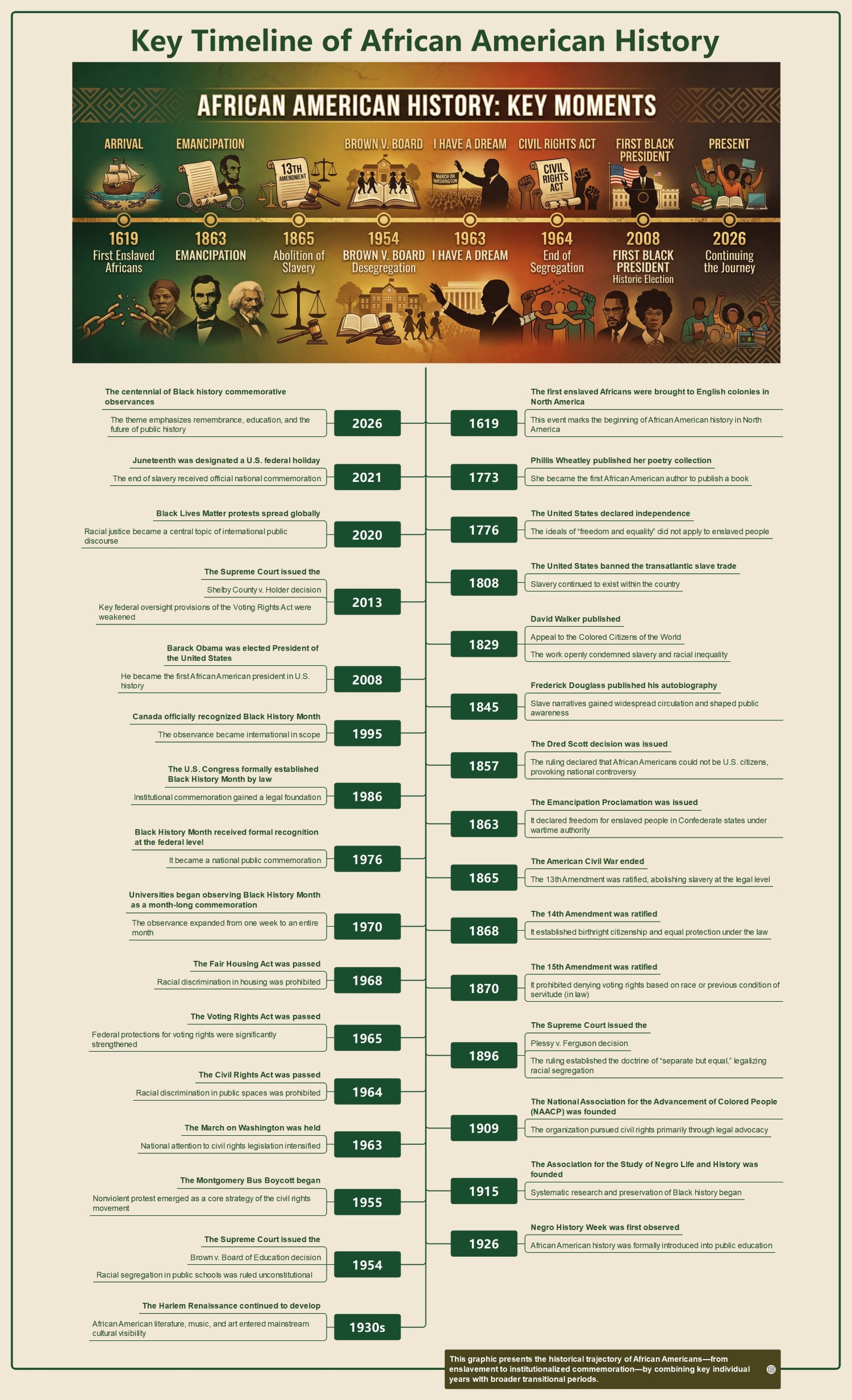
- Phillis Wheatley: The first African American author to publish a book.
- Frederick Douglass: Abolitionist who exposed slavery's realities through autobiographical works.
- W.E.B. Du Bois: Sociologist who introduced the concept of double consciousness.
- Langston Hughes: Leading figure of the Harlem Renaissance literary movement.
- Toni Morrison: Nobel Prize-winning author exploring Black memory and trauma.
Global Influence of Music and the Arts
African American musicians have defined the sound of modern popular culture worldwide. By innovating genres like jazz, soul, and hip-hop, these artists created universal languages that connect musical expression directly to social movements and global artistic evolution.
- Louis Armstrong: Foundational figure who defined modern jazz performance.
- Duke Ellington: Composer who elevated jazz into a large-scale art form.
- Aretha Franklin: Icon of soul music connected to the civil rights movement.
- James Brown: Pioneer of funk music influencing modern popular styles.
- Hip-Hop Culture: Global force originating in African American urban communities.
Historical Preservation and Public Memory
Preserving the past is vital for building an accurate national narrative. This section focuses on the institutions and leaders dedicated to researching and sharing African American history, ensuring these foundational stories are never forgotten by future generations.
- Carter G. Woodson: Founder of Negro History Week in the 1920s.
- ASALH: Organization that researches and disseminates African American history.
- HBCUs: Preserved extensive archives and cultural heritage during periods of neglect.
- Schomburg Center: Global center for the study of Black culture.
- NMAAHC: National museum integrating Black history into the national narrative.
FAQs about this Template
-
Why is historical preservation important for African American heritage?
Historical preservation ensures that the contributions and struggles of Black Americans are accurately recorded and celebrated. By maintaining archives and museums, we prevent important stories from being lost to time. This process helps the public understand the full scope of American history and promotes social equity through education and awareness.
-
How did African American innovators influence modern technology?
Many modern technologies rely on foundations laid by Black scientists and engineers. For example, the architecture of personal computers and the logic of internet search engines were shaped by their brilliance. These innovations have made technology more accessible and have driven the digital revolution that connects our world today.
-
What role did the Harlem Renaissance play in American literature?
The Harlem Renaissance was a turning point that brought Black experiences into the mainstream literary world. It allowed writers to express their identity and heritage through poetry and prose. This movement challenged stereotypes and paved the way for future generations of authors to share diverse stories with a global audience.