About this British Monarchs Timeline template
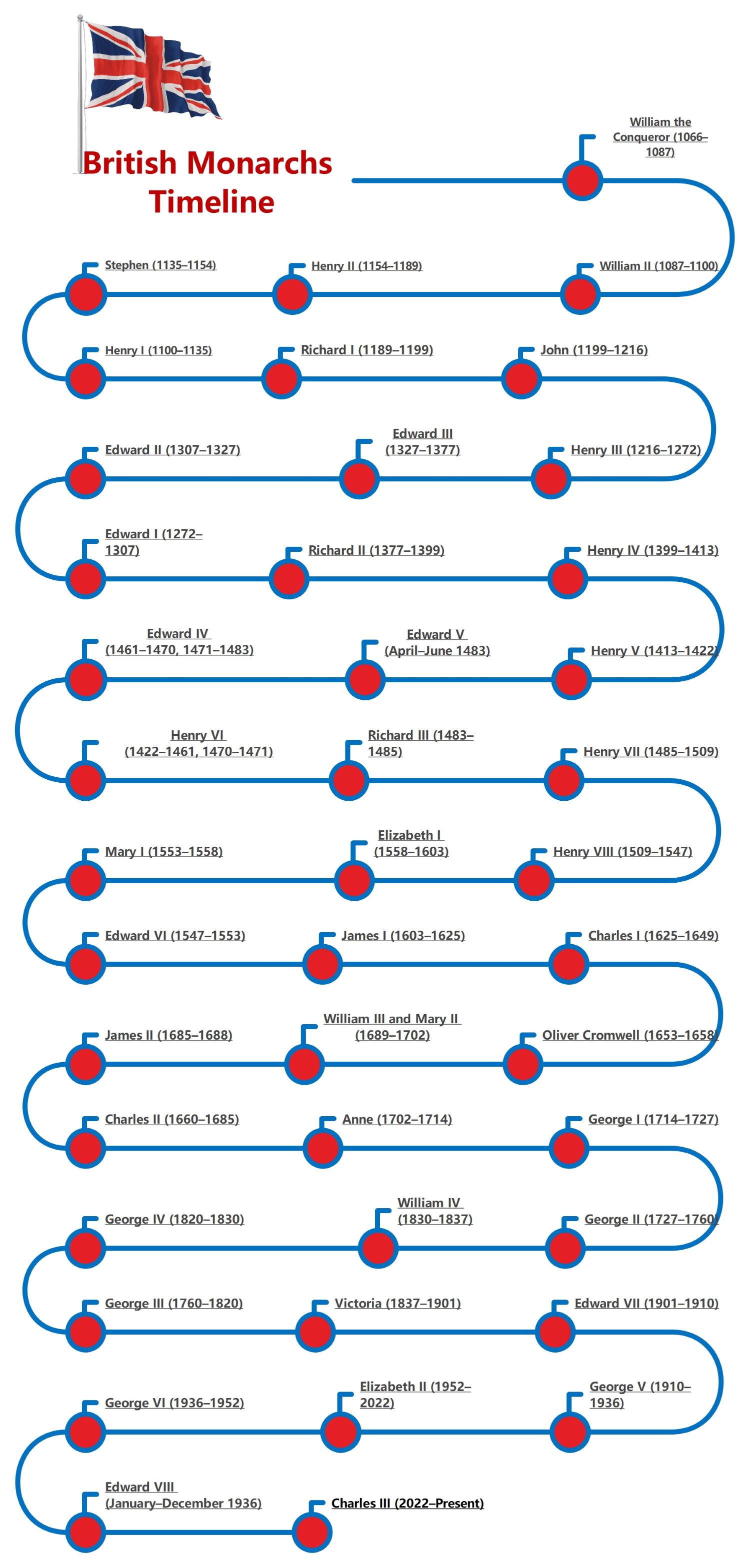
This visual guide simplifies the complex history of British royalty. It provides a clear, chronological path through the various dynasties. Users can easily track succession dates and identify major historical eras from the Middle Ages to the modern Elizabethan and Carolean ages.
The Norman and Early Plantagenet Kings
This period began with the Norman Conquest in 1066, fundamentally changing English society. These monarchs established the foundations of the legal system and central government while expanding royal influence across the British Isles and France.
- William the Conqueror (1066-1087)
- William II (1087-1100)
- Henry I (1100-1135)
- Stephen (1135-1154)
- Henry II (1154-1189)
- Richard I (1189-1199)
- John (1199-1216)
The House of Lancaster and York
Marked by the Wars of the Roses, this turbulent era saw intense power struggles between rival branches of the royal family. The crown shifted frequently as different factions fought for dominance until the Tudor victory at Bosworth.
- Henry IV (1399-1413)
- Henry V (1413-1422)
- Henry VI (1422-1461, 1470-1471)
- Edward IV (1461-1470, 1471-1483)
- Edward V (1483)
- Richard III (1483-1485)
The Tudor and Stuart Dynasties
The Tudors and Stuarts oversaw the English Reformation and the eventual unification of the English and Scottish crowns. This period also includes the temporary abolition of the monarchy under Oliver Cromwell during the Interregnum years.
- Henry VII (1485-1509)
- Henry VIII (1509-1547)
- Elizabeth I (1558-1603)
- James I (1603-1625)
- Charles I (1625-1649)
- Oliver Cromwell (1653-1658)
- Anne (1702-1714)
The Modern Windsor Era
Starting from the early 20th century, the House of Windsor has led Britain through two World Wars and significant social change. It highlights the long-standing reign of Queen Elizabeth II and the recent succession of King Charles III.
- George V (1910-1936)
- Edward VIII (1936)
- George VI (1936-1952)
- Elizabeth II (1952-2022)
- Charles III (2022-Present)
FAQs about this Template
-
Who was the longest-reigning monarch on this timeline?
Queen Elizabeth II holds the record as the longest-reigning monarch in British history. She served for 70 years and 214 days, from February 1952 until her death in September 2022. Her reign saw immense global changes and the transition of the British Empire into the Commonwealth of Nations during her many decades of service.
-
Why is Oliver Cromwell included in the royal timeline?
Oliver Cromwell is included because he served as Lord Protector during the Interregnum, a period between 1649 and 1660 when England was a republic. Although he was not a king, he held executive power after the execution of Charles I, making him a critical figure in the chronological succession of British national leaders.
-
What happened during the transition from the House of Tudor to Stuart?
The transition occurred in 1603 when Elizabeth I died without an heir. The crown passed to her cousin, James VI of Scotland, who became James I of England. This event is known as the Union of the Crowns, marking the beginning of the Stuart dynasty and the eventual formation of the United Kingdom.