About this Black History template
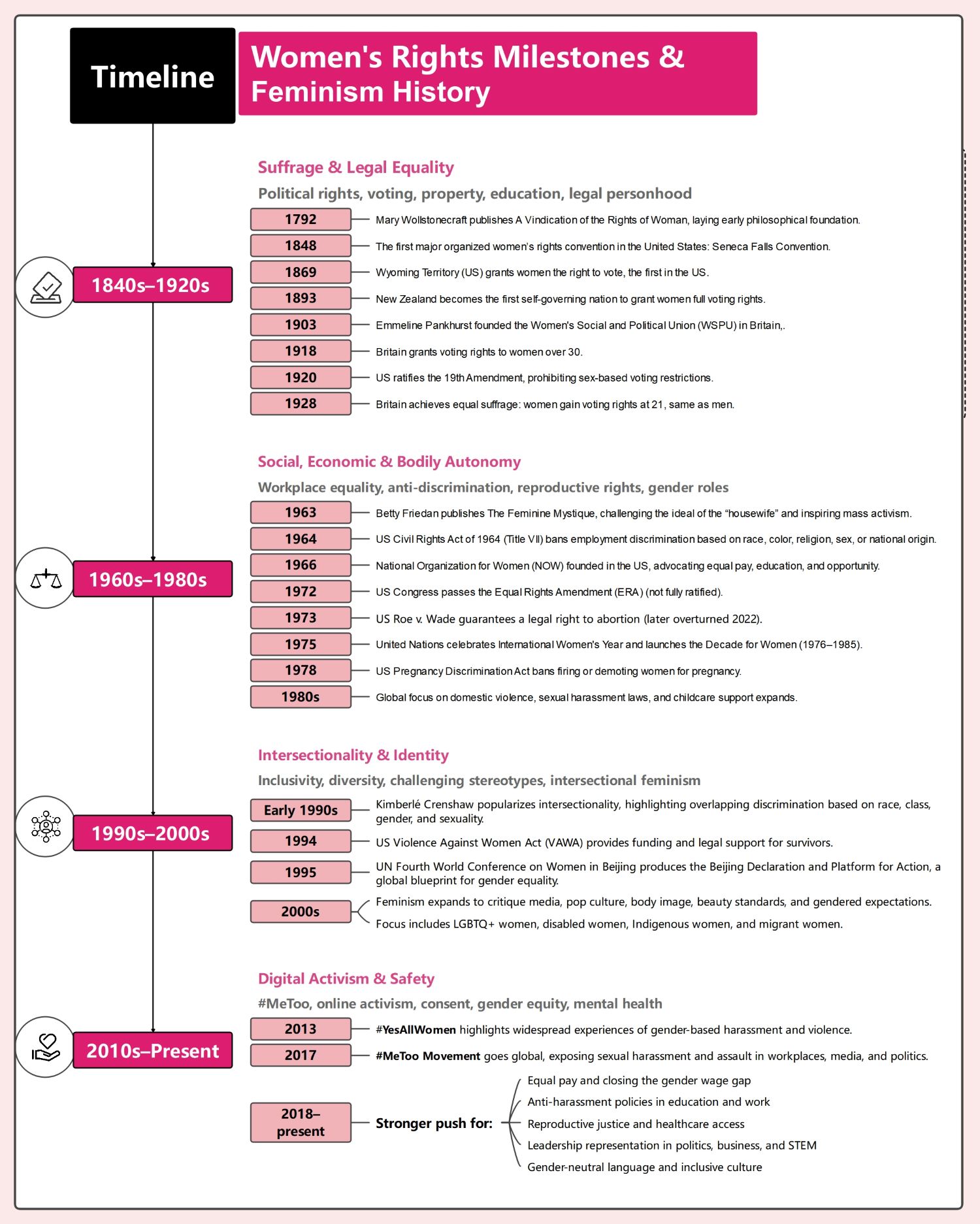
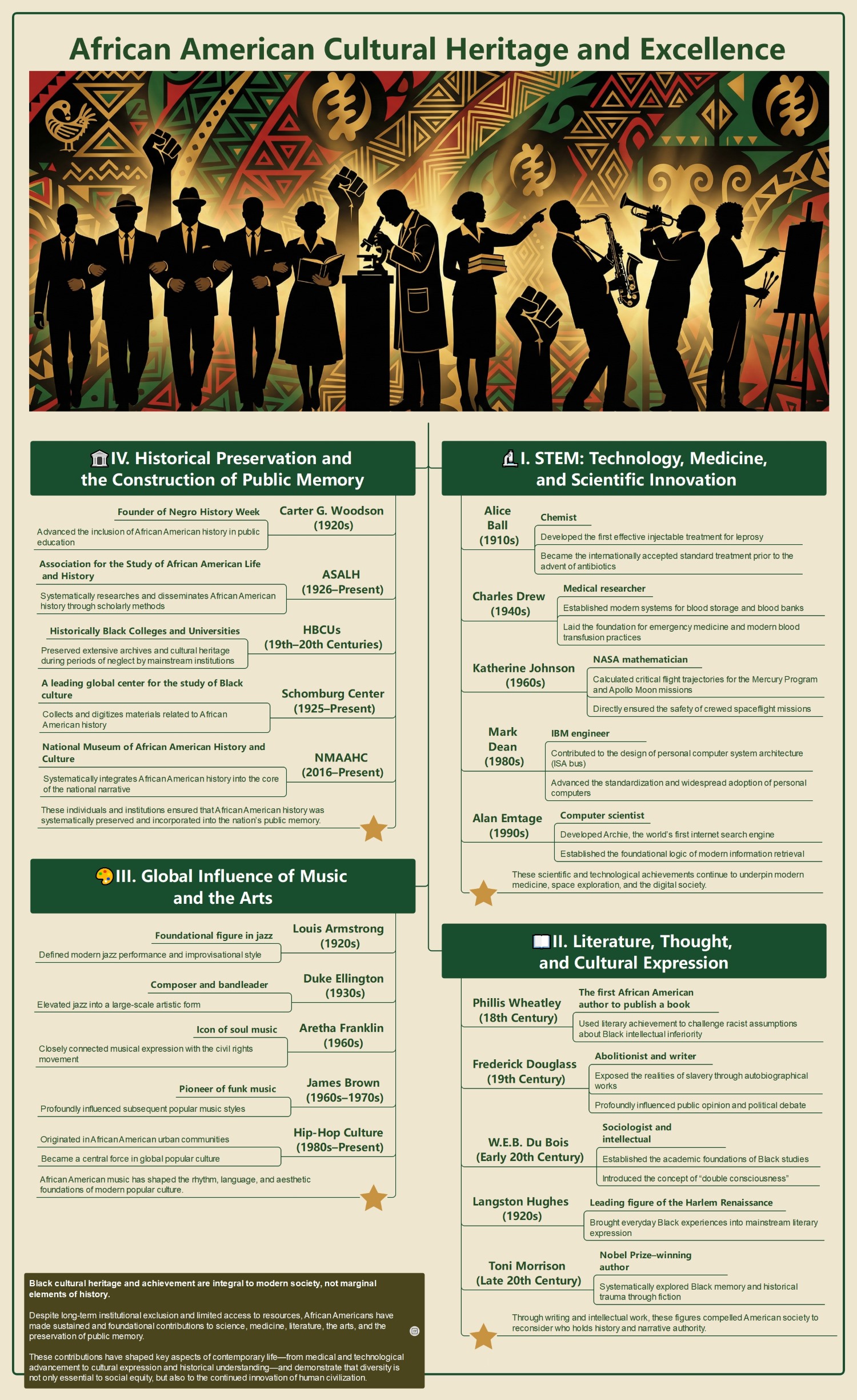
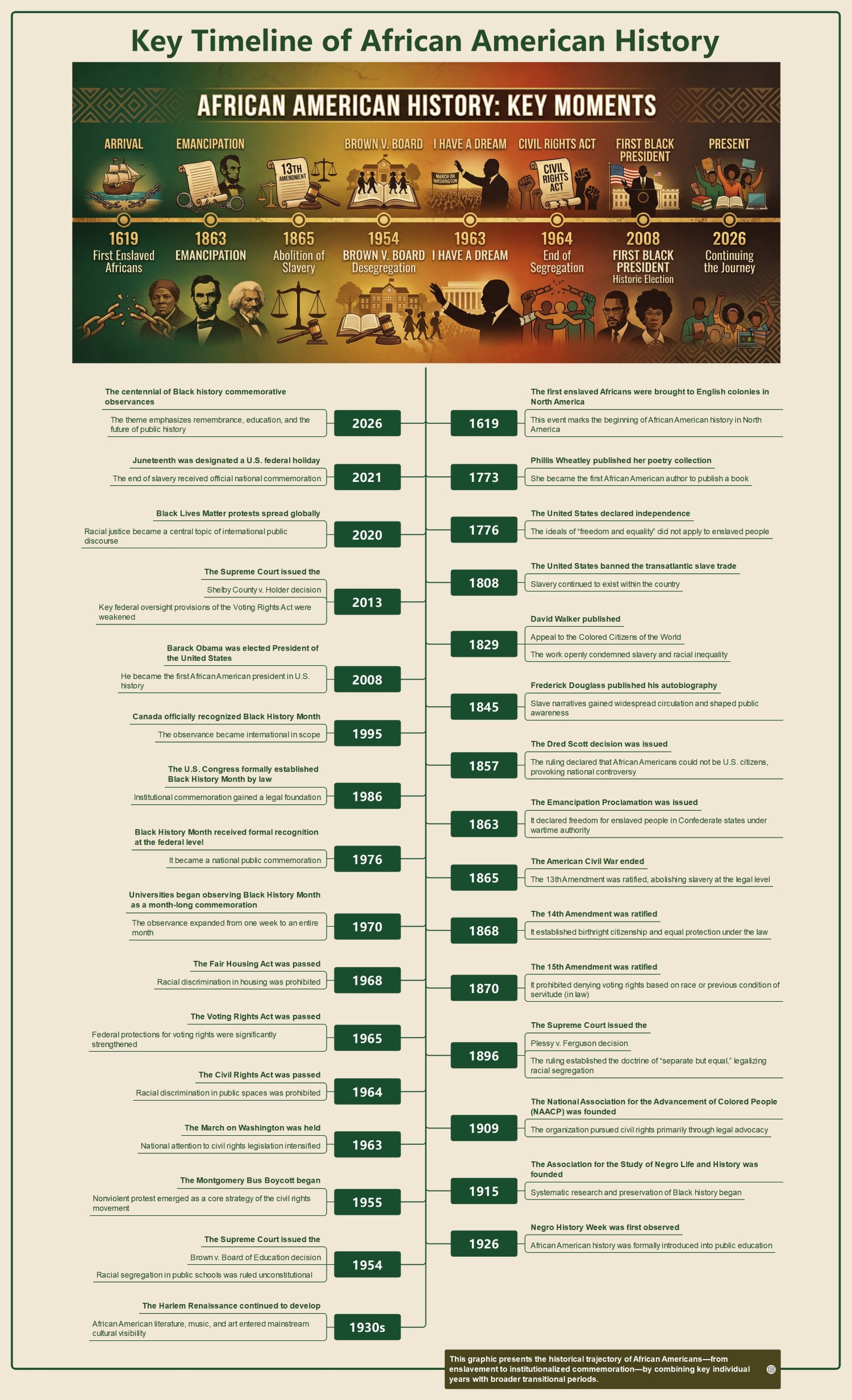
This template provides a comprehensive visual timeline of African American history. It covers major legal, social, and political milestones. Use this to educate, present, or study the long journey toward civil rights and equality.
Early Milestones and the Fight for Freedom
This section explores the early years of African American history. It covers the arrival of enslaved people and the first steps toward liberation. These events set the stage for centuries of struggle for basic rights.
- 1619: First enslaved Africans arrive in North America
- 1773: Phillis Wheatley publishes her poetry collection
- 1776: Declaration of Independence issued
- 1863: Emancipation Proclamation issued by Lincoln
- 1865: 13th Amendment abolishes slavery
The Struggle for Civil Rights
This era focuses on the legal and social battles for equality. It highlights the end of segregation and the rise of powerful protest movements. These moments transformed American law and society for all citizens.
- 1896: Plessy v. Ferguson establishes the "separate but equal" doctrine
- 1909: Founding of the NAACP
- 1954: Brown v. Board of Education ruled segregation unconstitutional
- 1963: March on Washington and "I Have a Dream" speech
- 1964: Civil Rights Act passed
Modern Progress and Commemoration
The final section looks at contemporary achievements and the formal recognition of Black history. It marks political milestones and the global expansion of civil rights awareness. This journey continues to evolve in the modern world.
- 1976: Black History Month receives federal recognition
- 2008: Barack Obama elected as the first Black President
- 2020: Black Lives Matter protests spread globally
- 2021: Juneteenth becomes a U.S. federal holiday
- 2026: Centennial of Black history commemorative observances
FAQs about this Template
-
Why is the year 1619 significant in Black history?
The year 1619 marks the arrival of the first enslaved Africans in the English colony of Virginia. This event is widely recognized as the beginning of the history of slavery in what would become the United States. It serves as a foundational moment for understanding the systemic issues and the long-standing struggle for freedom that followed for generations.
-
How did the Civil Rights Act of 1964 change America?
The Civil Rights Act of 1964 was a landmark piece of legislation. It officially outlawed discrimination based on race, color, religion, sex, or national origin. Specifically, it ended segregation in public places and banned employment discrimination. This law provided the federal government with the power to enforce integration, significantly advancing the cause of racial equality across the entire nation.
-
When did Black History Month start and why?
Black History Month began as "Negro History Week" in 1926, founded by historian Carter G. Woodson. He chose February to coincide with the birthdays of Abraham Lincoln and Frederick Douglass. By 1970, many universities expanded the celebration to a full month. In 1976, President Gerald Ford officially recognized Black History Month to honor the often-neglected accomplishments of African Americans.