About this Legal, Social, and Ethical Issues in Education template
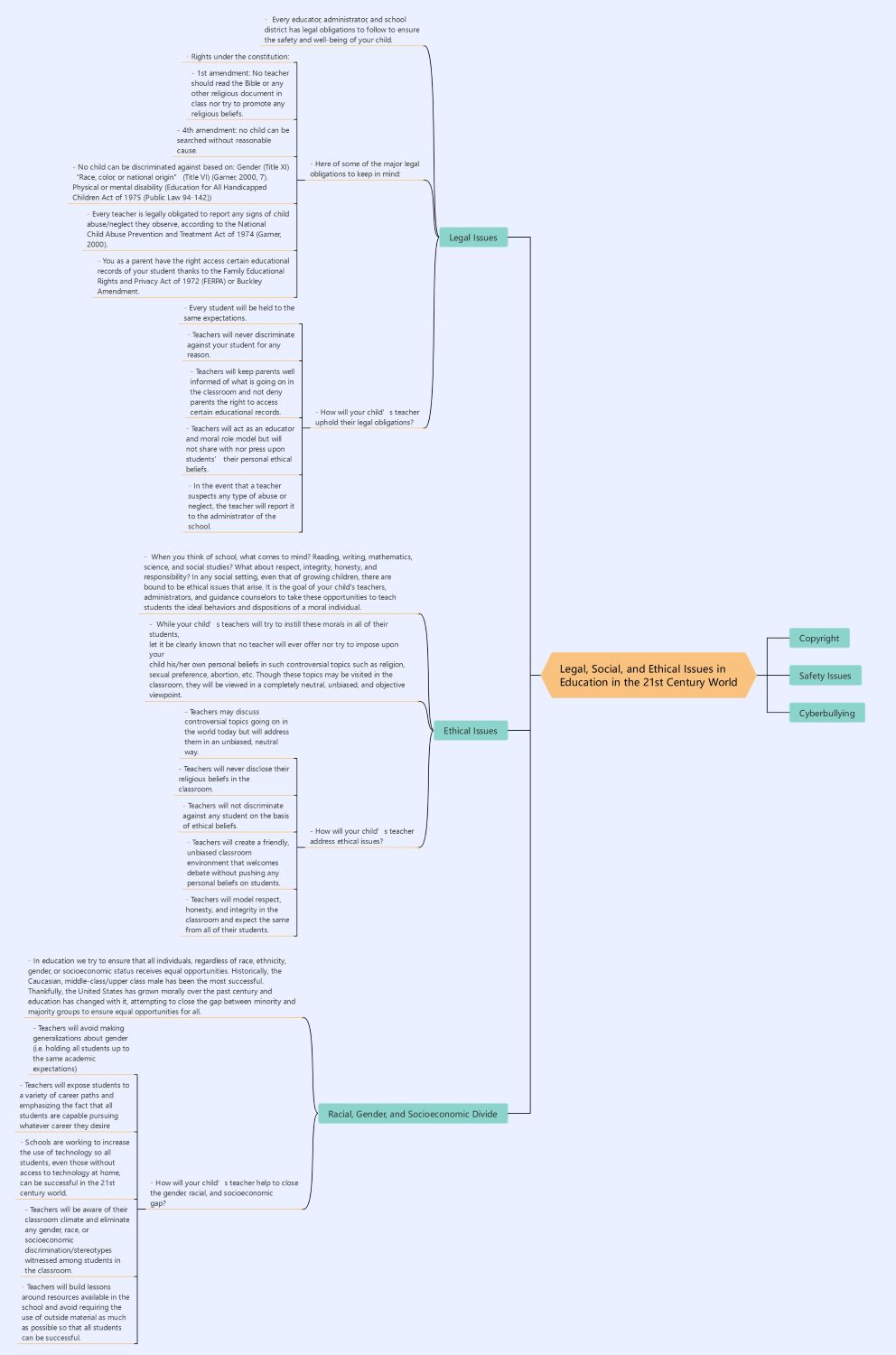
This comprehensive mind map outlines the critical frameworks governing modern classrooms. It helps educators navigate complex legal mandates, ethical dilemmas, and social divides. By using this guide, schools can foster an environment built on transparency, equality, and mutual respect for all students in a digital world.
Legal Issues
Teachers must follow strict legal obligations to protect student safety and constitutional rights. This includes adhering to federal laws regarding privacy, non-discrimination, and reporting suspected abuse. Legal knowledge ensures educators provide a secure and legally compliant classroom for everyone.
- 1st Amendment rights regarding religious neutrality in class.
- 4th Amendment protections against unreasonable student searches.
- Non-discrimination based on gender, race, or disability status.
- Mandatory reporting of suspected child abuse or neglect.
- FERPA compliance for protecting student record privacy.
Ethical Issues
Ethical standards guide how teachers interact with students and handle sensitive topics. Educators should model professional integrity while remaining neutral on controversial subjects. This approach creates a respectful space where students feel safe expressing their own thoughts without outside pressure.
- Neutral discussion of controversial global and social topics.
- Refraining from imposing personal religious or political beliefs.
- Maintaining a friendly and unbiased classroom environment.
- Modeling honesty and professional integrity for all students.
- Promoting mutual respect among diverse student populations.
Racial, Gender, and Socioeconomic Divide
Closing the opportunity gap is a primary goal for modern education. Teachers must eliminate stereotypes and provide equal resources to all students regardless of their background. Ensuring accessibility to technology and career paths helps every child achieve long-term academic success.
- Avoiding gender-based generalizations in academic expectations.
- Exposing students to diverse and inclusive career paths.
- Increasing technology access for students without home internet.
- Eliminating classroom stereotypes and discriminatory behavior.
- Using school-based materials to ensure financial accessibility.
Digital and Safety Concerns
Modern schools face unique challenges related to the digital world and physical security. Managing copyright laws, preventing cyberbullying, and ensuring general safety are critical components of a healthy school culture. These pillars protect the well-being and intellectual property of students.
- Adherence to digital and print copyright laws.
- Implementation of school safety protocols and procedures.
- Prevention and reporting of student cyberbullying incidents.
FAQs about this Template
-
What are a teacher's legal obligations regarding student privacy?
Under the Family Educational Rights and Privacy Act (FERPA), teachers must protect the confidentiality of student educational records. They cannot share grades, disciplinary actions, or personal data with unauthorized individuals. This ensures that a student’s academic history remains private. Parents have the legal right to access these records to stay informed about their child's progress and school behavior.
-
How should teachers handle controversial topics in the classroom?
Teachers should approach controversial global issues with total neutrality and objectivity. They must avoid sharing their personal religious, political, or social views to prevent influencing students unfairly. The goal is to create a safe, unbiased environment where students can explore different viewpoints. This encourages critical thinking and allows students to form their own opinions based on facts and balanced discussion.
-
Why is addressing the socioeconomic divide important in modern schools?
Addressing the socioeconomic divide ensures that every student has an equal chance at success, regardless of their family's wealth. Schools work to provide technology and learning materials to those who lack resources at home. This prevents students from falling behind due to financial barriers. By eliminating these gaps, educators promote fairness and ensure that academic achievement is based on talent and hard work.