About this Marine Pollution template
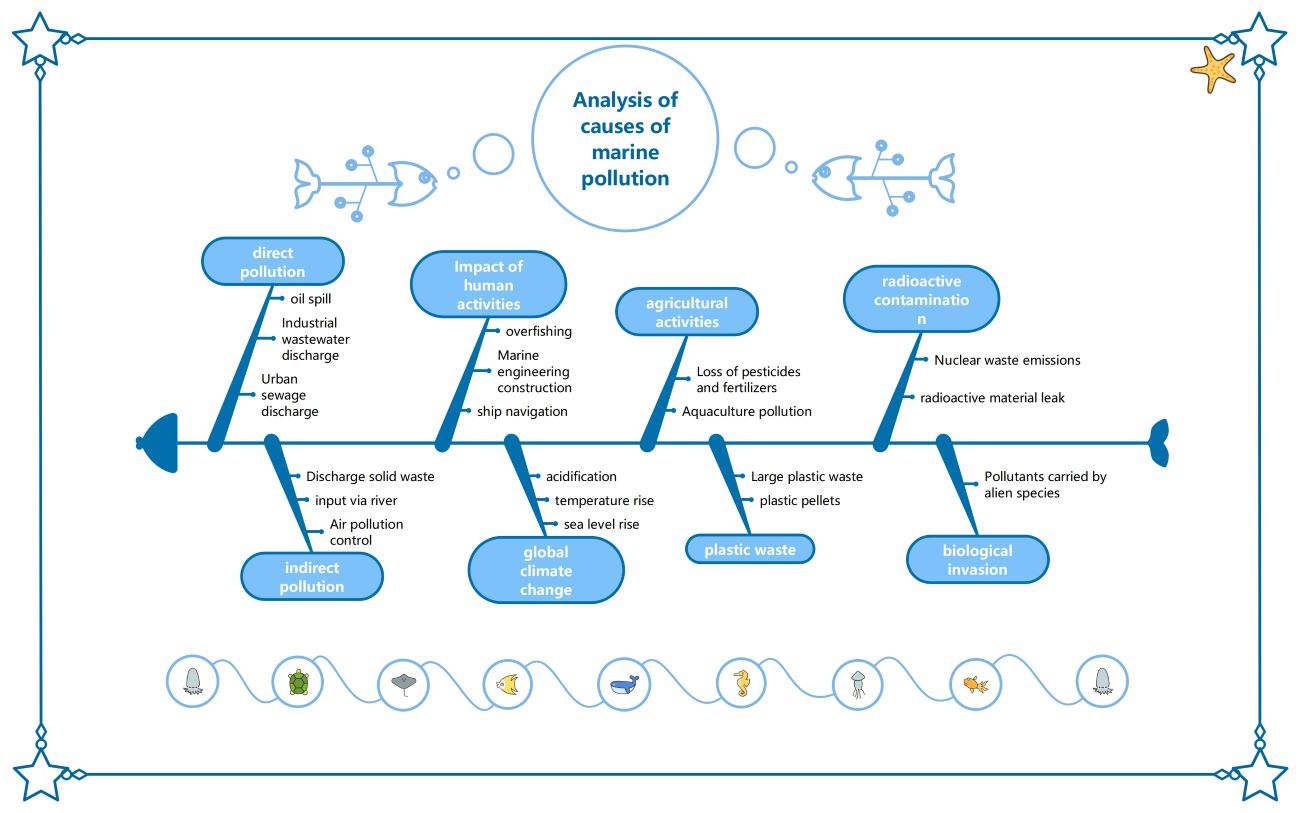
This fishbone diagram offers a clear visual map of marine pollution causes. It helps researchers and students organize complex environmental data. By using this template, you can identify key drivers like industrial waste and climate change to develop effective solutions for ocean conservation.
Direct Pollution Sources
Direct pollution occurs when harmful substances enter the ocean immediately from a specific source. These contaminants often come from coastal activities or shipping accidents. They cause instant damage to local water quality and nearby marine life.
- Oil spill accidents
- Industrial wastewater discharge
- Urban sewage discharge
Indirect Pollution Factors
Indirect pollution involves contaminants that travel through other paths before reaching the sea. Often, these pollutants originate far inland. They move through the atmosphere or river systems. This makes tracking the exact source much more difficult.
- Discharge of solid waste
- Input via river systems
- Air pollution control impacts
Impact of Human Activities
Human actions at sea significantly disrupt natural oceanic cycles and habitats. As global trade and resource extraction grow, so does the pressure on marine environments. These activities often lead to long-term ecological shifts that are hard to reverse.
- Overfishing of fish stocks
- Marine engineering construction
- Commercial ship navigation
Global Climate Change
Climate change alters the physical and chemical properties of the ocean. Rising greenhouse gases trap heat and increase carbon levels in the water. These shifts threaten the survival of coral reefs and many sensitive aquatic species across the globe.
- Ocean acidification
- Global temperature rise
- Rising sea levels
Agricultural and Plastic Waste
Runoff from farms and discarded plastics represent two of the biggest threats to oceans today. Chemicals from fertilizers fuel toxic algae blooms. Meanwhile, plastic debris persists for centuries, harming animals that mistake it for food sources.
- Loss of pesticides and fertilizers
- Aquaculture pollution
- Large plastic waste and pellets
Contamination and Biological Threats
Nuclear waste and invasive species create unique hazards for marine ecosystems. Radioactive leaks can persist for generations in the water column. Similarly, alien species can outcompete native life, leading to a complete breakdown of local biological diversity.
- Nuclear waste emissions
- Radioactive material leaks
- Pollutants carried by alien species
FAQs about this Template
-
What is the primary source of marine pollution?
The primary source is a combination of land-based runoff and direct industrial disposal. Agricultural fertilizers, urban sewage, and plastic litter account for the majority of ocean debris. Additionally, atmospheric pollution and oil spills contribute significantly to water degradation. Understanding these diverse sources is crucial because it allows scientists to create targeted policies to protect our fragile marine ecosystems and global biodiversity.
-
How does plastic waste specifically damage the ocean?
Plastic waste is a severe threat because it does not biodegrade and persists for centuries. Large debris can physically entangle sea creatures, while microplastics are often consumed by fish and birds. These plastics contain harmful toxins that enter the food chain, eventually affecting human health. Reducing plastic use is essential to prevent long-term damage to the world's oceans and various aquatic species.
-
Why is ocean acidification considered a form of pollution?
Ocean acidification is a form of chemical pollution caused by excessive carbon dioxide emissions from human activity. When the ocean absorbs CO2, the water becomes more acidic over time. This change harms shell-forming organisms like coral reefs and shellfish. Because it radically alters the chemical balance of the sea, it is a major environmental concern that requires urgent global action today.