About this vocabulary test for kids template
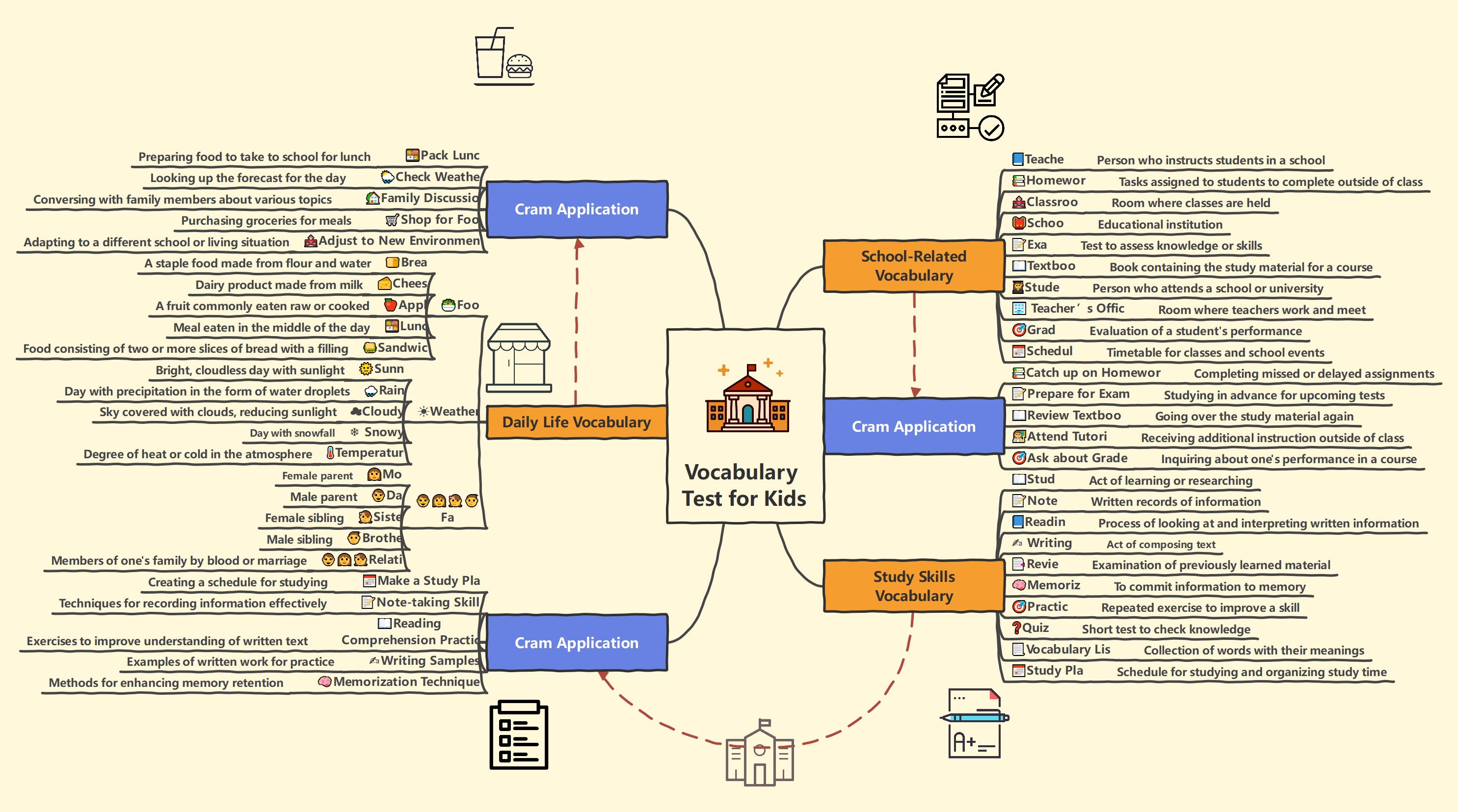
This template is designed to help educators and parents organize vocabulary learning into logical categories. It covers daily life, school environments, and study habits to ensure a well-rounded linguistic foundation for young learners.
Daily Life Vocabulary
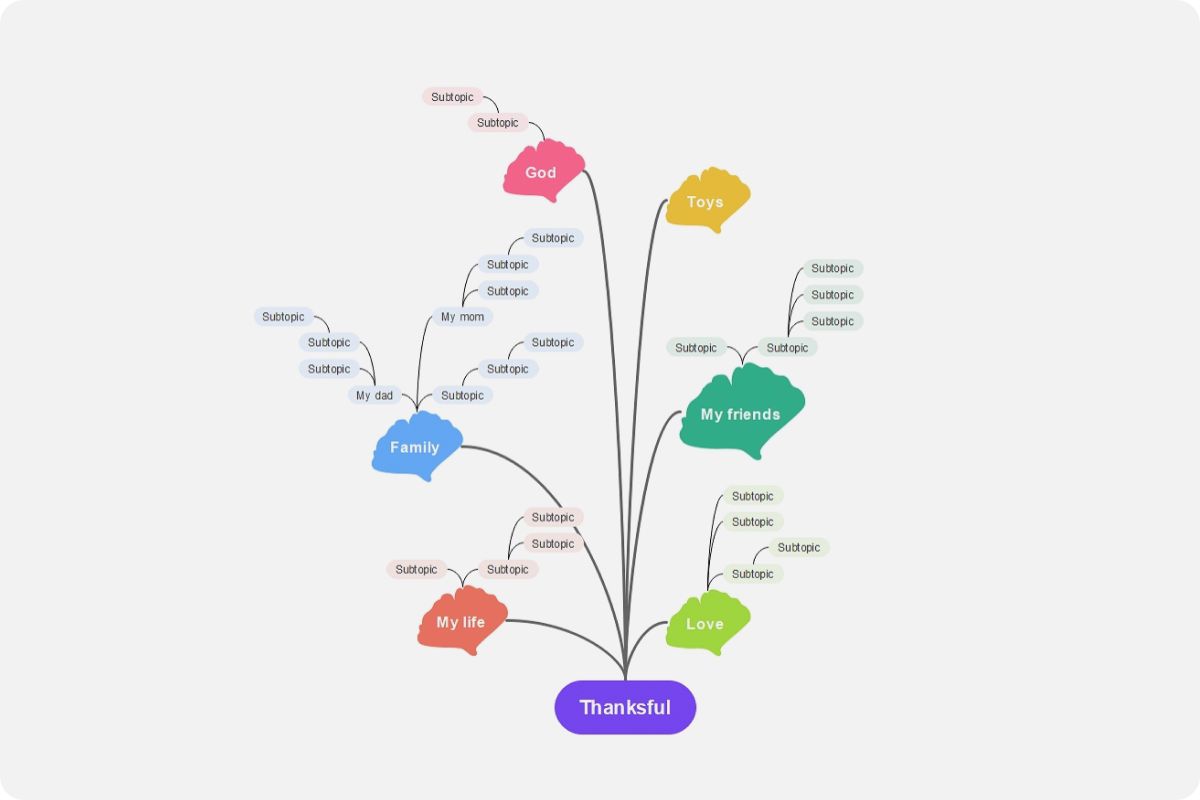
This section focuses on words children encounter every day. It includes essential terms for describing family members, understanding weather changes, and identifying common foods. Mastering these basics helps kids communicate their needs and observations more clearly.
- Weather: Sunny, Rain, Cloudy, Snowy, Temperature
- Food: Bread, Cheese, Apple, Lunch, Sandwich
- Family: Mom, Dad, Sister, Brother, Relative
- Daily Actions: Pack lunch, Shop for food, Check the weather
School-Related Vocabulary
Success in the classroom starts with understanding school-specific terminology. This section helps students identify key people and places within their educational environment. Knowing these words boosts confidence and helps children navigate their daily school routines more effectively.
- People: Teacher, Student
- Places: Classroom, School, Teacher's Office
- Items: Homework, Exam, Textbook, Schedule, Grade
Study Skills Vocabulary
Developing effective study habits is crucial for long-term academic growth. This section introduces terms related to active learning and organization. It encourages students to understand the processes of memorizing, practicing, and reviewing their course materials for better results.
- Core Actions: Study, Reading, Writing, Practice
- Documentation: Note, Vocabulary List, Study Plan
- Assessment: Review, Memorize, Quiz
Cram Application
The application phase connects vocabulary knowledge to practical academic actions. It focuses on how students can use their skills to prepare for tests and improve their grades. These strategies help bridge the gap between learning words and using them.
- Exam Prep: Prepare for exam, Review textbook, Attend tutoring
- Skill Building: Note-taking skills, Reading comprehension practice
- Organization: Make a study plan, Memorization techniques
FAQs about this Template
-
How can I help my child prepare for a vocabulary test effectively?
Effective preparation involves consistent practice and contextual learning. Encourage your child to use new words in daily conversations or write short stories using the test terms. Breaking the list into small, manageable chunks prevents overwhelm. Using visual aids like this template helps children categorize information, making it much easier to recall during the actual examination.
-
Why is it important to learn school-related vocabulary early on?
School-related vocabulary helps children understand instructions and navigate their environment with confidence. When kids know terms like schedule, textbook, or tutoring, they feel more in control of their learning process. This specialized language reduces anxiety in the classroom, allowing students to focus on their lessons rather than struggling to understand basic administrative terms or teacher requests.
-
How do study skills improve a child's overall vocabulary retention?
Study skills like note-taking and summarizing require kids to process information actively. Instead of just memorizing a list, students learn to connect words to concepts. Techniques such as creating a study plan or practicing writing samples reinforce the meaning of words through repetition. This active engagement ensures that the vocabulary moves from short-term memory into long-term linguistic mastery.