About this DSAT Test Preparation template
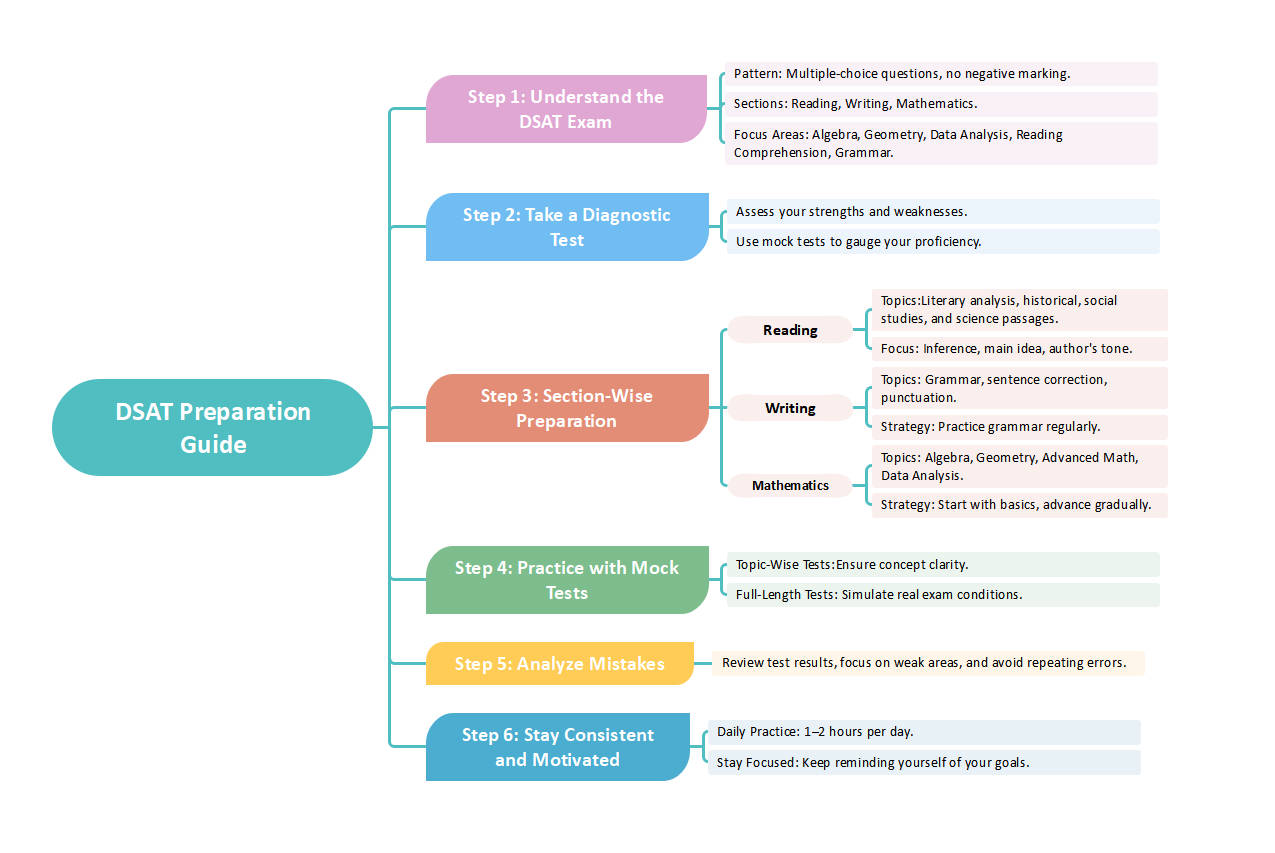
This DSAT preparation template provides a step-by-step roadmap for students. It covers everything from initial diagnostic testing to final review strategies. Use this visual guide to stay organized and ensure you cover all necessary topics efficiently.
Understand the DSAT Exam
Starting your journey requires knowing the test format. The DSAT uses multiple-choice questions without negative marking for wrong answers. It focuses on three core areas to evaluate your college readiness and academic skills.
- Multiple-choice questions with no negative marking
- Core sections include Reading, Writing, and Mathematics
- Key focus on Algebra, Geometry, and Data Analysis
- Testing on Reading Comprehension and Grammar skills
Take a Diagnostic Test
A diagnostic test is essential for identifying your current skill level. It highlights your strengths and reveals areas that need more attention. This step helps you create a customized study plan tailored to your needs.
- Assess your current strengths and weaknesses
- Use mock tests to gauge your initial proficiency
- Identify which sections require the most improvement
Section-Wise Preparation
Dedicated practice for each section ensures total subject mastery. You should focus on specific topics like literary analysis and advanced math. Applying targeted strategies for Reading, Writing, and Math will help you build confidence and accuracy.
- Reading: Focus on inference, main ideas, and author tone
- Writing: Practice grammar, punctuation, and sentence correction
- Mathematics: Start with basics in Algebra and Geometry
- Advanced Math and Data Analysis for the Math section
Practice with Mock Tests
Consistent practice with mock tests simulates the actual exam environment. You should use topic-wise tests to build concept clarity before moving to full-length exams. This method builds the stamina needed for the real testing day.
- Use topic-wise tests to ensure conceptual clarity
- Take full-length tests to simulate exam conditions
- Build endurance for the digital testing format
Analyze and Stay Consistent
Analyzing your mistakes is the best way to avoid repeating them. Review every wrong answer and focus on your weak spots. Finally, maintain a daily practice schedule to keep your motivation high and reach goals.
- Review test results to identify recurring errors
- Focus on improving specific weak areas
- Practice for 1-2 hours every single day
- Stay focused by reminding yourself of your goals
FAQs about this Template
-
How is the Digital SAT different from the traditional paper SAT?
The Digital SAT is shorter and features a more streamlined format compared to the old paper version. It uses an adaptive testing model, meaning the difficulty of questions changes based on your performance. There are also shorter reading passages with only one question each. This new digital format is designed to be more secure and provides results much faster.
-
What is the best way to use diagnostic tests during DSAT prep?
You should take a diagnostic test at the very beginning of your study journey. This provides a baseline score and helps you see exactly where you struggle. Use these results to prioritize your study time on weak subjects while maintaining your strengths. Periodic mock tests throughout your preparation will also help you track your progress and adjust strategies.
-
Can I improve my DSAT math score if I struggle with basics?
Yes, you can significantly improve your math score by starting with the fundamental concepts. Focus on mastering Algebra and Geometry basics before moving to advanced topics like trigonometry or complex data analysis. Regular practice with multiple-choice questions and learning how to use the built-in graphing calculator efficiently will boost your confidence. Consistent daily practice is key to mastering these math skills.