About Passive Voice Rules
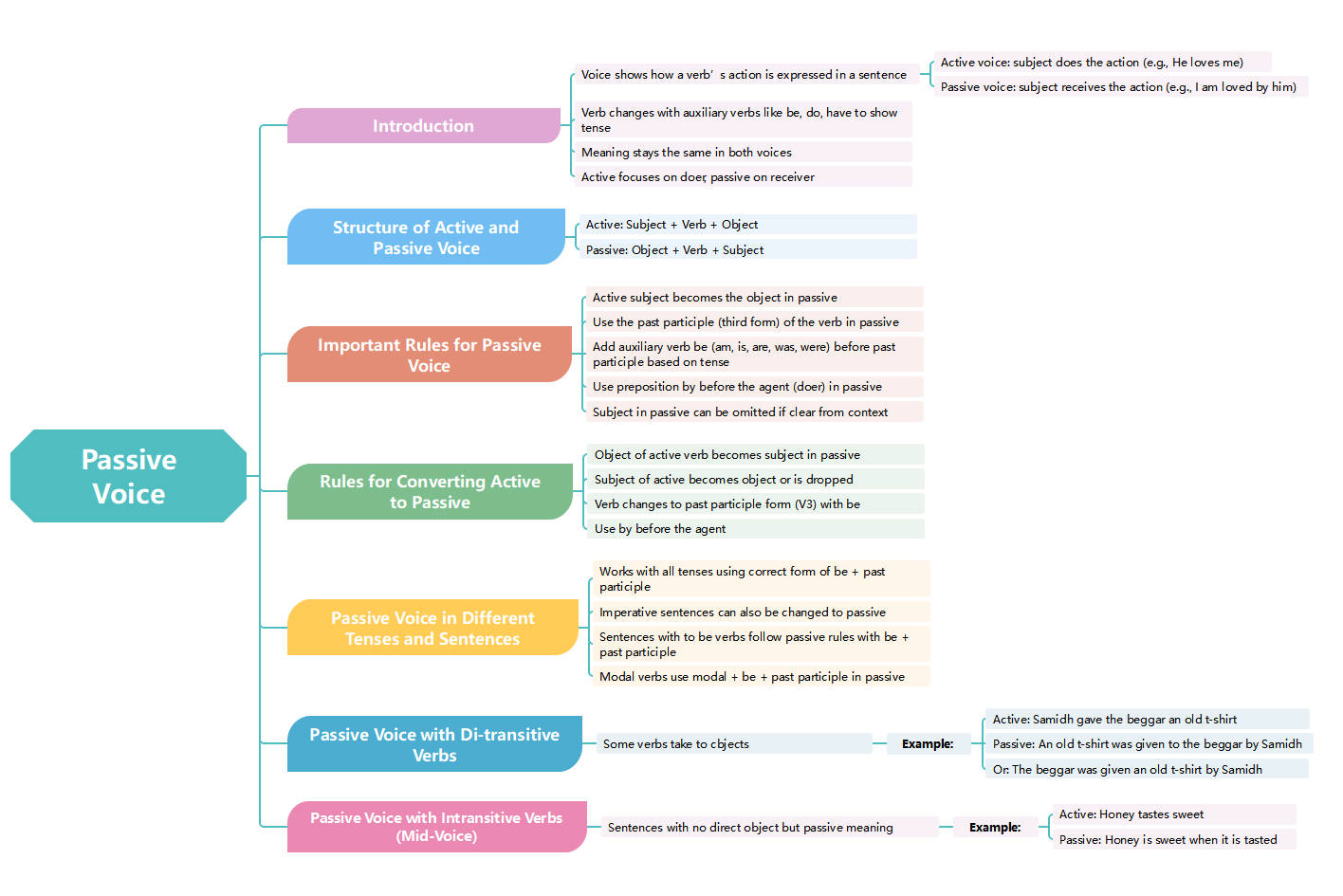
This comprehensive template breaks down the complex rules of passive voice into easy-to-understand sections. It covers structures, conversion steps, and specific verb types to help learners master English grammar through clear visual organization and practical examples.
Structure of Active and Passive Voice
This section explains the basic sentence patterns used in both voices. It highlights how the positions of the subject and object shift during conversion, ensuring the sentence remains grammatically correct and logically sound for readers.
- Active: Subject + Verb + Object
- Passive: Object + Verb + Subject
Important Rules for Passive Voice
Mastering these fundamental guidelines is essential for accurate sentence transformation. These rules focus on verb forms and the inclusion of auxiliary components that indicate the tense and the relationship between participants in any given action.
- The active subject becomes the object in the passive
- Use the past participle (third form) of the verb
- Add auxiliary verb be (am, is, are, was, were)
- Use the preposition by before the agent (doer)
- The subject in passive can be omitted if clear
Passive Voice in Different Tenses and Sentences
The passive voice adapts across various grammatical structures, including modal verbs and imperative commands. Using the correct form of the verb to be is critical for maintaining the intended timeframe and mood of the sentence.
- Works with all tenses using be + past participle
- Imperative sentences can be changed to passive
- Sentences with to be follow passive rules
- Modal verbs use modal + be + past participle
Passive Voice with Di-transitive Verbs
When a sentence contains two objects, it can often be transformed into two different passive versions. This flexibility allows writers to emphasize either the direct or indirect object depending on the specific goal of the message.
- Some verbs take two objects
- Active: Samidh gave the beggar an old t-shirt
- Passive: An old t-shirt was given to the beggar
- Passive: The beggar was given an old t-shirt
FAQs about this Template
-
When should I use passive voice instead of active voice?
You should use the passive voice when the person performing the action is unknown, irrelevant, or less important than the action itself. It is frequently used in scientific reports, news headlines, and formal documents to maintain an objective tone. By focusing on the recipient, you emphasize the result or the event rather than the individual doer.
-
How do I change an active sentence into a passive one correctly?
To convert a sentence, move the active object to the subject position. Identify the tense of the original verb and add the corresponding form of the auxiliary verb be. Change the main verb to its past participle form. Finally, place the original subject after the word by or omit it entirely if the agent is obvious.
-
Can every English verb be used in the passive voice?
No, only transitive verbs can be used in the passive voice because they require a direct object to receive the action. Intransitive verbs, like sleep or arrive, do not have objects and therefore cannot be converted. However, some special cases called mid-voice allow for passive meanings even without a standard direct object in the original sentence.