About this Modal and Auxiliary Verbs template
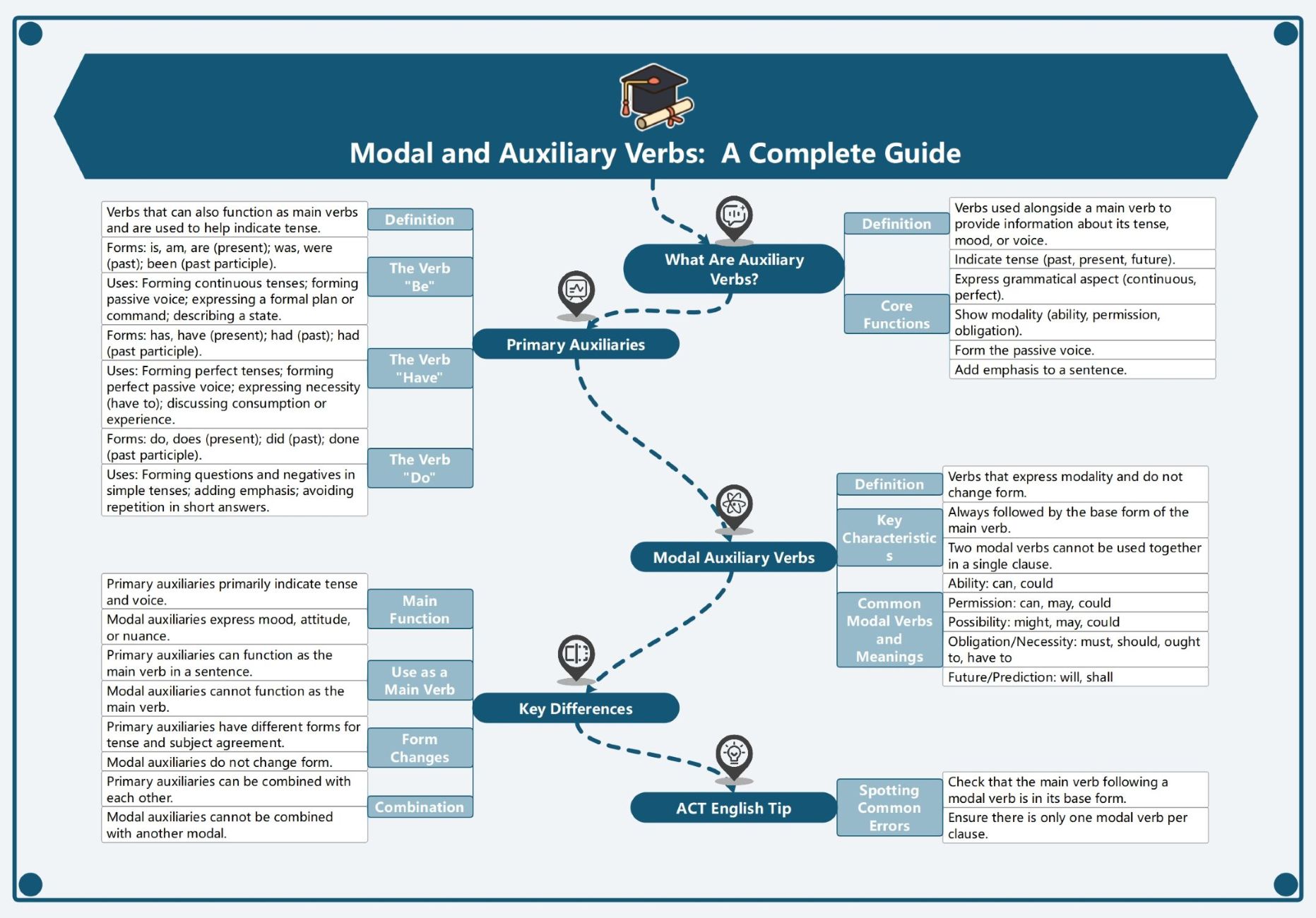
This template offers a comprehensive visual map of English helping verbs. It is designed to help students and educators distinguish between primary and modal auxiliaries. Use this diagram to master verb tenses, moods, and common grammatical structures with ease and confidence.
What Are Auxiliary Verbs?
Auxiliary verbs are helping words used with a main verb to provide context. They clarify the tense, mood, or voice of a sentence. These verbs are necessary for building complex ideas and adding specific emphasis to your writing.
- Indicate past, present, and future tenses
- Express grammatical aspects like continuous or perfect
- Show modality including ability and permission
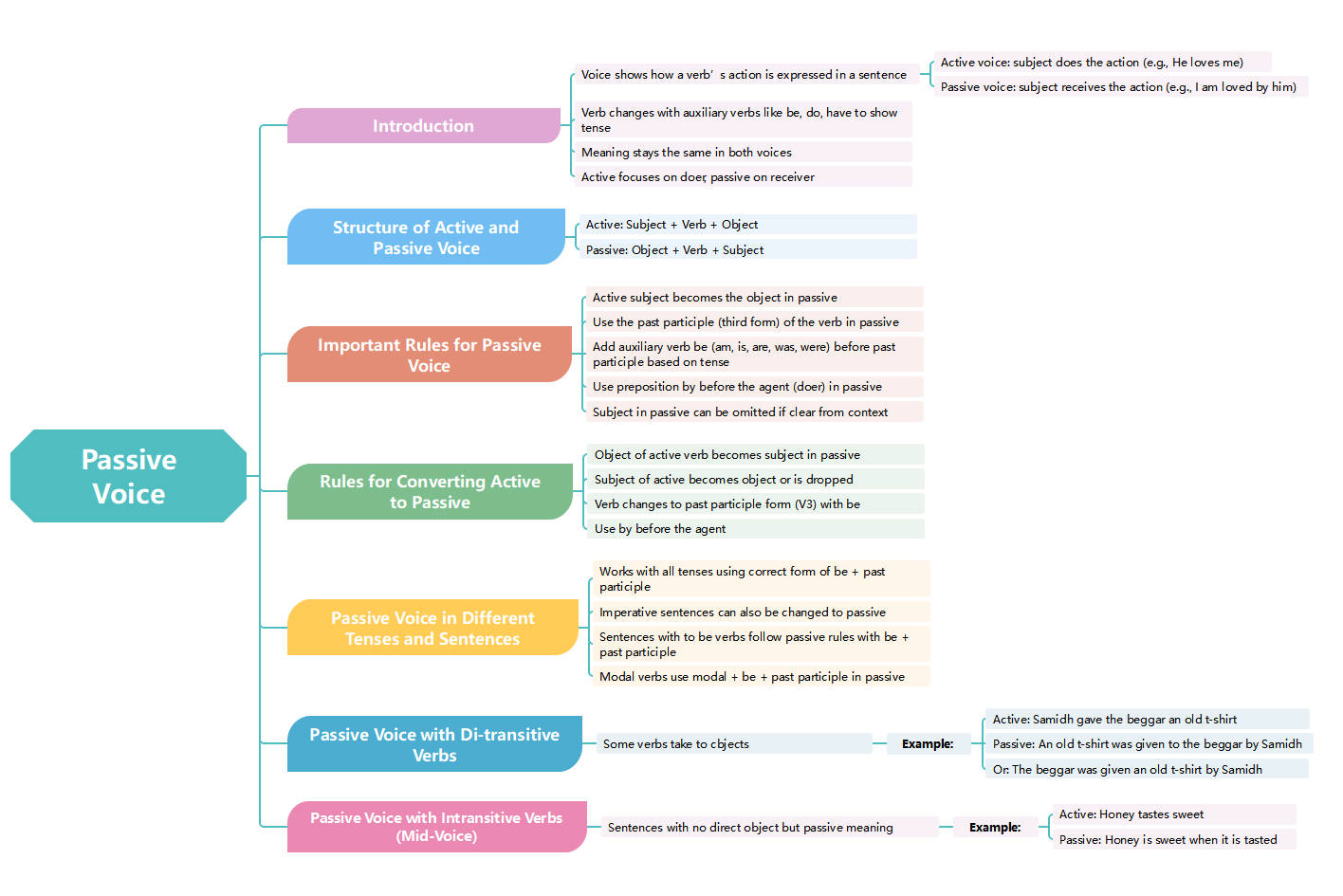
- Assist in forming the passive voice
- Add emphasis to a specific statement
Primary Auxiliaries
Primary auxiliaries are unique because they can also function as the main verb. They primarily help indicate the tense and voice of a sentence. These verbs change their form based on the subject and the timeframe being described.
- The Verb "Be" (is, am, are, was, were, been)
- The Verb "Have" (has, have, had)
- The Verb "Do" (do, does, did, done)
- Used for forming continuous and perfect tenses
- Essential for asking questions and forming negatives
Modal Auxiliary Verbs
Modal verbs express specific moods like possibility or obligation and never change their form. They must always be followed by the base form of a main verb. These verbs help speakers convey their attitude toward the action being described.
- Ability: can, could
- Permission: can, may, could
- Possibility: might, may, could
- Obligation and Necessity: must, should, ought to, have to
- Future and Prediction: will, shall
Key Differences
Understanding the differences between primary and modal verbs is vital for grammar mastery. Primary auxiliaries handle tense and can stand alone. Conversely, modal verbs focus on nuance and must always accompany a main verb to complete a thought correctly.
- Primary auxiliaries indicate tense and voice
- Modal auxiliaries express mood, attitude, or nuance
- Primary verbs can be main verbs; modals cannot
- Primary verbs change form; modal verbs remain constant
- Primary verbs can combine; modals cannot be combined
FAQs about this Template
-
How do primary auxiliary verbs differ from modal auxiliary verbs?
Primary auxiliary verbs like "be," "do," and "have" mainly help indicate the tense or voice of a sentence. They can also act as the main verb in a clause. Modal verbs, however, express specific moods like ability or permission. Modals never change their form and must always be paired with a main verb to function correctly in a sentence.
-
Can I use two modal verbs together in the same sentence?
No, you should not use two modal verbs together in a single clause. In standard English, rules state that one modal verb is sufficient to express mood or possibility. If you need to express two ideas, you must use a phrase like "be able to" alongside a modal. This helps you avoid common grammatical errors in your writing.
-
Why are auxiliary verbs so important for English learners?
Auxiliary verbs are essential because they allow you to create different tenses and express complex ideas. Without them, you could not form questions, negatives, or the passive voice. They provide the necessary context for the main action in a sentence. Mastering these verbs helps you communicate more naturally and accurately in both professional and casual English settings.