
Volkswagen is one of the world’s leading car manufacturing companies, offering both cost-effective and premium-quality models. It comprises several major brands, such as Audi, Skoda, Lamborghini, and Porsche, among others.
Founded in Berlin in 1937 by the German Labour Front, the company has grown significantly through strategic acquisitions over the years.
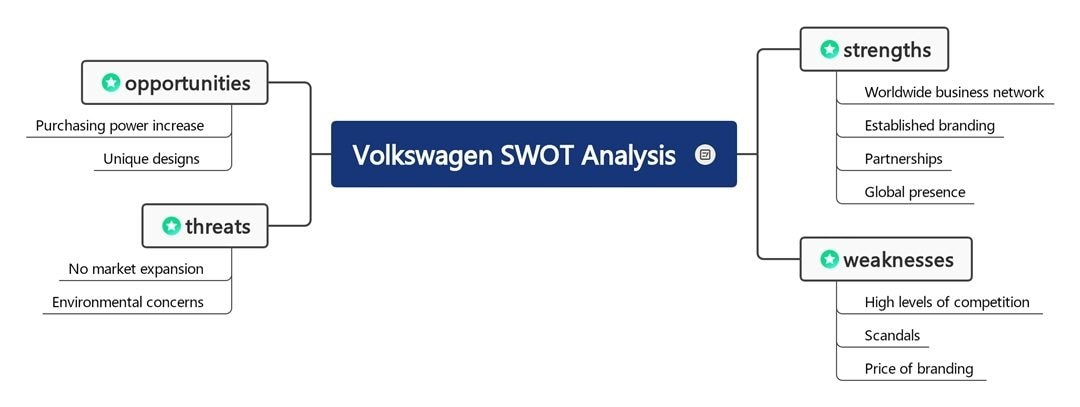
Various factors influence Volkswagen's performance in the current market. This article analyzes the company's strengths and weaknesses in the current market and examines the opportunities and threats it faces today.


In This Article
Overview of Volkswagen
Here’s a brief overview of Volkswagen Group to help with the SWOT analysis.
| Aspect | Information |
| Founded | 1937 |
| Headquarters | Wolfsburg, Germany |
| CEO | Oliver Blume |
| Annual Revenue (2025) | $353.073 billion USD |
| Market Cap | $61.76 billion USD |
| Key Products | Automobiles, Commercial Vehicles |
| Latest Growth | 2.8% profit growth in Q1 2025 |
| Official Website | www.volkswagen-group.com |
Volkswagen’s Strengths
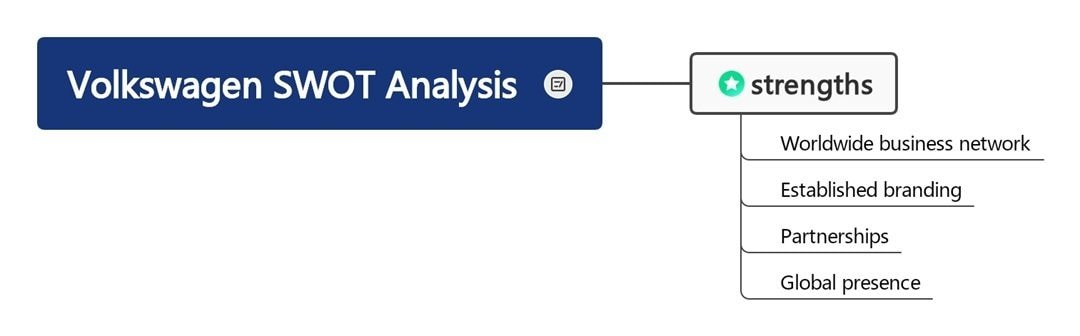
Volkswagen has several advantages as listed below.
Worldwide Business Network
One of Volkswagen's key assets is its worldwide umbrella presence, which provides a high degree of efficiency. In addition to automobiles, it provides various offerings, and all of its activities are constantly running at full capacity.
The brand maintains a consistent level of R&D and ensures effective communication with its global market. It also provides a significant presence in its native country, where it can employ the entire town.
Established Branding
While Volkswagen primarily functions as an umbrella company, it makes every effort to maintain a strong presence in the market. People are becoming more aware of Audi and Porsche, but they also know Volkswagen as the parent company.
Partnerships
Volkswagen has many partners that help with supply chain management, accounting, and other areas. Among these, Accenture is the most essential, serving as a major consultant and handling all system requirements.
Such solid collaborations enable the brand to focus on its core competencies, such as R&D and business management. They further guarantee that Volkswagen remains the most popular car brand in the majority of nations.
Global Presence
In terms of global presence, the Volkswagen Group operates in 153 countries worldwide. It has 115 manufacturing factories in 17 European nations and 10 countries in North and South America, Asia, and Africa.
The Volkswagen Group also offers a wide range of financial services to both distributors and consumers, including insurance, banking, financing, and lending.
Volkswagen’s Weaknesses
The following are Volkswagen's most significant flaws.
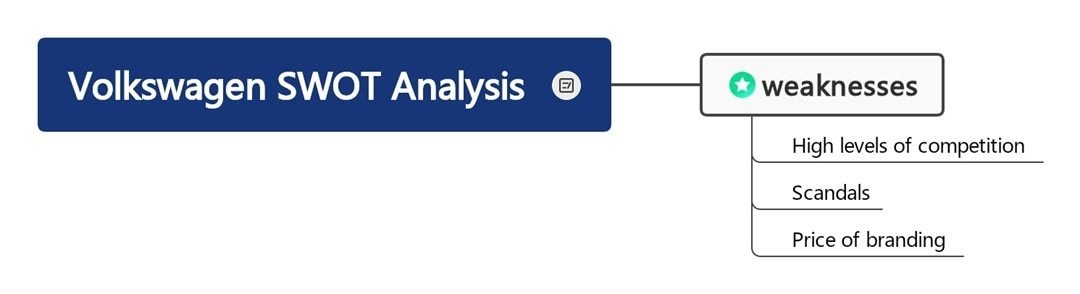
High Levels of Competition
Due to the highly competitive luxury automobile sector, Volkswagen has been struggling to expand markets. Many emerging companies are also now able to provide premium features in mid-range automobiles. As a result, consumers with limited budgets in growing economies are not buying Volkswagen's premium-priced vehicles.
Scandals
Following the emissions scandal, over 11 million automobiles were deemed unsafe and returned to the manufacturer. This has blemished Volkswagen's otherwise spotless reputation.
The company has made a significant investment in promoting a new identity, yet this one incident has created a lot of skepticism among customers. Since the current generation is cautious about supporting businesses that harm the environment, such controversy could be disastrous.
Price of Branding
Some Volkswagen trademarks require excessive branding expenditure. For example, Porsche and Bentley are rare luxury automobile brands that require a significant amount of money to maintain.
In developing economies, these brands are also unable to compete with names like Maruti and Hyundai. Therefore, Volkswagen needs to re-evaluate the sustainability of these brands immediately.
Volkswagen’s Opportunities
Volkswagen's opportunities include increased purchasing power and unique designs.
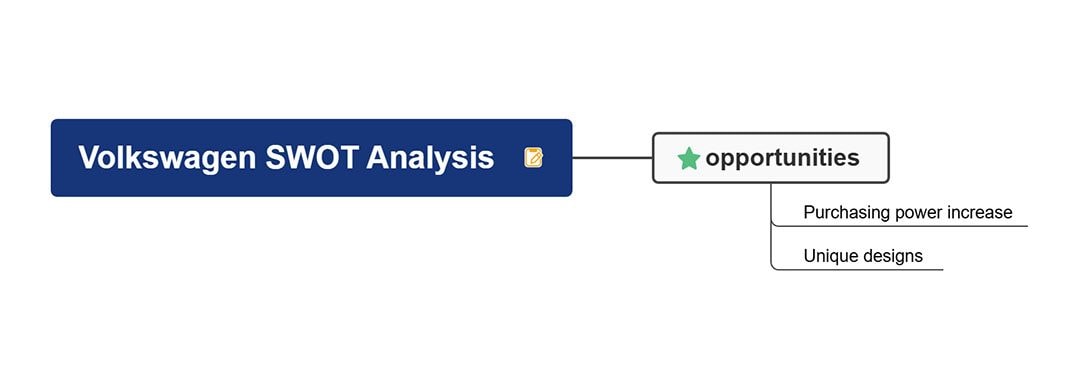
Purchasing Power Increase
The world’s purchasing power is rapidly increasing. Vehicles that were previously out of reach for the middle-income are now within their reach. Therefore, this is an ideal time for Volkswagen to enter the semi-luxury car market.
This appears to be the preferred vehicle type in most emerging markets, and it may provide substantial income for the company. The brand's future will be determined by its ability to capture these market opportunities.
Unique Designs
In recent years, the technical environment has significantly improved. Therefore, Volkswagen should deploy as many unique car designs as possible. These designs are not only fuel-efficient but also beneficial for the environment, which is a pressing concern at present.
Volkswagen can also enter the self-driving car market with the help of strategic agreements with the right tech companies. For most of these businesses, combining high-performance technology with premium automobiles is the way to go.
Volkswagen’s Threats
Below are the threats to Volkswagen’s business.
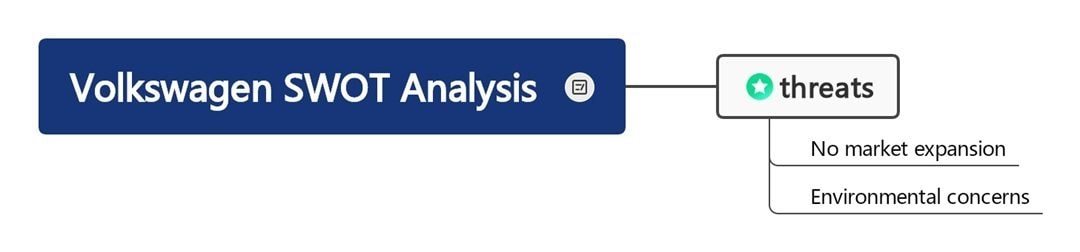
No Market Expansion
Volkswagen has struggled to advertise itself to the millennials and Gen Z generations. As a result, the company's image is being regarded as a relic of the past.
The company needs an immediate rebranding to reach new audiences. If the brand is unable to do so, it may lag behind its competitors.
Environmental Concerns
The present climate issue has had a significant impact on automobile manufacturers. Since automobiles significantly contribute to environmental destruction, Volkswagen must develop greener vehicles.
Furthermore, given their long-standing ecological difficulties due to the emissions scandal, this would be a novel approach to sell the brand.
How To Make a SWOT Analysis for a Company
A SWOT analysis is a useful tool that can help companies like Volkswagen better understand their position in the market. It highlights their internal strengths and weaknesses, and examines external opportunities and threats.
Having a clear SWOT analysis can be very useful for making strategic decisions for companies. This can help them identify issues, enhance their brand, and better adapt to changing market needs.
Use a Professional SWOT Analysis Maker
Creating a SWOT analysis doesn’t have to be complicated. You can easily create one using the right tool to spark your creativity and make brainstorming a breeze.
Wondershare EdrawMind is a versatile tool suitable for various needs, whether for completing school projects or work tasks.
EdrawMind supports various features, including AI tools, a rich library of symbols, and different diagrams. This way, you can easily create a detailed SWOT analysis.
Steps To Make a SWOT Analysis Mind Map
You can create a SWOT analysis mind map using EdrawMind by following these simple steps:
 Try the app & get 500 free AI tokens


Step 1
Open the EdrawMind app or use it online.
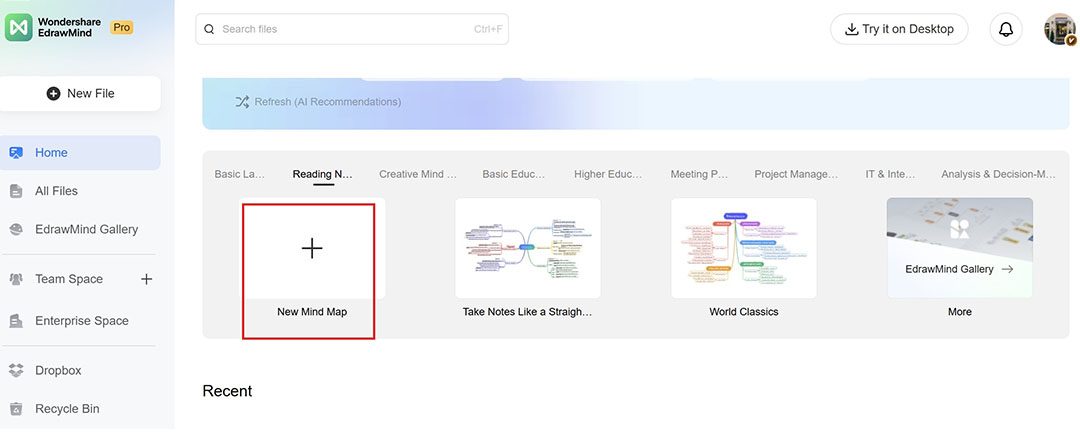
Step 2
Create a new mind map.
Step 3
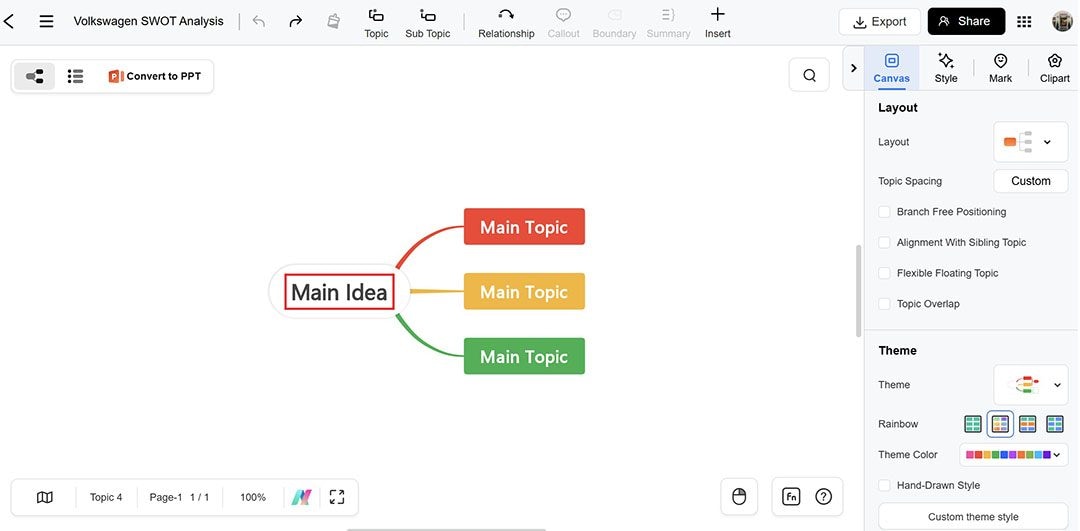
Edit the main idea or the central node as needed. For example, you can edit it to Volkswagen SWOT Analysis.
Step 4
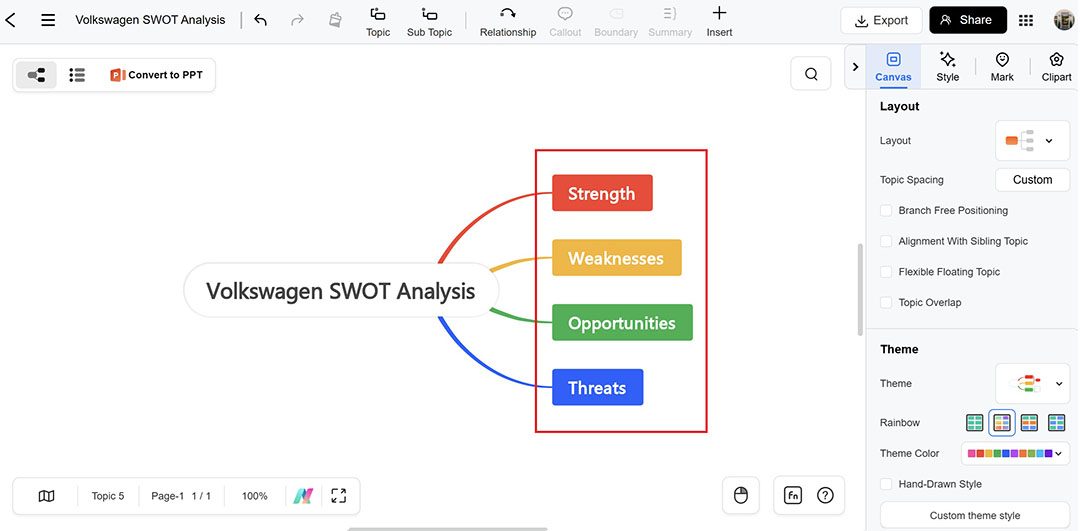
Add four main branches: Strengths, Weaknesses, Opportunities, and Threats. You can also add more subtopics to expand your ideas.
Step 5
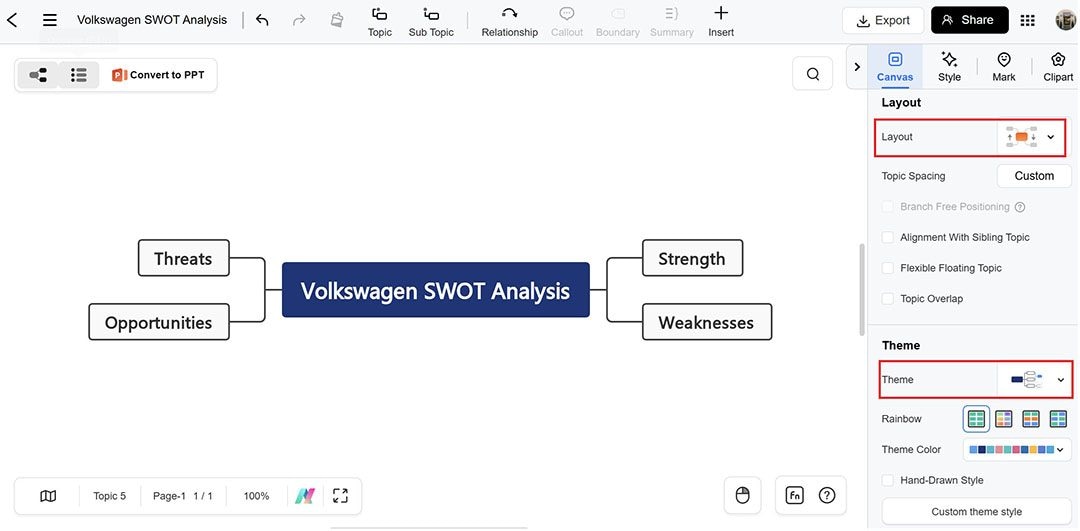
Customize the layout and colors of the branches, and add images or icons.
Step 6
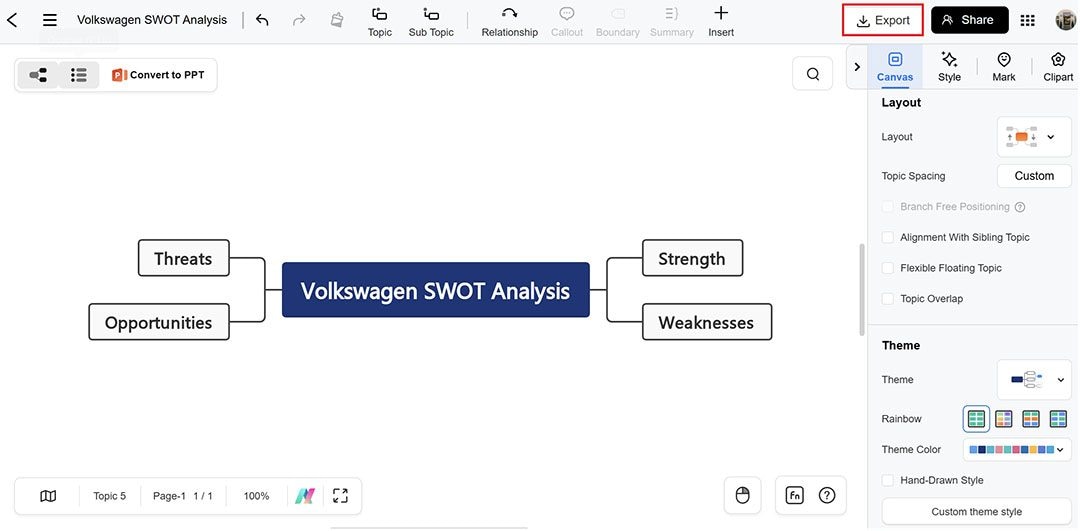
Save and export your mind map. You can also share it with other people via PDF, JPG, or other supported file formats.
Tips for Creating a SWOT Analysis Mind Map
It is important to keep things clear and simple when making a SWOT analysis mind map. Make sure to use short phrases or keywords, and avoid using complete sentences.
To further organize your ideas, you can also use colors and add icons to your mind map. This can help you categorize your ideas and make them visually appealing.
Finally, consider using tools such as Wondershare EdrawMind. With many built-in templates and customization options, you can create professional-looking mind maps with ease.
A thoughtfully crafted mind map can boost your analysis and make your marketing strategy more organized. It’s a great way to stay on top of your ideas and see the bigger picture more easily.
FAQs
Here are some frequently asked questions related to this topic:
-
1. What Is the Volkswagen Emissions Scandal?
The Volkswagen emissions scandal, also known as "dieselgate," was a controversy uncovered in 2015. It revealed that the company used illegal software to manipulate emissions tests for its diesel vehicles.
This allowed its cars to pass regulatory standards while actually emitting dangerous levels of nitrogen oxide, significantly exceeding legal limits. -
2. What Brands Are Under the Volkswagen Group?
The Group consists of ten brands from five European countries: Volkswagen, Volkswagen Commercial Vehicles, ŠKODA, SEAT, CUPRA, Audi, Lamborghini, Bentley, Porsche, and Ducati. -
3. What Other Services Does Volkswagen Provide?
In addition to manufacturing automobiles and commercial vehicles, the Volkswagen Group also provides a wide range of financial services to both distributors and consumers, including insurance, banking, financing, and lending.
 EdrawMind
AppsEdrawMind Online
EdrawMind
AppsEdrawMind Online