
What Is SWOT Analysis
A SWOT analysis is one of the most effective tools for understanding a business, project, or brand. It highlights strengths, weaknesses, opportunities, and threats, clearly showing internal and external factors that affect performance.
This article will explain SWOT analysis with examples and practical tips.
In This Article
A Strengths, Weaknesses, Opportunities, and Threats (SWOT) Analysis is widely used for evaluating a business. By reviewing the four elements, companies clearly understand their performance and the challenges ahead.
It helps measure internal factors, such as strengths and weaknesses that are within your control. It also includes external factors, such as opportunities and threats outside your control.
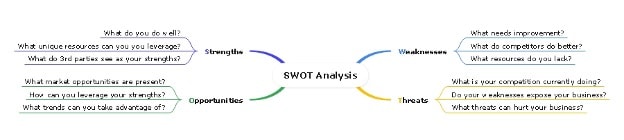
The process highlights what your business does well, where it can improve, and how it can prepare for future risks or opportunities. Below, here is a SWOT analysis example (more later) to give you a picture of how it works:
The Different Elements of a SWOT Analysis
A SWOT Analysis is a structured method to identify a company’s Strengths, Weaknesses, Opportunities, and Threats. It requires proper research, accurate data collection, and team collaboration to categorize internal and external factors that shape business performance.
Strengths
The topic of Strength is very subjective, as some consider strength to be the amount of funding their company has received.
In contrast, others consider strength to be the number of employees they currently employ.
Here are the questions you’ll usually ask for this part:
- Where does the company excel?
- What sets the brand apart from its competitors?
- What resources or assets support employees?
Here are some examples of items you can put in the Strengths quadrant of your SWOT analysis diagram:
- Skilled staff
- Supportive managers
- Healthy workplace culture
- Effective sales strategy
Weaknesses
Once a company learns about its strengths, it can easily jot down the areas that weaken its overall performance. Some of the questions that you need to ask yourself to find the weaknesses are:
- What are the gray areas in the company, product, or any project?
- What are some of the strategies your competitors are doing better than you or your company?
- What are some of the key resource limitations?
- Are there any unclear selling propositions within the company?
Here are some examples of weaknesses:
- Outdated technology
- Low employee motivation
- Poor internal communication
- Weak brand reputation
Opportunities
The third segment is “O”, which stands for opportunities. As the name suggests, opportunities are areas where your business or brand could take advantage to increase efficiency.
It should be noted here that you can easily convert your weaknesses into opportunities with the right goals and the right team. Some of the questions that you need to ask yourself to find the opportunities are:
- Are you maximizing your marketing strategy?
- Could you create a product that benefits a significant portion of the audience?
- Who are the renowned competitors in your area?
- What are some of the untapped markets?
Here are some examples of opportunities:
- Rising demand for a product
- Advances in the industry’s R&D; expired patents open for public use
- Expanding into new customer segments
Threats
Lastly, Threats are external risks that could harm the business. They may stem from competition, environmental changes, or shifts in public perception. Questions to ask are:
- Are new competitors entering the market?
- Could ecological or economic changes disrupt operations?
- Has negative publicity affected the brand?
Here are some examples of threats:
- Market saturation
- Growing competitors
- COVID-19 pandemic
When To Use SWOT Analysis
Unlike other business and marketing diagrams available in EdrawMind, SWOT Analysis is not something you create just once. It is most useful at specific moments when clarity and direction are needed.
If you want to thrive in the market, strengthen your strategy, or manage risks effectively, conducting a SWOT Analysis becomes essential.
You can also use it to increase revenue, reduce costs, or gain a better understanding of your market position. Here are some situations where SWOT Analysis plays a vital role:
- A company should conduct a SWOT Analysis whenever there are shifts in leadership or ownership, such as onboarding a new CEO or CFO, or when one firm acquires another. For instance, Elon Musk’s acquisition of Twitter is a prime case.
- External changes, such as a new wave of a pandemic, sudden lockdowns, or shifts in economic policy, alter the business landscape. A SWOT Analysis helps companies anticipate threats while adjusting strategies to seize opportunities in changing conditions.
- Strategic planning introduces new directions, goals, and processes. Conducting a SWOT Analysis at this stage ensures the plan is realistic, aligned with resources, and mindful of possible obstacles.
- Companies should not wait for crises or transitions to run an analysis, even without visible changes. Conducting SWOT quarterly or annually helps track progress, measure stability, and uncover potential risks or growth areas before they escalate.
How To Make a SWOT Analysis
Now that you have understood the importance and categorization of each aspect of SWOT Analysis. Here are different ways to visualize your SWOT analysis and how to make it with a powerful tool: Wondershare EdrawMind.
Different Formats for SWOT Analysis
First, examine the various formats available for a SWOT analysis diagram. You can choose either of these depending on your needs.
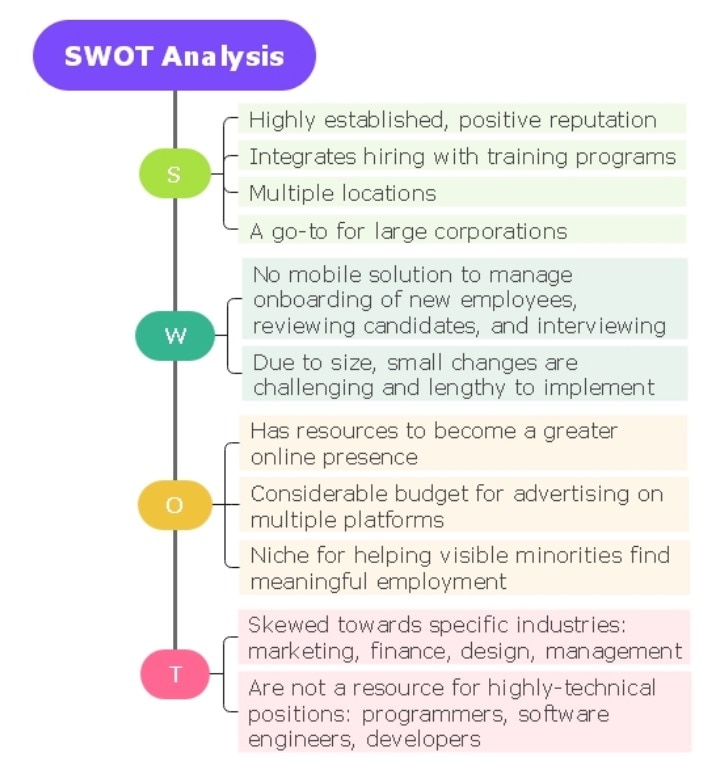
Vertical SWOT Analysis
This is one of the easiest ways to create a SWOT Analysis. You won’t have to worry about space, as it’s just a vertical format. Like a list, you can add as many factors or aspects as possible.


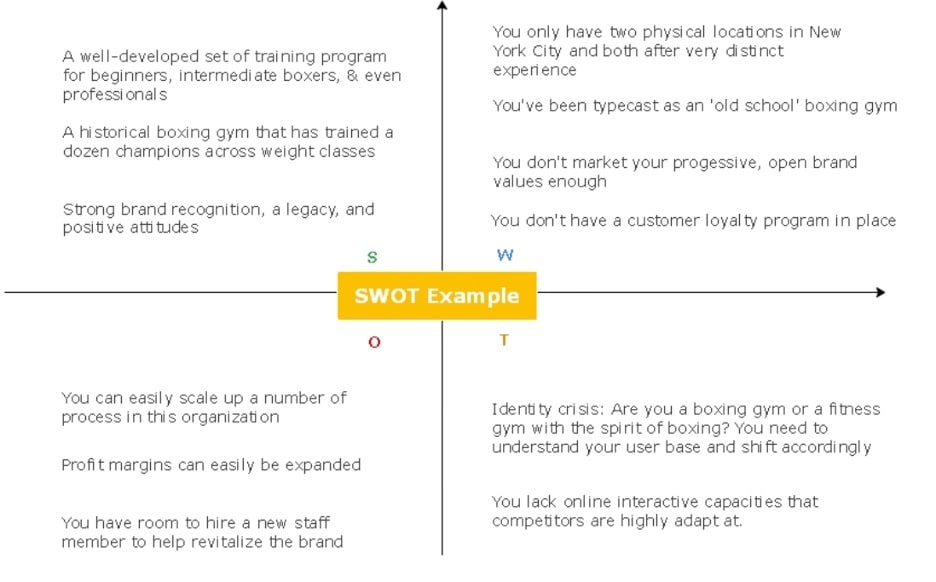
2x2 Grid SWOT Analysis
This is the most common form of a SWOT analysis. Using four quadrants, an analyst can easily view the different aspects at a glance, unlike the vertical format, where you’ll have to scroll down if it’s much longer.
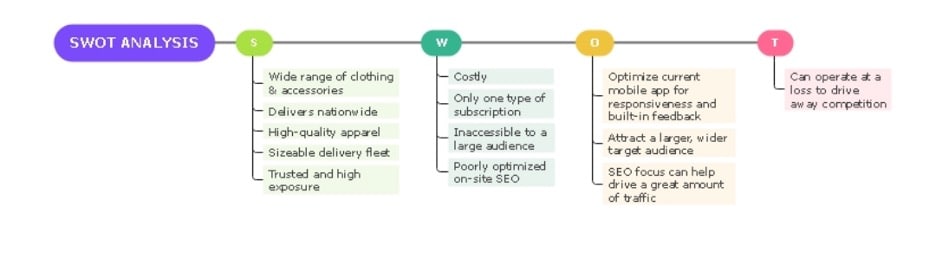
Horizontal SWOT Analysis
A horizontal SWOT analysis can also be a good option if you need a quicker glance at the items. List the SWOT analysis vertically to conserve space.
How To Make a SWOT Analysis Diagram With EdrawMind Online for Free
Making a SWOT Analysis is easier when you have the right tool. Wondershare EdrawMind Online provides a clean, user-friendly workspace where you can design professional SWOT diagrams without worrying about formatting or layout.
With EdrawMind, you can create your SWOT Analysis, share it with teammates in real time, and export it into PDF, Word, or PowerPoint formats. This makes it a brainstorming tool and a ready-made presentation asset for meetings and reports.
Here are the steps to make a SWOT analysis diagram with Wondershare EdrawMind:
 Try the app & get 500 free AI tokens


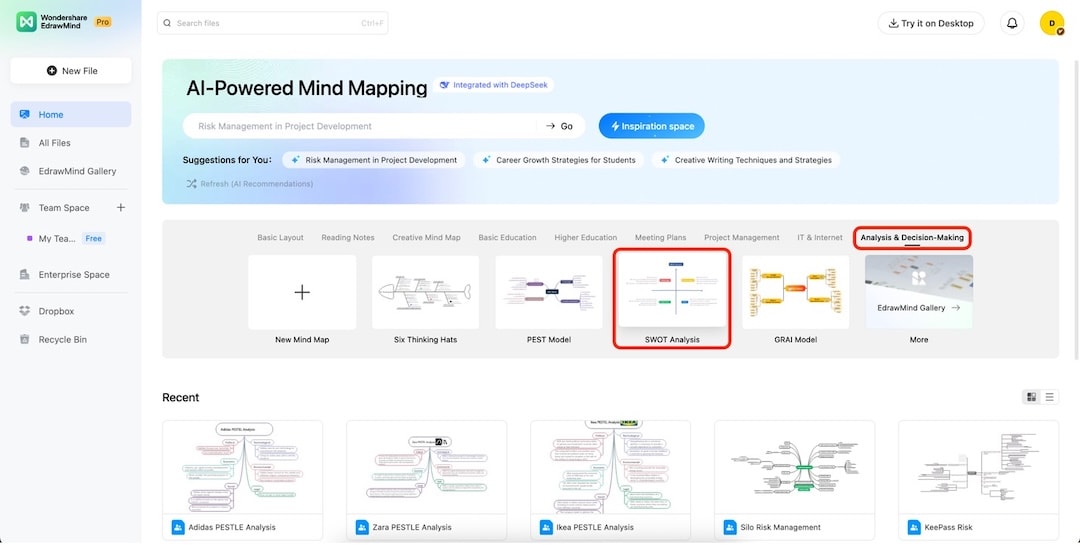
Step 1 Choose a SWOT Template
- Go to Home > Analysis & Decision Making > SWOT Analysis
- You can also use the EdrawMind Gallery to duplicate user-made templates
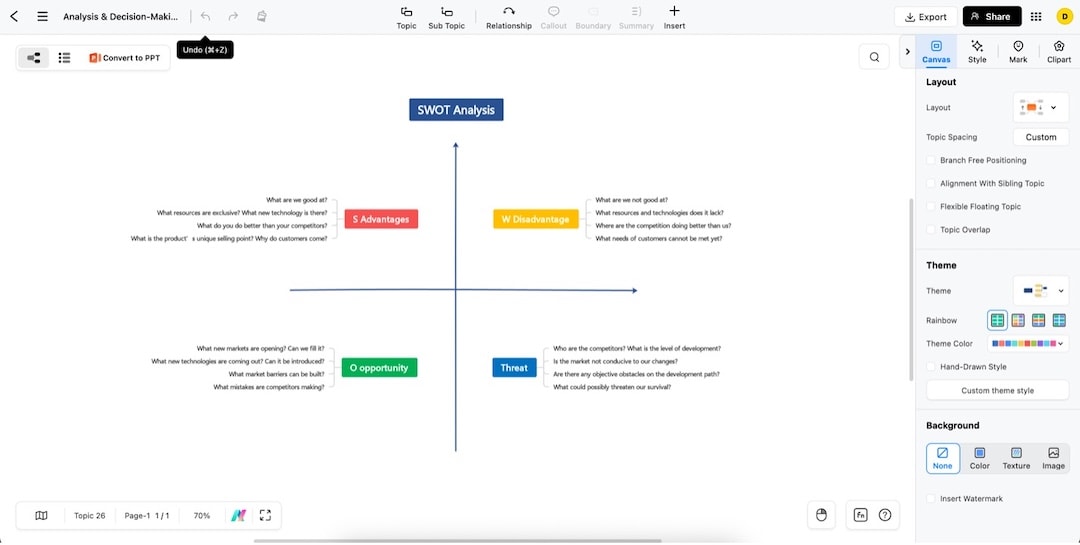
Step 2 Fill in the Content
- Double-click nodes to edit their content
- Use the Subtopic button to add more factors per quadrant
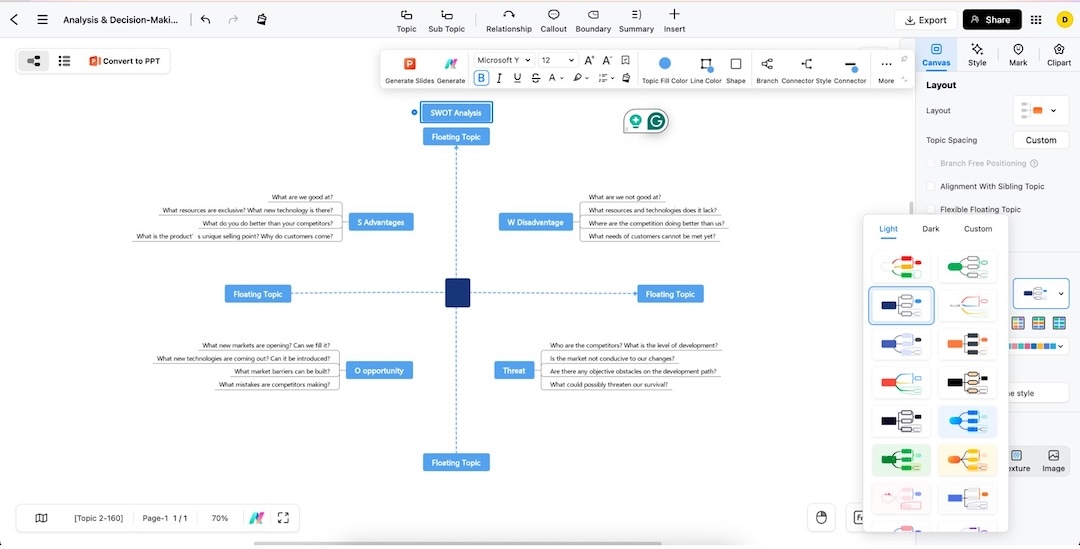
Step 3 Design Your SWOT Analysis Diagram
- Use the Canvas or Style panels on the right side to change specific colors, lines, or choose themes
- Use the Mark or Clipart menus to add relevant pictures
- Click on an element to bring up the floating customization bar with context-specific options
Step 4 Export Your Content
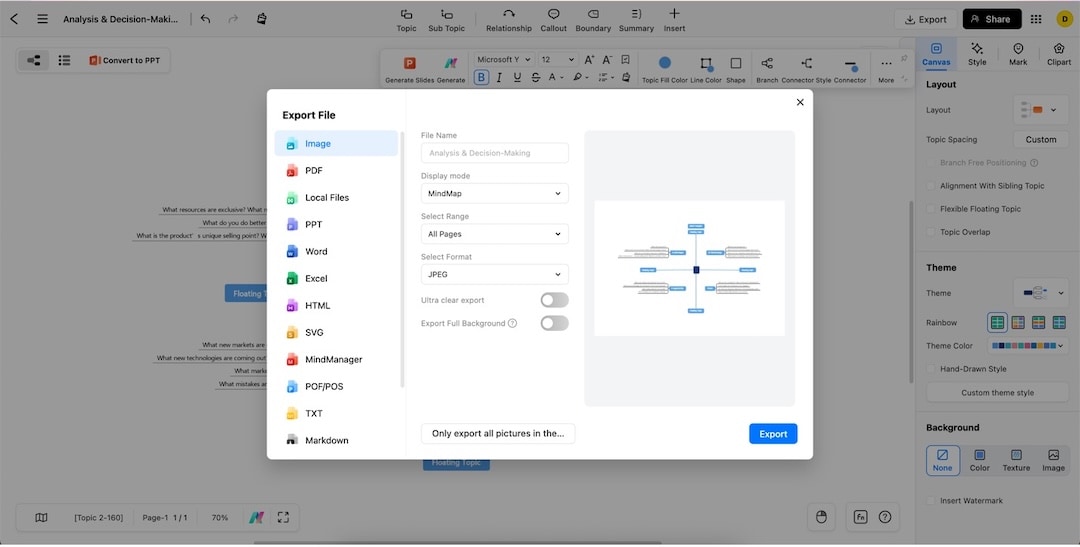
- Press the Export button
- Choose a file type from the left panel of the pop-up window
- Change the File Name, Range, Format, etc.
- Hit Export once done
Turning SWOT Into Action With TOWS Analysis
Conducting a SWOT Analysis is only the first step. The challenge lies in turning your insights into actionable strategies. While a SWOT analysis highlights both internal and external factors, it doesn’t automatically provide a roadmap.
This is where TOWS Analysis comes in. As an extension of SWOT, TOWS helps you pair strengths, weaknesses, opportunities, and threats to create practical growth and risk management strategies.
Here’s how the combinations work:
- Strengths + Opportunities. This refers to how a company uses its strength to seize the opportunity. For instance, if your company deals in online food delivery, then any lockdown will allow you to increase your revenue.
- Strengths + Threats. List all the strengths that will help you overcome your threats. If your threat is a poor management team and you have an excellent HR team, then you can use this strength to remove the threat.
- Weaknesses + Opportunities. Identify opportunities that help compensate for internal weaknesses. For example, a company with outdated technology might adopt new tools that come out on the market.
- Weaknesses + Threats. When you combine these two elements, you avoid all your weaknesses while minimizing the threats.
SWOT Analysis Examples
Lastly, here are some examples of SWOT analysis diagrams. As you’ll notice, you will be provided with both generic and real-world examples, allowing you to have a mix of ready-to-use templates and inspiration.
H&M SWOT Analysis
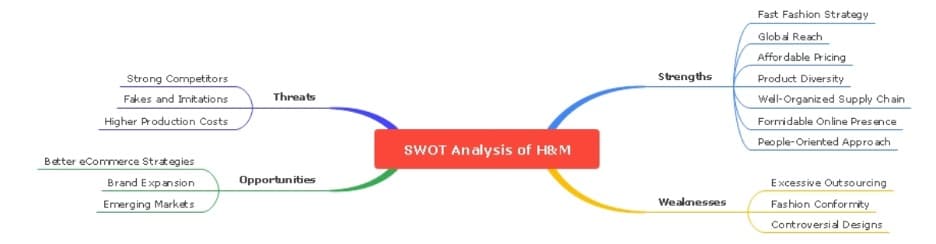
Here's the SWOT Analysis example of a multinational brand, H&M. As you can see in this SWOT Analysis template, all the factors that affect the overall business capacity of H&M have been marked.
ZARA SWOT Analysis
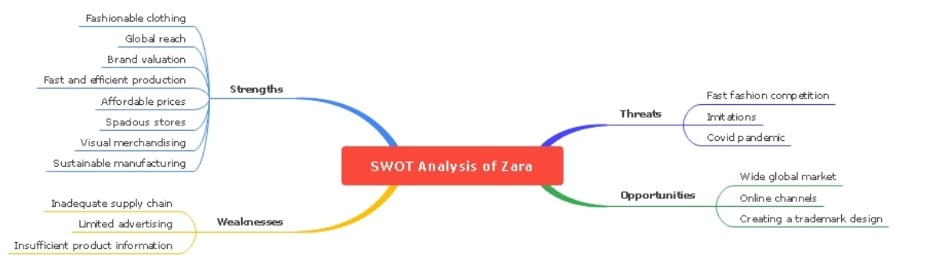
Here is the SWOT Analysis example of an expensive clothing brand, Zara. Zara is one of the most recognized brands, famous for selling expensive clothes and accessories. However, the costly line is their strength and threat.
Coffee Shop SWOT Analysis
This is a sample SWOT Analysis example for a coffee shop. As you can see in the SWOT Analysis template, there are internal and external factors that affect the overall business capacity of the coffee shop.

Restaurant SWOT Analysis
Here’s another SWOT analysis template for restaurants. You can reference the factors marked herein or add your own. The content will depend on your restaurant's location, menu, and other factors.

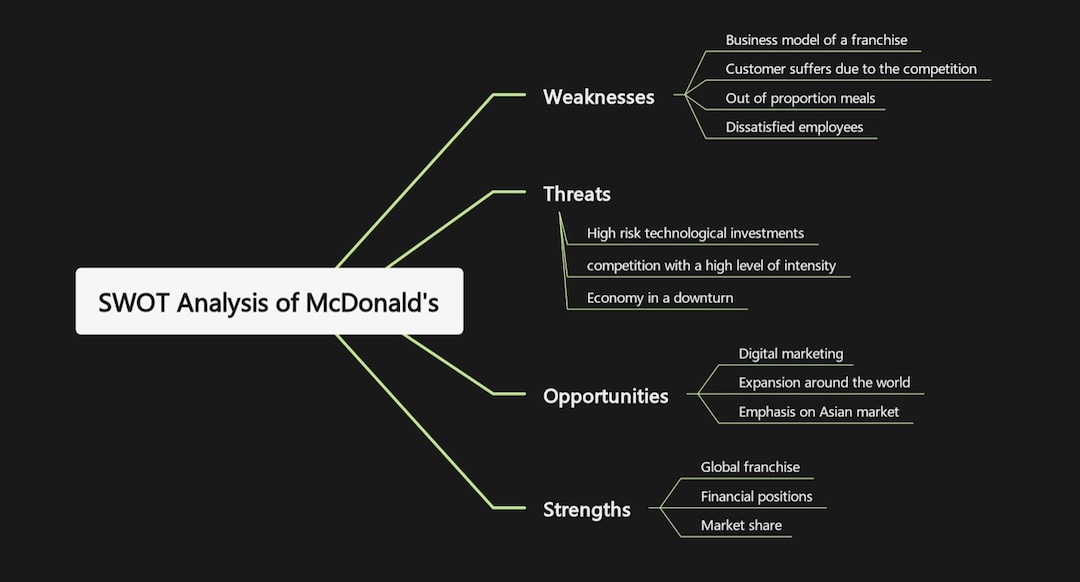
McDonald’s SWOT Analysis
Here’s another real-life example. McDonald’s is a large fast-food corporation that works on the franchising model. Hence, the SWOT analysis centers on these concepts. You can see how their franchising model also posed threats to their operations.
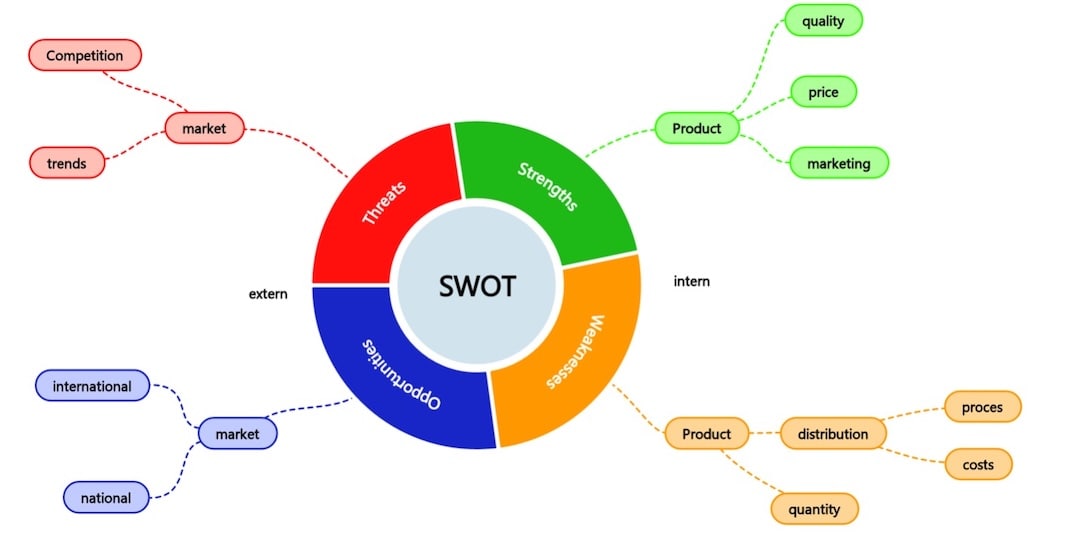
Circular SWOT Diagram
This wasn’t mentioned earlier in the discussion, but a creative way to create a SWOT diagram is to use the circular format. You label different parts of the circle and connect the corresponding factors using a mind map style.
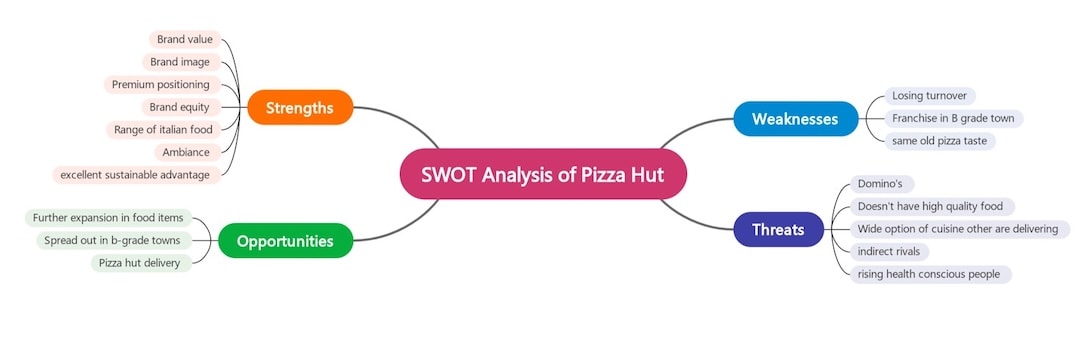
Pizza Hut SWOT Analysis
Back to another real-world SWOT analysis. Pizza Hut’s SWOT analysis offers insight into the factors that make it a strong company. The factors presented here are particular so that you can apply them by analogy to your organization.
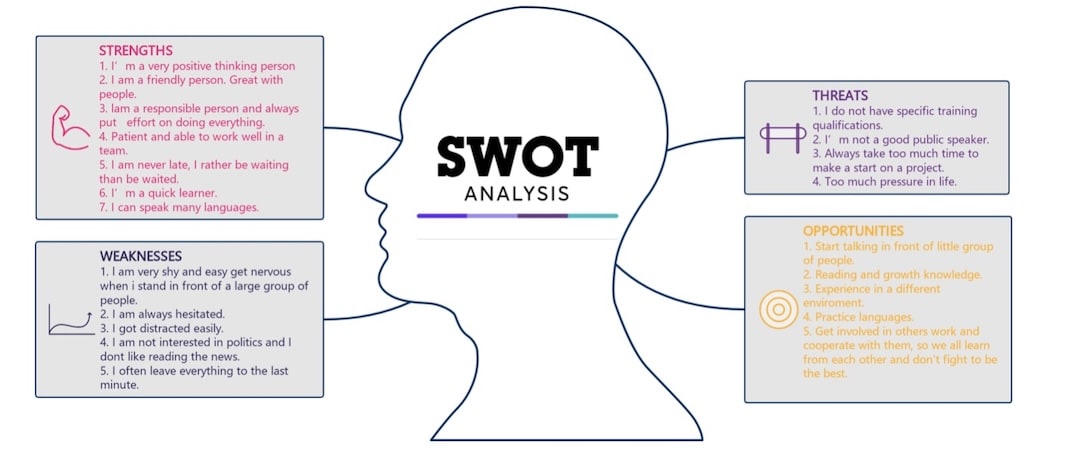
Self-Assessment SWOT Analysis
SWOT analysis diagrams are not only for businesses. You can apply the same principles to yourself. This is great if you’re undertaking self-development or trying to explore areas of yourself you’re not yet familiar with.
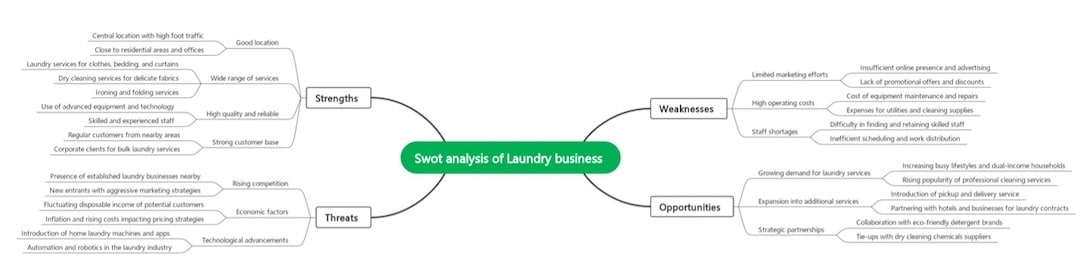
Laundry Business SWOT Analysis
If you want to start a new laundry business, this example might help you. It provides a quick template and identifies common factors that might fall under strengths, weaknesses, and other categories.
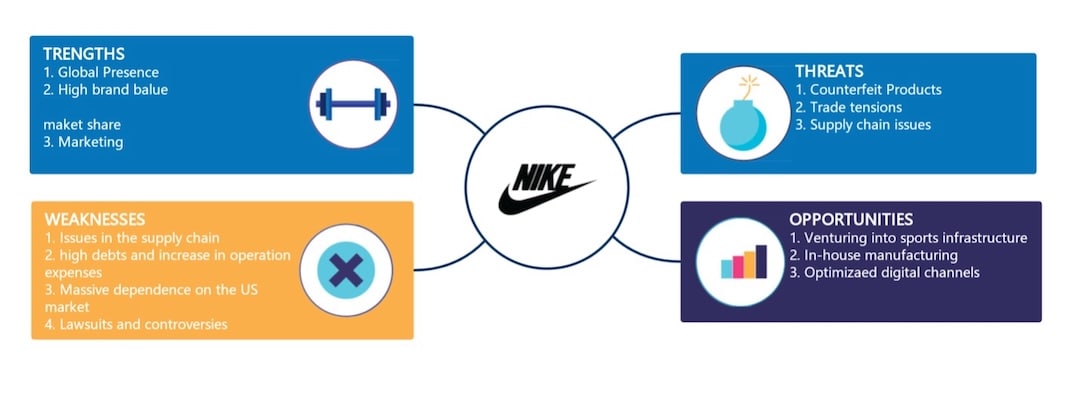
NIKE SWOT Analysis
This SWOT analysis focuses on the Nike brand. This is a great template because it offers spaces for pictures or icons. It makes the diagram much richer than the usual blocks of text.
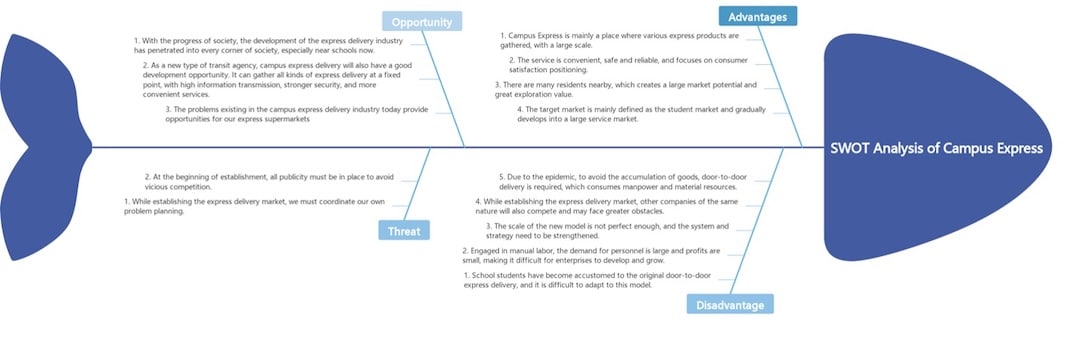
Fishbone Diagram SWOT Analysis
Here’s another fresh approach to SWOT analysis. This partakes of a fishbone structure. However, it’s functionally similar to a 2x2 quadrant SWOT analysis diagram because it involves four basic “bones” for each SWOT element.
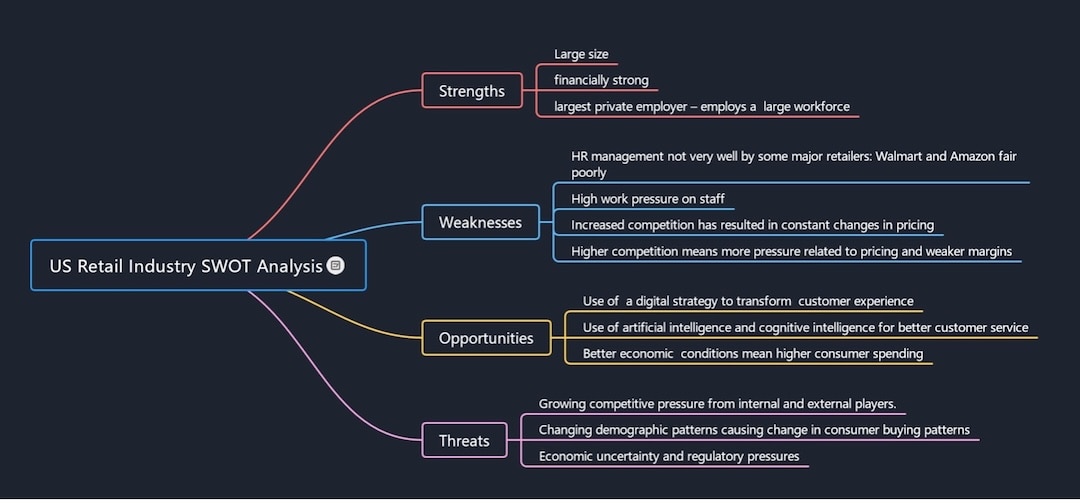
US Retail Industry SWOT Analysis
If you’re interested in the macro-economic side, this one’s for you. This US retail industry SWOT analysis is not specifically about a business but analyzes the industry as a whole.
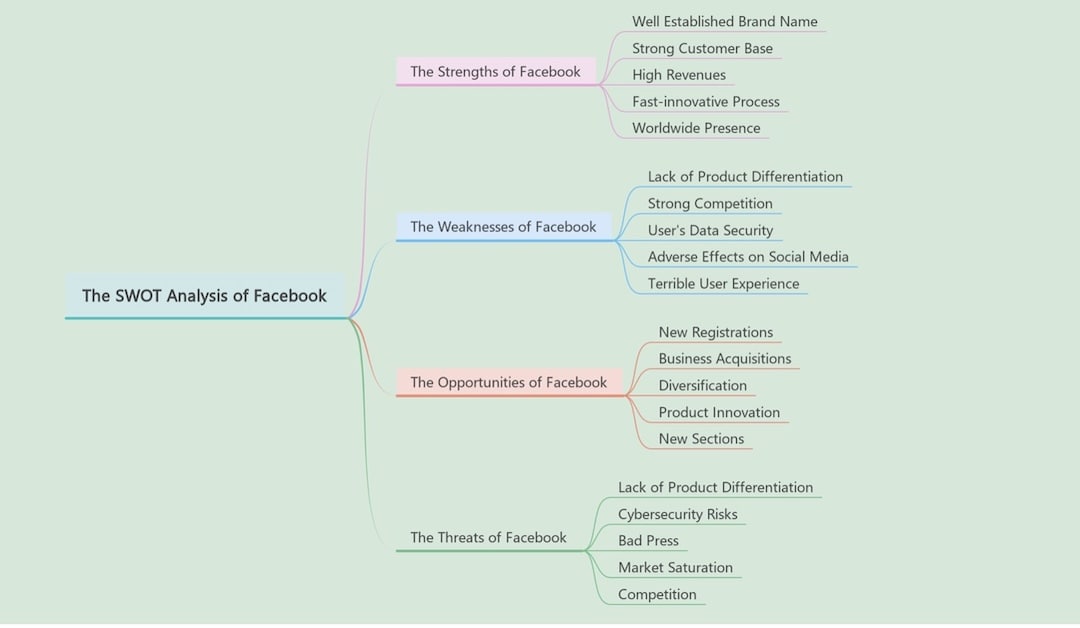
Facebook SWOT Analysis
For another real-world example, here’s the SWOT analysis of Facebook. For tech companies, this can be an excellent resource for correlating the performance of your website or service with that of this world-class corporation.
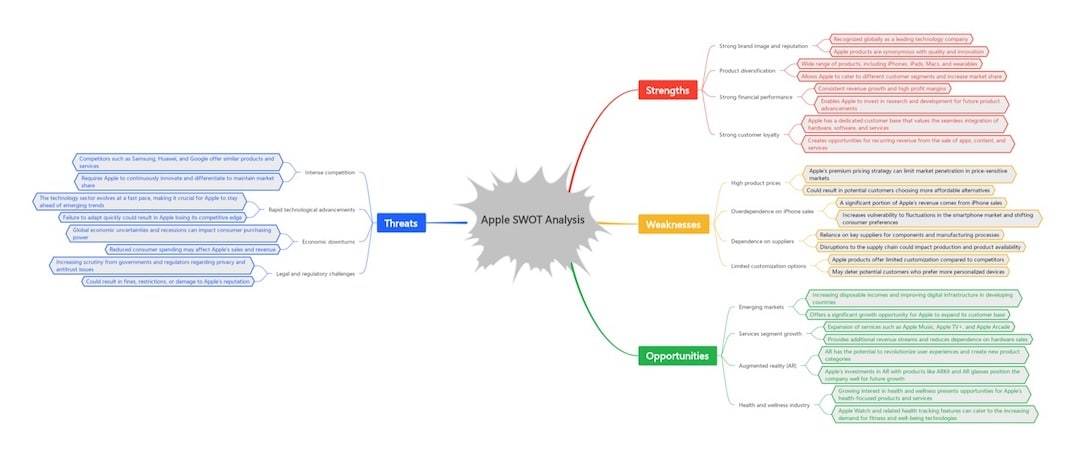
Apple SWOT Analysis
Lastly, here’s our take on Apple’s SWOT analysis. As one of the leading tech companies in the world, it’s a great source of insight and inspiration for your own SWOT analysis, as well as the factors that affect similar businesses.
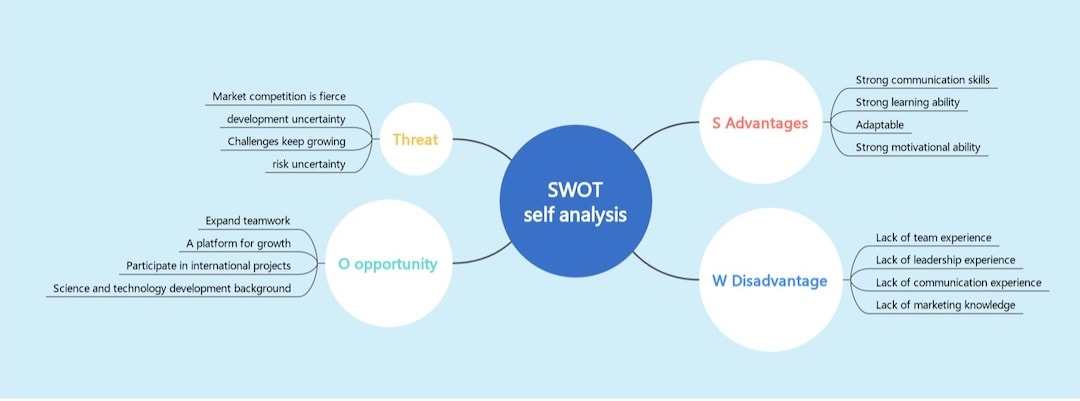
Bubble SWOT Analysis
For the final part of our listing, a bubble SWOT analysis provides a fresh visual appearance to your standard diagrams. You can use the circles as nodes. Use this template if you want a more creative approach.
9 Tips for SWOT Analysis
As you saw in the SWOT Analysis examples and templates, a SWOT Analysis is a straightforward evaluation method that businesses of all kinds use. Some of the practice tips you should follow to make the best out of your research are:
- Use Quantifiable Statements. While creating a SWOT Analysis, always use measurable data. Instead of saying “XYZ will increase Q3 sales,” write “XYZ will increase Q3 sales by 15%.”
- Cover All Business Areas. Ensure your SWOT analysis encompasses every aspect of the business, including content marketing, digital marketing, sales, operations, and more.
- Balance the Categories. Maintain a balanced presentation of strengths, weaknesses, opportunities, and threats. This makes comparison more straightforward.
- Create Multiple Versions. Conduct multiple SWOT analyses to determine which version best reflects your company’s current situation.
- Be Thorough. Always make your SWOT Analysis complete and detailed. Information gaps can make your findings less reliable.
- Keep It Simple. Avoid overcomplicating the SWOT Analysis, especially if the audience is general or non-technical.
- Plan Ahead. Collect accurate data and align your SWOT Analysis with your company’s goals and vision before drafting.
- Use Professional Tools. Tools like EdrawMind help you format your SWOT Analysis diagrams neatly and professionally.
- Label Clearly. Ensure that each element of your SWOT Analysis is clearly marked and labeled.
Key Takeaways
A SWOT Analysis is essential for evaluating businesses of all sizes, from startups to global enterprises. Even in academic settings, students often create personal SWOT charts to identify strengths and weaknesses in their studies.
Success depends on identifying the internal and external factors that influence performance for companies. As discussed in this guide, using the right tools makes building and analyzing SWOT charts much easier.
Wondershare EdrawMind offers thousands of ready-made templates, designed for both business and educational purposes. With its extensive resources and a strong online community, EdrawMind remains one of the best SWOT Analysis tools in 2025.
 EdrawMind
AppsEdrawMind Online
EdrawMind
AppsEdrawMind Online