


Samsung, a global leader in technology and electronics, uses a strategic marketing mix. Its 4Ps—product, price, place, and promotion—highlight how the brand sustains growth and global market dominance.
In this article
How to Interpret Samsung Marketing Mix
The 4Ps work as a connected system: Product defines the offer, Price signals value, Place determines access, and Promotion shapes demand. The useful question is how a change in one P affects the other three.
| Product | Portfolio, localization, innovation, packaging, and core versus growth products. |
| Price | Premium/value position, market variation, bundles, promotions, and perceived value. |
| Place | Stores, partners, direct channels, e-commerce, delivery, and geographic reach. |
| Promotion | Campaigns, social activity, sponsorships, loyalty, and in-store communication. |
| Best fit / limitation | Best for go-to-market analysis; the 4Ps alone do not explain profitability, industry power, or segment attractiveness. |
Overview of Samsung
Samsung is a global technology leader that sells smartphones, TVs, home appliances, and smart services like Samsung TV Plus. In 2024, it earned roughly $207 billion USD—its second-highest year ever.
Samsung’s smart mix of top-quality products, varied prices, global placement, and bold promos helps it win in a tough market. Its Galaxy S25 smartphone drove a record quarterly revenue of KRW 79.14 trillion in early 2025.
This article breaks down Samsung’s 4 Ps—product, price, place, promotion—in simple terms. It shows how each part helps Samsung stay powerful, grow profits, and keep its global leadership in tech.
But first, here’s a quick overview of the company:
| Aspect | Information |
| Founded | 1969 |
| Headquarters | Suwon, Gyeonggi Province, South Korea |
| CEO | Young Hyun Jun |
| Annual Revenue (2025) | $220.8 billion USD |
| Market Cap | $344.78 billion USD |
| Industry classification | Technology hardware & semiconductors |
| Latest Growth | -55% (Q2 2025) |
| Official Website | samsung.com |
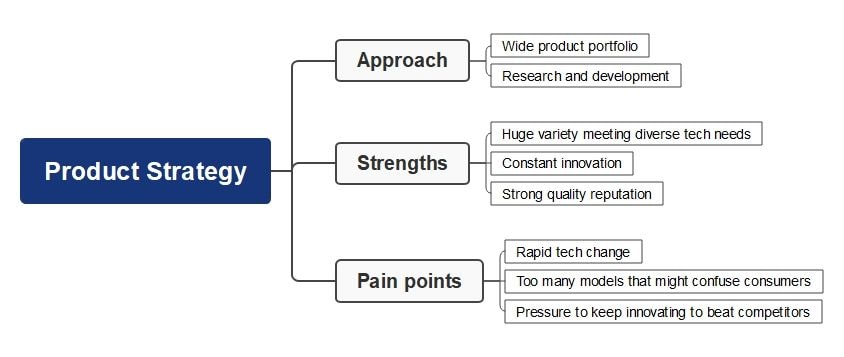
Samsung’s Product Strategy
Samsung is one of the biggest names in electronics because it offers a massive variety of products. From smartphones and tablets to fridges, TVs, wearables, and even memory cards, it covers almost every customer need in the tech world.


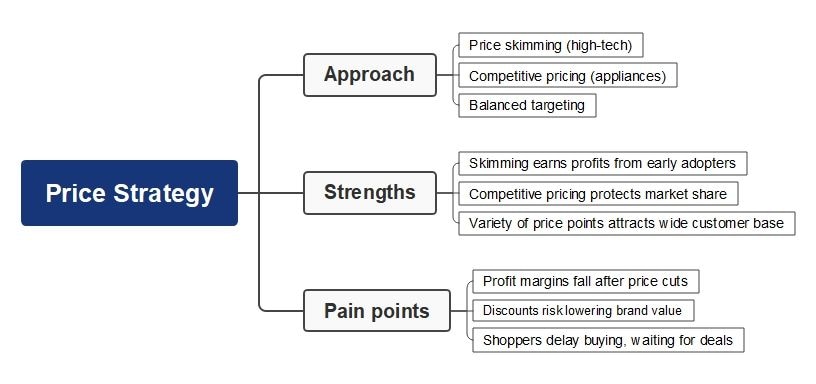
Samsung’s Price Strategy
Samsung uses price skimming for new, high-tech products like the Galaxy S-series. By launching at a high price, it captures profits from early adopters before slowly lowering the price as competitors release similar devices.
Samsung’s Place Strategy
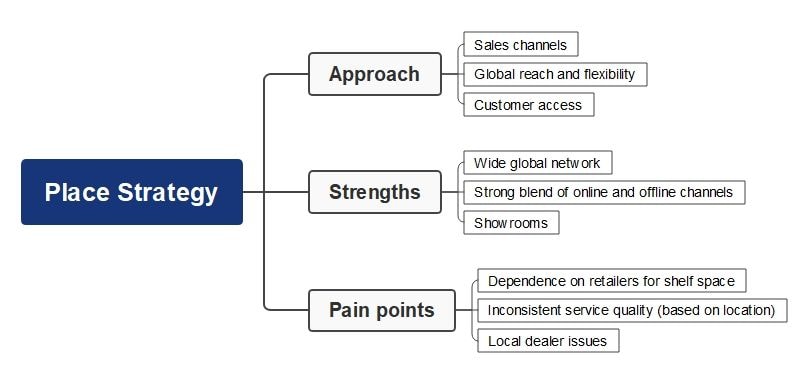
Samsung products are available almost everywhere thanks to its strong distribution network. It sells through exclusive showrooms, retail chains like Croma, wholesalers, and e-commerce sites, making sure customers can find its products with ease.
This three-part system gives Samsung global reach while also allowing flexibility in local markets. By being present in both physical and digital spaces, Samsung ensures accessibility for different kinds of buyers, from walk-in shoppers to online customers.
Samsung’s Promotion Strategy
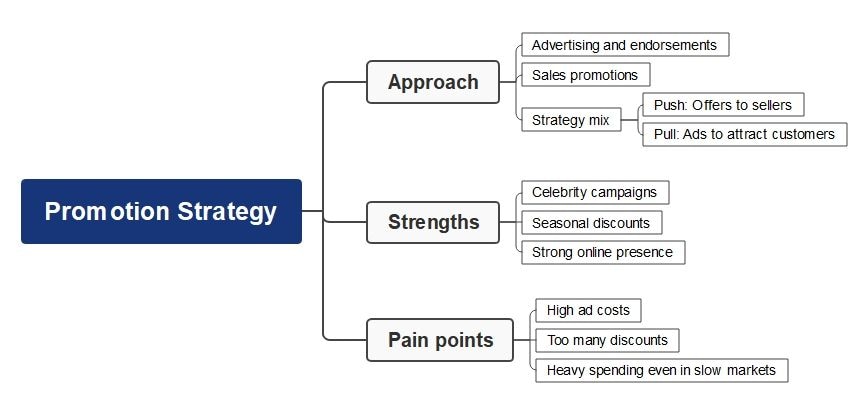
Samsung uses aggressive promotion strategies to stay visible worldwide. It invests in TV ads, social media, digital campaigns, and endorsements from global celebrities, ensuring its products attract attention across various platforms.
It also uses sales promotions like discounts, festive deals, and dealer incentives to boost demand. This mix of pull (ads for customers) and push (offers for sellers) strategies helps Samsung maintain strong visibility and drive product sales.
Samsung’s Marketing Mix (4Ps)
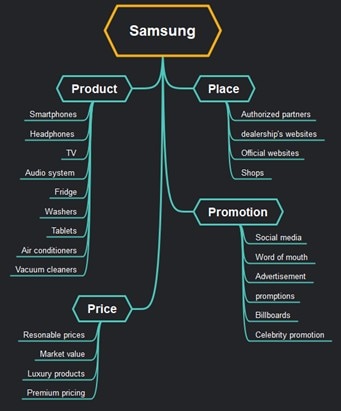
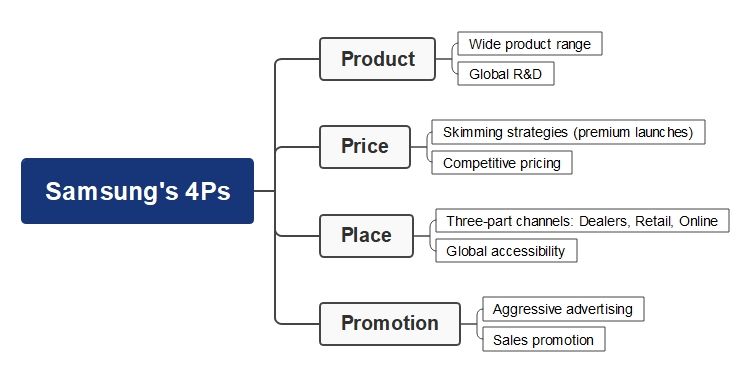
Samsung’s wide product range, from Galaxy phones to home appliances, shows its strength in innovation. Its pricing strategies mix premium launches with competitive pricing, helping the brand reach both high-end and budget customers across global markets.
Samsung’s creative promotions, from digital ads to celebrity endorsements, boost its market image. To see how product, price, place, and promotion work together, the integrated 4Ps mind map offers a clear visual of how the mix drives success.
How To Create a Marketing Mix Analysis Mind Map
Samsung, a global leader in technology and electronics, offers a vast range of products. Analyzing its marketing mix is essential to understanding how the company maintains competitiveness, attracts diverse customers, and secures long-term industry leadership.
Marketing mix analysis helps businesses understand what works and what doesn’t. By looking at products, prices, places, and promotions, companies can spot strengths, fix weaknesses, and make better choices to achieve long-term success.
A good way to perform marketing analysis is by utilizing mind maps. These visual tools make it easy to understand each marketing aspect by showing ideas in clear, connected branches.
You can draw them by hand or use software, but tools like EdrawMind are most convenient since
 EdrawMind
AppsEdrawMind Online
EdrawMind
AppsEdrawMind Online