About this Statutory Interpretation template
This template provides a comprehensive overview of the methods used by judges to interpret legislation. It covers the primary rules, modern approaches, language guidelines, and various aids available to the court for achieving legal clarity and justice.
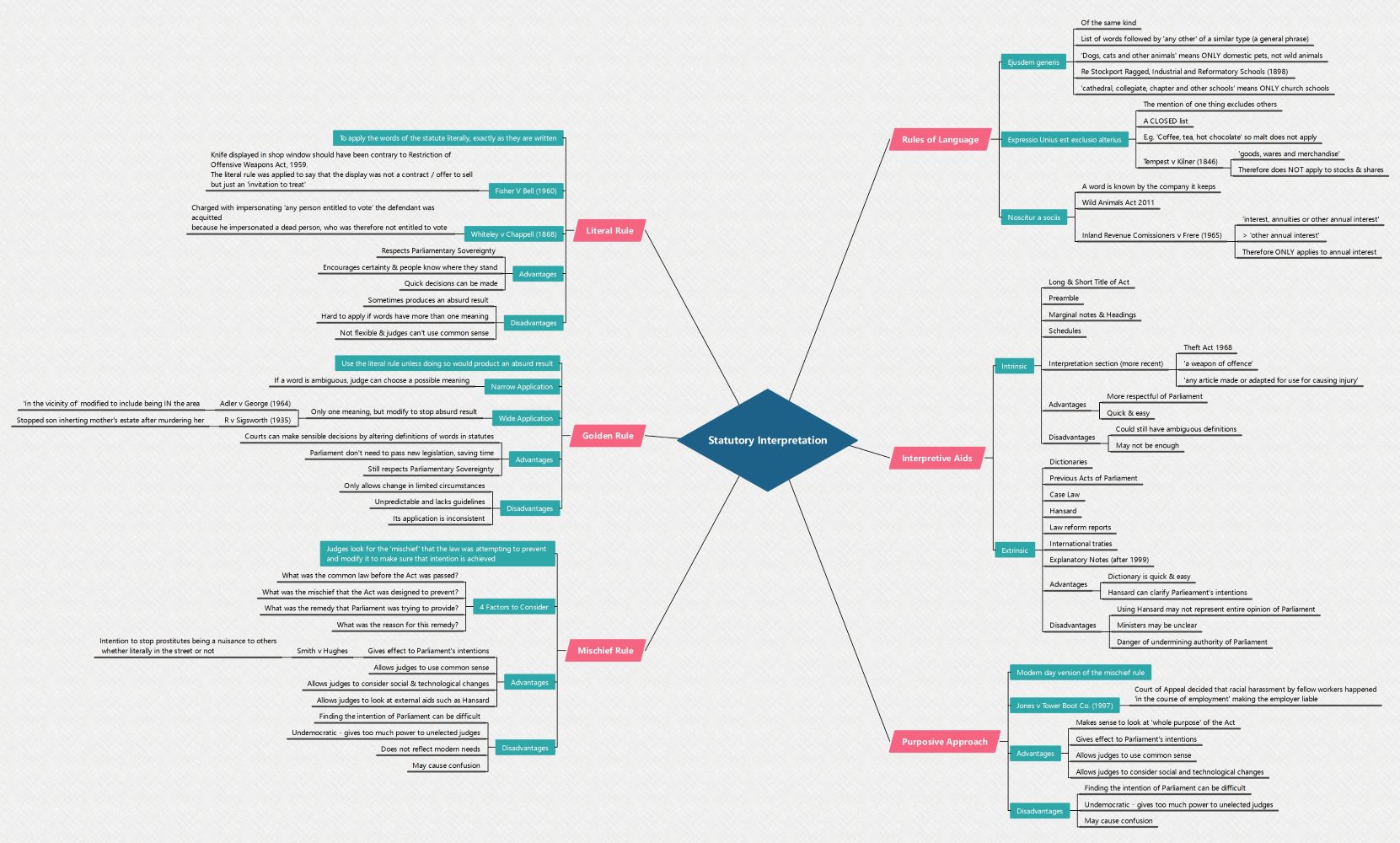
Literal Rule
The literal rule requires judges to apply the exact dictionary meaning of words in a statute. This approach respects parliamentary sovereignty by ensuring that the law is applied exactly as written by the legislators themselves.
- Fisher V Bell (1960)
- Whiteley v Chappell (1868)
- Encourages parliamentary sovereignty
- Avoids judicial law-making
- Can produce absurd results
Golden Rule
The golden rule allows judges to depart from the literal meaning to avoid an absurd outcome. It provides flexibility through narrow and wide applications, ensuring that the law remains sensible, practical, and fair.
- Narrow Application for ambiguous words
- Wide Application to avoid repugnant results
- Adler v George (1964)
- R v Sigsworth (1935)
Mischief Rule
Judges using the mischief rule look for the specific problem the law was designed to prevent. By focusing on the gaps in common law, they ensure the legislation achieves its original intended legislative purpose.
- Smith v Hughes case
- The four factors to consider
- Focuses on the remedy for the mischief
- Allows for judicial common sense
Purposive Approach
The purposive approach is a modern method that seeks to identify the overall objective of an Act. It allows judges to consider social and technological changes, ensuring that law remains relevant in contemporary society.
- Modern version of the mischief rule
- Jones v Tower Boot Co. (1997)
- Makes sense of the whole Act
- Can be seen as undemocratic
Rules of Language
Language rules help courts determine the context of specific words within a list or sentence. These principles ensure that statutory terms are understood correctly in relation to the surrounding text and legislative framework.
- Ejusdem generis (of the same kind)
- Expressio Unius est exclusio alterius
- Noscitur a sociis (known by company)
- Tempest v Kilner (1846)
Interpretive Aids
Interpretive aids are resources found either within the statute itself or in external documents. These tools provide essential context and background information to help clarify the true intention behind complex or confusing legislative wording.
- Intrinsic aids (Preamble, Schedules)
- Extrinsic aids (Hansard, Dictionaries)
- Law reform reports
- International treaties
FAQs about this Template
-
What is the difference between the Literal and Golden rules?
The literal rule demands that judges use the plain, ordinary meaning of words, even if the result is nonsensical. Conversely, the golden rule acts as a modification. It allows judges to deviate from the literal meaning specifically when the standard interpretation would lead to an absurd or repugnant outcome that Parliament clearly did not intend to create for the public.
-
How do extrinsic aids assist in statutory interpretation?
Extrinsic aids are resources outside the Act, such as Hansard, which records parliamentary debates, or legal dictionaries. They provide historical context and clarify what legislators were trying to achieve during the drafting process. Using these tools helps judges understand the broader purpose of the law when the specific wording of a statute remains unclear or highly ambiguous.
-
Why is the Purposive Approach considered a modern method?
The purposive approach is seen as modern because it goes beyond the specific words to identify the overall objective of the legislation. Unlike older, stricter rules, it allows judges to consider social and technological changes. This flexibility ensures that the law remains relevant today, although some critics argue it gives too much power to unelected judges in court.