About this Constitutional Design template
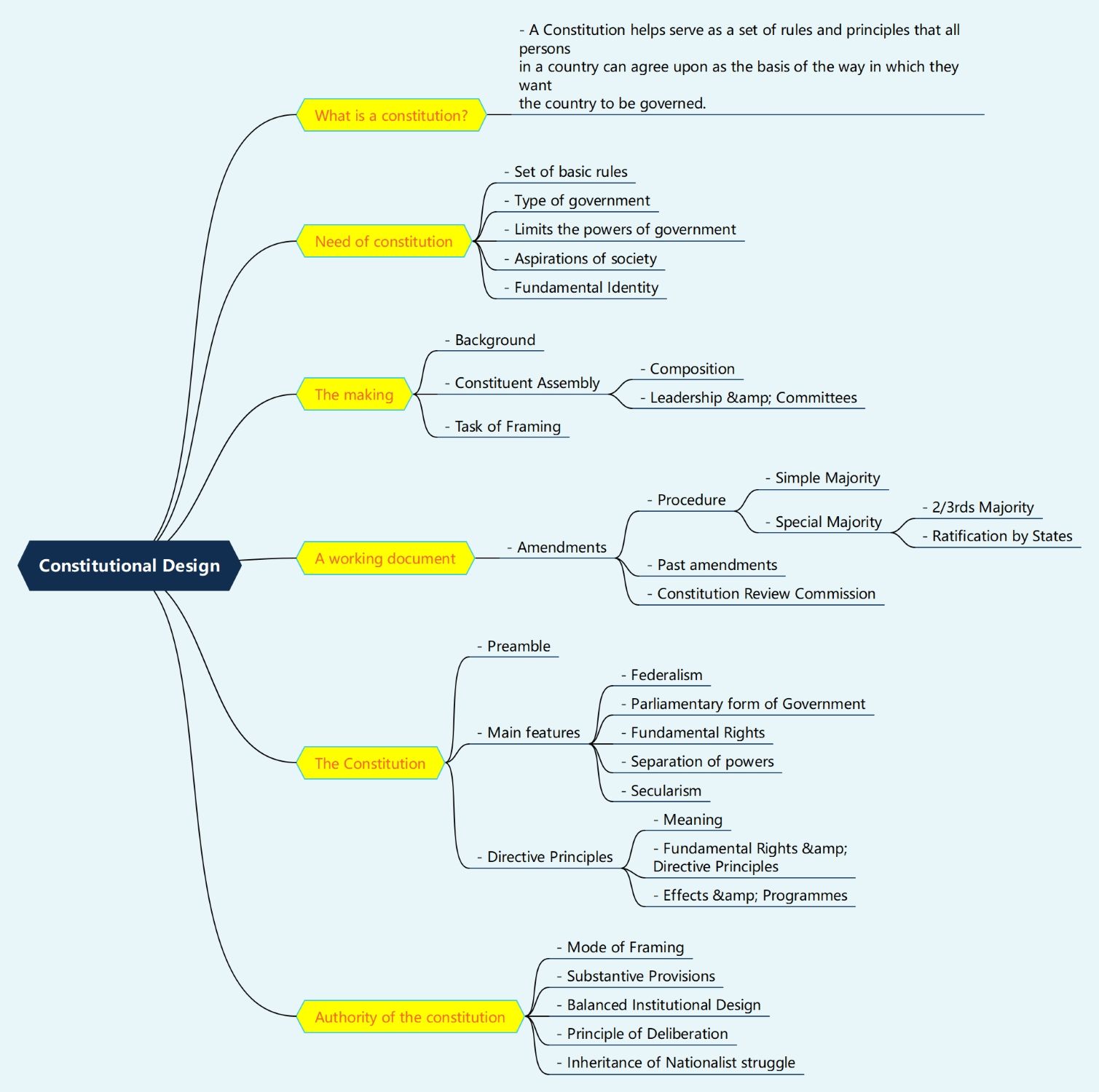
This template provides a clear visual map of how a constitution is structured and created. It covers the definition, purpose, and key features of a national framework. It is an excellent tool for students and legal professionals to understand the core pillars of governance.
What is a Constitution?
A constitution is a core framework for any nation. It provides the primary rules and principles that all citizens agree upon. This document serves as the foundation for how a country is governed daily.
- Rules and principles
- Basis of governance
- Collective agreement
Need for a Constitution
Every nation needs a constitution to set basic rules for its people. It defines the type of government and limits its power. It also reflects the society's aspirations and establishes a strong shared identity.
- Basic rules
- Type of government
- Limiting power
- Social aspirations
- Fundamental identity
The Making Process
Creating a constitution involves a complex process called the framing task. This usually requires a special group called a Constituent Assembly. This assembly has diverse members and leaders who work together to draft the laws.
- Constituent Assembly
- Composition
- Leadership and Committees
- Task of Framing
A Working Document
A constitution is a living document that can change through specific amendment procedures. These changes might require a simple majority or a special majority. It ensures the laws stay relevant to the current needs of society.
- Amendment procedures
- Simple majority
- Special majority
- Constitution Review Commission
The Main Features
Modern constitutions often include key features like federalism and a parliamentary system. They protect fundamental rights and promote secularism. These structures ensure power is separated among different branches to prevent any single group from ruling alone.
- Federalism
- Parliamentary system
- Fundamental Rights
- Separation of powers
- Secularism
Authority of the Document
The authority of a constitution comes from how it was framed and its substantive provisions. It relies on a balanced institutional design and the principle of deliberation. Often, it carries the spirit of a nation's struggle.
- Mode of framing
- Substantive provisions
- Institutional design
- Nationalist struggle
FAQs about this Template
-
Why is constitutional design important for a new democracy?
Constitutional design is vital for new democracies because it establishes the primary legal framework for the nation. It defines how power is shared and protects individual rights from government overreach. A well-designed constitution provides stability during political transitions. It ensures that the government remains accountable to the people and follows a predictable set of rules that promote long-term peace.
-
What are the main components of a well-designed constitution?
A well-designed constitution includes several critical components like a preamble, a bill of rights, and a clear description of government branches. It outlines the separation of powers to prevent tyranny and details the process for making laws. Additionally, it must include an amendment process. This allows the document to adapt to future societal changes while maintaining its core legal principles.
-
How can a constitution be updated over time?
Constitutions are updated through a formal process known as amendments. This process usually involves different levels of legislative approval, such as a simple or special majority vote. In some federal systems, the states must also ratify the changes. These updates allow the constitution to address new challenges, protect modern rights, and correct outdated laws without needing to write an entirely new document.