About this How to Become a Lawyer Template
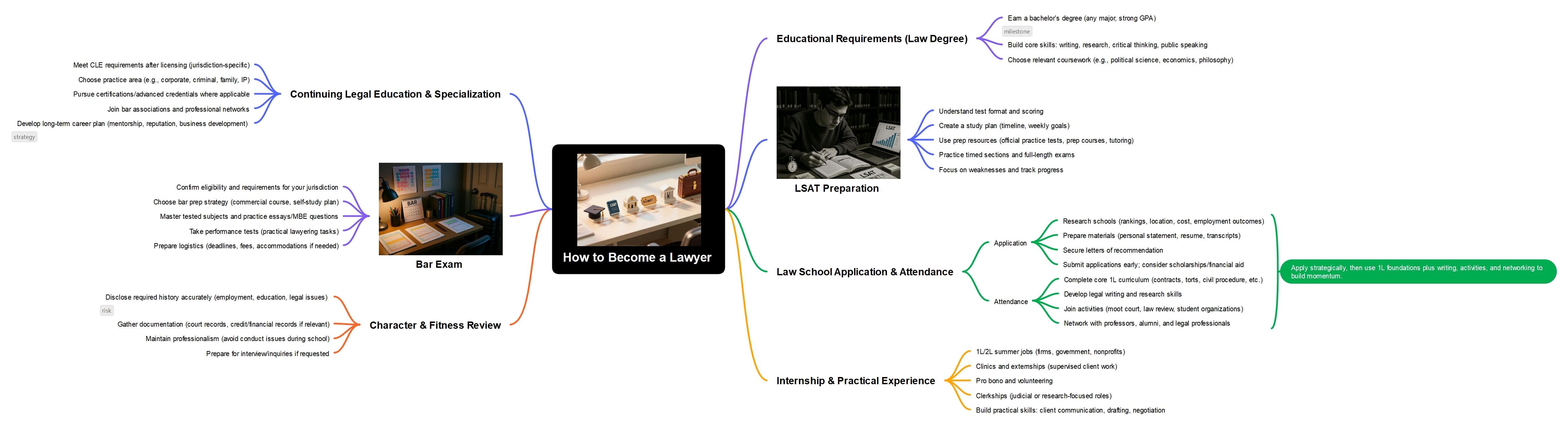
This “How to Become a Lawyer” template organizes the path into legal education, preparation, and professional development nodes, making the process easier to follow in order.
Educational Requirements (Law Degree)
This branch defines the main academic requirement and sets the legal profession path within a formal education framework.
- Use this node to establish the role of legal education.
- Keep later preparation tied to this academic requirement.
Earn a bachelor's degree (any major, strong GPA)
This branch highlights the undergraduate step, showing that legal preparation starts with broad academic performance.
- Use this node to connect early academic work to the legal path.
- Keep GPA and degree readiness tied to the same stage.
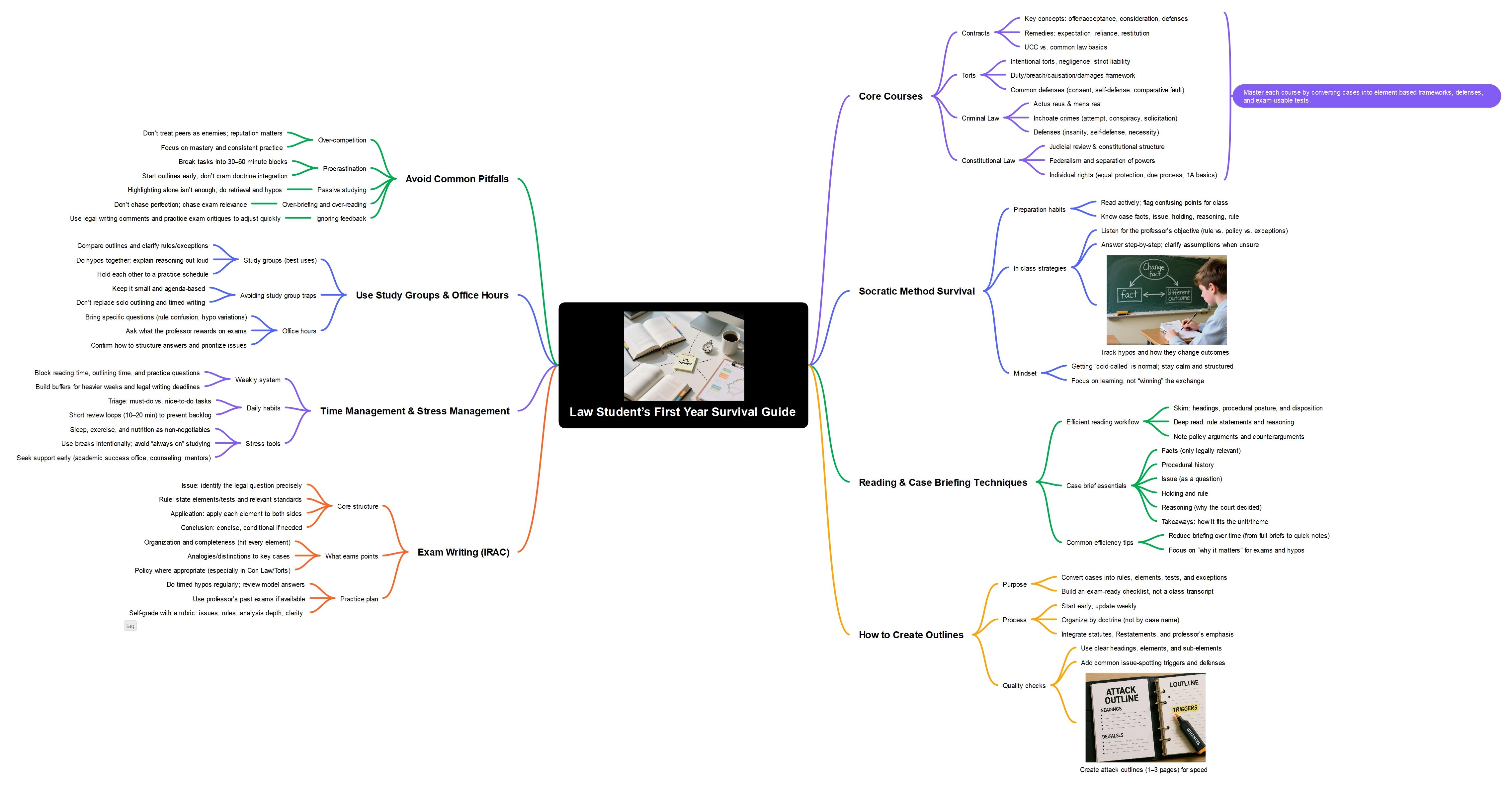
Build core skills: writing, research, critical thinking, public speaking
This branch shows that becoming a lawyer depends on core abilities as well as formal qualifications.
- Use this node to separate transferable skills from credentials.
- Keep foundational abilities visible in the career path.
Choose relevant coursework (e.g., political science, economics, philosophy)
This branch narrows the undergraduate stage by showing what kinds of study can support later legal work.
- Use this node to connect coursework with legal readiness.
- Keep subject choices linked to long-term preparation.
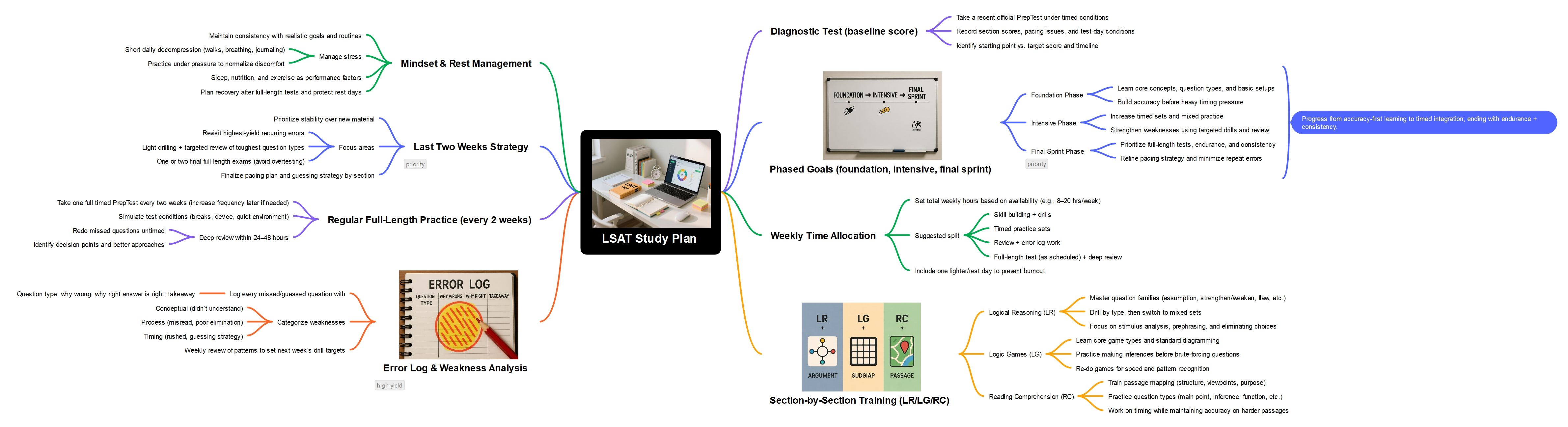
LSAT Preparation
This branch introduces the admissions-test stage and signals a shift from general academic preparation to law-school entry.
- Use this node to frame test planning as a distinct step.
- Keep LSAT work tied to application timing.
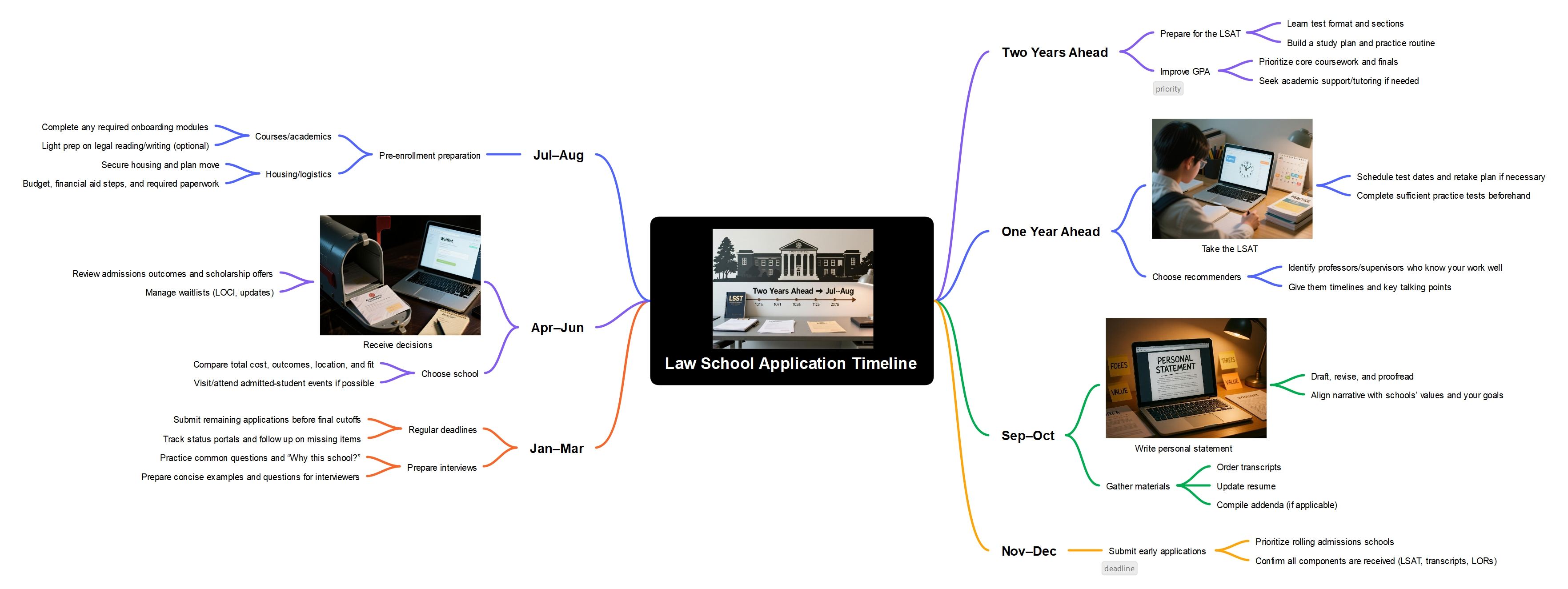
Law School Application & Attendance
This branch expands the path beyond testing by grouping the transition into law school itself.
- Use this node to connect admission with the start of formal legal training.
- Keep the path moving from preparation into execution.
FAQs about this Template
-
What does a lawyer do?
A lawyer advises clients, interprets legal rules, prepares legal documents, negotiates outcomes, and may represent people or organizations in court or other formal proceedings. The role can vary by specialization, but the core work usually combines legal analysis, communication, strategy, and professional responsibility.
-
How do you become a lawyer?
The path usually involves completing the required education, meeting jurisdiction-specific training or examination standards, and obtaining a legal license or admission. The exact route depends on the country, but most systems require formal legal study, supervised practical preparation, and proof that the candidate meets professional qualification rules.
-
Why is legal training important for becoming a lawyer?
Legal training is important because lawyers do more than memorize rules. They need to interpret law, build arguments, assess risk, and advise clients responsibly. Structured training helps future lawyers develop legal reasoning, ethical judgment, research skills, and the ability to apply legal principles in real situations.
-
What's the difference between a lawyer and a paralegal?
A lawyer is a licensed legal professional who can usually advise clients formally, represent them in certain proceedings, and take legal responsibility for that work. A paralegal supports legal tasks such as research, drafting, and file preparation, but the scope of independent legal practice is typically more limited.