About this How to Become a Real Estate Attorney Template
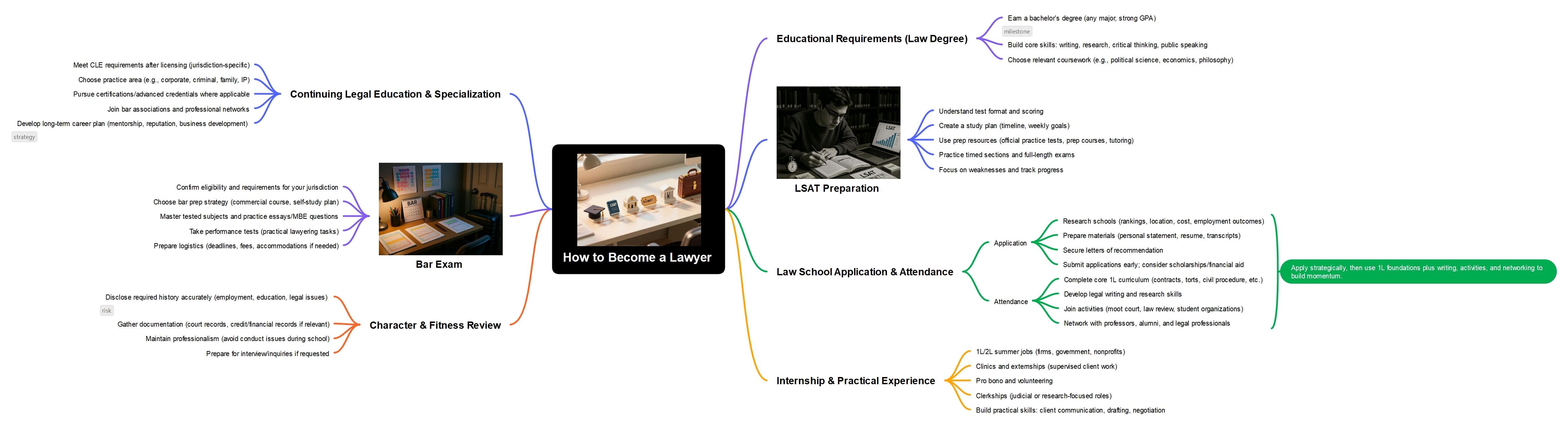
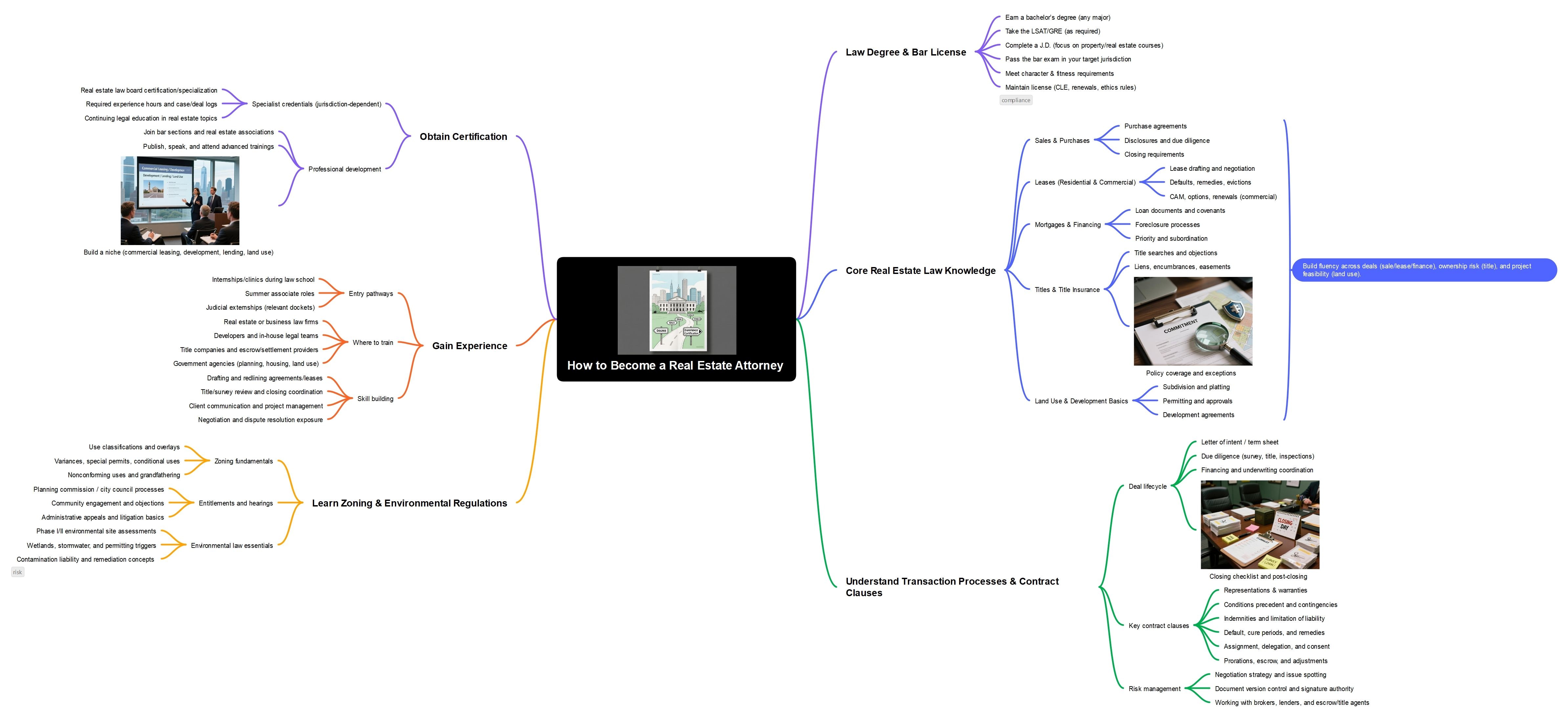
This template is structured as a legal-career pathway focused on real estate work. It helps users move from general legal qualification into the specific regulatory, transactional, and ongoing licensing demands of property-related practice.
Law Degree and Bar License
This branch highlights the core qualification stage for becoming a real estate attorney. It anchors the pathway in formal legal education and bar admission rather than jumping directly into the specialty itself.
Earn a Bachelor’s Degree
This section points to the standard undergraduate step that comes before law school. It is useful for readers who need to understand the full professional route instead of only the law-school stage.
Pass the Bar Exam in Your Target Jurisdiction
This branch focuses on the licensing step that turns legal education into actual attorney eligibility. It is especially important because real estate practice is tied closely to state or local jurisdiction rules.
Meet Character and Fitness Requirements
This section captures the professional-screening part of becoming licensed. It helps users remember that qualification involves more than academic or testing success alone.
Maintain License
This branch focuses on continuing legal education, renewal, and professional rules. It is useful because attorney qualification is not a one-time event but an ongoing professional responsibility.
Real Estate Practice Direction
This final section turns the legal pathway toward the actual specialty. It gives users room to think about transactional work, property development, leasing, zoning, title issues, and other real-estate practice areas.
FAQs about this Template
-
What does a real estate attorney do?
A real estate attorney usually works on legal matters involving property transactions, ownership, contracts, title issues, leasing, and disputes connected to land or buildings. The role often involves reducing risk before a deal closes and helping clients handle property-related legal complexity more confidently.
-
How do you become a real estate attorney?
The path usually involves completing the required legal education, meeting jurisdiction-specific licensing rules, and then building experience in property-related legal work such as transactions, title review, development, leasing, or dispute support. Specialization often grows through practice exposure over time.
-
Why is real estate law important?
Real estate law is important because property transactions and ownership issues often involve high financial value, long-term obligations, and complex documentation. A strong understanding of this area helps clients manage risk more carefully before a mistake becomes expensive or difficult to unwind.
-
What's the difference between a real estate attorney and a general property agent?
A real estate attorney provides legal analysis, contract review, and risk guidance within the scope of legal practice, while a property agent usually focuses more on market transactions, listings, and deal facilitation. Both can be involved in property work, but their professional roles are not the same.