About this Corruption Mind Map template
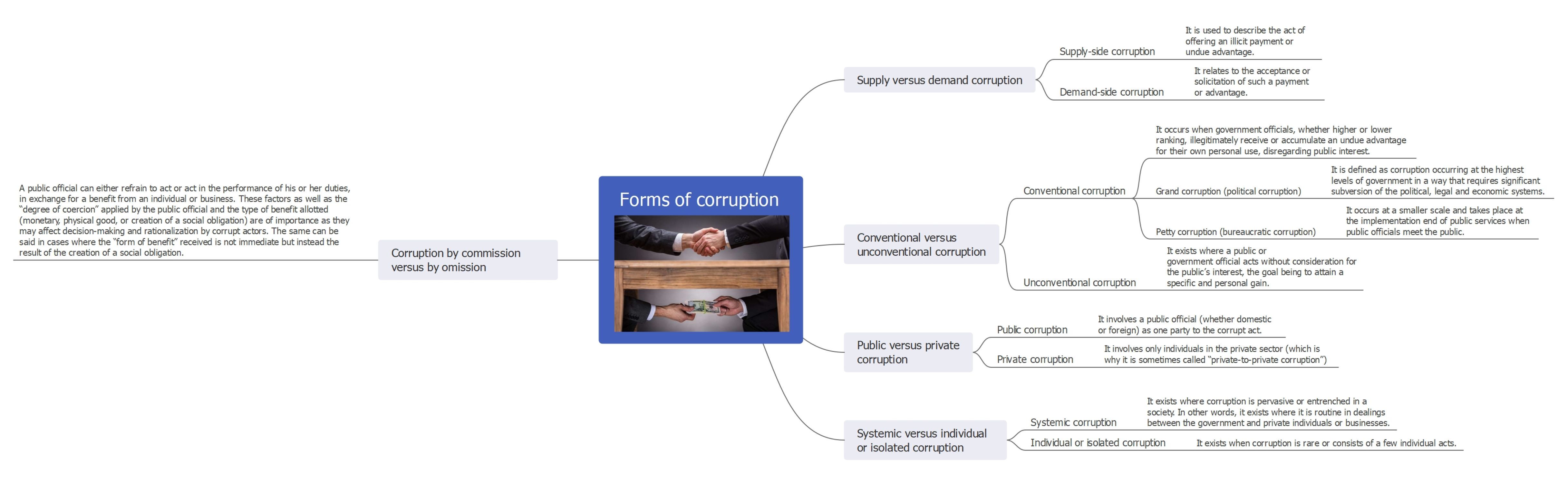
This template offers a deep look into the causes and results of corruption. It breaks down complex social and economic issues into easy-to-read sections. Use it to educate others and find effective solutions.
Social Factors
Social factors often drive corruption within communities. These issues arise when people lack proper education or awareness of their rights. When cultural ethics decline, illegal actions might become more common in daily life.
- Less Education
- Inefficient Communication
- Lack of Awareness
- Misuse of Law
- Threats and Cultural Ethics
Victim Impact
Corruption creates many victims across all levels of society. People often face poverty or lose faith in the system due to long delays. This section highlights the tragic human cost when justice fails to work.
- Poverty and Suicide
- Unemployment
- False Justice
- Health Hazards
- Delay in Procedures
Economy
Corruption has a heavy impact on a nation's wealth and stability. It leads to illegal transactions and higher inflation rates. These factors combined create black money markets and hurt the overall growth of the economy.
- Illegal Transactions
- System Loopholes
- Inflation Issues
- Black Money
- Money Laundering
Triggers and Solutions
Triggers like low income and long procedures often push people toward corrupt acts. However, strengthening rules and using media can provide real solutions. Awareness campaigns are essential tools for building a more honest and fair society.
- Competition for Resources
- Shortcut Mindsets
- Strengthened Rules
- Awareness Campaigns
- Use of Media
FAQs about this Template
-
What are the main causes of corruption listed in the mind map?
The mind map identifies several key causes, including social factors and economic triggers. Issues like poor education, low income, and lack of awareness create environments where corruption grows. Additionally, system loopholes and long administrative procedures often tempt individuals to seek illegal shortcuts. Recognizing these diverse causes is the first step toward developing effective strategies to prevent corrupt behavior in society.
-
How does corruption impact the economy?
Corruption severely damages the economy by encouraging illegal transactions and money laundering. It leads to market inflation and a loss of faith in financial systems. When public funds are misused, it results in degraded exports and inefficient resource use. This creates an unstable environment that discourages investment. Ultimately, corruption slows down national growth and increases the gap between different social classes.
-
What solutions can help reduce corruption effectively?
Reducing corruption requires a mix of legal and social efforts. Strengthening rules and improving transparency through web portals can make a big difference. Awareness campaigns and the use of social media help educate the public about their rights. Additionally, feedback systems and better communication channels allow citizens to report issues safely. Combining these tools creates a stronger defense against unethical practices.