


Uber is a high-tech firm that began operations in 2009. Its journey to the application perfectly integrates the transportation business with technology.
In This Article
Overview of Uber
This article will go through Uber’s SWOT analysis. It will examine how Uber, an innovative company that popularized taxis on demand through an app, achieved this by consistently analyzing its strengths and weaknesses.
But before that, you can see where Uber stands today. This is a great starting point, especially if you’re creating a case study on the tech giant. Here’s a quick overview of Uber:
| Aspect | Information |
| Founded | 2009 |
| Headquarters | San Francisco, California, USA |
| CEO | Dara Khosrowshahi |
| Annual Revenue | US$43.978 billion (2024) |
| Market Cap | US$193.81 billion |
| Key products/services | Ride-hailing, food delivery (via Uber Eats), freight, and logistics |
| Latest Growth | 18.23% YoY increase for Q2 2025 |
| Official website | www.uber.com |
Uber’s Strengths
The “S” in a SWOT matrix stands for strengths. So, here is the company analysis of Uber’s strengths:
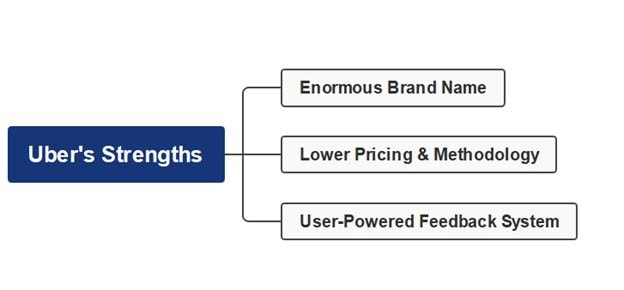
Enormous Brand Name
One of Uber's greatest assets is the enormous brand name it has established. They are virtually interchangeable with the term "ride-sharing." They serve as a baseline by which all similar businesses are measured.
They have expanded to more than 50 nations and are continuing to grow. They are the largest ride-sharing corporation in the world, with over 80 million active users.
Lower Pricing & Methodology
Uber's pricing is lower than that of all other modes of transportation. This was Uber's main strength when it first debuted, and it remains the company's ace now.
When taking a cab, customers typically pay double or even quadruple the cost for the same journey, depending on the state, time of day, and other factors. Furthermore, they had to wait even longer for the cab to arrive.
In addition, Uber is trying to satisfy its drivers by employing a mechanism that adjusts the pricing of a trip based on demand. The pay will be much greater when a driver works Saturday night shifts.
User-Powered Feedback System
Finally, Uber users may rate their journey as well as the driver. As a result, the service has always been of the highest quality, as drivers always strive to enhance their ratings for more bookings.
Uber’s Weaknesses
Next up are Uber’s weaknesses. This section will show how Uber’s management and strategies affect its operations. In recent years, though, people have seen an upscale effort on Uber's part to address these concerns.
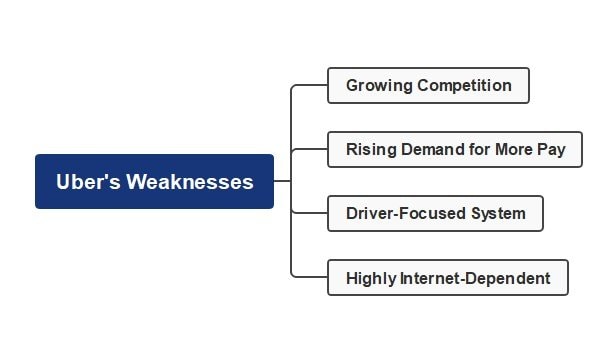
Growing Competition
The competition is heating up because the app's premise is so basic. There are no large upfront expenditures, such as purchasing a car fleet or running stations.
Rising Demand for More Pay
While Uber is trying to keep costs minimal, drivers are dissatisfied with their pay. In certain circumstances, the running expenditures they must cover are so enormous that there is minimal potential for profit.
Driver-Focused System
Uber relies significantly on its drivers. They are essentially Uber's brand ambassadors 24 hours a day, seven days a week. However, their conduct is unpredictable, and the company's reputation suffers when a new scandal makes the press.
In fact, several drivers have been convicted of harassing and abusing passengers. This negatively affects Uber’s brand identity in the long run.
Highly Dependent on the Internet
Last but not least, Uber is primarily highly dependent on the internet. The entire company model is doomed to fail when all of the other uncontrollable variables are factored in.
Thus, it would be best for Uber to explore other options for inviting passengers. For example, Grab in Southeast Asia places “pickup points” where they can ask a representative to book a ride for them.
Uber’s Opportunities
Next up are Uber’s opportunities. These are mainly external factors that make up facts or events that Uber can use to propel their company upward.
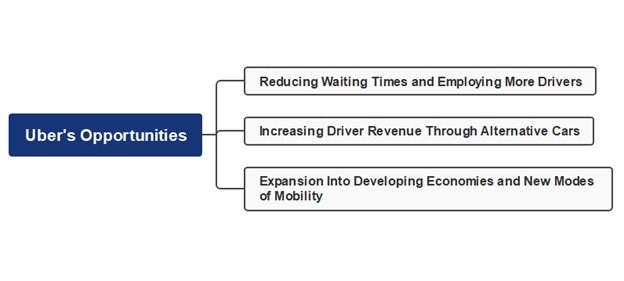
Reducing Waiting Times and Employing More Drivers
Uber has several advantages over traditional taxi and transportation services, including lower wait times. They can treble their strength and reduce waiting times by employing even more drivers.
Increasing Driver Revenue Through Alternative Cars
They can encourage the usage of automobiles with reduced operating costs. Less expensive Electric vehicles can be used. It will lower the price and boost the profitability for the driver.
As a result, the drivers' revenue will increase, and they will be happier. They rely on drivers to keep them afloat.
Expansion Into Developing Economies and New Modes of Mobility
Uber can expand into developing economies like Asia and the Middle East, especially India. Previously, they were already in Southeast Asia. However, they pulled out due to Grab.
As Grab struggles to maintain its brand identity as the region's “giant,” it would be the perfect time for Uber to enter, especially given its reputation.
Lastly, Uber can also expand into other modes of transportation, such as motorcycle taxis. These are popular in countries like the Philippines, with brands like Angkas and JoyRide leading the way.
Uber’s Threats
Lastly, here are Uber’s threats. Again, these may be external factors that threaten the dominant position of the tech firm. However, these may be easily addressed through strengths and opportunities.
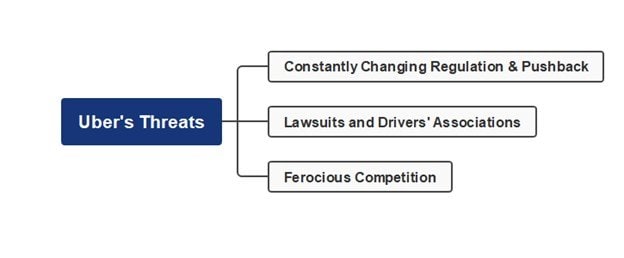
Constantly Changing Regulations & Pushback
The most serious challenge to Uber is that each country's rules and regulations are constantly changing. Uber could be outlawed across the country with a simple change in the legislation.
Simultaneously, traditional taxi communities are putting much pressure on the government to implement control. Fraud and scandals are rising as new markets and drivers enter the industry. It isn't good for the company's image.
Fines might be imposed if you have issues with the local government. It will also have a poor reputation.
Lawsuits and Drivers’ Associations
Disgruntled drivers pose a danger to the firm, as they band together and launch lawsuits against it. This results in financial losses as well as a tarnished brand image.
Ferocious Competition
Finally, the ferocious competition is catching up. Riders and drivers have a range of systems to choose from, resulting in cheaper pricing. Uber must work hard to maintain a competitive advantage over competing products.
Increased competition will eventually result in lower pricing. Due to this, drivers will be deterred from joining the company in new areas. Customers will be lost as a result of this. Uber's profits will dwindle.
How To Make an Uber SWOT Analysis Diagram
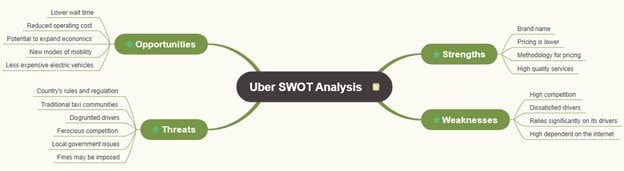
A SWOT analysis diagram is one of the most effective ways to study Uber’s position in the global market. Instead of keeping long lists of strengths, weaknesses, opportunities, and threats, placing them in a diagram makes the information easier to digest.
With a clear diagram, you can quickly see the factors that help Uber grow and the risks that might slow it down. You can try doing this using our discussion above or your own analysis of the company.
Use a Professional SWOT Analysis Diagram Maker
One needs a diagram to keep up with the strengths, opportunities, weaknesses, and threats. You don't need to be an expert to make an effective diagram. EdrawMind has countless pre-made SWOT templates for you to customize properly.
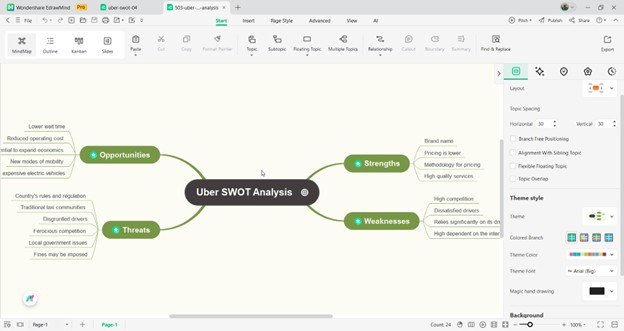
You can easily make an SWOT analysis through EdrawMind’s extensive Library of symbols and pre-made templates. And, with AI tools like a diagram generator and a built-in chatbot, getting new information has never been easier.
How To Make an Uber SWOT Analysis Diagram
 Try the app & get 500 free AI tokens


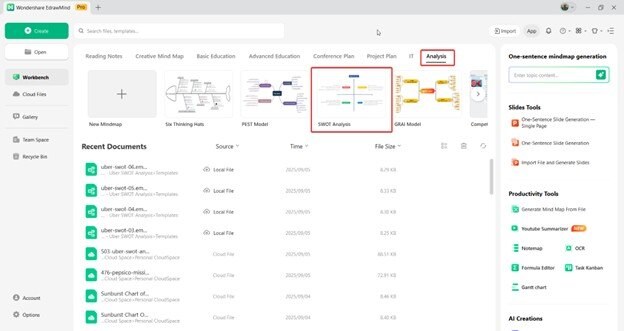
Step1 Choose a SWOT analysis template that you want to use.
In EdrawMind, you can access these on the homepage through Analysis > SWOT Analysis.
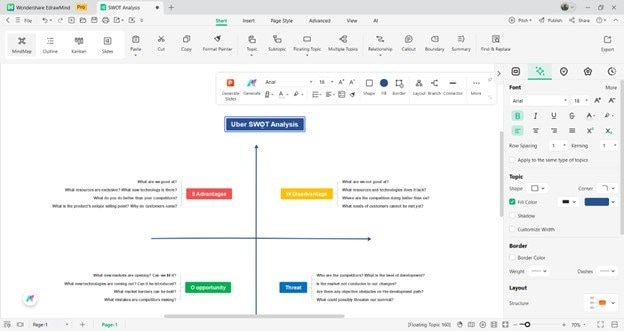
Step2 Edit the content accordingly.
Label the diagram as “Uber SWOT Analysis,” and fill in the details accordingly.
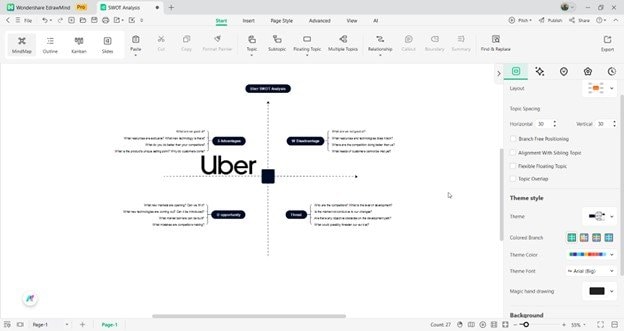
Step3 Customize the design of your SWOT Analysis diagram.
You can use the company’s signature black-and-gray modern theme, or add images and logos.
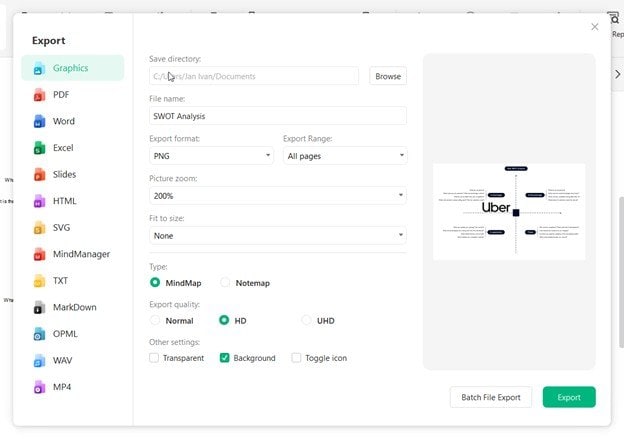
Step4 Once done, export the diagram via PDF, JPG, or other required file formats.
Tips When Making a SWOT Analysis Diagram
Now that you know how to make an Uber SWOT analysis diagram, here are some tips. These tips are not only practical for an Uber SWOT analysis, but also for other companies.
- Stay concise. Use short keywords instead of long sentences to keep the diagram easy to scan.
- Balance your points. Avoid overloading one quadrant while leaving another nearly empty. A balanced SWOT looks more reliable.
- Use specific examples. For example, under threats, write “competition from Lyft” instead of just “competition.”
- Highlight priorities. Not all factors carry the same weight. Emphasize the most important ones with bold text or icons.
- Match the style to the brand. A clean, modern design with Uber’s signature colors makes the diagram look professional and brand-relevant.
-
1. How does Uber’s mission influence its service offerings?
One of Uber’s missions is to create opportunity through movement. Uber should expand into other forms of transportation, such as e-bikes, motorcycle scooters, and more.
These days, Uber has already expanded into the market, specifically in countries that allow the use of consumer-grade scooters on the streets.
-
2. How does technology give Uber a competitive advantage?
As one of the earliest ride-hailing apps, Uber has integrated all the latest tech and introduced it to the market.
Uber’s AI-driven algorithms, real-time tracking, and cashless payments make rides more reliable, supporting its vision of seamless transportation.
-
3. How does Uber capitalize on changing consumer habits?
With rising demand for delivery, Uber expanded Uber Eats, which grew significantly during the pandemic and diversified revenue streams.
This also gave an option for Uber drivers who do not prefer other people riding in their personal vehicles.
 EdrawMind
AppsEdrawMind Online
EdrawMind
AppsEdrawMind Online