

Every company has a mission and vision statement, but most teams struggle to explain what they actually mean.
I have sat in meetings where heads nod, yet no one ties those words to daily work. Without a mission and vision analysis, projects drift, priorities clash, and money gets burned.
In this guide, I'll explain them and show you how to analyze mission and vision statements with EdrawMind.
In This Article
Mission vs Vision: What's the Real Difference
Every business talks about having a mission and a vision. Yet if you ask five people what they mean, you'll likely get five answers.
What a Mission Really Means
Your mission defines the present: what you do, who you do it for, and why it matters now. It answers:
- What problem are we solving?
- Who are we helping?
- How are we doing it differently?
A mission turns purpose into action.
Examples: IKEA: “To create a better everyday life for the many people.”
What a Vision Really Means
Your vision defines the future: what success looks like when your mission is fulfilled. It shows where you’re headed and the change you aim to create.
Example: IKEA: “To offer a wide range of well-designed, functional home furnishing products at prices so low that as many people as possible can afford them.”
The Real Difference
Mission = What you’re doing now. Vision = Where you’re going next.
Your mission keeps you focused. Your vision keeps you moving. Without a mission, you lose direction. Without a vision, you lose drive. Together, they bring clarity and purpose.
Why You Need Both
A clear mission guides daily decisions and a strong vision inspires long-term effort. When both align, everyone understands why the company exists and where it’s headed.
They are two sides of the same coin. If your mission doesn't lead toward your vision, one of them needs fixing.
How to Do Mission and Vision Statement Analysis on EdrawMind
Two methods let you start analyzing mission and vision statements. Let me walk you through both.
Method 1: Template Approach
 Try the app & get 500 free AI tokens


Step1 Select a Suitable Template
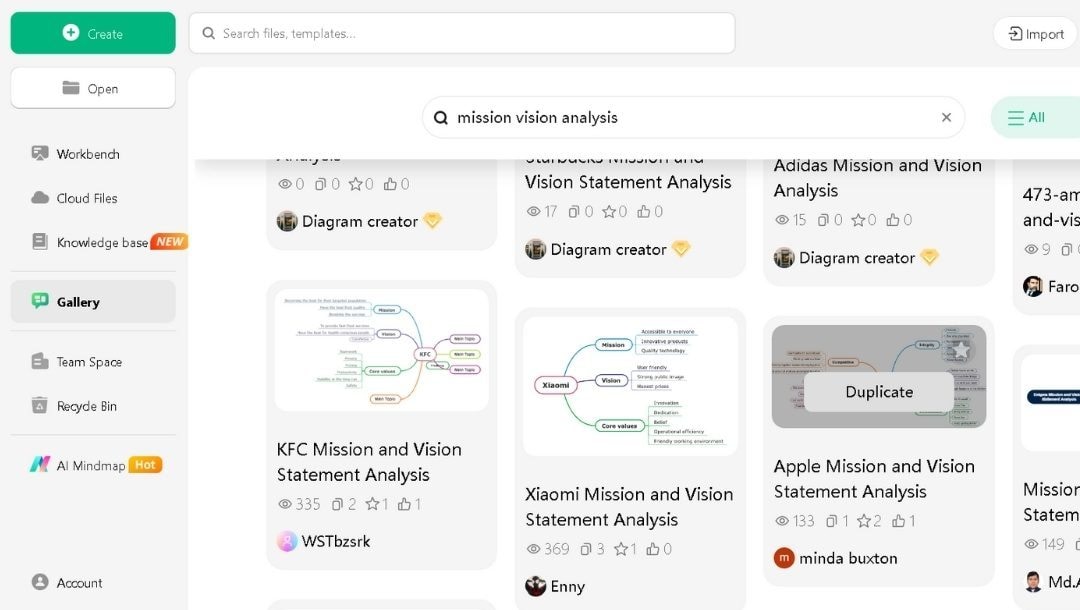
- Click on the Gallery on the left side panel in EdrawMind.
- Type "mission vision analysis" in the search bar.
- Review options that display different analysis styles, including side-by-side comparison, hierarchical breakdown, and interconnected web.
- Press Duplicate to load a suitable one into your editor.
- The structure appears with sample content you'll replace.
Step2 Enter Core Statements
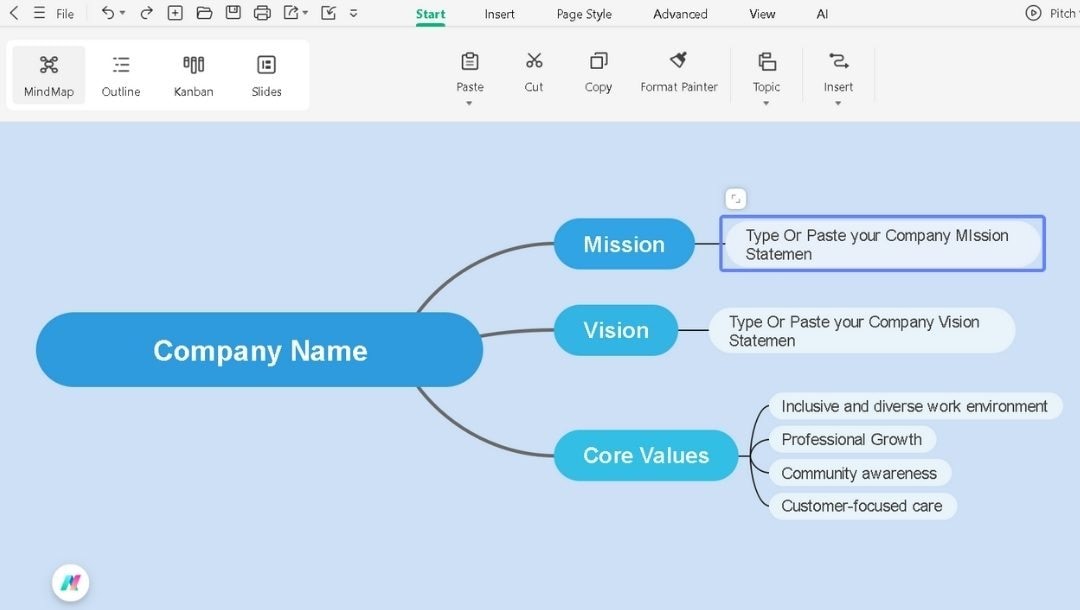
- Double-click the central topic node.
- Type your organization or team name.
- Click the mission section and delete the placeholder.
- Paste or type your complete mission statement.
- Move to the vision section and add your vision statement.
Step3 Break Statements into Parts
- Right-click the mission node.
- Hit Tab or Shift+Enter to add a Subtopic.
- Identify components: target market, product/service, delivery approach, differentiator.
- Add each as a separate subtopic.
- Repeat for vision: future market position, societal impact, timeline, and success measures.
- Continue subdividing until each element is concrete.
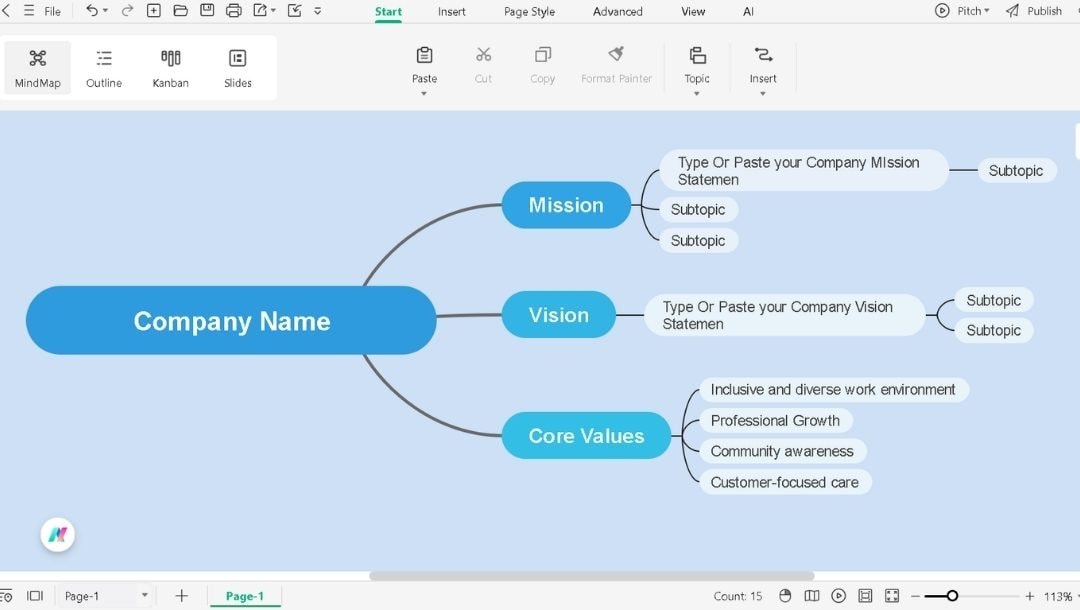
Step4 Enhance with Formatting
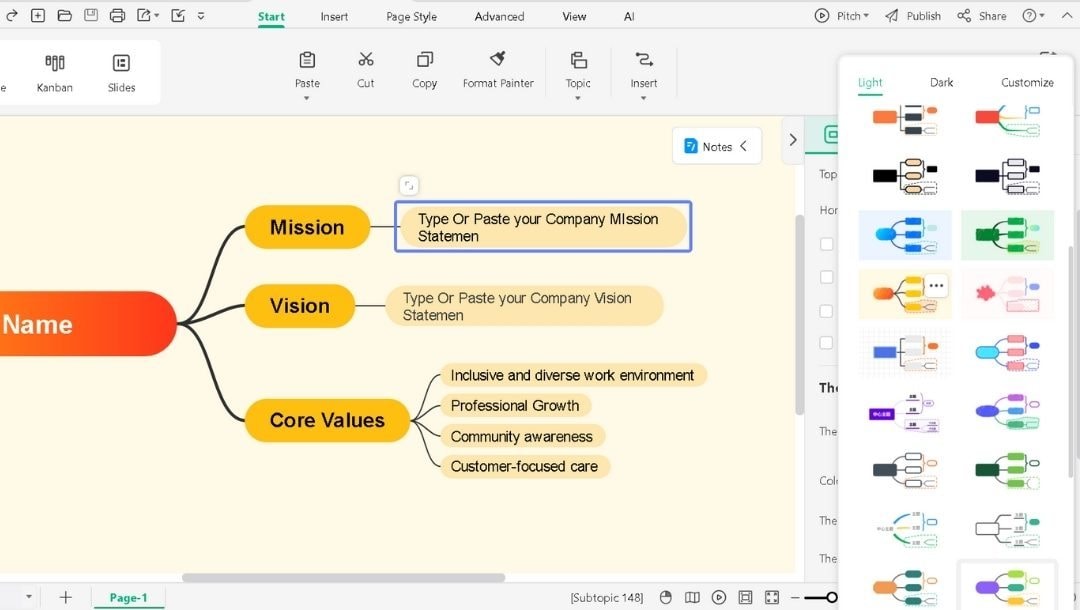
- Open Themes in the right panel.
- Apply a preset theme or customize colors manually.
- You can assign one color family to mission branches (e.g., blues).
- Use a contrasting family for vision branches (e.g., oranges).
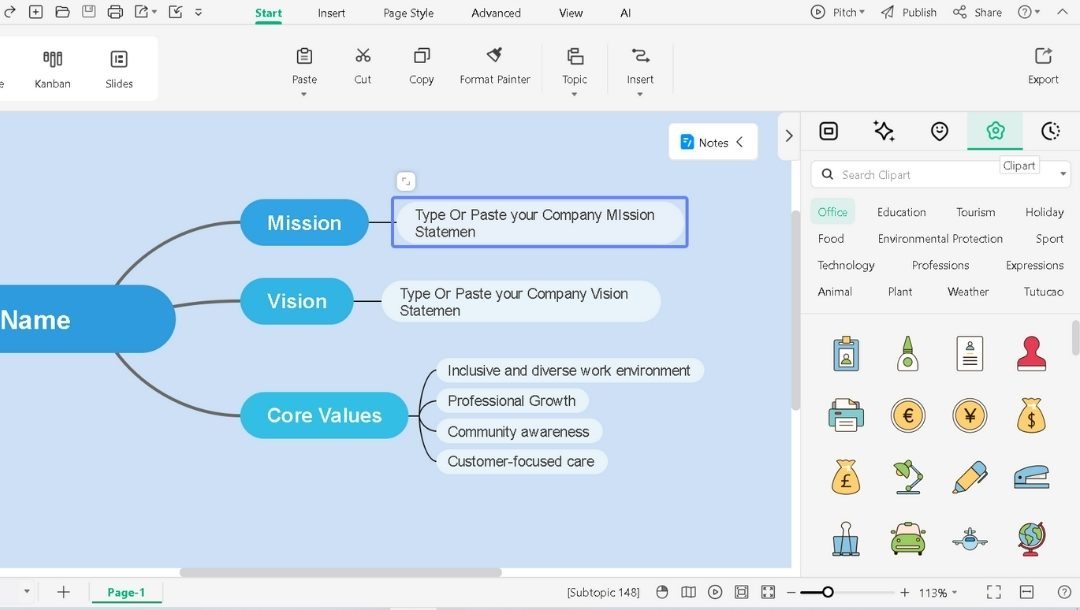
- Add Clipart from the left panel to improve scanning speed.
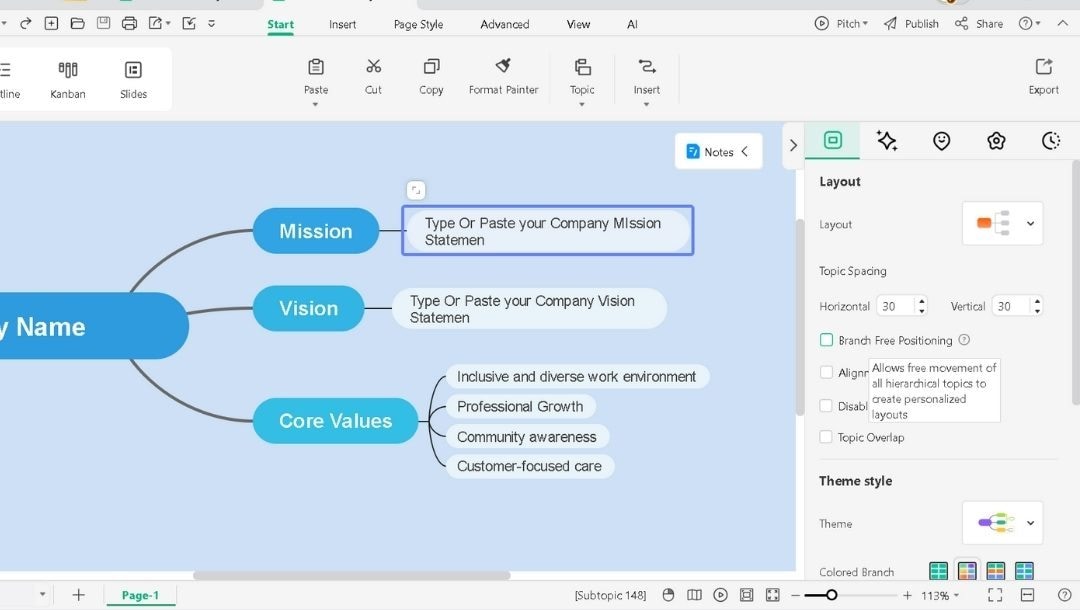
- Enable Branch Free Positioning for Custom Layout.
Step5 Export Your Mission and Vision Analysis
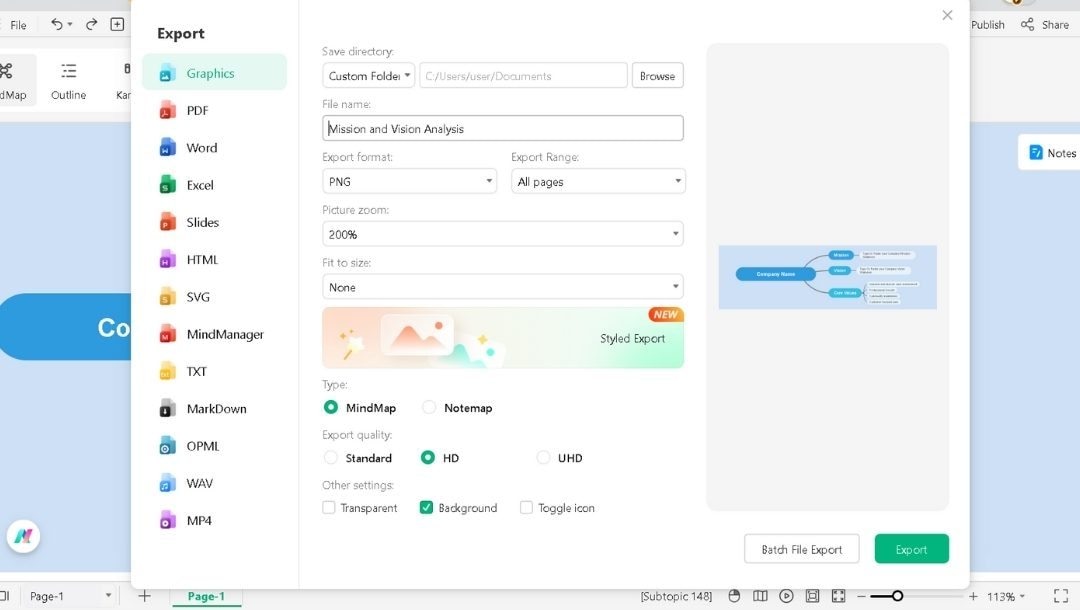
- When everything is ready, click the export icon in the upper-right corner.
- Choose the required format: PDF (for static sharing), EMMX (for future edits), or PNG (for reports).
- Adjust quality settings as required.
- Select the destination and click Export.
Method 2: AI-Generated Framework
Step1 Generate Initial Map
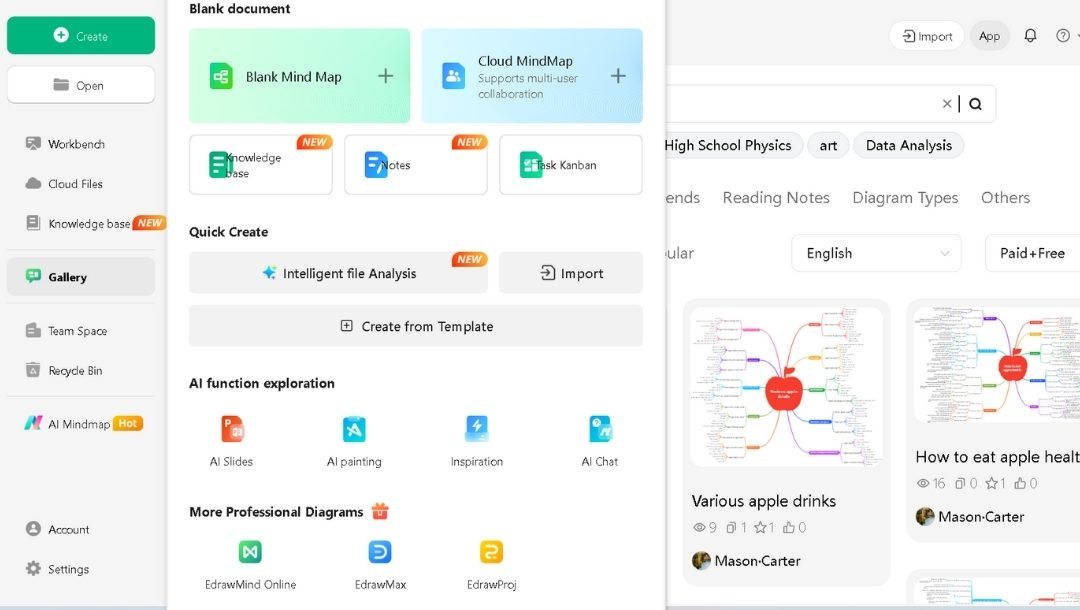
Open EdrawMind and click +Create and then Blank Mind Map on the home page.
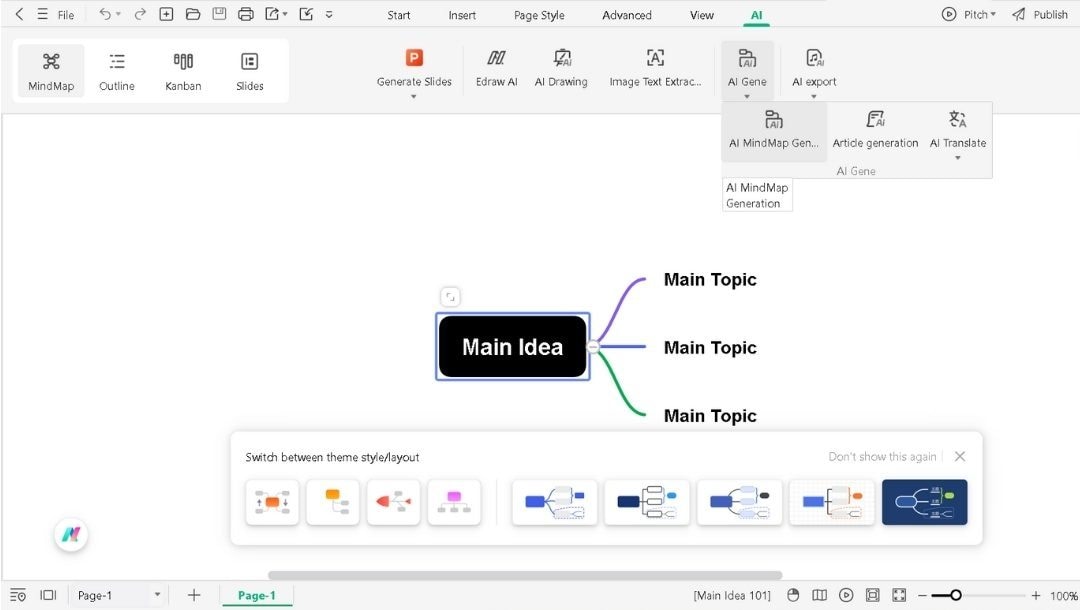
- On the top toolbar, go to AI > AI Gene > AI MindMap Generation.
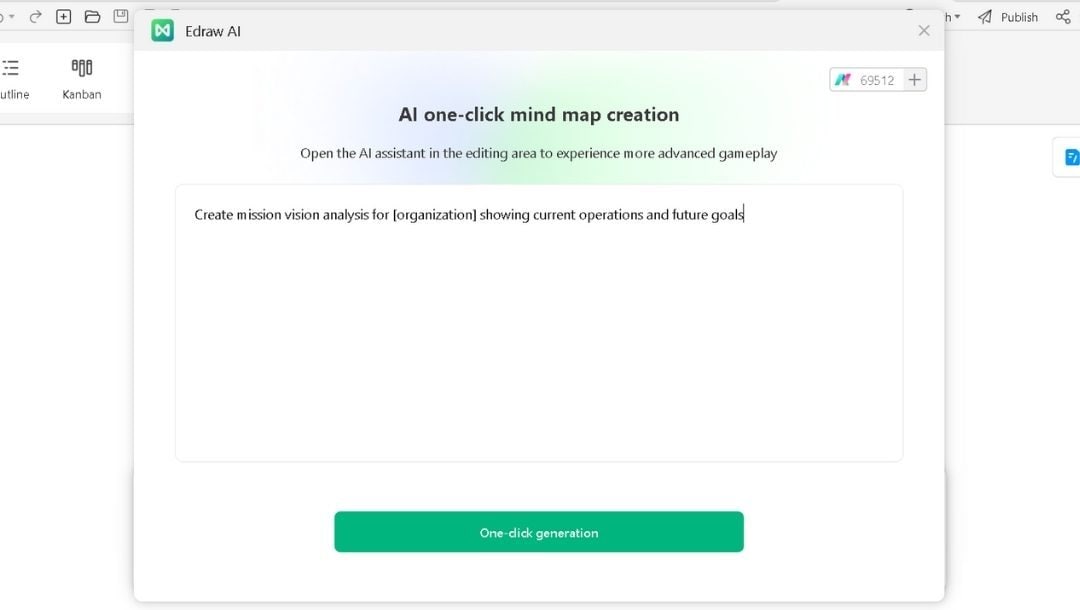
- In the prompt box, paste your mission and vision text, like: "Create mission vision analysis for [organization] showing current operations and future goals”.
- Then click One-Click Generation.
Step2 Review the Draft Map
- Review the AI-generated diagram on the canvas.
- Check that mission items appear under the Mission branch and future goals under the Vision branch.
- Add missing details to the prompt if needed and regenerate.
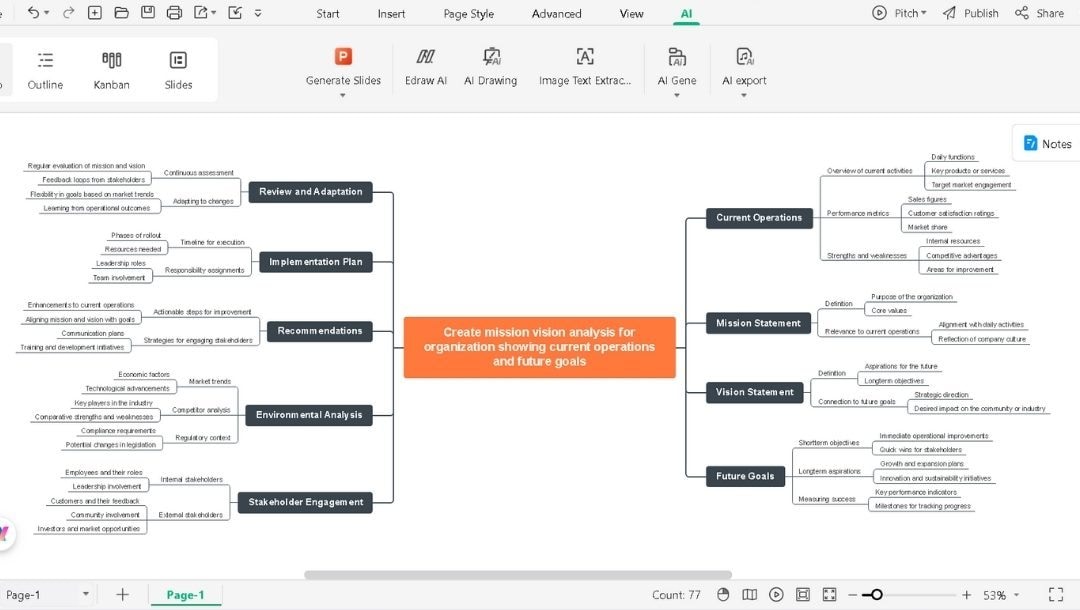
- The AI produces a base structure in under 15 seconds.
- After that, proceed to Steps 3-5 in the template method for customization and export.
Why Use EdrawMind for Mission and Vision Analysis Mapping
EdrawMind offers faster and more actionable mission and vision analysis compared to standard tools.
- AI generation creates structured maps in 10 seconds from your text, eliminating the need for manual setup.
- Over 6,000 templates include pre-designed mission and vision layouts for immediate use.
- Cross-platform access (Windows, Mac, Linux, web) with cloud sync keeps work available everywhere.
- Real-time collaboration lets teams co-edit, comment, and refine statements together.
- Export to PDF, PNG, or SVG to preserve formatting for presentations and printing.
- Presentation mode walks stakeholders through your analysis during meetings.
- Offline editing works without an internet connection, syncing changes when you reconnect.
Best Mission and Vision Map Templates in EdrawMind
Samsung Vision Mission Analysis
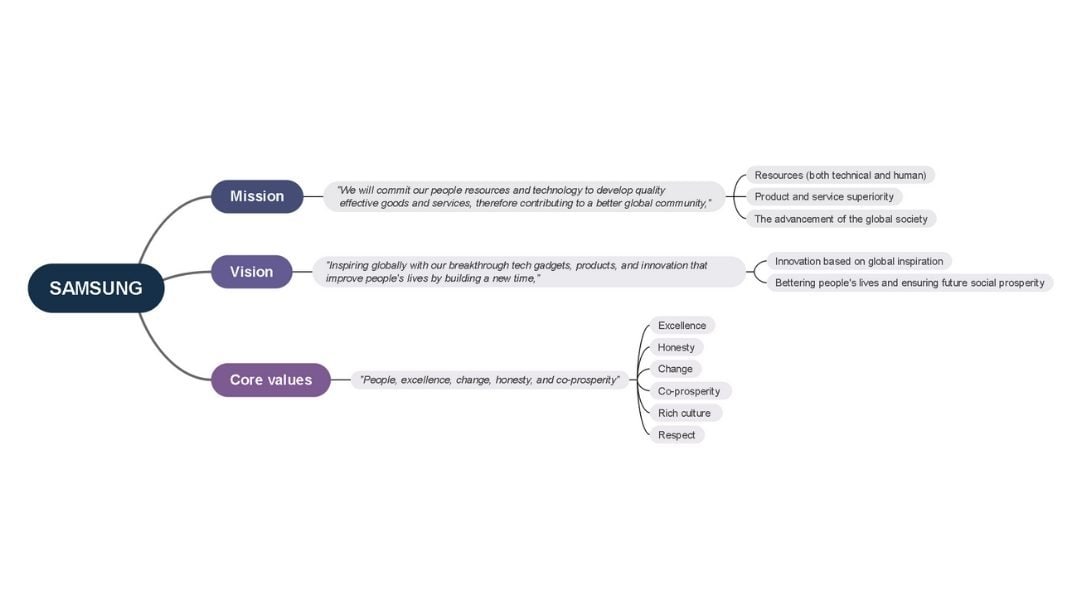


Samsung’s mission, vision, and core values are displayed in a clean mind map. Different tones of blue and purple mark each branch, and rounded bubbles highlight key topics.
Subtopics are written in plain text. The map divides statements into practical elements, including resources, product quality, and global influence.
It is ideal for department heads, HR teams, and strategic planners seeking a clear and simple overview on one page.
Vision and Mission Analysis of Apple
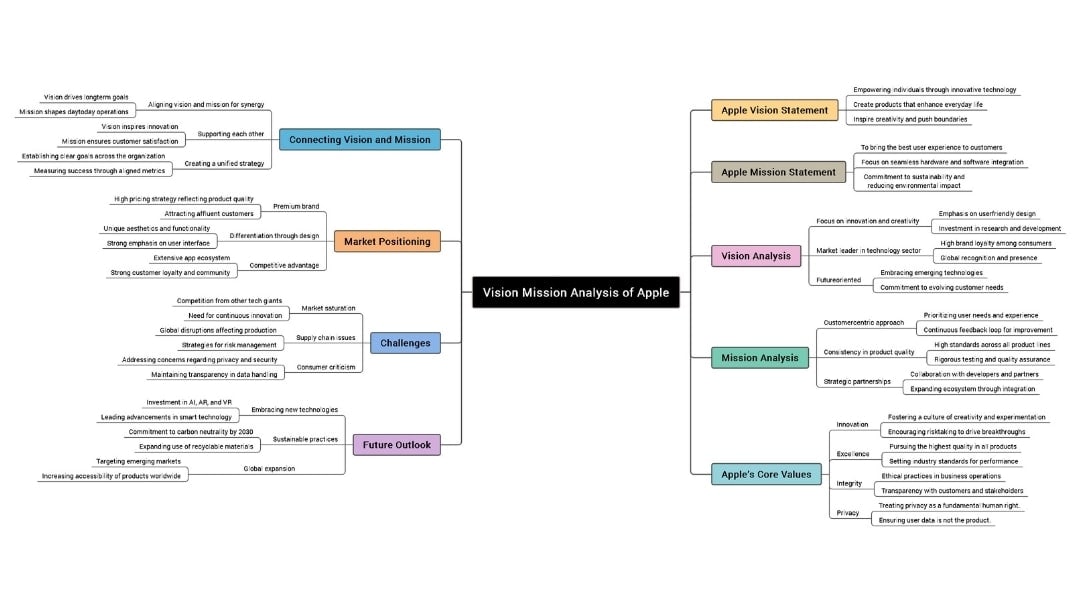
The map clearly displays Apple's mission, vision, and values in a two-sided layout. Each side uses bright colors to distinguish ideas: goals on one side, challenges on the other.
You can see how supply chain issues and market position are closely linked to Apple's primary objectives.
I'd suggest this map for students and team leaders who want a simple view of how Apple connects plans with real-world facts.
Tesla Vision and Mission Analysis
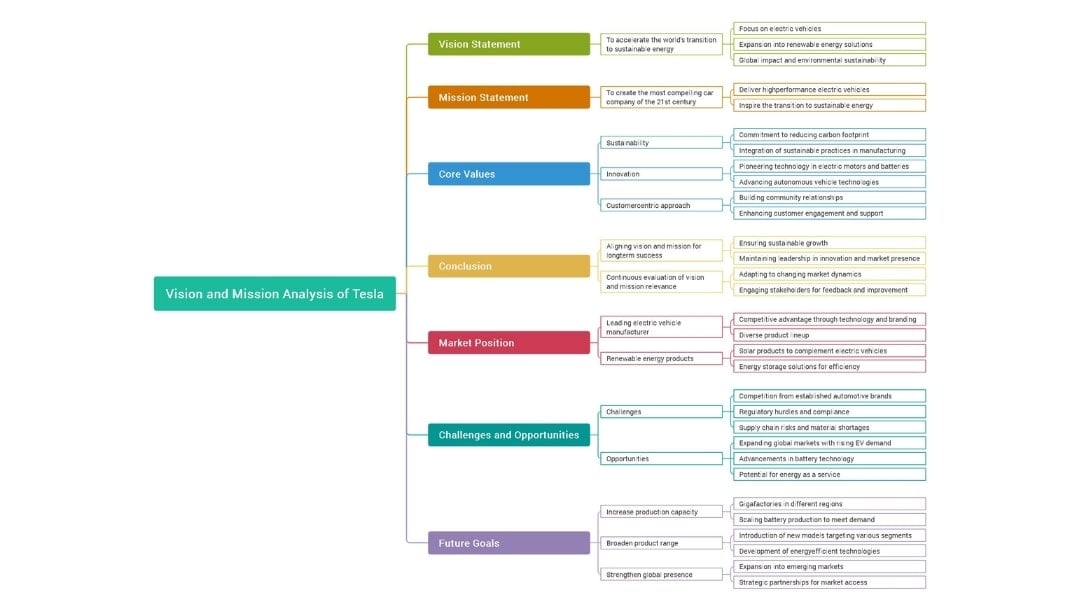
Here, Tesla’s full strategy spreads across a horizontal mission and vision map. Each key area has its own color for smooth reference. The branch details link guiding ideas to actions.
It works well for analysts, students, and strategy teams who need a complete market view.
Tips for a Better Mission and Vision Analysis
- Match Words to Proof: Ensure measurable actions can back every verb and noun. Replace ambiguous words with measurable actions like “launch two features per quarter" or "reduce defects to 1%."
- Break Statements Into Testable Claims: List each promise separately. Define one way to verify it: customer feedback, KPIs, or market share.
- Link Mission to Vision: For every mission action, draw a line to a vision outcome. Missing connections reveal gaps or misalignment.
- Set Scope and Timeline: The mission spans 0–12 months, while the vision extends 3–5 years. Add dates to goals so progress is measurable.
- Use Short, Clear Language: Read aloud. Remove jargon or empty adjectives. If a newcomer stumbles, simplify it.
- Check Conflicts and Dependencies: Identify contradictions or missing resources, skills, or partners to ensure a seamless workflow. Note any compliance or budget constraints.
- Assign Owners and Review Cycles: Assign each low-alignment item a designated owner and a due date. Schedule quick monthly checks and quarterly deep reviews.
- Contrast with Competitors: Highlight what makes your statements different, not just better.
Final Thoughts
Your mission and vision statements either work or waste time. Find out what it does in the next few minutes.
How?
Open EdrawMind, grab a template, enter your statements, and watch the truth emerge. Where does your mission actually push toward your vision? Where does it pull sideways or stop altogether?
The map shows you instantly. No more guessing during budget meetings or strategy calls. So, build your first analysis now.
 EdrawMind
AppsEdrawMind Online
EdrawMind
AppsEdrawMind Online