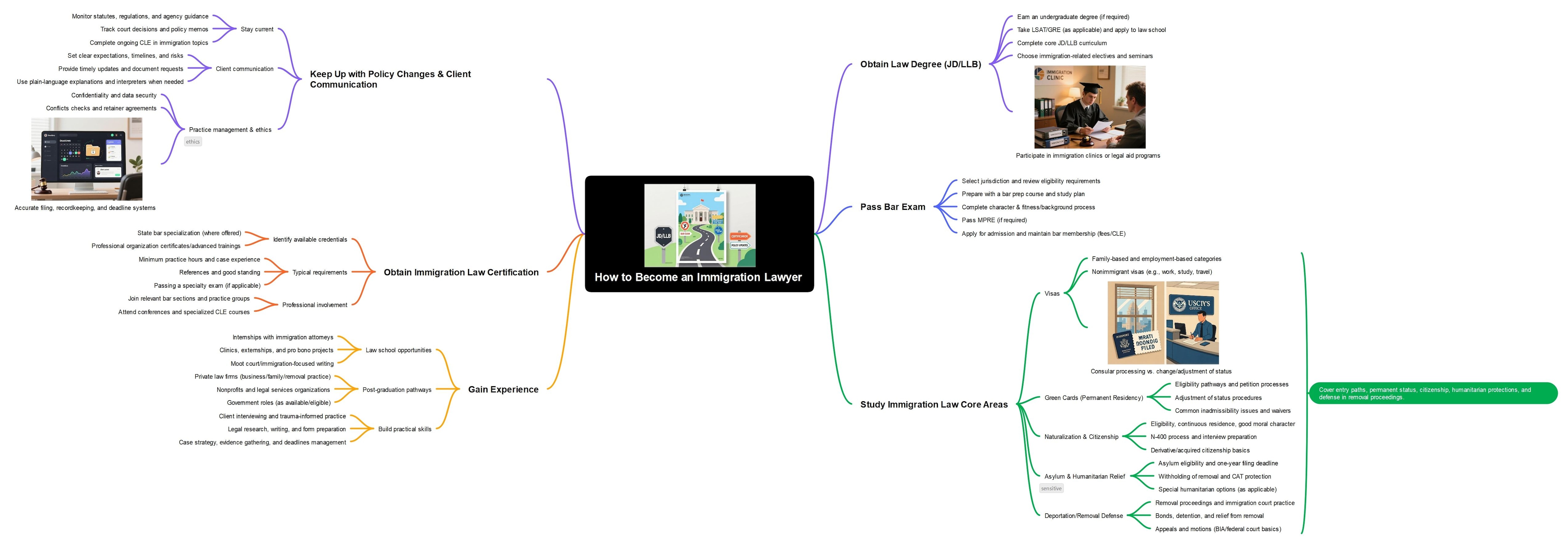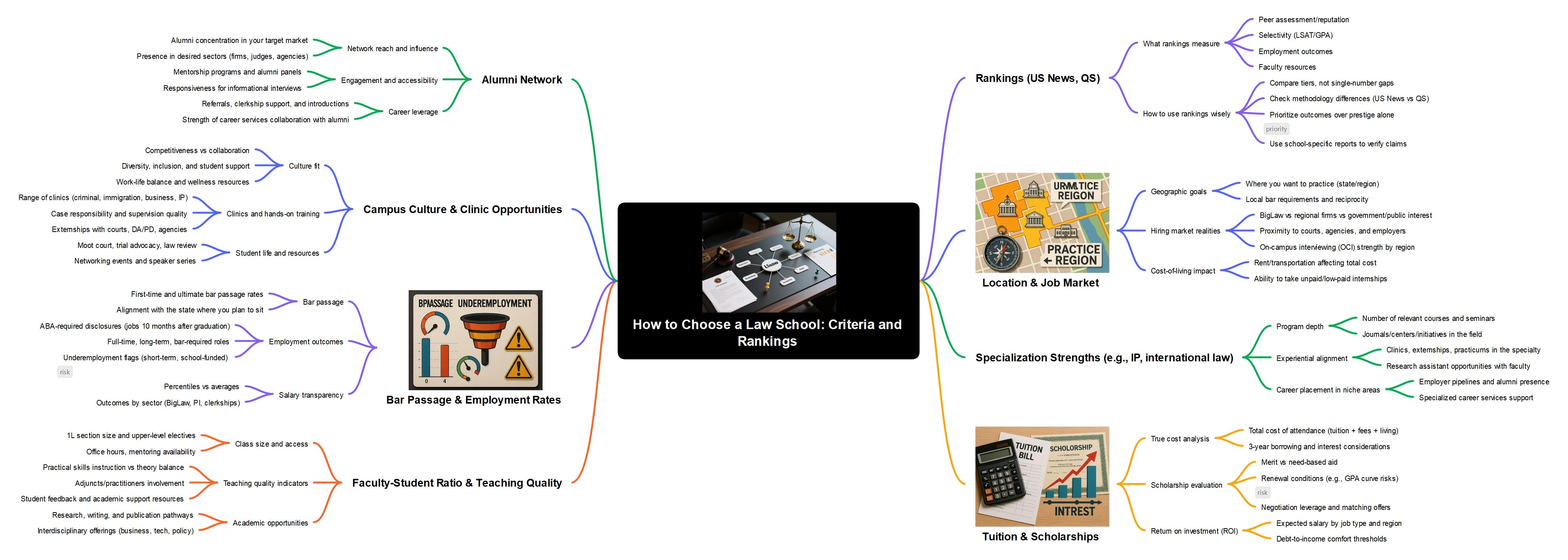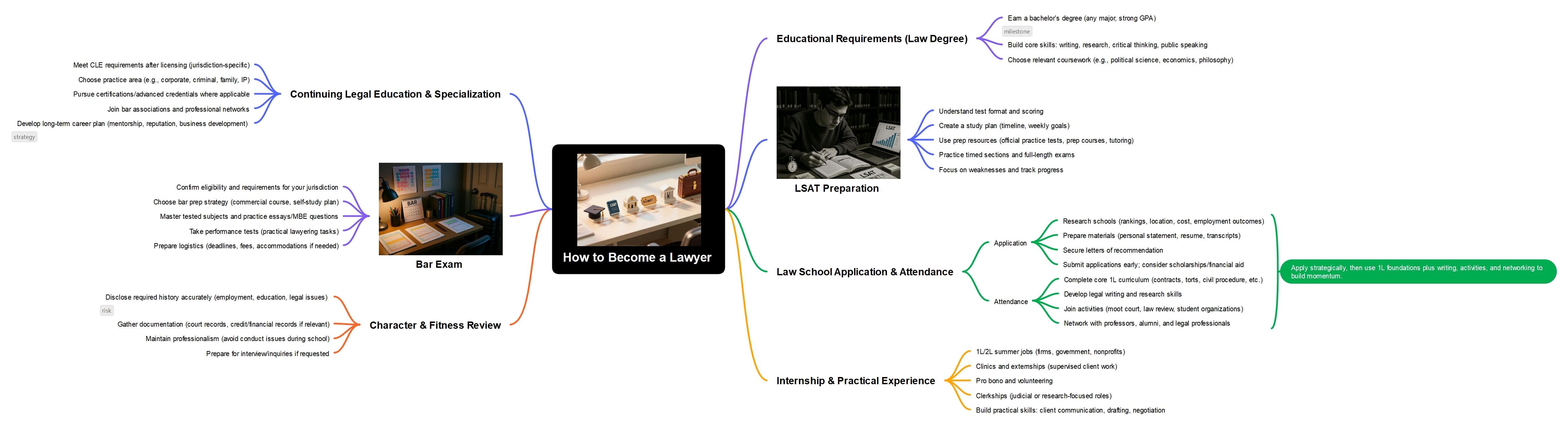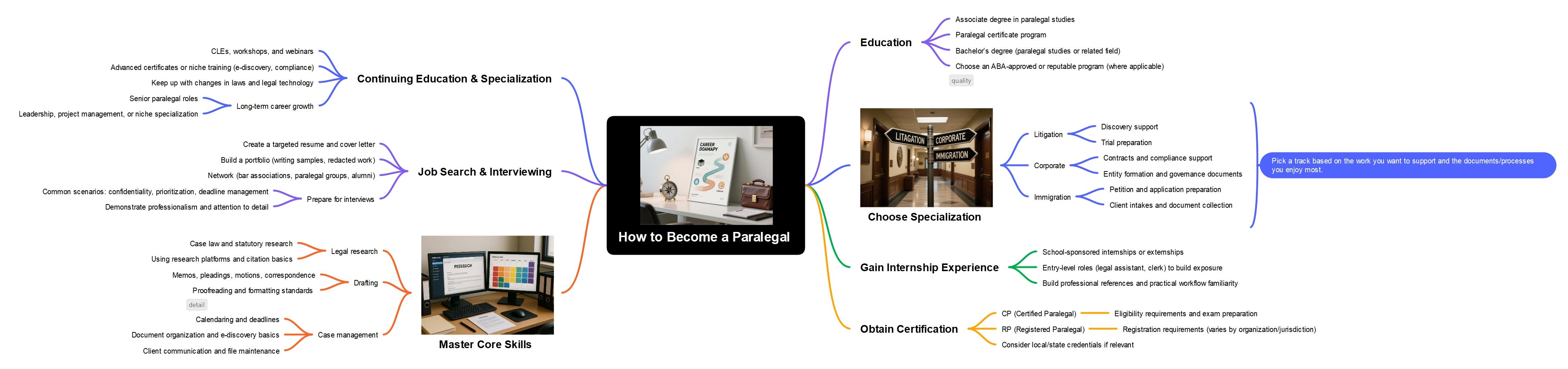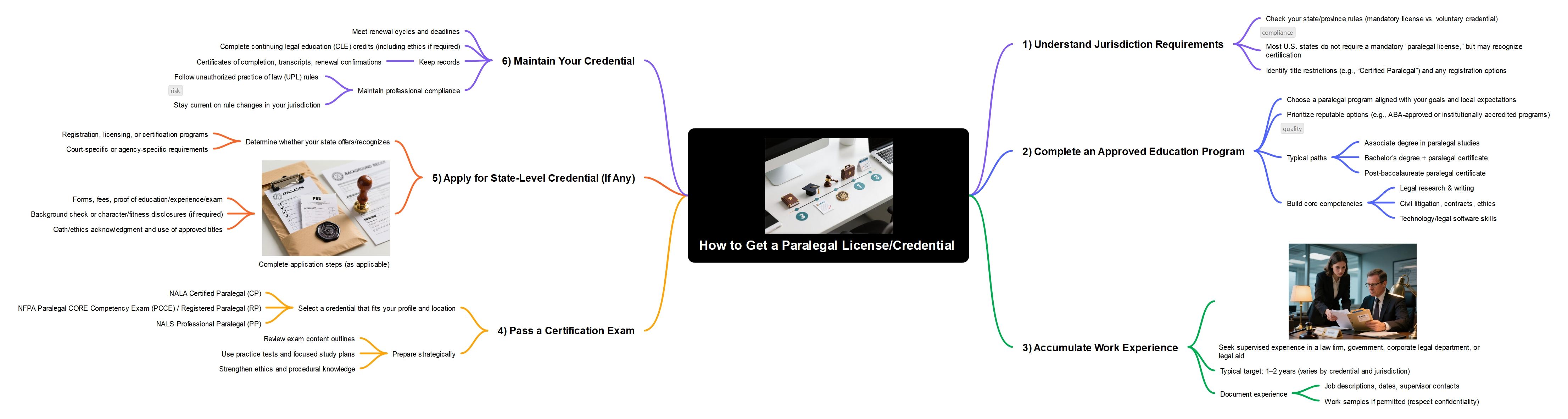
About this How to Get Paralegal License Template
This template is structured around a common source of confusion in the paralegal field: many places do not require a mandatory license, but certification, title restrictions, and employer expectations still matter. It helps users distinguish formal legal requirements from professional signals.
Understand Jurisdiction Requirements
This branch focuses on the first question users need to answer: what the law actually requires where they plan to work. It helps separate mandatory rules from informal professional expectations.
Mandatory License vs. Certification
This section clarifies that a mandatory paralegal license is uncommon in many jurisdictions, while certification may still be recognized or valued. It is useful for preventing people from planning around the wrong assumption.
Title Restrictions
This branch highlights whether certain designations such as certified paralegal or similar titles are regulated. It helps users understand where wording itself carries professional or legal consequences.
Recognized Credential Paths
This section gives users a place to compare the practical routes that may matter even when no license is formally required, including certificate programs, national credentials, or employer-trusted qualifications.
Employer Expectations and Specialization
This branch turns the legal-rule question toward hiring reality. It helps users think about what firms, companies, or specialty practice areas may expect even when the jurisdiction does not impose a strict licensing regime.
Qualification Strategy
This final section helps users turn the information into an action plan. It is useful for choosing the right combination of education, certification, and market positioning for the region where they want to work.
FAQs about this Template
-
What is a paralegal license?
A paralegal license or qualification requirement refers to the credential, approval, or formal recognition needed in some jurisdictions before someone can work in certain legal support roles. The exact rules vary, so understanding the local requirement matters more than assuming one global path exists.
-
How do you get qualified for paralegal work?
Getting qualified for paralegal work usually involves meeting the relevant education, training, certification, or jurisdiction-specific requirements that apply where you plan to work. The right path depends on local rules, employer expectations, and how formal the role is in that legal market.
-
Why does paralegal qualification matter?
Paralegal qualification matters because legal support work depends on precision, confidentiality, and process awareness. The more formal the role or jurisdiction, the more important it becomes to understand what training or recognition is expected before taking on legal support responsibilities.
-
How is a paralegal license different from legal education?
A paralegal license or formal qualification requirement is about permission, recognition, or role eligibility, while legal education is about learning the knowledge and skills behind the work. The two are connected, but they do not always come from the same step.