



“All the world’s a stage, and all the men and women merely players.” That famous line by William Shakespeare perfectly describes his own life. He was born in 1564 and played many roles, including acting, writing poetry, and writing plays. He wrote stories about love, betrayal, laughter, and tragedy that still touch hearts today.
The William Shakespeare Timeline of his life shows how he went from Stratford-upon-Avon to the big stages of London, where he became a legend whose words will never fade. Let's look into his life and see how he became the best storyteller in the world.
William Shakespeare Timeline
William Shakespeare didn't just write plays; he changed how people tell stories. He wrote 37 plays and 154 sonnets, and people all over the world still quote, study, and perform his works. He even came up with more than 1,700 new words that we still use today!
Let's look more closely at the key events in his life to see how he became one of the most important writers in history.
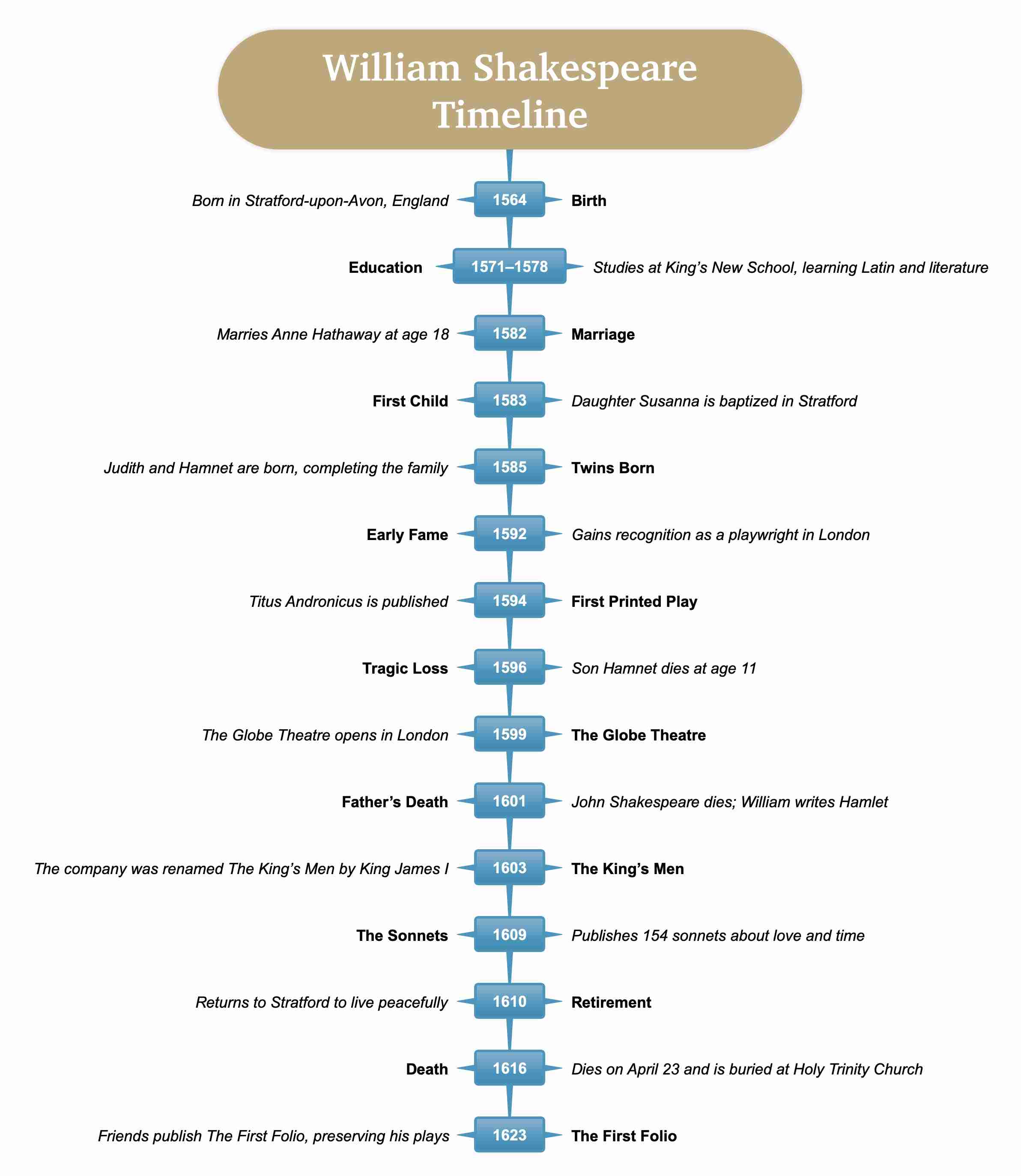


Born in Stratford-upon-Avon (1564)
William Shakespeare was born in Stratford-upon-Avon, England, in April 1564.
His father, John, was a glove maker, and his mother, Mary, belonged to a farming family. They lived in a small house in Henley Street. William was baptized on April 26 and grew up surrounded by stories, markets, and church life in a lively little town.
Education Years (1571-1578)
Shakespeare attended King New School in Stratford, where he learned reading, writing, Latin, and classical stories from Rome and Greece. These lessons sparked his imagination and love for words. He perhaps did not attend university, but the knowledge he gained here helped him build the world's most famous plays later in life.
Marriage to Anne Hathaway (1582)
Shakespeare got married to Anne Hathaway at the age of 18. Anne was eight years older than him. She lived in a nearby village called Shottery. They likely had a simple ceremony. Despite their age difference, their marriage marked the start of his family life.
First Daughter Born (1583)
William and Anne welcomed a child, Susanna, a year after they got married. In May 1583, she was baptized in the same church of Holy Trinity where her father would one day be buried.
Birth of the Twins (1585)
Anne gave birth to twins, Judith and Hamnet, in 1585. The fact that Shakespeare had three children made his life more hectic. Some believe that it was during this time that he started considering getting a job outside Stratford.
Rise to Prominence (1592)
In 1592, Shakespeare had made a name for himself in London's theatre world. A writer named Robert Greene mentioned him in a pamphlet, proving he was already a known playwright. People were starting to see that he had talent in making realistic characters and touching stories. It was the beginning of his popularity.
First Printed Play (1594)
In 1594, Shakespeare's tragedy Titus Andronicus was printed for the first time. It was in the same year that he became part of the Lord Chamberlain's Men, a renowned acting group in London. With this group, he wrote and performed plays that would later become classics. It was the turning point in his life as a writer and actor.
Personal Loss (1596)
Shakespeare lost his one and only son, Hamnet, in 1596 when he was only 11 years old. The loss was heartbreaking. Many scholars believe his later plays, especially Hamlet, reflected his grief and search for meaning. Nevertheless, Shakespeare didn't stop writing even after this tragedy.
The Globe Theatre was Built (1599)
Shakespeare's acting company built the Globe Theatre in London in 1599. It was made of wood, with an older theatre, and became the stage on which a lot of his finest works were performed. It turned Shakespeare's words into unforgettable performances for everyone.
Father's Death (1601)
In 1601, Shakespeare lost his father, John. About the same period, he wrote Hamlet, a play that is full of questions about life, death, and duty. Many believe his father's death inspired these deep themes. It became a turning point in his writing, as it demonstrated how his personal life influenced his creative world.
The King's Men (1603)
When King James I came to power, Shakespeare's company was renamed The King's Men. They performed before the royalty and gained even more success. Being chosen as the king's official troupe gave Shakespeare honor and financial security. It proved that he was no longer a local playwright; he was a national treasure.
The Sonnets Published (1609)
In 1609, a collection of 154 of Shakespeare's Sonnets was published. These short poems explored love, time, beauty, and friendship. Readers were fascinated by their mystery and emotion. The Sonnets are still read everywhere in the world, even after many years.
Retires to Stratford (1610)
After years of success in London, Shakespeare went back to Stratford-upon-Avon. He invested in real estate and spent a little more time with the family. He stepped away from theatre life, but he wrote new plays occasionally. This peaceful retirement gave him the rest he had earned after decades of creativity and hard work.
Writes His Will and Dies (1616)
At the beginning of 1616, Shakespeare wrote his will in which he left gifts to his family and friends. He passed away on April 23, 1616; the same date he was believed to have been born. He was buried in Holy Trinity Church in Stratford. His tomb is still there, in memory of one of the greatest writers in history.
The First Folio was Published (1623)
Seven years after he died in 1623, two of Shakespeare's friends, John Heminges and Henry Condell, collected his plays into one large book called The First Folio. Without it, many of his masterpieces might have been lost. This publication helped preserve Shakespeare's legacy and shared his genius with future generations.
How to Create a Similar Timeline
A timeline helps you see events in order and understand how things happened. Before making one, it’s important to plan carefully. Here’s how you can make a timeline step by step.
- Decide the purpose: Think about why you are making the timeline. Your goal will help you decide what events to include and how much detail to add.
- Collect accurate information: Write down important dates, events, and milestones. Double-check facts using reliable sources to make sure everything is correct.
- Arrange events chronologically: Place events from earliest to latest so your timeline is easy to follow.
- Choose a layout: Choose a style such as horizontal, vertical, or creative that fits your content.
- Add details: Include short descriptions, locations, or key facts for each event.
- Use the right tool: Visual tools like EdrawMind make it easy to create neat and professional timelines quickly.
Steps to Create the Shakespeare Timeline
Now that you’ve planned your timeline with these tips, it’s time to start making it. You can explore a tool like EdrawMind to turn your collected information into a clear, visual timeline. Follow the steps below:
 Try the app & get 500 free AI tokens


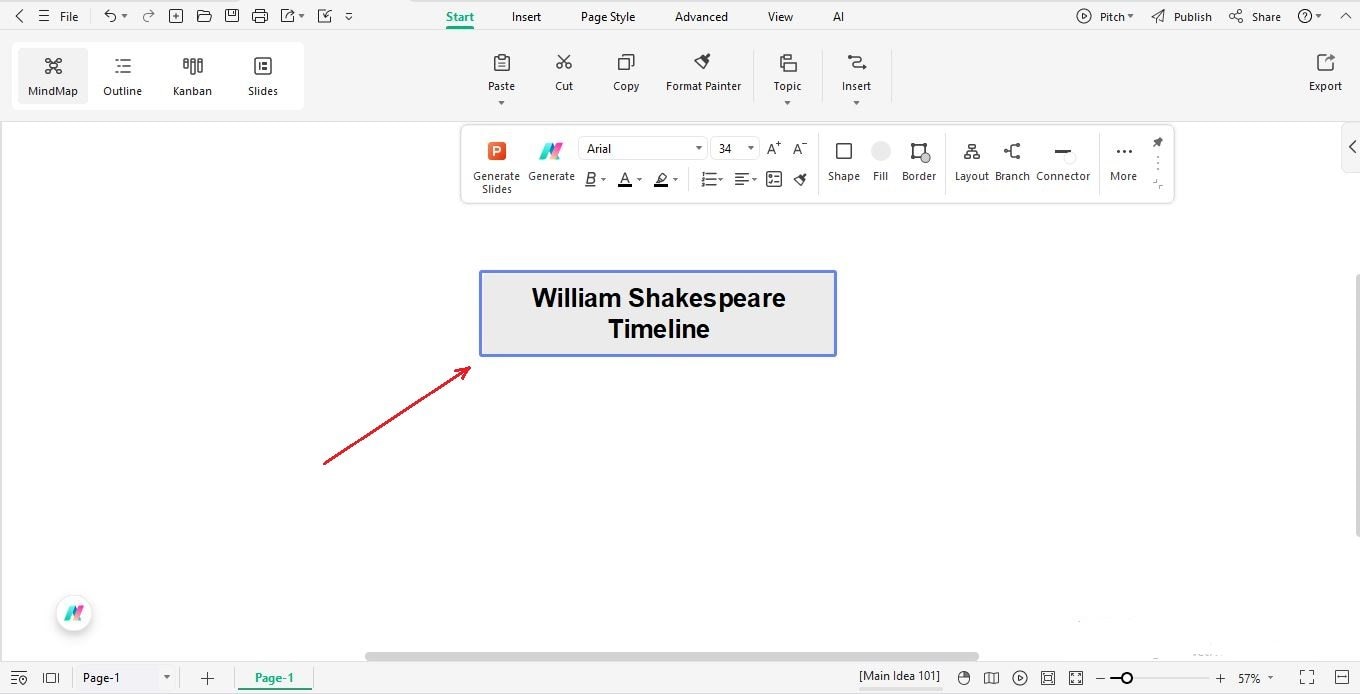
Step 1 Create a New File & Add Title
- Open Wondershare EdrawMind and start a new file.
- Type a clear heading, such as “William Shakespeare Timeline,” at the top of your page.
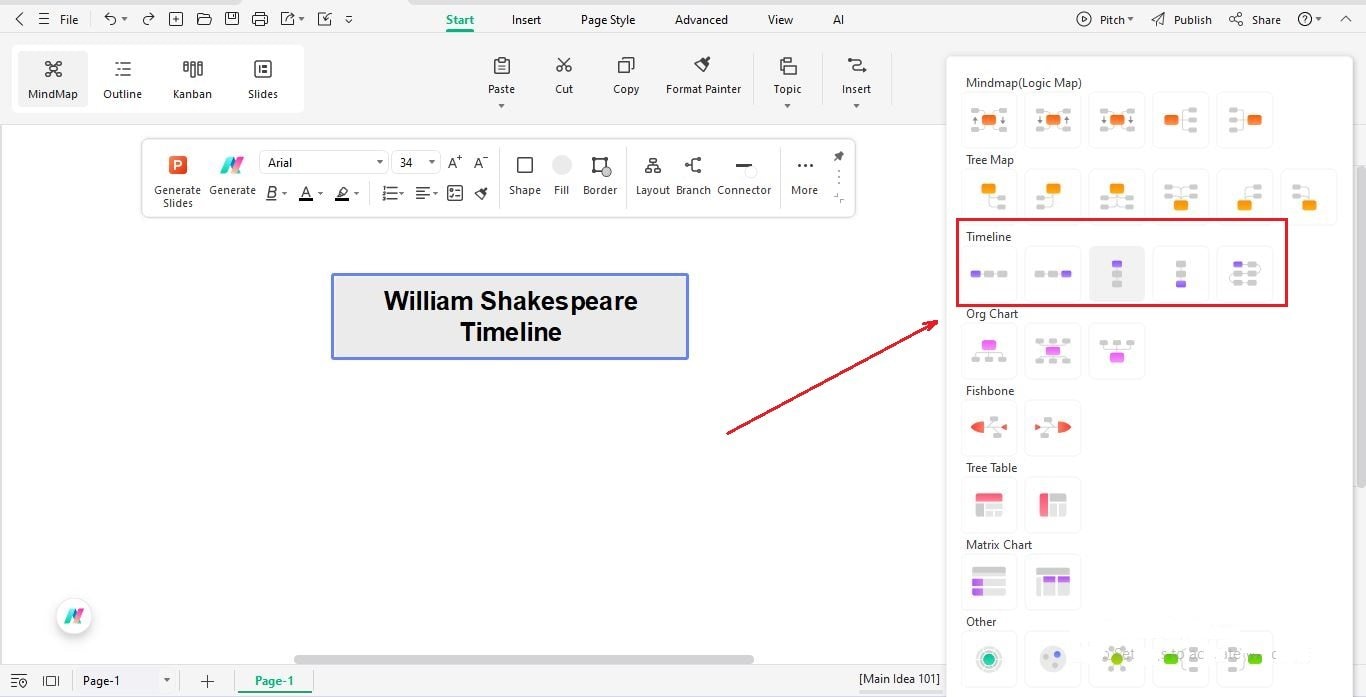
Step 2 Choose the Timeline Layout
- After adding the title, add a timeline layout.
- Adjust the size and position so it fits nicely on your canvas.
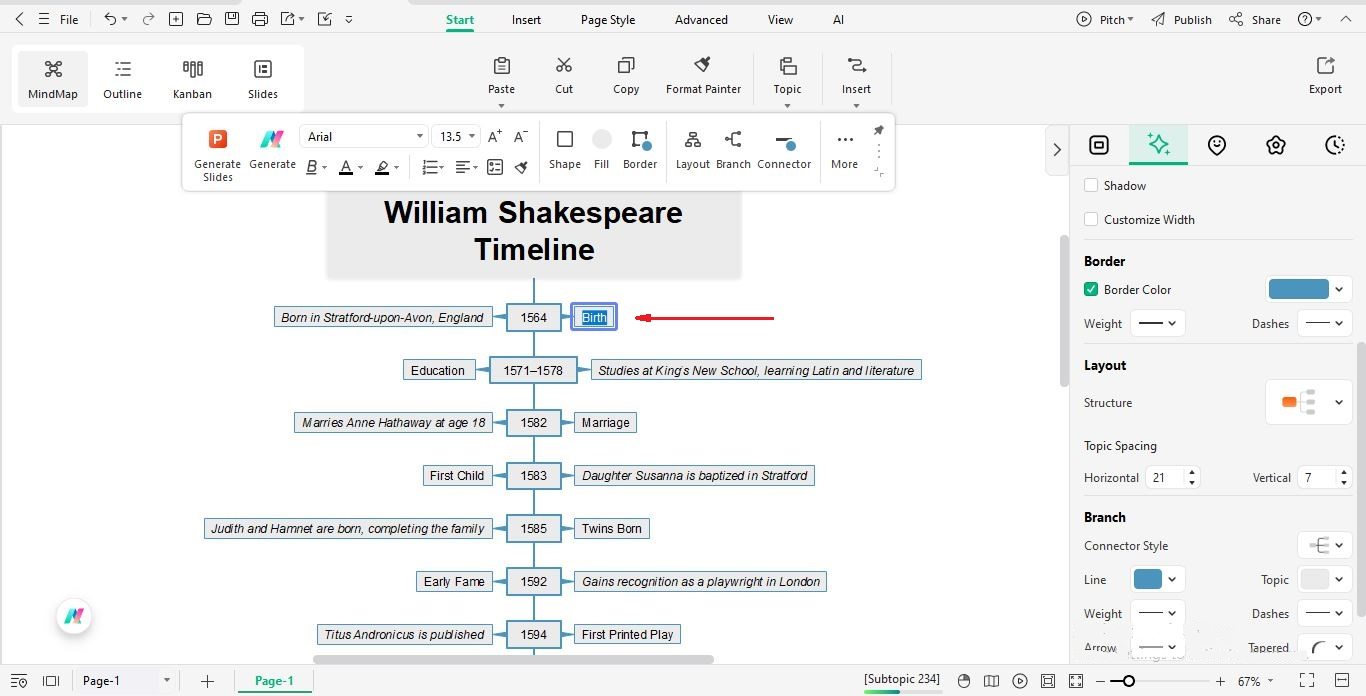
Step 3 Add Shakespeare’s Major Life Events
- Add key milestones like his birth, marriage, famous plays, and death.
- Use short text boxes for each event to keep your timeline neat and readable.
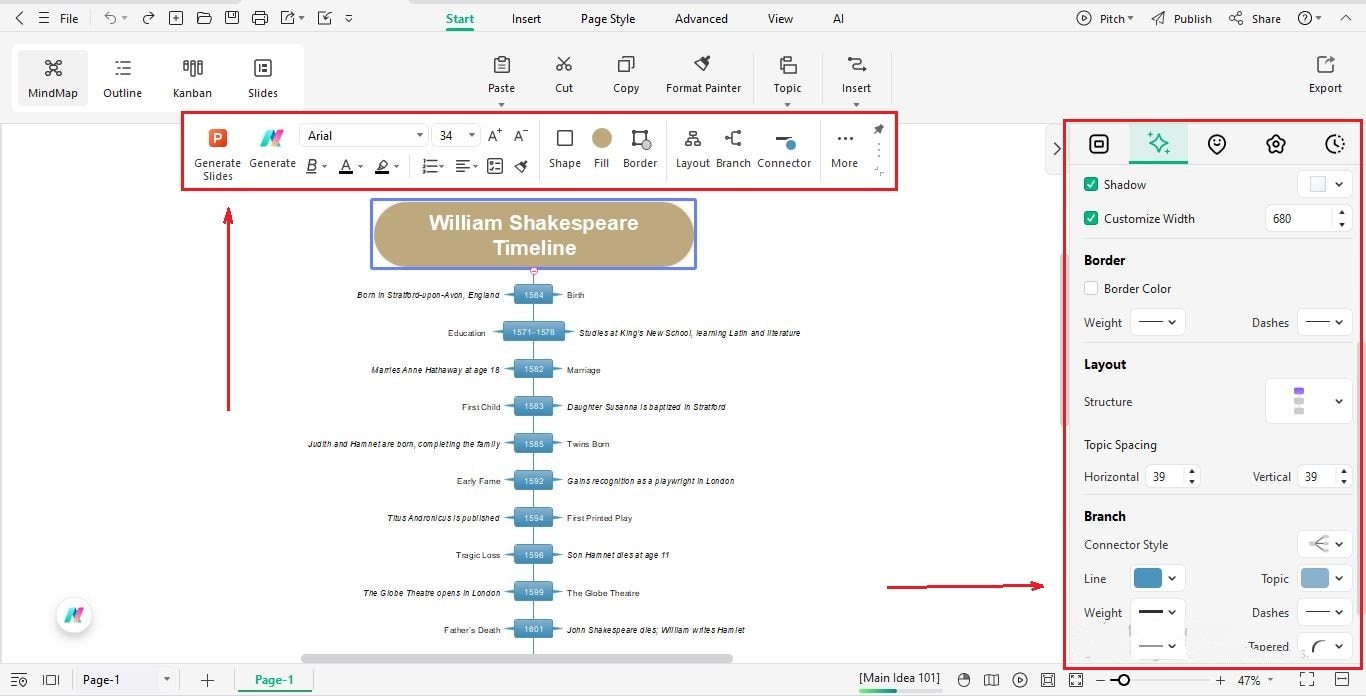
Step 4 Customize the Design
- Personalize your timeline by changing the colors, fonts, and shapes.
- Highlight major works like Plays and achievements.
Step 5 Save and Export
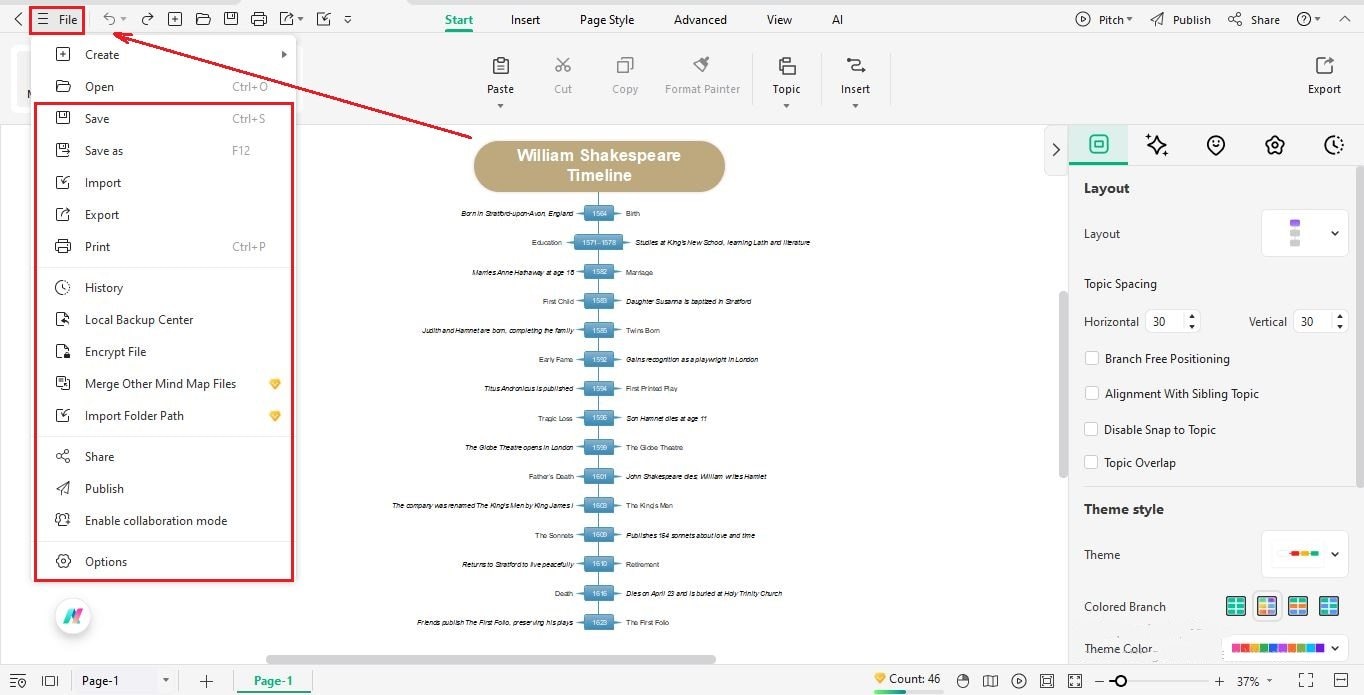
- Save your file to keep your progress.
- Export your William Shakespeare Timeline as a PNG, PDF, or other format to share or print.
Closing Thoughts
The life of William Shakespeare was filled with creativity, passion, and timeless influence. His early years, family life, and rise in London’s theatre world showed a remarkable talent for storytelling that changed English literature forever. Every moment in his timeline highlights how his works continue to inspire readers, actors, and writers around the world.
If you’d like to create a clear and engaging timeline like this, try EdrawMind. With its easy tools and timeline templates, you can turn complex stories into simple visuals in minutes.
 EdrawMind
AppsEdrawMind Online
EdrawMind
AppsEdrawMind Online