

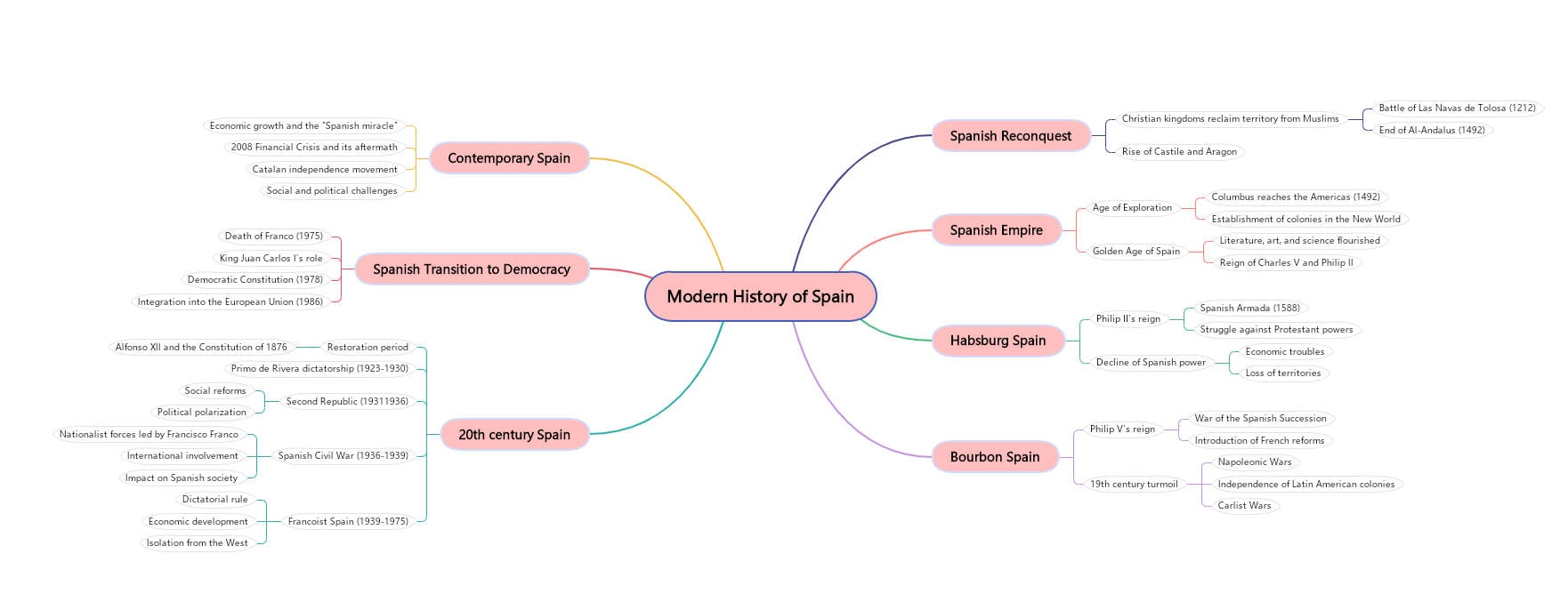
The history of Spain spans prehistoric Iberia, Roman Hispania, Visigothic rule, Al-Andalus, the Christian kingdoms and Reconquista, imperial expansion, dynastic conflict, civil war, dictatorship, and the modern constitutional monarchy. The timeline below organizes these turning points chronologically so each era can be understood in context.
Periodization note: Spain's history is divided differently by historians, so the timeline below uses broad political and cultural eras rather than implying that every transition happened in a single year. The chronology should be read as a guide to major turning points, not a substitute for regional histories. Source.
Spain is known as the country of countries. In old times, a group whose ancestors were likely Basques inhabited the Iberian Peninsula. Celtic clans crossed the Pyrenees about the center of the principal thousand years BC and settled. Spain's story is one of Europe's excellent legends. It accepts the incredible battles among Muslims and Christians of the Middle Ages, one of the world's greatest ever empires, and, in the 20th century, civil war, autocracy, and a staggering comeback to democracy. As you travel around the country, it's superbly easy to connect with Spain's entrancing past through its untold well-protected landmarks and historical places, and phenomenal museums.
In this article
Spain History Timeline
The major historical events of Spain included periods when it was a world-majestic power transforming Europe, Africa, and the Americas, and also, when it was a hotbed of progressive enthusiasm that nearly broke it down. The primary human tenants of the Iberian Peninsula, where Spain lies, showed up by at least 1.2 million years ago, and Spain has been occupied continuously since then.
Spain has been shaped by its various proprietors (Visigoths, Christians, Muslims, England, and France, among others), and has been both a magnificent power across the world and a country helpless before its attacking neighbors.
The following are the significant moments in Spanish history that have led to the solid and powerful democracy it is today.
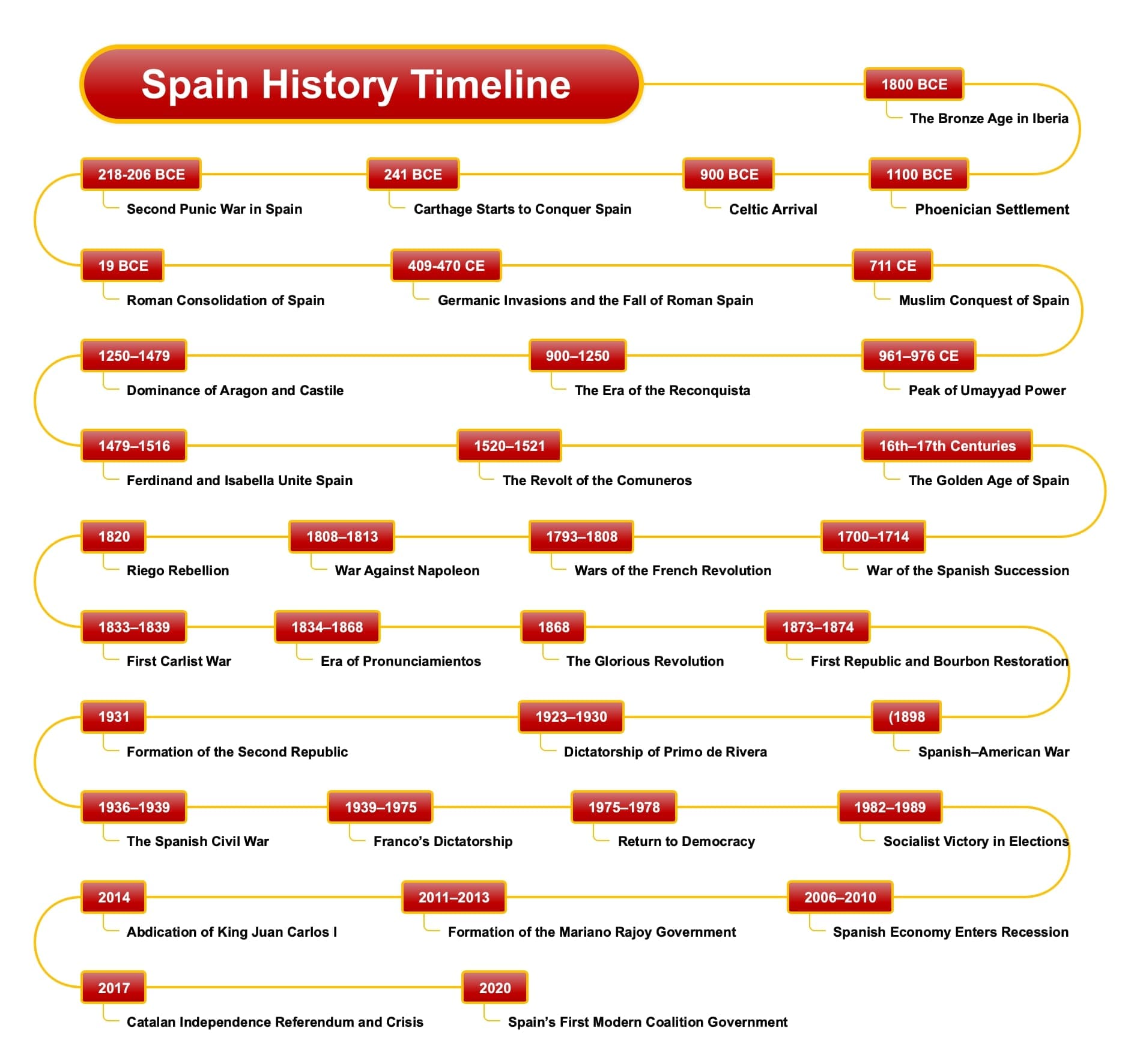


(1800 BCE) The Bronze Age in Iberia
Around 1800 BCE, bronze was used in Iberia. El Argar civilization built organized settlements, which formed the foundation for future communities.
(1100 BCE) Phoenician Settlement
In 1100 BCE, Phoenicians came to the coast. They bring with them the iron tools, the potters’ wheel, and trade concepts. For many years, they touched culture and everyday life.
(900 BCE) Celtic Arrival
The Celtic people migrated to Spain in the North some 900 BCE. They brought their culture and civilizations. They blended with the locals and crossed various cultural contours that influenced the existence of the upcoming generations.
(241 BCE) Carthage Starts to Conquer Spain
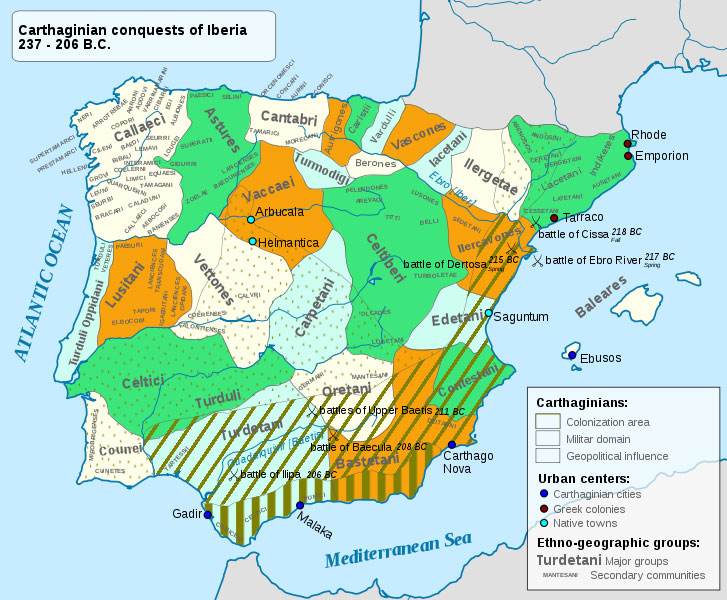
Image: Carthaginian conquests of Iberia 237 – 206 BCE
Carthaginians turned their focus to Spain after being defeated by the Romans in the initial Punic War.
- Carthage's ruler, Hamilcar Barca, started his ambition in Spain. In 241 BCE, he built a city for Carthage in Cartagena, Spain.
- After he died in 281 BCE, Hasdrubal, Hamilcar's child-in-law, took the wheel.
- 7 years later, Hasdrubal passed in 221, his child Hannibal (183-247 BCE) continued the war.
(206 -218 BCE) Second Punic War in Spain (Hispania)
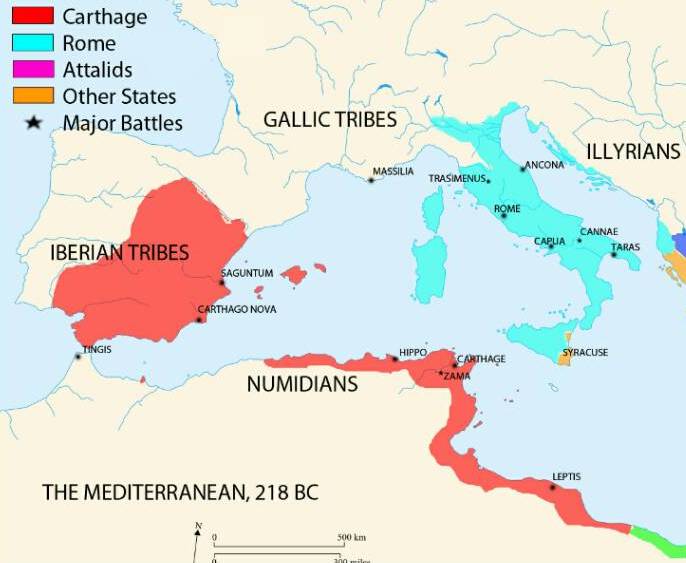
Image: The western Mediterranean in 218 BCE
As the Romans battled the Carthaginians during the Second Punic War, Spain became a battlefield. In 211 BCE, the amazing general Scipio Africanus crusaded. In 206 BCE, the Romans drove Carthage out of Spain and started the conquest of Spain, which the Romans called Hispania.
(19 BCE) Roman Control of Spain
After defeating the Carthaginians, the Romans started to take over Spain. Finally, in 19 BCE, Rome controlled all of Spain. They built roads and cities, and implemented laws. Trade increased, and Roman culture influenced everyday life.
(409–711 CE) Visigothic Spain
As Roman power declined because of war, Germanic tribes entered Spain in 409. The Sueves, Vandals, and Alans arrived first. Later, the Visigoths, who settled in southern Gaul, came. They fought for control of Spain. Finally, the Visigoths defeated them all and started to rule Spain.
This is the time when people call it the Visigothic Spain. For the next 200 years, the Visigothic Kingdom continued its rule in this land.
Be aware that in 589, the Visigoths renounced Arianism (their belief), and the Gothic language also lost its status. In 654, the Visigothic Code declared the distinctions between the Hispano-Roman population and the Goths. They were all Hispanics.
(711 CE) Muslim Conquest of Spain
In 711 CE, the Moors of the Umayyad Caliphate or the Umayyad Empire, a Muslim power from North Africa, invaded Spain. They defeated the Visigothic kingdom at the Battle of Guadalete. They killed the king as well. This is where the Muslims started to take over Spain.
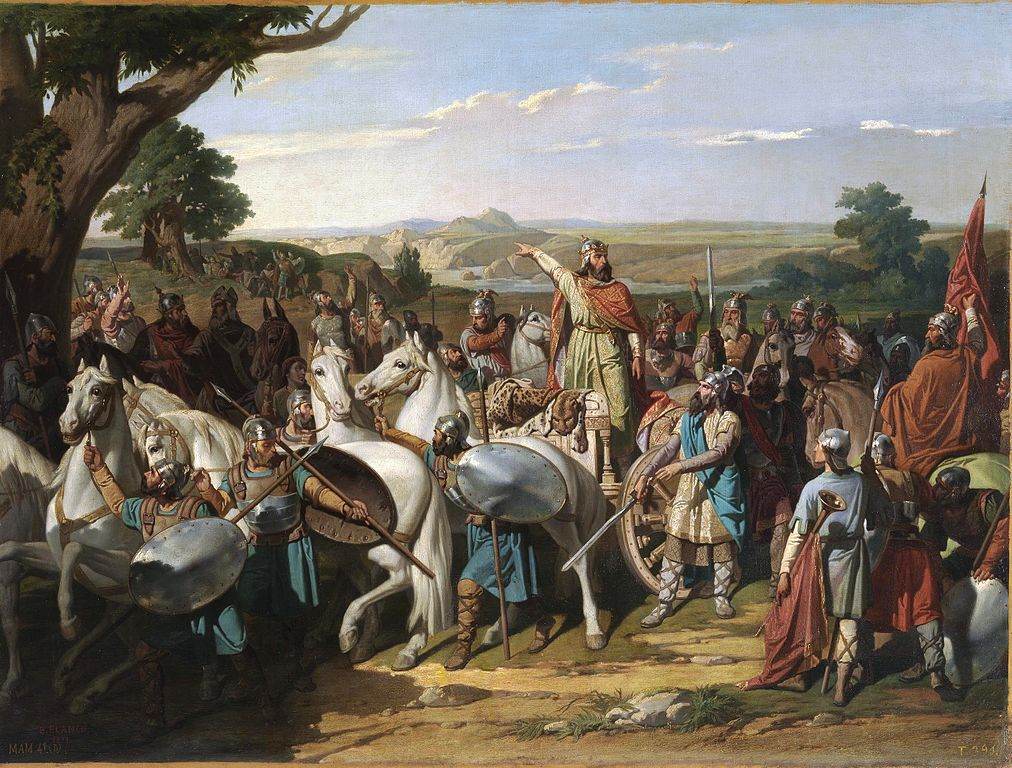
Image: El Rey Don Rodrigo arengando a sus tropas en la batalla de Guadalete by Bernardo Blanco y Pérez (1871)
(961–976 CE) Peak of Umayyad Power
The Umayyad administration ruled most parts of Spain and renamed the land as Al-Andalus. Spain became the center of Islamic culture.
After 750, the Umayyad Empire split into several smaller kingdoms. Some survivors of the Umayyad built the Amir first and the Caliphs later in Cordoba, Spain. From 8 to 13 centuries (the Islamic Golden Ages), Cordoba was the center of Islamic science, medicine, philosophy, culture, invention, and economy.
(900-1250) The Start of Reconquista
For centuries, the Christian powers in the north tried to reclaim the peninsula from Islamic rule. Muslim Spain can hardly fight back due to all kinds of internal conflict. In 1031, the Cordoba Kingdom collapsed into several smaller kingdoms and states.
In the 1230s, Castile took over Cordoba. In the mid-thirteenth century, they had almost all of Spain back, except Granada.
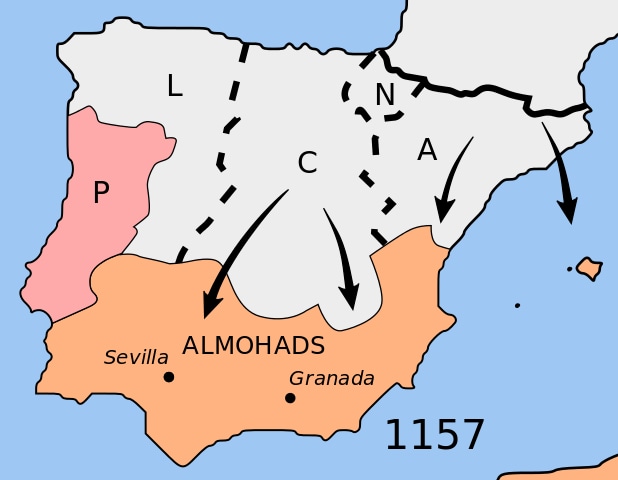
Image: Extent of the Reconquista into Almohad territory as of 1157.
(1250–1479) Spain was Influenced by Aragon and Castile
The last period of the Reconquista saw two huge empires kick the Muslims almost out of Iberia: Aragon and Castile. Castile was the biggest kingdom in Spain. Aragon was an organization of multiple regions. They controlled most of Spain, except Granada, under Islamic rule.
(1479–1516) Ferdinand and Isabella Unite Spain
In 1469, Ferdinand II of Aragon married Isabella I of Castile. And both came to power in 1479. This marks the foundation of unity in Spanish history.
Marks 1492. This is the turning of Spain.
- This year, Granada was back. The last Islamic power in Spain was over. The Reconquista was truly over.
- Christopher Columbus's expedition, sponsored by the Catholic Monarchs, reached the Americas, initiating the Spanish Colonization.
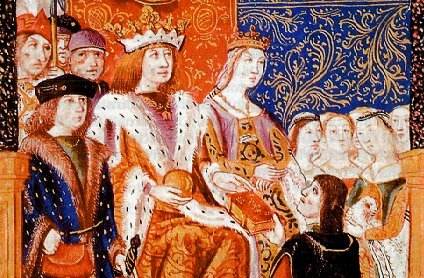
Image: Ferdinand and Isabella with their subjects
(1520–1521) The Revolt of the Comuneros
When Charles V ascended to the Empire of Spain, he made a steamed at delegation of foreign court to power while committing not to, setting tax needs, and setting off abroad to protect his promotion to the kingdom of the Holy Roman Empire. Urban areas rose against him, discovering huge success from the outset, but after the revolution spread to the entire state and the honorability was undermined, the last gathered to defeat the Comuneros.
(16th and 17th Centuries) The "Golden Age of Spain"
A period of social harmony, incredible creative endeavor, and a spot as a politically influential state at the core of a world kingdom, the 16th and mid-17th century have been depicted as Spain's wonderful age, a time when tremendous goods streamed in from America, and the Spanish military was named as powerful.
The plan of European politics was absolutely set by Spain, and the state helped bankroll the European conflicts fought by Charles V and Philip II as Spain shaped a piece of their tremendous Habsburg kingdom, but the fortune from abroad caused expansion, and Castile continued failing.
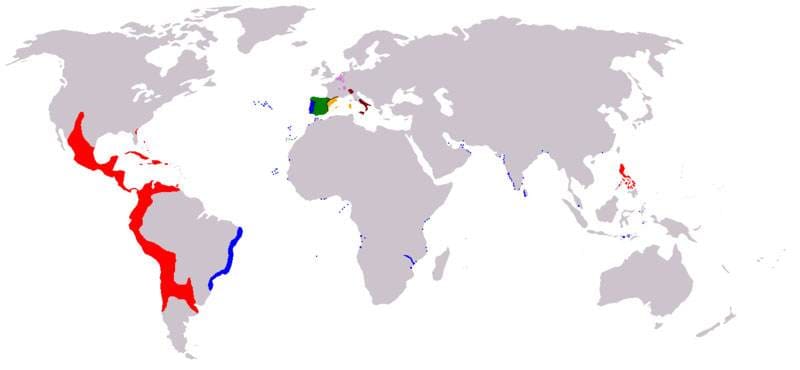
Image: The realms of Philip II of Spain
(1700–1714) War of the Spanish Succession
When Charles II passed on, he left the kingdom of Spain to Duke Philip of Anjou, grandson of French ruler Louis XIV. Philip acknowledged, but he was not accepted by the Habsburgs, a group of old lords who wished to hold Spain among their multiple possessions. The war was ended with settlements in 1713 and 1714: Philip came into power; However, some areas of Spain's royal family were lost. Simultaneously, Philip moved to concentrate Spain into one unit.
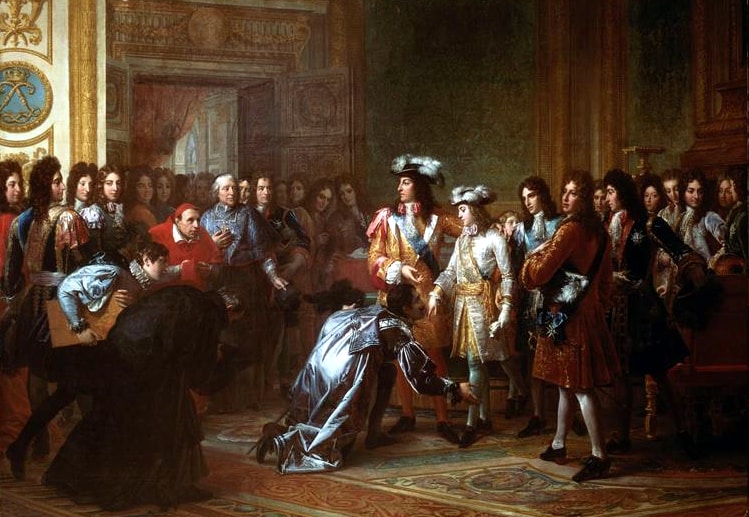
Image: Philip accepts the Spanish throne as Philip V; November 16, 1700.
(1793–1808) Wars of the French Revolution
France, having executed their empire in 1793, appropriated the response of Spain (which had helped the now dead ruler) by proclaiming war. A Spanish intrusion soon transformed into a French attack, and peace was announced between the two countries. This was firmly followed by Spain aligning with France against England, and an on-off-on war followed. England cut Spain off from their kingdom, trade domains, and the Spanish economy was badly affected.
(1808–1813) War against Napoleon
In 1807 Franco-Spanish powers took Portugal; however, Spanish soldiers stayed in Spain as well as expanded in number. At the point when the king abdicated for his child Ferdinand and afterward adjusted his perspective, the French monarch Napoleon was forced to intercede; he just gave the empire to his brother Joseph, a critical miscalculation. Some regions of Spain rose in rebellion against the French, and a military war resulted.
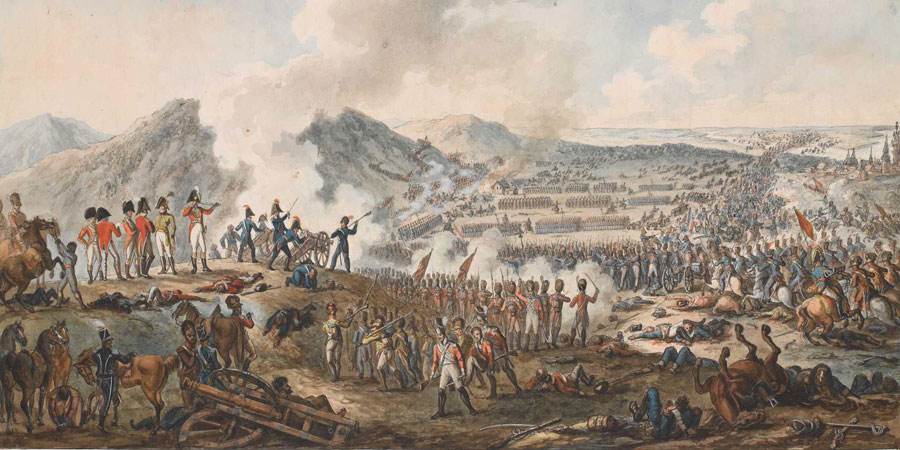
Image: Peninsular War
(1820) Riego Rebellion
A general named Riego, getting ready to lead his military to America on the side of the Spanish provinces, revolted and established the constitution of 1812. Ferdinand had dismissed the constitution at that point, but after the general moved to squash Riego, even revolted, Ferdinand announced, "liberals" now consolidated to change the country. Be that as it may, there was outfitted resistance, including the production of a "rule" for Ferdinand in Catalonia, and in 1823, French forces entered to reestablish Ferdinand to full power. They won a simple triumph, and Riego was established.
(1833–1839) First Carlist War
When the ruler Ferdinand died in 1833, his pronounced replacement was a three-year-old girl: Queen Isabella II. The last king's brother, Don Carlos, contested both the progression and the "realistic approval" of 1830 that permitted her the seat. Civil war followed between his powers, the Carlists, and those faithful to Queen Isabella II. The Carlists were powerful in the Basque Country and Aragon, and soon their war transformed into a battle against liberalism.
(1834–1868) Government Formed by "Pronunciamientos"
In the wake of the First Carlist War, Spanish politics broke between two principal groups: The Moderates and the Progressives. On various events during this period, the politicians requested that the commanders eliminate the current government and introduce them to power; the officers, leaders of the Carlist war, did so in a move known as Pronunciamientos.
(1868) The Renowned Revolution
In September 1868, another Pronunciamientos occurred when the commanders and government officials denied the kingdom during the past systems took control. Queen Isabella was deposed, and a temporary government called the September Coalition was established. A newly made constitution was coming in 1869, with a new king, Amadeo of Savoy, coming into ruling power.
(1873–1874) The First Republic and Restoration
Ruler Amadeo abdicated in 1873, confused that he was unable to shape a balanced government as the political parties inside Spain contended. The First Republic was broadcast in his stead, but concerned military officials organized another Pronunciamiento to, as they accepted, save the country from anarchy. They reestablished Isabella II's son, Alfonso XII, to the throne, with a new constitution following.
(1898) The Spanish-American War
The rest of Spain's American kingdom, Cuba, Puerto Rica, and the Philippines were defeated in this war with the United States, which was going about as partners to Cuban separatists. The misfortune became known as just "The Disaster" and sparked debate within Spain regarding why they were losing an empire while other European states were developing theirs.
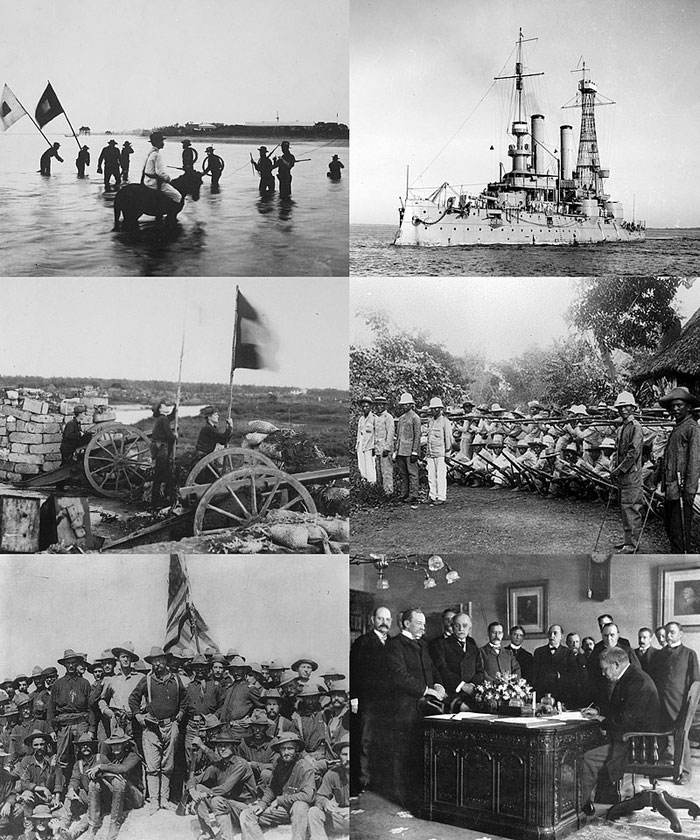
Image: Spanish–American War
(1923-1930) Rivera Dictatorship
With the military going to be the vision of a government investigation into their disappointments in Morocco, and with the king baffled by a succession of dividing governments, General Primo de Rivera organized an overthrow; the ruler acknowledged him as a dictator. Rivera was upheld by well-known people who feared a potential Bolshevik uprising.
(1931) Formation of the Second Republic
With Rivera fired, the military officials could scarcely keep ruling. In 1931, an uprising devoted to breaking the government happened. Rather than face civil war, King Alfonso XII escaped the country, and a temporary alliance government announced the Second Republic. The primary real democracy in Spanish history, the Republic passed effective reforms, including women's rights to cast a vote and the disconnection of church and state.
(1936–1939) The Spanish Civil War
General elections in 1936 exposed a Spain separated, politically and geographically, between the left and the right movements. As pressures took steps to transform into conflict, there were calls from the right for military power. One happened on July 17 after the death of a conservative chief made the military ascent, but the coup flopped as "unconstrained" opposition from republicans and liberals countered the army; the outcome was a grisly civil war that lasted three years.
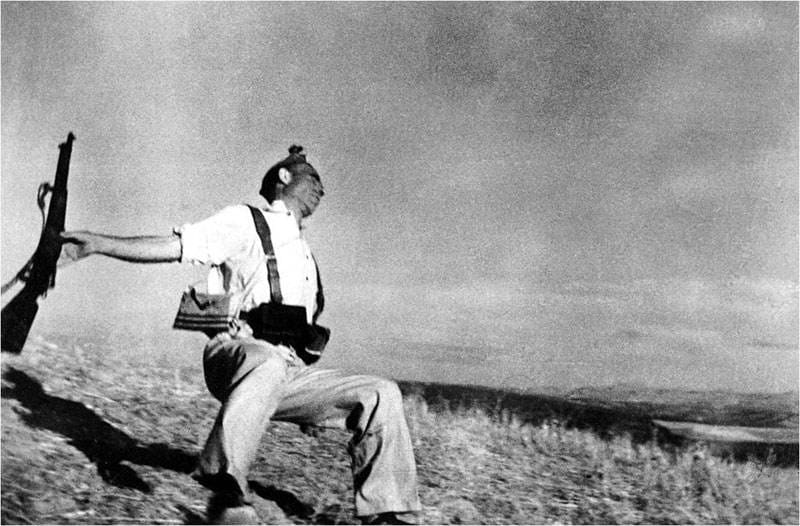
Image: The Spanish Civil War
(1939–1975) Franco's Dictatorship
The fallout of the civil war saw Spain administered by an authoritarian and moderate dictatorship under General Franco. Opposition agendas were stifled through jail and execution, while the language of the Catalans and Basques was prohibited. Franco's Spain remained to a great extent impartial in World War II, permitting the system to survive until Franco died in 1975.
(1975–1978) Return to Democracy
When Franco passed on in November 1975, he was succeeded, as arranged by the government in 1969, by Juan Carlos, a beneficiary to the empty throne. The new ruler was focused on democracy and cautious exchange, just as the presence of an advanced society searching for independence permitted a referendum on political change, followed by another constitution, which was affirmed by 88% in 1978.
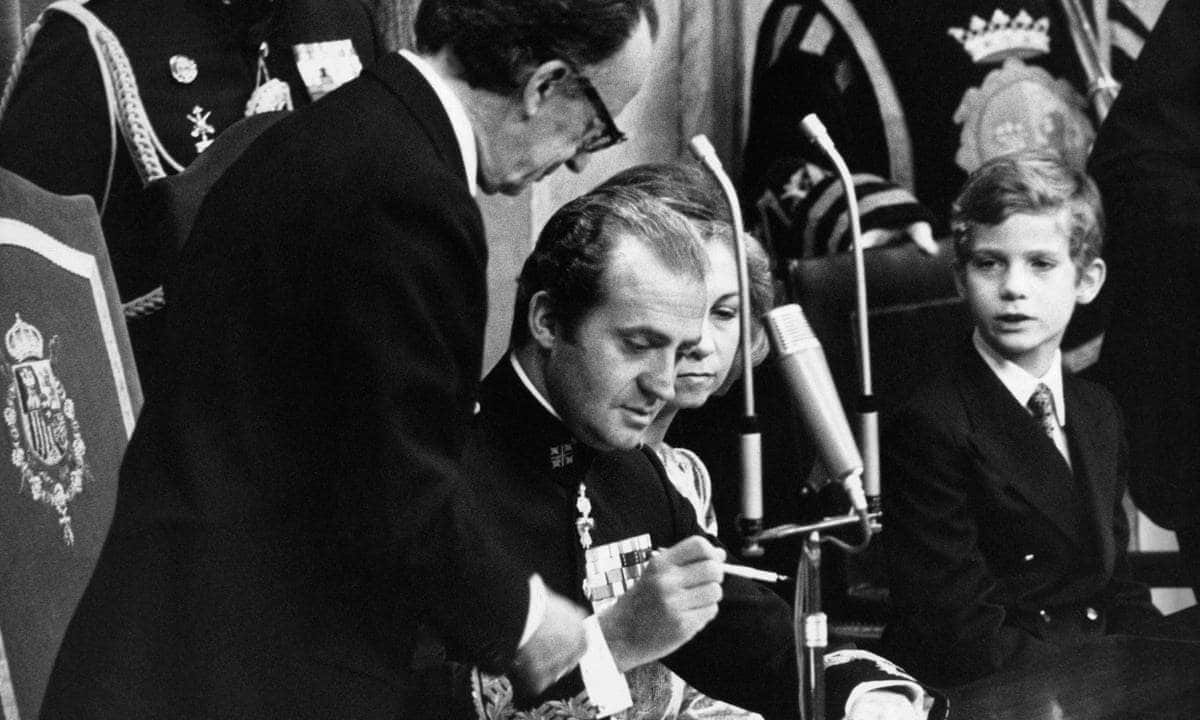
Image: King Juan Carlos I of Spain signs the Spanish Constitution of 1978 at a special joint meeting of parliament in Madrid, establishing Spain as a democracy, 27 December 1978. Photograph: Central Press/Getty Images
(1982-1989) Socialists Got Victory in Elections
Communists under Felipe González won elections and remained in power until 1996. Free education, an extended welfare state, and the advancement of abortion laws are key approaches. Spain additionally joins NATO. In 1986, Spain joined the European Economic Community, which later turned into the European Union.
(2006-2010) Spanish Economy Enters Recession for First Time Since 1993
Lt Gen Jose Mena Aguado was terminated as the leader of the armed forces, retaining powers after proposing that the army may make a move in Catalonia if the areas gain a lot of self-sufficiency. After his extraordinary actions taken against innocent people, the Spanish economy entered a downturn for the first time since 1993. This was the huge economic downfall throughout the entire history of Spain, which pushed it back for decades.
(2011-2013) Formation of the Mariano Rajoy Government
A newly established government, controlled by Mariano Rajoy, came into power. Declare a new round of austerity measures to cut the public budget by 16.5bn euros (£14bn) and almost divide the public deficit from almost 8% of GDP in 2012. At that time, Spain's unemployment rate took off to a new record of 27.2% of the labor force in the primary quarter. Economy registers 0.1% development in July-September, officially lifting it out of the downturn.
Stepping Down of King Juan Carlos I (2014).
King Juan Carlos I resigned after several years as king. His son, Felipe VI, became the new king. He focused on rebuilding trust and making the monarchy more open.
Catalan Independence Referendum and Crisis (2017)
Catalonia held a vote to become independent, although Spain's court declared it illegal. The vote resulted in massive demonstrations and political tensions. The Spanish government took control of Catalonia, and leaders were put in jail or left the country.
Spain's First Modern Coalition Government (2020)
Spain held two elections in 2019, but no party won enough seats to rule alone. In 2020, a coalition government was formed. The Socialist Party joined with Unidas Podemos. This created a new style of shared government in Spain.
How to Make a Spain History Timeline?
A timeline helps you see events in the order they happened. It shows how one era connects to the next, which makes history easier to understand. Before you start, it’s important to plan carefully.
- Decide the purpose: Think about why you are making the timeline. Are you showing important events, culture, or all of Spanish history?
- Collect information: Write down important dates and events, like Roman Spain, Muslim rule, the Reconquista, the Spanish Empire, and modern Spain.
- Arrange events in order: Arrange them from oldest to newest.
- Add details: Write short notes about each event.
- Use the right tool: Programs like EdrawMind make it easy to create a clear and colorful timeline.
Steps to Make the Spain History Timeline
The history of Spain is full of kings, explorers, and cultural milestones. The easiest way to understand it all is to lay it out in order. Here’s how to create the Spain history timeline using EdrawMind:
 Try the app & get 500 free AI tokens


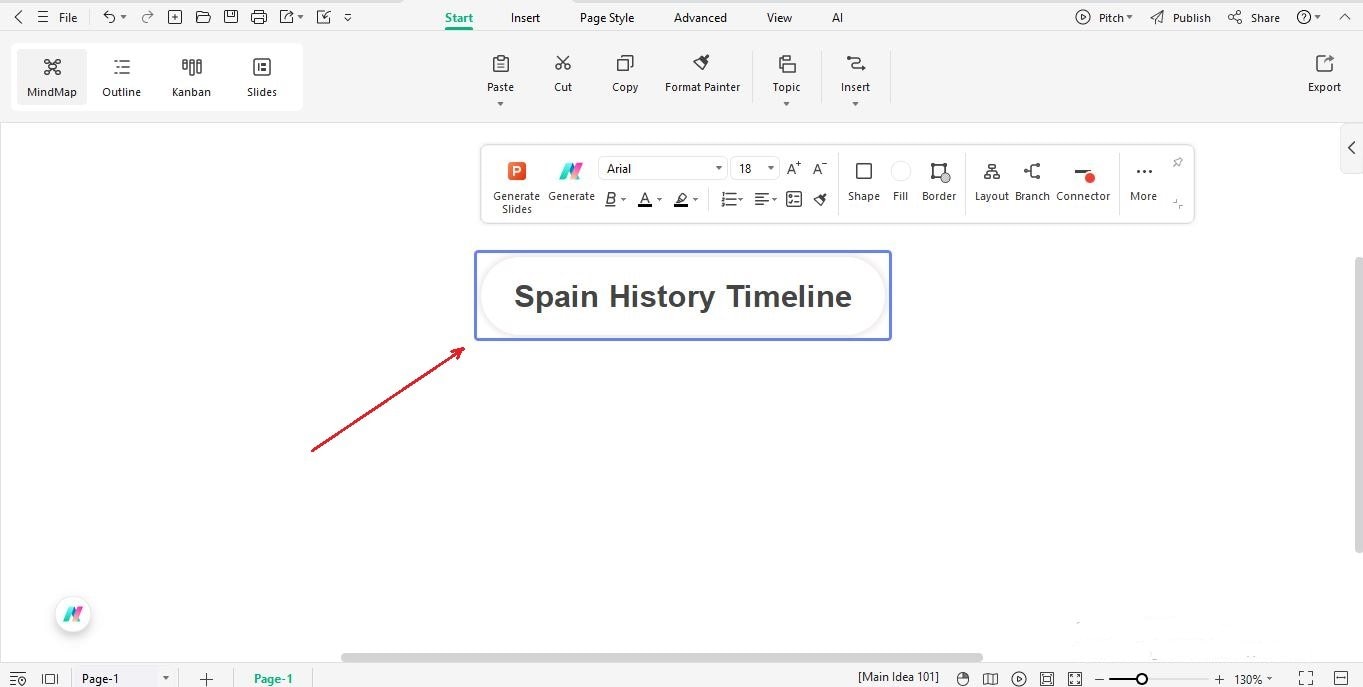
Step 1 Create a New File and Add a Title
- Open EdrawMind on your desktop or browser.
- Start a new file and type a clear title like “Spain History Timeline” at the top.
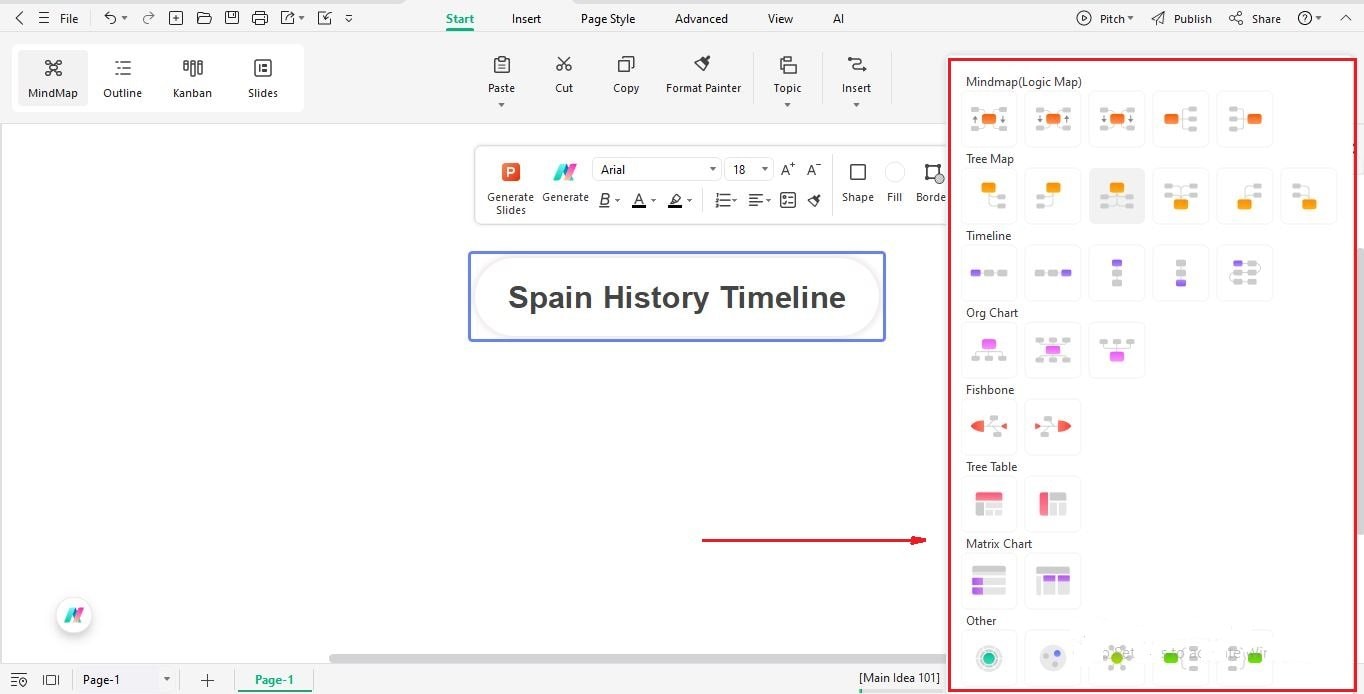
Step 2 Choose the Timeline Layout
- Select your main topic and change the layout to a timeline style (horizontal, vertical, or S-shape).
Step 3 Add Historical Events
- Add main events as topics, like Roman Spain, Muslim rule, the Reconquista, etc.
- Use subtopics to add details like dates, key figures, or locations.
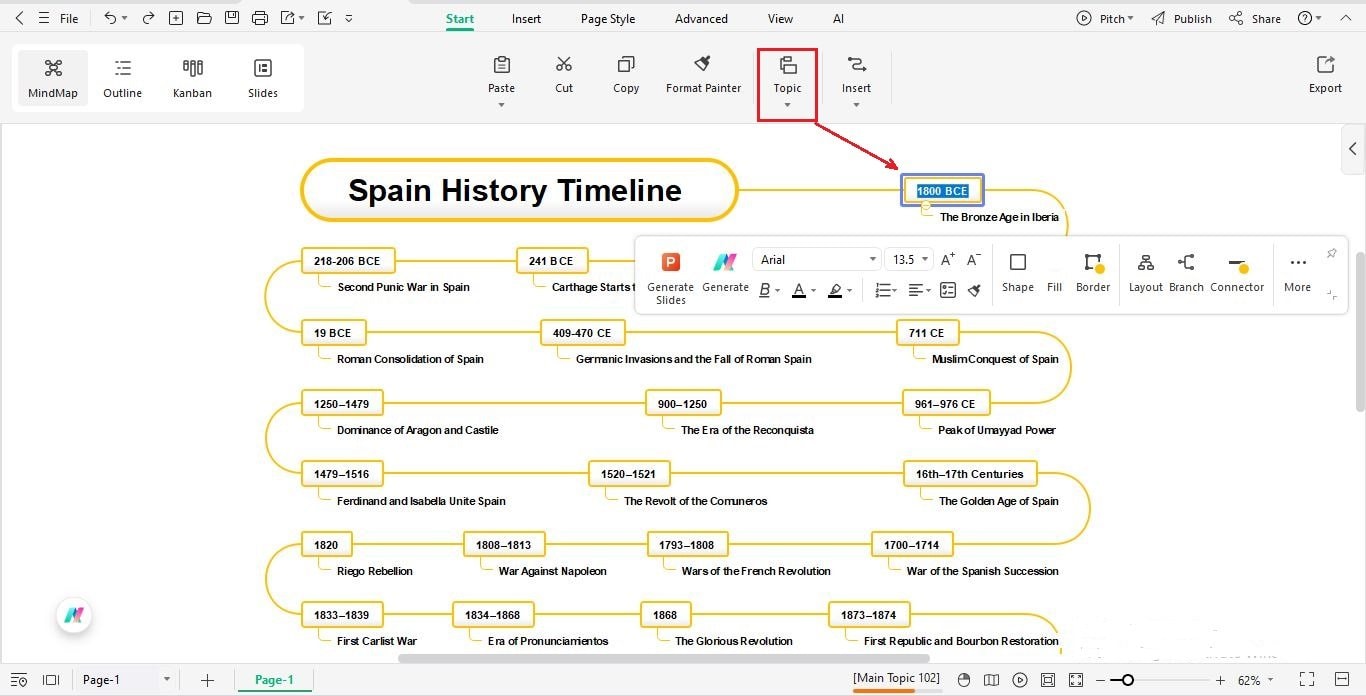
Step 4 Customize the Design
- Change colors, fonts, shapes, and styles to make your timeline visually clear and appealing.
- Highlight major periods to make them stand out.
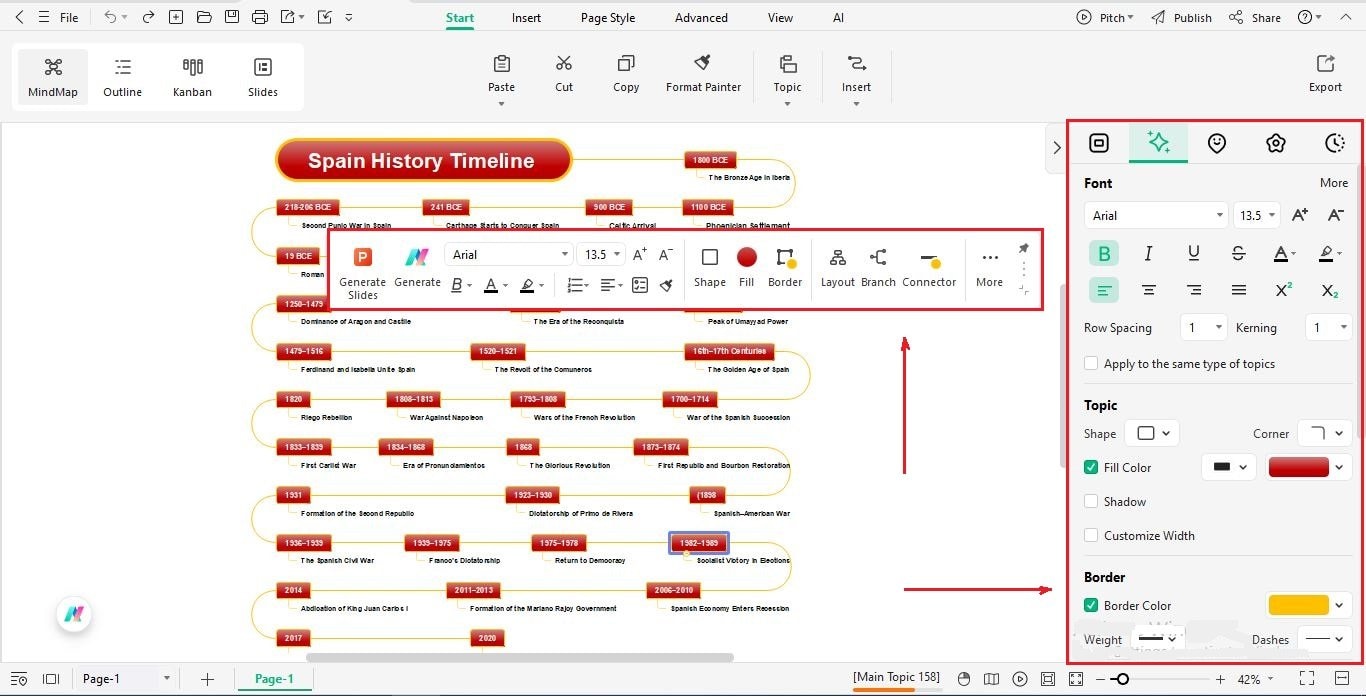
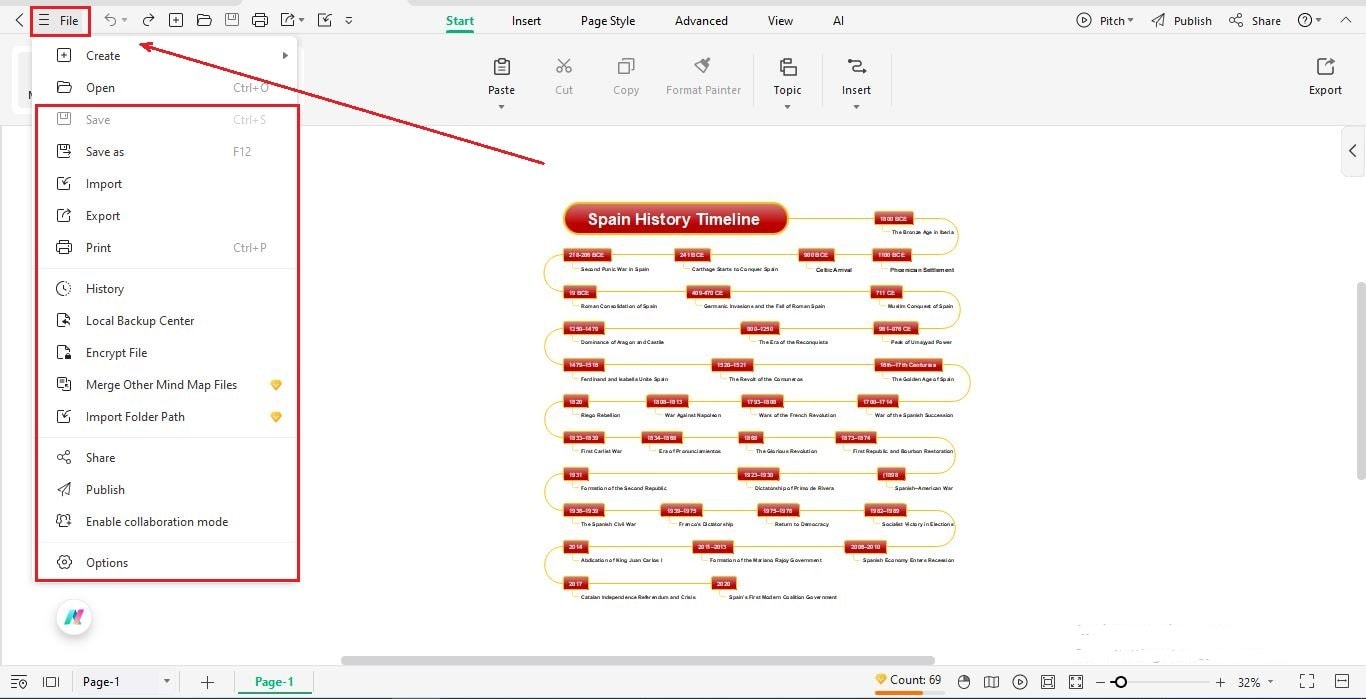
Step 5 Save, Export, or Print
- Download and save your work.
- You can also export your timeline as PNG, JPG, PDF, or Word, or print it to share.
Facts about Spain
You must have thought of Spain as a country all about siestas, sand, and sun. However, Spain is much more than that. Spain is a diverse country in the southwest of Europe known for beautiful beaches, amazing cities, ski slopes, fun festivals, and great food. It is an extraordinary holiday destination that has everything a vacationer is looking for, from warm seashores and recreation to chronicled landmarks and art.
If you are thinking of visiting Spain, here are a few facts about the country. They might help you make the right decision.
- Spain is the European Union's second-largest country. If you include Canary, it measures about 506,000 square kilometers.
- Spanish is the second most widely spoken language in the world. There are 440 million native Spanish speakers.
- Spain is a constitutional monarchy.
- Spain boasts 47 UNESCO World Heritage sites
- The famous La Tomatina festival held in August is one of the widely known festivals celebrated in Spain. The festival has many visitors from around the world every year.
- Spain was not a pa
 EdrawMind
AppsEdrawMind Online
EdrawMind
AppsEdrawMind Online