


Preparing for the real estate exam is important for a career in property sales and management. This test measures your knowledge of real estate laws, contracts, financing, and ethics. Passing it unlocks the license you need to begin working in the field. However, with so many topics, it’s easy to feel overwhelmed or spend too much time on less important areas.
This guide explains how to study for the real estate exam. You’ll learn structured methods, practice techniques, and how to use mind maps with tools like EdrawMind.
In this article
What Is the Real Estate Exam?
The real estate exam aims to measure your knowledge of real estate practices, laws, and professional responsibilities. The exact structure varies by location.
Many exams cover similar areas to ensure all candidates meet the standards required to work as licensed agents.
For example, in California, the exam is divided into seven core sections. Each one evaluates a different aspect of real estate knowledge, from ownership rules to contract law.
Understanding these sections is crucial because they represent the foundation of daily work in the field. Here are seven core sections below with a mind map made in Wondershare EdrawMind:
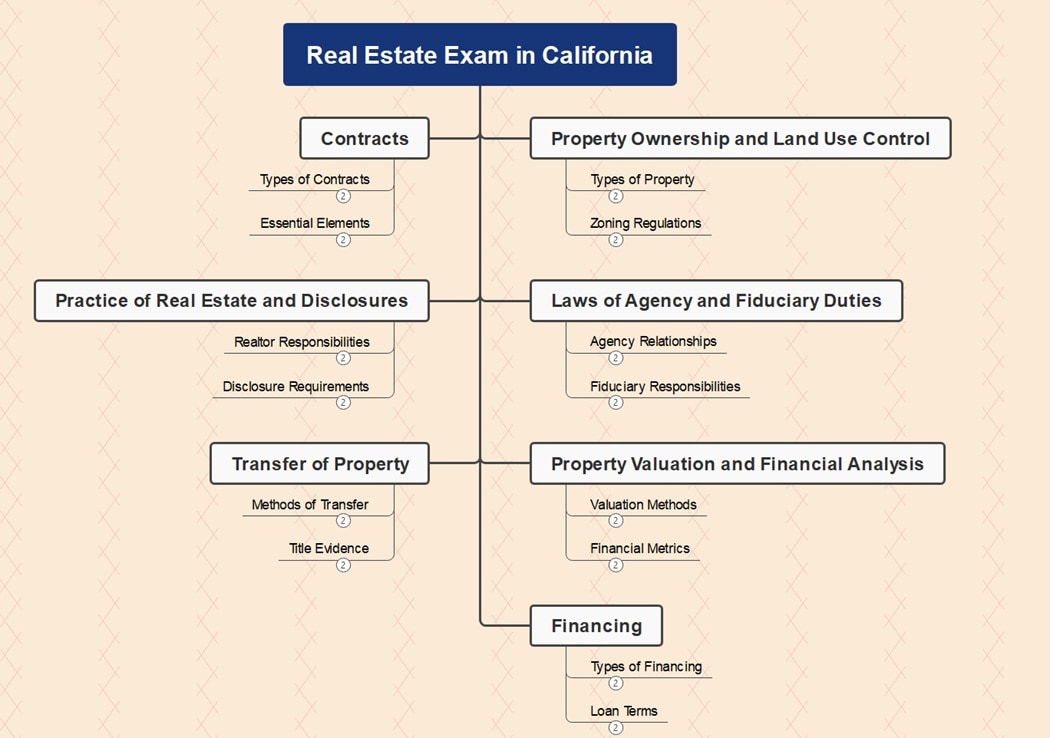


Property Ownership and Land Use Control
This section focuses on the basics of property rights, classifications, and regulations. It examines how ownership types and land use policies impact sales and transfers.
Laws of Agency and Fiduciary Duties
Here, the exam tests your grasp of agency relationships and the duties you owe clients. It emphasizes trust, accountability, and ethical responsibilities as a licensed professional.
Property Valuation and Financial Analysis
This part measures your ability to know a property’s value through analysis, comparisons, and financial methods. It enables you to assess fair prices and effectively guide both buyers and sellers.
Financing
You will be tested on financing options, lending laws, mortgages, and loan origination. This section highlights your understanding of how buyers secure funding and the role financing plays in transactions.
Transfer of Property
This segment covers deeds, escrow, taxes, title insurance, and vesting. It focuses on the legal and practical processes that ensure property changes hands correctly and securely.
Practice of Real Estate and Disclosures
One of the broader sections evaluates your professional conduct. Topics include supervision, property management, disclosure requirements, and ethical practices necessary for working in real estate.
Contracts
The final area tests your knowledge of agreements such as purchase contracts, listing agreements, and brokerage contracts. It ensures you can prepare and interpret legally binding documents.
Mastering these areas is essential to passing the exam and starting your real estate career. If the material feels overwhelming, try using a mind map. It helps organize topics and makes studying easier.
Tips for Studying the Real Estate Exam
Preparing for the real estate exam takes planning and the right approach. With clear strategies, consistent practice, and smart tools, you can build confidence and improve your chances of success.
Review Your State’s Exam Outline
- Start by reviewing your state’s official exam guide. Each state highlights slightly different subjects, so understanding the outline helps you prioritize. This ensures your preparation targets the areas that carry the most weight.
- Many students waste time on broad study without focus. By reviewing the official outline first, you create a clear roadmap of what must be studied. This saves time and allows you to approach your exam prep more strategically.
Use Prep Courses or Study Guides
- Prep courses and trusted study guides are highly effective. These resources not only provide relevant information but also include sample tests that mirror the actual exam. Familiarity with the exam format helps reduce stress.
- Books and online courses also cover common problem areas, saving you from guesswork.
Practice With Flashcards
- Flashcards are one of the most effective tools for memorizing key terms, definitions, and formulas. Creating or using digital decks helps strengthen recall and makes studying more interactive.
- Repetition is the main advantage here. Reviewing cards daily keeps information fresh and reinforces memory. With flashcards, you can study in small bursts throughout the day without feeling overwhelmed.
Take Timed Practice Tests
- Timed practice tests simulate the real exam experience. They train you to manage time wisely, stay focused, and work under pressure. Completing several timed tests improves both speed and accuracy.
- Practice tests help identify weak points as well. Reviewing wrong answers lets you adjust your study plan and devote more effort to topics you struggle with.
Build a Study Schedule
- Consistency is more effective than cramming. Create a daily study schedule that divides topics into manageable sections. Short, structured study sessions improve comprehension and reduce burnout compared to long, irregular marathons.
- A schedule also ensures balance. You won’t overlook important topics or waste too much time on one section. Following a set routine helps build discipline and keeps your preparation on track.
Use Memory Aids and Acronyms
- Acronyms, mnemonics, and short phrases simplify complex material. Turning lists into memorable words or catchy sentences helps you retain more information. These tricks make studying less intimidating.
- For example, a phrase can summarize a list of laws or contract types. These simple memory aids reduce the stress of memorization. It allows you to recall information when answering exam questions.
Consult Peers or Experts
- Learning with others can strengthen preparation. Talking with friends who are studying alongside you gives perspective, encouragement, and accountability. Shared goals often lead to more effective learning.
- Experts or mentors can highlight areas that require special focus. Their insights help you avoid mistakes and prepare smarter. Peer support also keeps motivation strong, especially during intense study weeks.
Mind Maps To Help You Study for the Real Estate Exam
Studying for the real estate exam can be overwhelming due to the numerous topics involved. Mind maps make preparation easier by turning complex information into clear visual structures. With them, you can organize, connect, and remember concepts.
Below are some mind maps within EdrawMind to help you study for the real estate exam:
Organize and Review Your Real Estate Knowledge
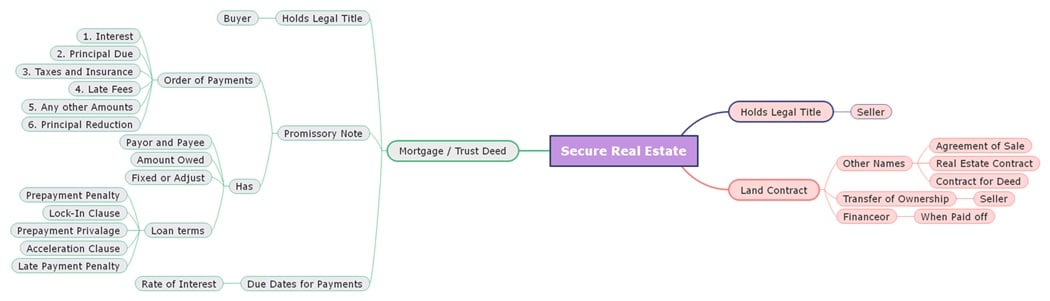
As exam day gets closer, it’s easy to feel lost in piles of notes and books. This mind map allows you to reorganize your material into categories. It allows you to revise and avoid missing key areas.
You can map out your notes, highlight important sections, and see how concepts connect. This structured view saves time during revisions and helps strengthen your recall before the test.
Map Out Your Exam Preparation Strategy
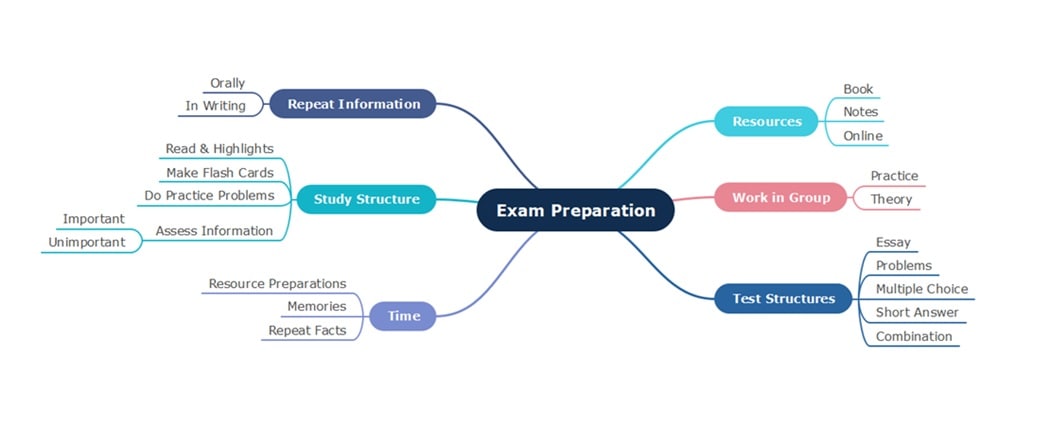
Preparing for the real estate exam needs more than reading books. A mind map can help you study smarter and more systematically.
You can build a preparation map that includes resources like books, notes, and online materials. Add branches for practice methods, test structures, and time management strategies. This keeps everything organized and easy to review at a glance.
Why Use EdrawMind for Studying Real Estate Exams?
EdrawMind is more than a mind mapping tool. It helps you plan, organize, and review study materials with clarity. Instead of scattered notes, you can build structured maps and use AI features to save time.
For exam preparation, EdrawMind makes studying visual and interactive. You can map topics, expand into sub-points, and convert notes into study guides. Its AI-powered tools ensure your study plan flows, keeping your review organized and effective.
Here are EdrawMind’s main advantages for studying real estate exams:
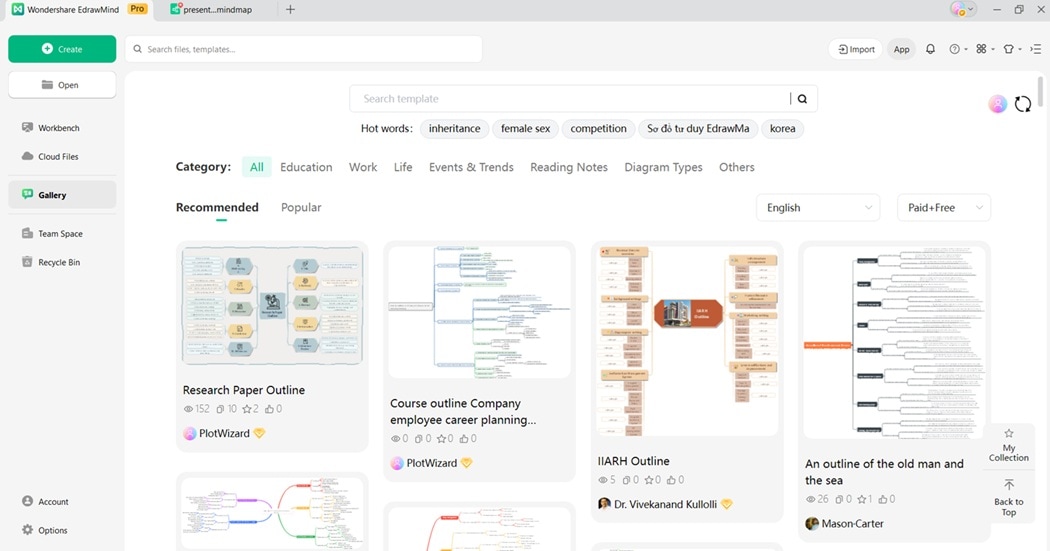
AI Mind Map Generation
This feature creates a complete study plan from a single topic. Enter a subject like “Property Law,” and AI generates branches with key terms and subtopics. It saves hours of outlining and helps you focus.
File to Mind Map
Upload your lecture notes, PDF reviewers, or Word summaries. EdrawMind converts them into a structured mind map instantly. This keeps your material organized and easy to review without rewriting everything by hand.
Pic to Mind Map
Turn images of handwritten notes or classroom board work into study maps with one click. EdrawMind’s AI recognizes the content and builds a digital structure. It makes review sessions more efficient.
AI Mapping
Generate mind maps from keywords or topics. This tool organizes information into branches and connections. You see relationships between concepts like contracts, property types, and financing methods.
Text to Mind Map Maker
Paste a block of text, and EdrawMind converts it into a clear mind map. This is useful for long reviews, laws, or case studies.
How to Study the Real Estate Exam With EdrawMind?
EdrawMind combines study outlines with mind maps. With AI tools, you can turn topics into structured review plans in seconds. Here’s how:
Step 1:
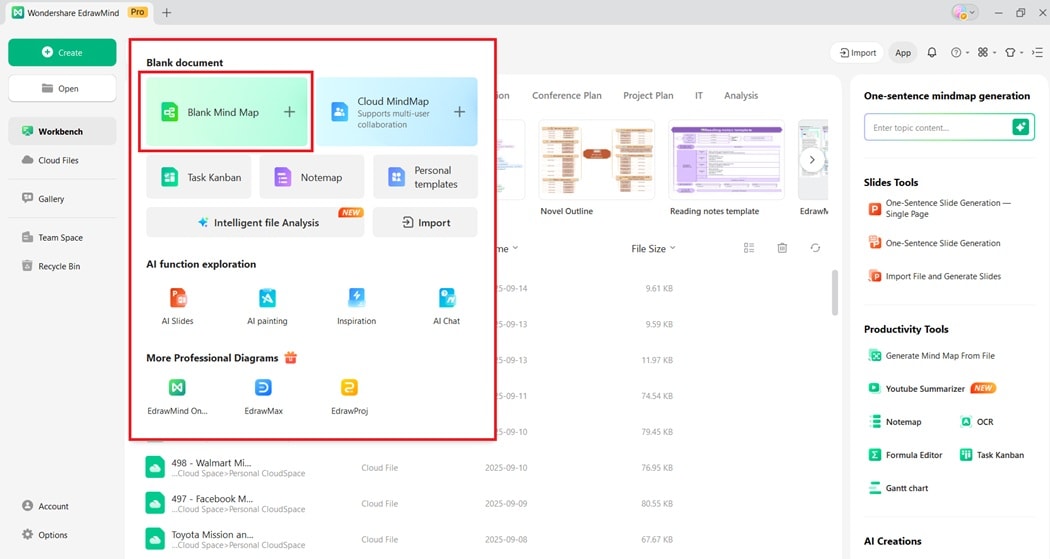
Download and install EdrawMind on your computer. Open it and log in or register for a Wondershare account. Create a new mind map.
 Try the app & get 500 free AI tokens


Step 2:
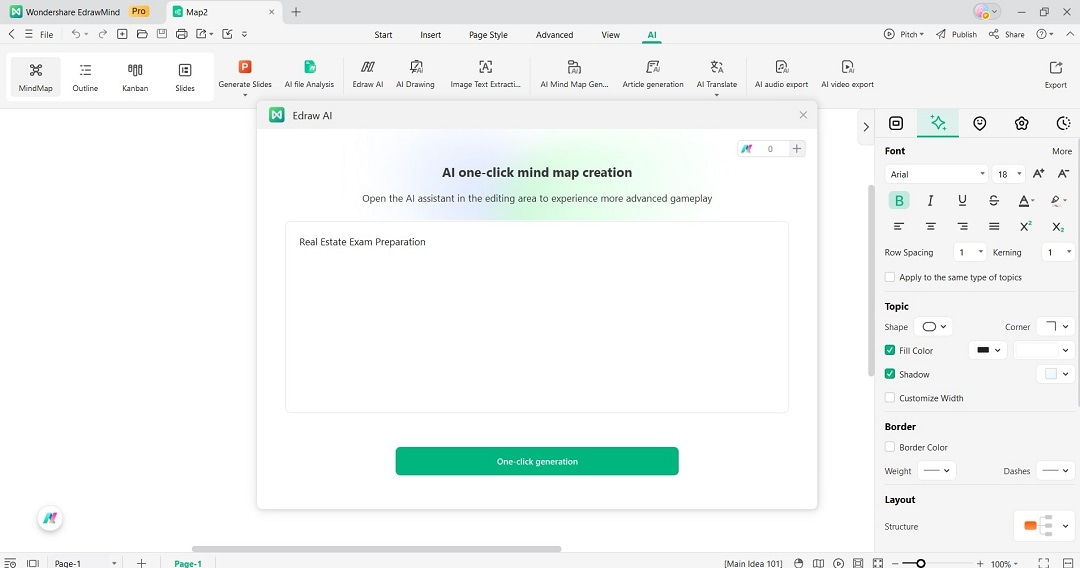
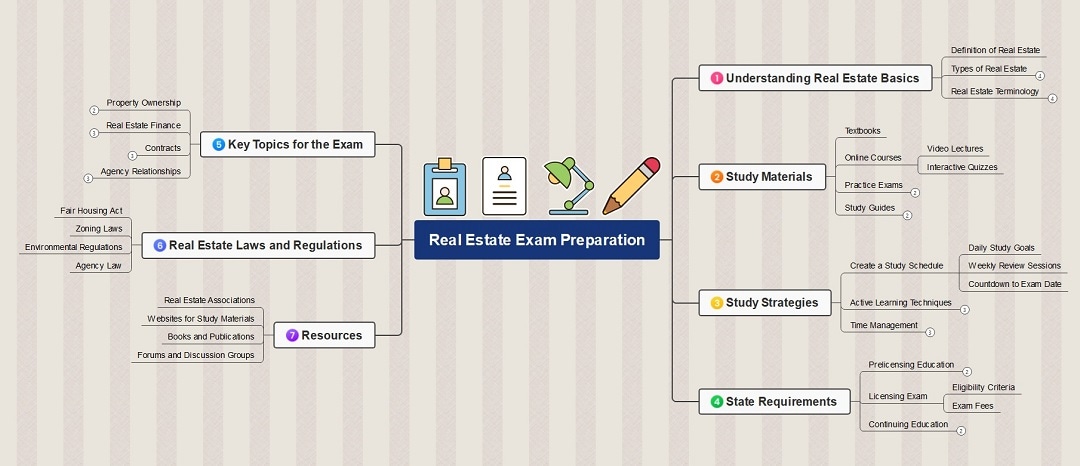
Open the AI Mind Map Generation from the top panel. Type your main subject, such as “Real Estate Exam Preparation.” Wait for the AI to create a full study map.
Step 3:
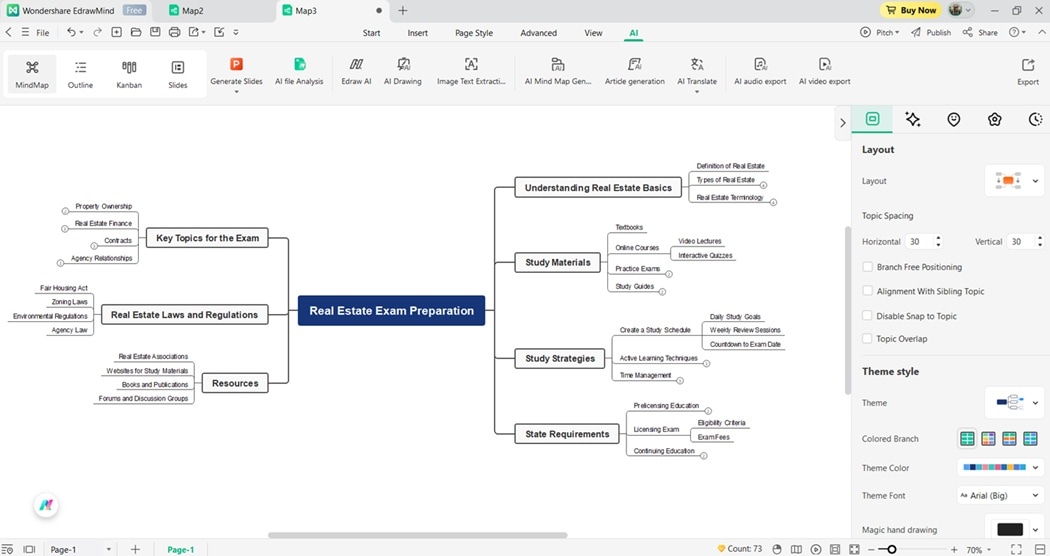
Review the generated branches for key exam areas. Expand or edit sections to match your state’s exam outline and study goals.
Step 4:
Customize your study map. Add icons, colors, and highlights for important points. Group similar topics and rearrange branches to make connections easier to remember.
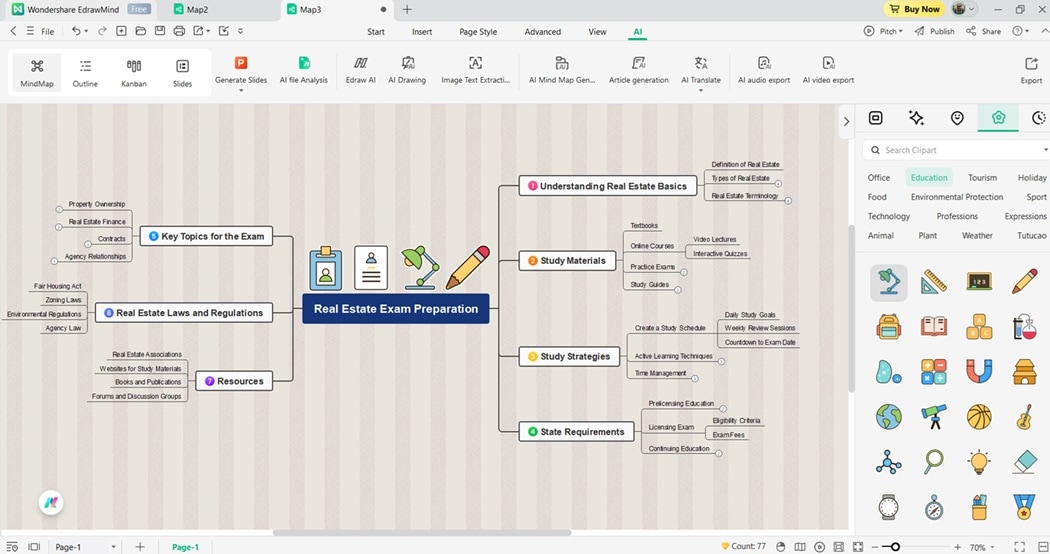
Step 5:
Save and review your completed map. Use it to quiz yourself, track progress, and revisit weak areas before exam day.
10 Ways To Improve Your Real Estate Exam Study Plan
- Know the exam format. Review if it includes multiple choice, essays, or case problems.
- Set clear study goals. Define how many chapters or topics you want to finish per week. Goals keep your review structured and prevent cramming.
- Keep notes concise. Use keywords and phrases instead of long sentences. This makes reviewing faster and strengthens memory retention.
- Follow a logical sequence. Study basic concepts before complex ones. For example, learn property rights before diving into financing and taxation.
- Use visuals. Add charts, diagrams, and property examples into your study maps. Visual learning improves recall on exam day.
- Practice transitions. Move between topics like contracts, property law, and ethics in a connected way. This helps you recall links between subjects during the test.
- Highlight key terms. Mark definitions, legal principles, and formulas. Reinforcing them makes them easier to recall in stressful test conditions.
- Balance theory and practice. Divide time between reading concepts and answering practice problems. A balanced review prepares you for different test types.
- Rehearse with your maps. Recite information aloud, redraw branches from memory, or test yourself with flashcards. Active recall strengthens learning.
- Revise after mock exams. Check which areas you missed and update your maps. This feedback loop keeps your study plan targeted and effective.
Conclusion
Preparing for the real estate exam can feel stressful, but a good study plan makes it manageable. Breaking topics into smaller steps and reviewing helps you build confidence while avoiding last-minute cramming.
EdrawMind supports better studying with AI tools that turn notes into clear visual mind maps. Features like Text to Mind Map and File to Mind Map make reviewing faster and organized. What’s more, they’re less overwhelming as you go.
To improve your chances of passing, try EdrawMind on desktop or mobile. Its simple design and AI functions keep preparation efficient, focused, and more effective until exam day arrives.
FAQ
-
How many questions are on the real estate exam?
The number varies by state, usually between 100 and 200 questions. Exams are multiple-choice, and each section tests different areas of real estate knowledge. -
How long should I study for the real estate exam?
Most candidates prepare for two to three months. A consistent study schedule with daily reviews and practice exams usually works best for effective preparation. -
Can I use EdrawMind on mobile for studying?
Yes, EdrawMind has a mobile version. You can create, edit, and review your study maps on the go, making exam preparation more flexible and portable.
 EdrawMind
AppsEdrawMind Online
EdrawMind
AppsEdrawMind Online