


Storytelling is one of the most powerful ways to share ideas. It inspires audiences and creates memorable content. A strong structure helps your message flow from beginning to end.
Mind maps make storytelling easier by organizing characters, events, and themes in a visual format. Instead of scattered notes, you see connections at a glance. This clarity strengthens pacing and creativity.
Wondershare EdrawMind helps you build stories step by step. Its mind mapping tools let you brainstorm, structure, and polish narratives. This article explores how to use mind maps for storytelling success.
In this article
What Is Storytelling Structure?
Storytelling structure is the organized sequence of events that shapes a narrative. It determines how the story begins, develops, and concludes. A good structure guides the audience through ideas and emotions.
Without structure, stories feel confusing. With structure, they have rhythm and purpose. Writers, educators, and professionals use it to capture attention. It explains complex points and leaves lasting impressions.
Here’s an example of a storytelling structure diagram made using Wondershare EdrawMind:
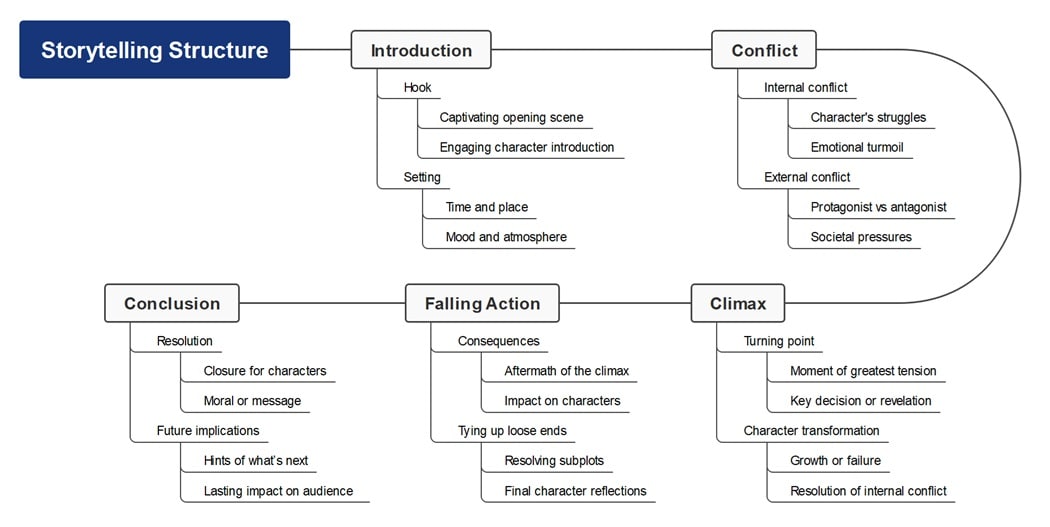


This mind map shows how a story is built step by step. It begins with an introduction, then moves through conflict, climax and falling action. It ends with a conclusion that gives resolution.
The introduction sets the tone with a hook and setting. Conflict builds tension with both internal and external struggles. The climax delivers transformation, while falling action handles consequences. The conclusion ties everything together.
By following this structure, writers can shape their ideas into complete narratives. Each stage ensures pacing, character growth, and emotional impact. This helps stories feel organized, engaging, and memorable for audiences.
What Is the Difference Between a Story and a Structured Story?
A story can be a collection of ideas, characters, or events with no clear order. It may feel scattered, leaving the audience unsure of direction or meaning behind the narrative.
A structured story organizes those same elements into a logical flow. With defined stages like introduction, conflict, climax, and resolution, the story has clarity. This makes it easier for readers to connect and follow.
The difference is planning. Structure ensures balance, pacing, and emotional depth. By mapping with tools like EdrawMind, storytellers can transform raw ideas into well-organized narratives. It keeps audiences invested from start to finish.
Types of Storytelling
Storytelling can take many forms, depending on tone, purpose, and audience. Some focus on linear plots, others embrace complexity, emotion, or experimentation. Here are five common types worth exploring:

Linear
Linear storytelling follows events in chronological order. It offers clarity and simplicity, helping audiences follow the plot from introduction to climax and resolution.
Nonlinear
Nonlinear storytelling shifts timelines, mixing flashbacks, flash-forwards, or parallel narratives. This type creates mystery and invites audiences to piece together meaning from scattered scenes.
Interactive
Interactive storytelling lets the audience influence outcomes. This is popular in games or digital media. It creates engagement by allowing the audience to shape the direction of the plot.
Emotional
Emotional storytelling focuses on feelings, relationships, and character growth. It builds strong connections by highlighting personal struggles, victories, or transformations.
Experimental
Experimental storytelling breaks rules of structure, style, or perspective. It may use abstract visuals, nonlinear language, or unusual pacing. This creates unique artistic effects that challenge traditional formats.
Storytelling Mind Map Templates
Templates give you a starting point. They turn abstract ideas into structured narratives. Here are examples:
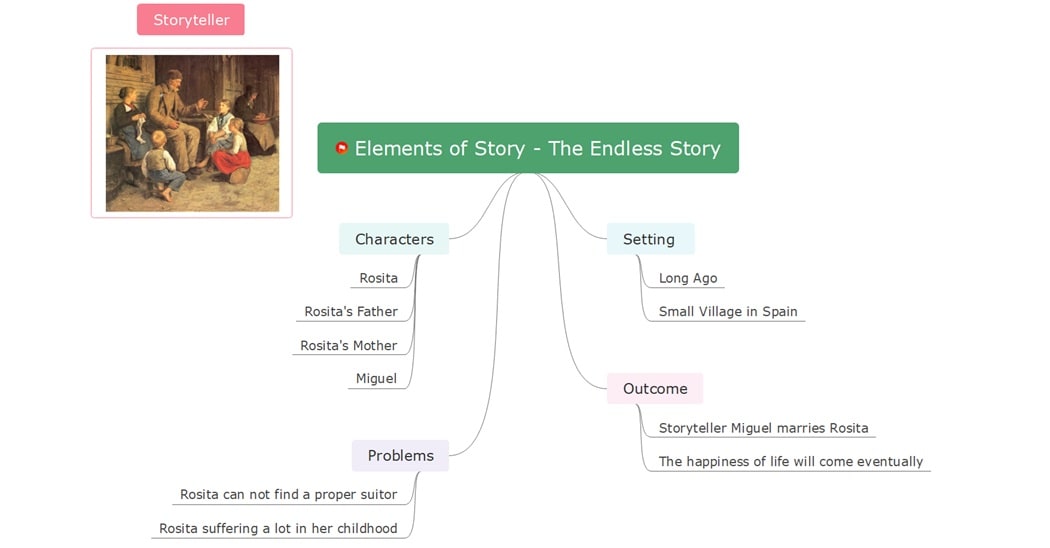
Elements of Story – The Endless Story
This mind map shows the timeless structure of a simple tale. It introduces a setting in a small Spanish village long ago. It shapes the background where characters live, struggle, and grow together.
The story highlights Rosita’s struggles and her eventual happiness with Miguel. Supporting characters like her parents deepen the plot. The themes of love, hardship, and destiny create a meaningful, lasting narrative journey.
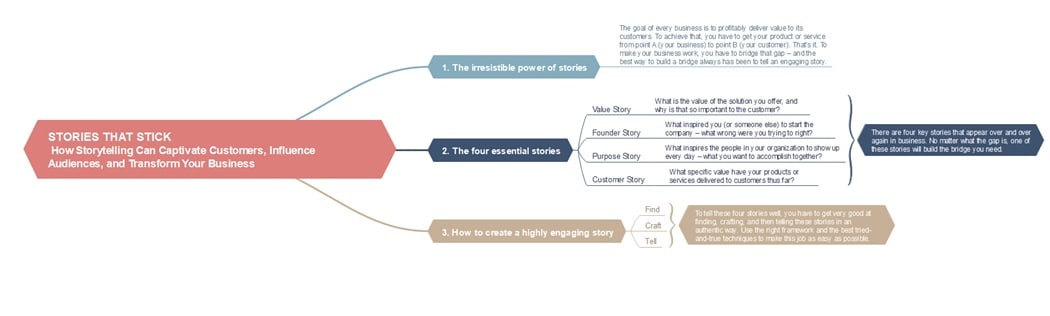
Stories That Stick in Business Template
The template explains the powerful role of storytelling in business. It shows how stories connect businesses with customers. It bridges the gap between what companies offer and what audiences truly value and need.
It highlights four essential stories every business must tell. These are the Value Story, the Founder Story, the Purpose Story, and the Customer Story. These narratives shape trust, communicate meaning, and build lasting customer and brand relationships.
It outlines how to create stories that captivate. By finding, crafting, and telling them, businesses can transform communication. This approach inspires audiences and strengthens loyalty. It ensures stories remain effective tools for influence and growth.
Types of Narrative Order in Storytelling
Narrative order offers writers multiple approaches to storytelling. In this template, Shunxu follows chronological order, showing time, space, and events in sequence. It ensures stories are clear, structured, and easy to follow, with a clear beginning, middle, and end.
Narration interrupts the timeline with inserted events. It enriches stories, highlights characters, and adds depth. By supplementing plots, writers can avoid plain storytelling and create variety. It ensures the main points and themes stand out.
Flashback and supplementary narration bring different effects. Flashback creates suspense by revealing outcomes or climaxes. Supplementary narration clarifies details, enriches characters, and balances structure. Together, these methods make stories dynamic, engaging, and more memorable.
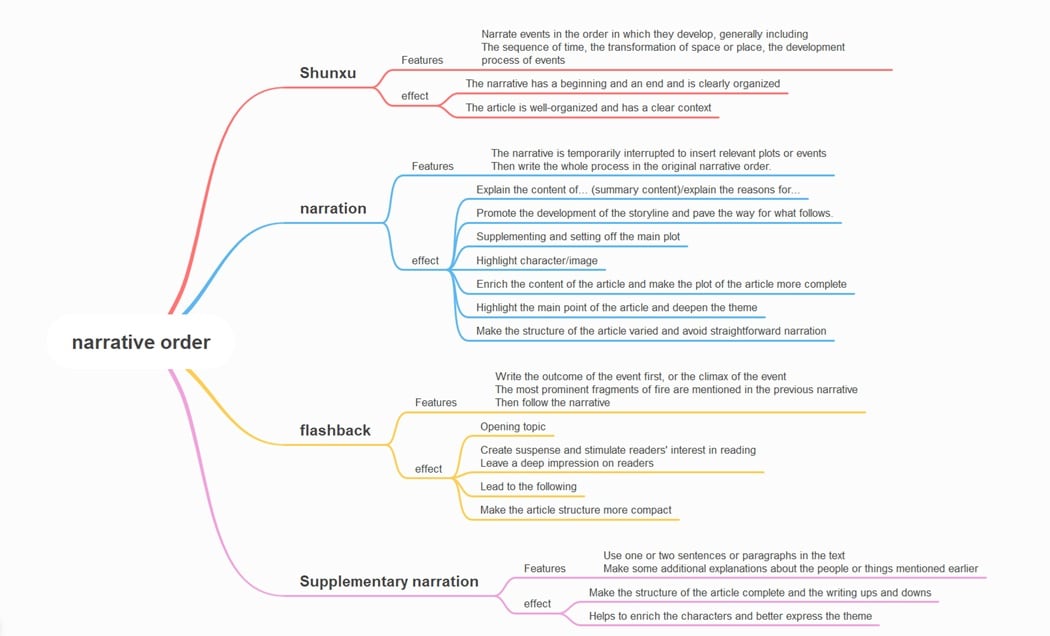
You can explore these narrative order examples more easily with visual aids. All of these templates are available in EdrawMind’s gallery. The platform helps you map out stories with clarity, structure, and creativity.
How To Develop Your Storytelling Structure
A storytelling style depends on your creativity, themes, and audience. Here’s how to develop and refine yours:
- Identify Your Purpose: Decide what message, theme, or experience you want your story to deliver.
- Know Your Audience: Understand their interests, age group, and cultural background to shape tone and structure.
- Experiment with Structure: Try linear or nonlinear flows, depending on the story’s mood and goals.
- Focus on Emotion: Highlight conflicts, transformations, and connections that spark audience empathy.
- Use a Mind Map: Visualize characters, themes, and events in EdrawMind for better structure.
- Incorporate Feedback: Share drafts with readers or peers to see how your story resonates.
- Revise and Polish: Refine language, pacing, and flow for maximum impact and clarity.
- Stay Consistent: Develop a signature style that audiences recognize while leaving room for growth.
Why Use EdrawMind for Storytelling?
EdrawMind is more than a mind mapping tool. It helps writers brainstorm, plan, and structure stories. With templates and AI tools, you save time and focus on creativity.
For storytelling, EdrawMind makes mapping easy. You can connect themes, characters, and scenes into one visual flow. Its AI tools simplify structure. It can turn rough concepts into polished outlines ready for sharing or expanding into full drafts.
Here are EdrawMind’s main features:

- AI Story Presentation Generator
Enter your main idea, and EdrawMind’s AI generates a structured story. It suggests sections like setup, conflict, and resolution. The feature provides a strong foundation that you can expand with details to create a presentation with just a click.
- File to Story Map
Upload drafts, notes, or reports, and EdrawMind converts them into a story map. This organizes your writing and reveals connections. It makes it easier to refine and track your narrative.
- Pic to Story Map
Take photos of handwritten notes, sketches, or whiteboards. EdrawMind scans the content and creates a clean story map. This feature saves time and preserves brainstorming work in a structured format.
- AI Mapping
Type a few keywords or short phrases, and EdrawMind builds a complete story map. You can rearrange, edit, and expand it, ensuring all characters, events, and themes are represented.
- Text to Mind Map Maker
Paste raw text like transcripts, rough chapters, or brainstorm notes. EdrawMind transforms them into a structured mind map, highlighting main points and making complex storylines easier to understand.
Make a Storytelling Structure With EdrawMind
EdrawMind’s AI-powered Mind Map Generation tool makes story planning faster and more creative. Instead of manually creating each node, the AI helps you expand ideas and organize storylines. Here are the steps:
Step 1:
Download and install EdrawMind. Log in with your Wondershare account or register a new one. Once inside, create a new mind map project to begin.
 Try the app & get 500 free AI tokens



Step 2:
Select the AI Mind Map Generation tool from the top toolbar. Enter your main story concept or theme. The tool creates a central node with related branches to guide your narrative.

Step 3:
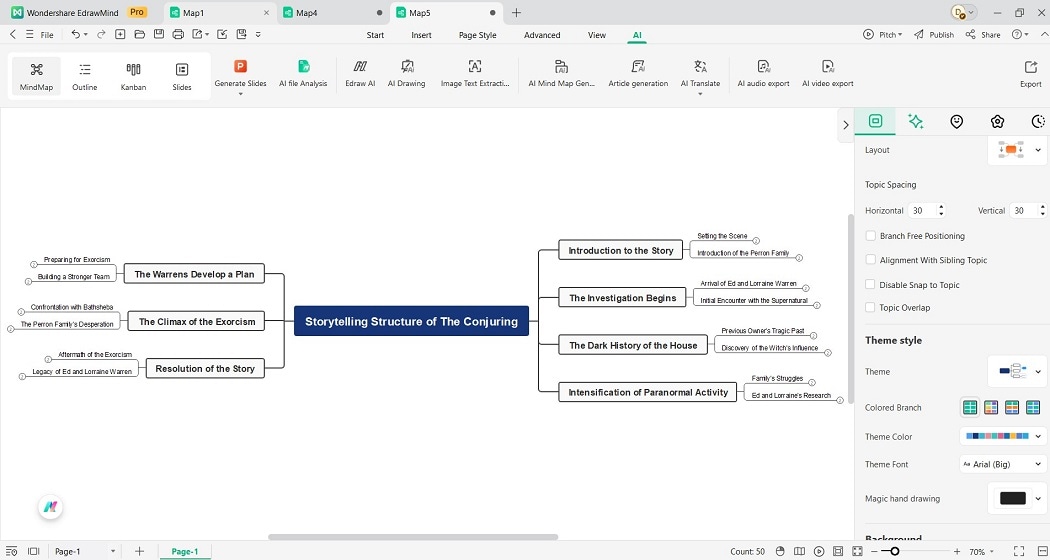
Wait for the AI to generate the mind map. Refine your central story idea in the main node. Adjust supporting branches like characters, setting, conflicts, and resolutions.
Step 4:
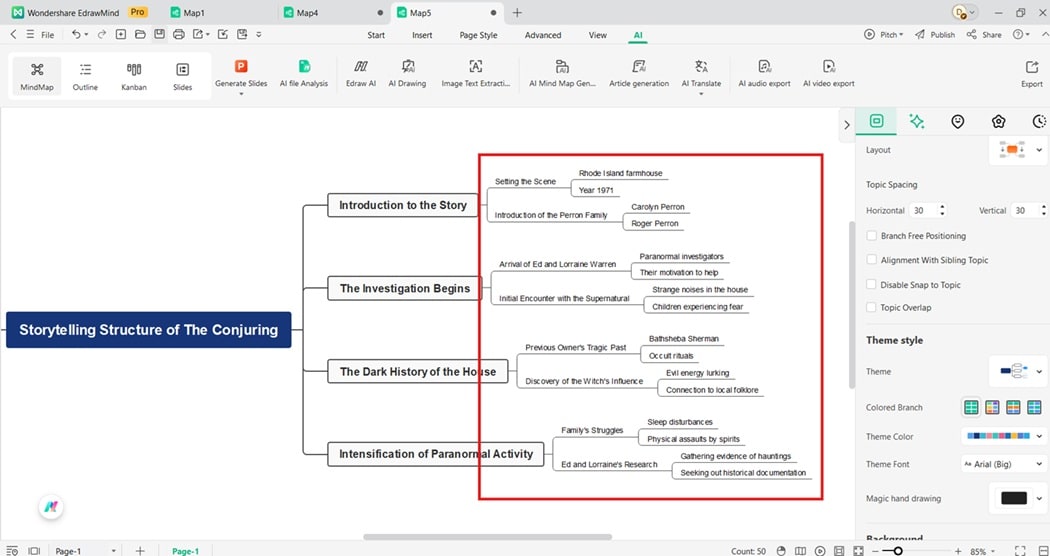
Add depth by asking AI to expand branches into beginning, middle, and end. You can include twists, character arcs, or world-building details with one click.
Step 5:
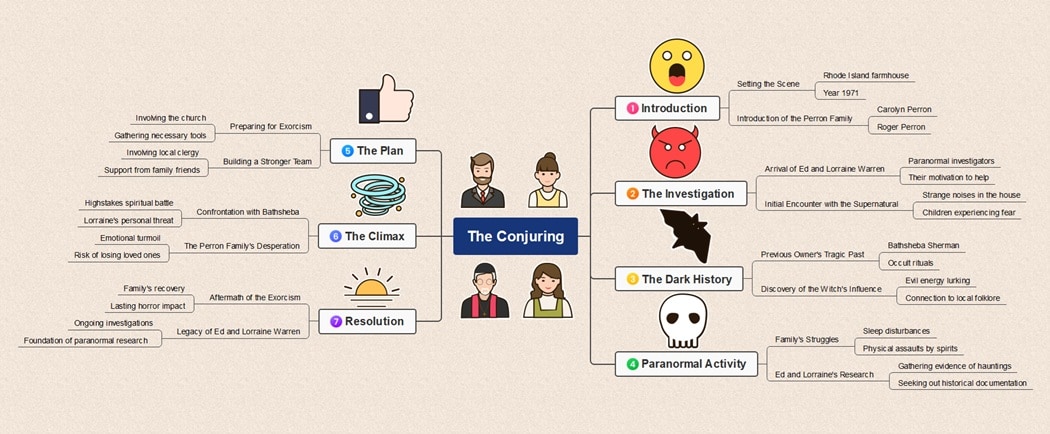
Enhance your map with icons, images, and color themes. Use the right-side panel to personalize your mind map.

Step 6:
Finalize and export your map. EdrawMind lets you save as PDF, Word, or image so you can collaborate, present, or refine drafts further.
10 Tips To Improve Storytelling With Mind Maps
Strong storytelling needs clarity. Use these tips to make your mind maps effective:
- Start with a clear central theme: Place your story’s main idea in the center. This ensures every branch links back to one strong foundation that drives the entire narrative forward.
- Use branches for main parts of the story: Divide your map into beginning, middle, and end. This keeps your story balanced. It helps you organize different sections with clarity and structure.
- Keep details concise but descriptive: Use keywords and short notes to describe events, characters, and settings. This keeps your map easy to follow without losing key narrative elements.
- Highlight turning points with icons: Emphasize twists and critical moments. Icons make these events stand out so you notice them instantly.
- Organize scenes in logical order: Arrange events step by step. Ensure one scene flows into the next. Proper sequencing maintains pacing and prevents your story from feeling scattered or disconnected.
- Use colors to group related ideas: Assign colors to themes, characters, or conflicts. This visual organization makes relationships easier to spot. It strengthens the way story elements connect.
- Expand character details with sub-branches: Create branches for each character. Add backstory, personality traits, and goals. Sub-branches make it easier to track how characters grow and interact across the plot.
- Add emotional beats alongside events: Mark where characters feel happiness, sadness, or conflict. Including emotions helps balance action with depth. It makes your story more engaging and meaningful for readers.
- Review for flow and pacing: Reread your story path and check how each scene connects. Adjust branches to ensure nothing feels too slow or rushed, keeping rhythm consistent.
- Update maps as your story evolves: Revise your map with new details or reordered events. Updating ensures your story outline remains accurate, flexible, and aligned with your latest creative vision.
With EdrawMind, you can turn story ideas into structured narratives. Its tools make planning simple, visual, and engaging. It helps writers build clear storylines with creativity and precision.
Conclusion
Storytelling is more powerful when ideas are clear and well-structured. A strong plan guides readers naturally and keeps your narrative engaging. Breaking events into smaller steps makes each scene flow without overwhelming your audience.
EdrawMind helps shape stories with AI tools that transform scattered notes into clear mind maps. Features like Text to Mind Map and AI Mind Map Generation simplify planning. They keep your narrative consistent while highlighting important events in an organized way.
To strengthen your storytelling, try EdrawMind on desktop or mobile. Its simple design and AI functions support effective planning. It helps you create sharper, clearer, and more compelling stories from beginning to end.
FAQS
-
How do mind maps support storytelling for presentations?
Mind maps help presenters outline key points visually. They keep slides focused, simplify delivery, and allow smooth transitions between topics. Audiences stay engaged with stories that feel structured and clear. -
Can mind maps shorten the writing process?
Yes, because they prevent confusion and wasted time. By planning in a clear structure, you know what to write next and keep the story moving smoothly. -
Why use EdrawMind instead of pen-and-paper mind maps?
EdrawMind offers templates, AI tools, and export options. It makes story planning faster, easier to share, and more professional compared to manual sketches.
 EdrawMind
AppsEdrawMind Online
EdrawMind
AppsEdrawMind Online