

Emotional intelligence, or EQ, refers to your ability to understand and manage your emotions, as well as those of others. It can be similar to empathy. But it goes just beyond understanding emotions.
Those with high EQ can effectively handle emotional situations personally and professionally. It's a tool that undoubtedly sets them up for success.
If you're reading about EQ for the first time or are concerned that you don't have a high EQ, don't worry. This article will explore the importance of EQ and some ways to improve your EQ.

In this article
Why Does Emotional Intelligence (EQ) Matter?
High intelligence (IQ) can take you far in life, securing admission to good schools and landing good jobs. However, it will be hard to succeed without the social skills and the ability to navigate difficult emotions.
These require the person to have good emotional intelligence. While it can be measured through different tests, it all boils down to self-awareness and reflection. Having high EQ can help you improve various areas of your life.
To dive into the specifics of why improving your EQ matters, here’s a quick discussion:
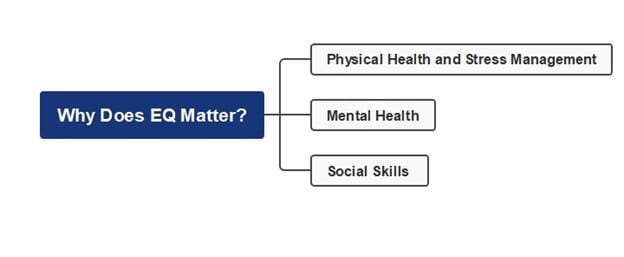


Physical Health and Stress Management
You can manage your emotions and stress levels if you have high EQ. While some stress is good for you, chronic and prolonged stress can put you at risk of heart problems or stroke, or develop conditions like hypertension.
Improving your EQ can help you maintain better physical health. Thus, as early as now, it’s good to note that EQ is not just about mental aspects.
Mental Health
When you have uncontrolled emotions and stress due to low EQ, it can be hard on your mental health. It can trigger issues like anxiety, depression, or worse, develop psychological conditions.
With high EQ, you can recognize your emotional triggers and manage them accordingly.
Social Skills
Everyone has met someone who struggles with social interactions. People with strong EQ read emotional cues more easily, even from strangers. This gives them an advantage in both personal and professional settings.
They connect with others faster, build stronger relationships, and handle conflicts better. High EQ also supports deeper bonds in family, friendships, and romantic life.
This is because they allow themselves to feel their loved ones’ emotions and respond accordingly.
What Can You Do To Improve Your Emotional Intelligence?
Now that you understand the importance of EQ, you're probably wondering how one can achieve EQ. Some people naturally have high EQ, but most people have to work to develop such skills.
However, you should know that it isn't something that will happen overnight. Strengthening your EQ will take time, but the good news is that the changes you seek to achieve can be accomplished through honing a few soft skills.
Here are the top soft skills that you can work on to improve your emotional intelligence:
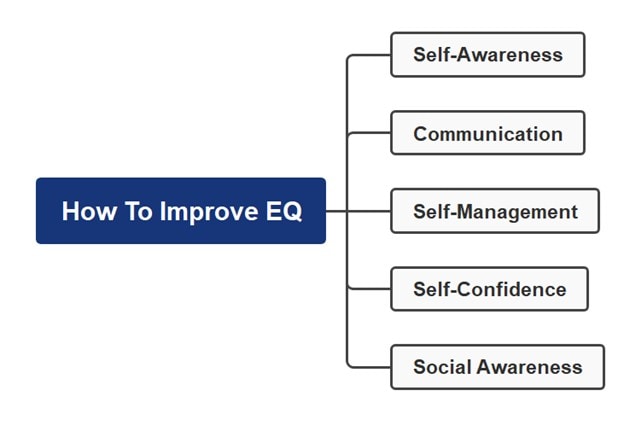
Self-Awareness
Improving your self-awareness is critical for improving your EQ. At its core, self-awareness involves being aware of yourself and your emotions, as well as the impact your actions have on others.
Thinking about how your actions will affect others before you take those steps will help you become more self-aware and emotionally intelligent.
Communication
Articulating your emotions in any area of your life, whether professional, personal, or social, is critical for improving your EQ. If you lack proper communication skills, you won't be able to overcome your emotions.
To develop communication skills, you should practice public speaking. In many cases, public speaking produces anxiety and discomfort. However, overcoming these feelings in a group setting is the best way to hone your communication skills.
Self-Management
Properly managing your time and examining your lifestyle choices will help you stay on top of tasks. Guiding others requires a high level of EQ, but a high organizational aptitude.
If others understand that you are organized and can manage yourself, they can trust you to manage them.
Self-Confidence
Think about all the top leaders in the world—what do they have in common? They're all confident in themselves and their abilities.
Confidence in yourself can help you overcome insecurities and boost your EQ. People can pick up on when you're nervous or anxious, so practice being confident.
Social Awareness
Those with high EQ are well-equipped to handle a variety of interpersonal interactions. To improve your ability to navigate these situations, practice your social awareness.
Good social awareness means understanding how your emotions affect others, and vice versa. To practice this skill, reflect on how the actions of others affect you.
From there, you can adjust your actions based on your experiences.
Different Ways To Measure Your EQ Progress
While there are ways to improve your emotional quotient or intelligence, the fact is that tracking progress is a highly abstract matter. You can’t have an objective analysis of your improvement unless you have the know-how.
For non-psychologists or non-psychiatrists, though, there are ways to help you track your progress in a way that you can easily understand. They are the following:
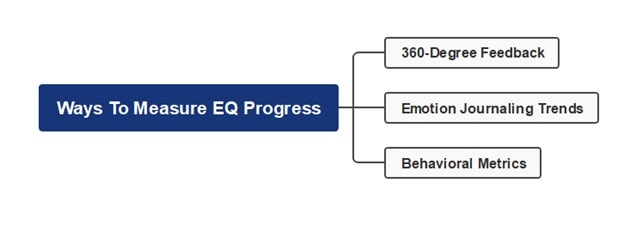
360-Degree Feedback
Ask for feedback from colleagues, friends, or mentors. Their observations about your communication and empathy can show patterns you may not notice yourself.
It is a clear sign of growth if several people notice that you handle stress better or listen more actively.
Emotion Journaling Trends
Record daily emotions and reactions in a journal. Over time, look for changes in how you handle stress, conflict, or joy. This reveals growth in self-awareness and regulation.
For example, you may notice that situations that once caused anger now receive calmer responses. These patterns reflect improvements in self-awareness and emotional regulation.
Behavioral Metrics
Pay attention to specific behaviors tied to EQ, such as how often you pause before reacting, resolve conflicts without escalation, or show empathy in conversations. Tracking these behaviors makes abstract progress more concrete and measurable.
How Diagrams Help in Improving Your Emotional Intelligence
The ways to measure your improving EQ in the previous section are best expressed visually. You must transform your journal entries or feedback themes into visual tools like mind maps or Gantt charts.
By doing this, you can see your emotional improvement over time. They can be a big step in self-regulation, especially when you notice that you’ve been having a lot of bad days. This will help you become self-conscious.
Using a Professional Mind Map Maker: Wondershare EdrawMind
Thus, if you’re looking for a tool to make these diagrams with, Wondershare EdrawMind is recommended. It has over 210 diagram types and an extensive library of user-made templates, so you’re sure to find something you need.
Besides, it has several AI tools, featuring a built-in chatbot you can use as your companion or talking buddy. EdrawMind has several features that can assist you in improving your emotional intelligence.
Sample: How To Make a 360-Degree Feedback Mind Map
One way to measure improvements in Emotional Intelligence is through 360-degree feedback, which can then be transformed into a mind map. It’s best to open EdrawMind on the side and make your mind map as you read.
Step 1:
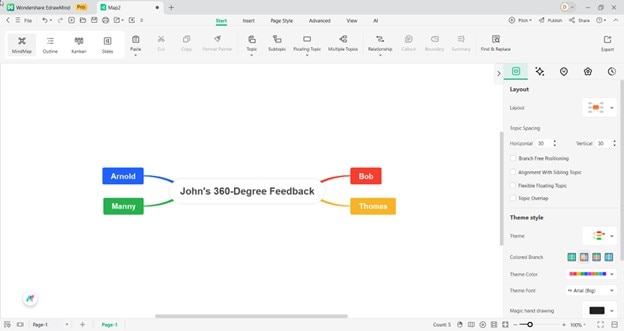
First, create the central topic for your mind map. In this example, you can use “John’s 360-Degree Feedback Mind Map.” Then, add the main branches, representing the people around you.
 Try the app & get 500 free AI tokens


Step 2:
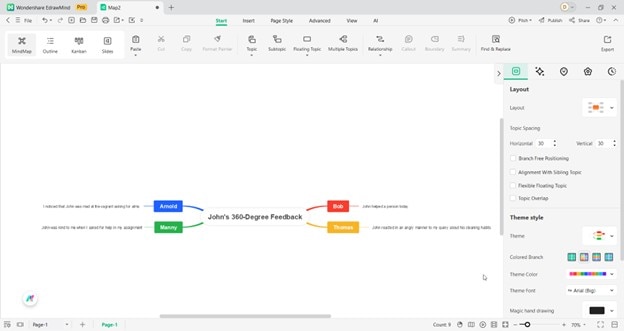
Then, add the Subtopics based on what they say about you. You can add further subtopics to reflect on what they said.
Step 3:
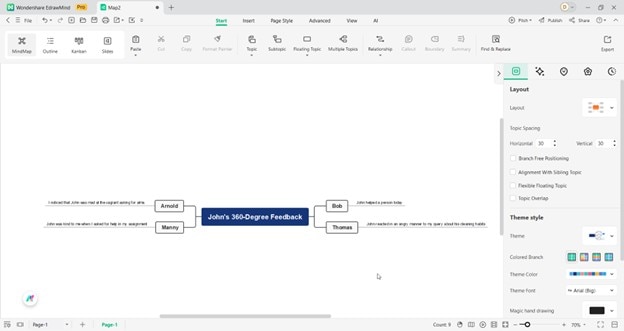
It’s also great to design your mind map. Add pictures, change the shapes, lines, or text styles.
Step 4:
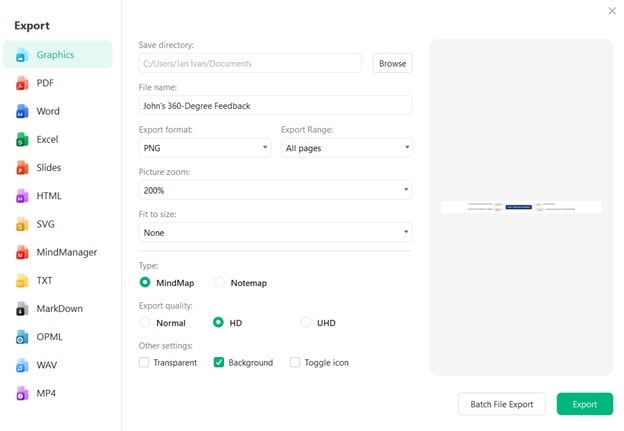
Export your mind map and add it to your documents/records. You can look back on this in the future.
Other Ways That EdrawMind Can Help in Improving Emotional Intelligence
Beyond creating mind maps for feedback, EdrawMind’s AI tools can also guide you in improving EQ through structured practice. These tools turn abstract emotions into something more visual and easier to understand:
- AI Presentation. Transform your reflections or emotional journals into engaging slides. Reviewing them as structured lessons helps you see emotional patterns clearly.
- File to Slide. Upload notes, reports, or saved feedback. EdrawMind will organize them into slides, making it easier to track themes and spot recurring issues.
- Pic to Slide. Add personal photos or workplace scenarios. The tool can label and arrange them, giving you visual reminders of emotional triggers and responses.
- AI Mapping. Input topics like conflict management or stress responses, and the tool generates clusters of related behaviors. This helps you understand connections between triggers and outcomes.
- Concept Map Maker. Build diagrams linking emotions with actions and results. For example, connect anger to impulsive words and relationship strain. Then map calmer responses as alternatives.
- Text to Mindmap Maker. Paste journal entries or feedback notes. The tool extracts recurring words or themes, turning them into mind maps you can analyze over time.
Conclusion
By working on the aforementioned soft skills, you will be well on your way toward improving your overall emotional intelligence, which will have long-term positive effects on your personal, professional, and social life.
FAQs
Before you go, read through these frequently asked questions related to our topic of how to improve EQ:
-
1. What is the biggest challenge in improving EQ?
The hardest part is consistency. Change takes time, and progress can feel slow. Staying aware of your emotions daily is often the biggest hurdle. -
2. Does EQ improvement mean suppressing emotions?
No. EQ is not about hiding emotions. It’s about understanding them and responding in healthier ways. Suppression can make things worse. Thus, improving your EQ does not mean you must be totally stoic. -
3. Can I improve EQ alone, or need professional help?
You can improve EQ through self-awareness and practice—tools like journaling or mind mapping help. Professional guidance may speed up progress, but it isn’t required. However, seek help if you’re really having a hard time.
 EdrawMind
AppsEdrawMind Online
EdrawMind
AppsEdrawMind Online