
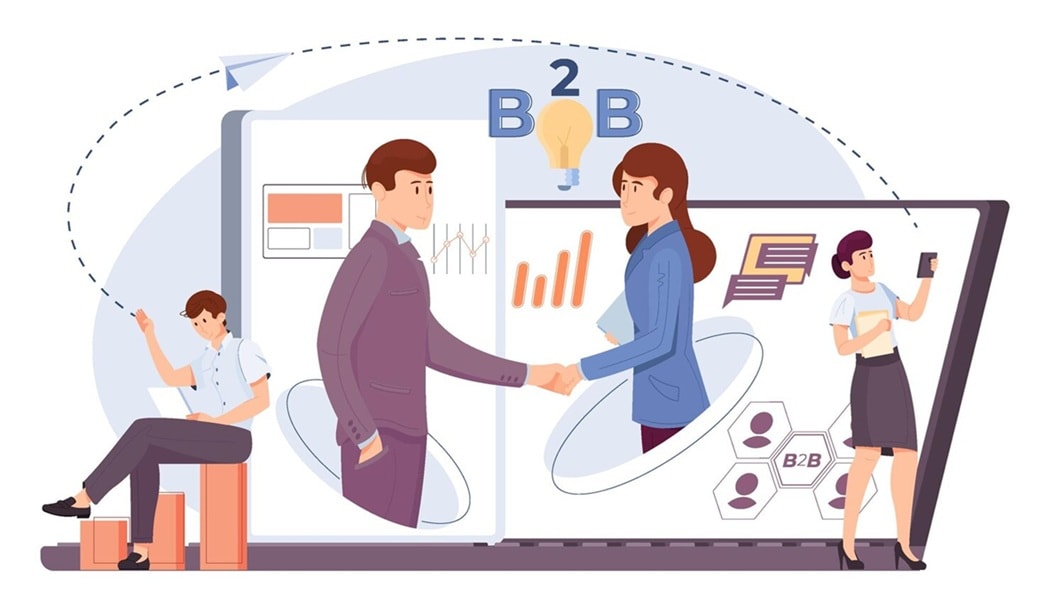
Business negotiation shapes deals, partnerships, and opportunities. A strong ability allows you to protect interests, reach agreements, and build trust. Without a strategy, conversations may collapse.
With the right preparation and skill, they can create lasting results for both sides.
Mind maps can help you prepare for negotiations. They give structure to your goals, alternatives, and talking points. Instead of scattered notes, you see everything at a glance. This clarity makes communication smoother and outcomes stronger.
Wondershare EdrawMind is designed for organizing thoughts visually. It helps professionals map out objectives, anticipate challenges, and plan negotiation strategies.
In this article
What Is a Business Negotiation?
Business negotiation is a structured discussion between two or more parties with the goal of reaching an agreement. It can involve contracts, pricing, partnerships, or problem-solving. Effective negotiation ensures that each side’s needs are addressed fairly.
Negotiation requires communication, analysis, and compromise. It is not about winning alone but finding balanced outcomes. A strong negotiator listens carefully, asks the right questions, and builds agreements that create value for everyone involved.
Here’s a business negotiation flow diagram made using Wondershare EdrawMind:
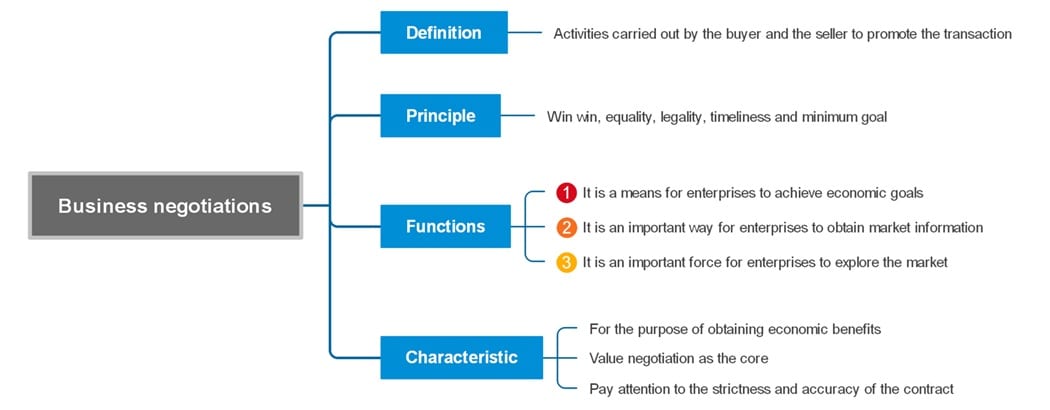


This mind map presents the concept of business negotiations in a clear structure. It describes negotiations as activities between buyers and sellers. It’s designed to promote transactions and enable agreements that benefit both sides.
The next section highlights key values that should guide negotiations. These include win-win outcomes, equality, legality, and timeliness, with a focus on setting minimum goals. These elements ensure fairness and cooperation throughout the negotiation process.
Functions and characteristics show the practical role of negotiations. They help enterprises achieve economic goals, gather market information, and explore opportunities. At the same time, negotiations emphasize economic benefits, value exchange, and accuracy in contract agreements.
Why Negotiation Skills Matter
Negotiation skills are vital for business growth. They help professionals close deals, resolve conflicts, and secure better terms. Without strong skills, opportunities may be lost or agreements may favor the other party.
Strong negotiators can reduce risks, strengthen relationships, and increase profitability. Companies rely on skilled professionals to ensure fairness, protect resources, and unlock long-term partnerships. Developing this ability can shape careers and boost organizational success.
How To Improve Business Negotiation Skills
Effective negotiation needs more than strategy. It also demands specific skills that guide the process and shape results. The following ten skills highlight essential techniques to strengthen your position and create better outcomes.
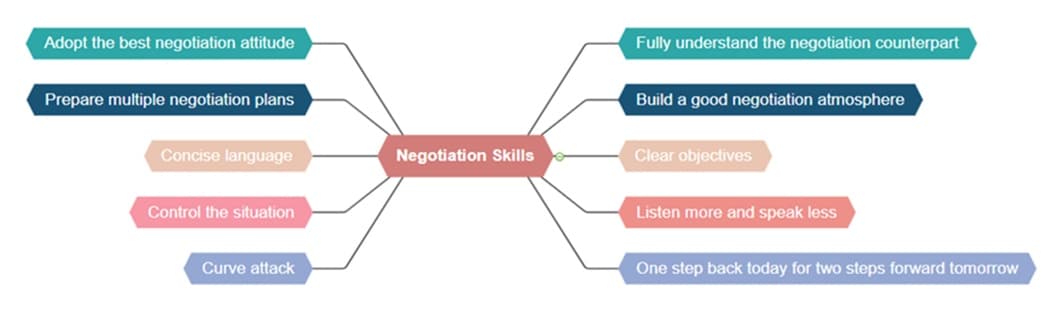
Adopt the Best Negotiation Attitude
A positive and flexible attitude sets the foundation for successful negotiations. By approaching discussions with confidence, respect, and openness, negotiators build trust. It demonstrates a willingness to collaborate and create a more productive exchange.
- Attitude shapes perception and builds trust quickly.
- A positive mindset attracts cooperation.
Prepare Multiple Negotiation Plans
- Plans protect against unexpected changes.
- Multiple options increase negotiation confidence.
Having different plans ensures adaptability in changing situations. When one approach does not work, alternatives provide room for adjustment. This preparation reduces risks, strengthens confidence, and allows negotiators to respond to unexpected challenges.
Concise Language
Clear and concise communication avoids confusion and strengthens arguments. Short, precise statements leave little room for misinterpretation. Using direct language helps negotiators express priorities. It also saves time and keeps the conversation focused on reaching agreements.
- Speak clearly to avoid misunderstandings.
- Concise points save valuable time.
Control the Situation
- Stay calm to guide discussions effectively.
- Focus keeps negotiations on track.
Strong negotiators manage the flow of discussions without dominating. Controlling the situation involves staying calm, redirecting unproductive dialogue, and maintaining focus. This skill helps maintain order, prevent distractions, and ensure objectives remain the central point of discussion.
Curve Attack
This technique involves approaching negotiations indirectly rather than head-on. By introducing ideas from different angles, negotiators can surprise counterparts, shift perspectives, and uncover new opportunities. A curve attack often opens doors when traditional methods face resistance.
- Indirect approaches can reveal hidden opportunities.
- Creativity surprises the counterpart.
Fully Understand the Negotiation Counterpart
- Know their priorities to create appealing proposals.
- Understanding builds trust fast.
Learning about the other party’s needs, interests, and motivations provides valuable insight. This allows negotiators to frame proposals that align with the counterpart’s priorities. It makes agreements more attractive while also building trust and stronger relationships.
Build a Good Negotiation Atmosphere
A respectful and cooperative environment encourages open communication. Creating a positive atmosphere reduces tension, promotes fairness, and fosters collaboration. This skill helps both sides feel heard and understood, increasing the chances of reaching a win-win agreement.
- Positive vibes improve communication efficiency.
- A friendly tone encourages collaboration.
Clear Objectives
- Set goals to guide your strategy.
- Objectives keep discussions focused.
Defining specific goals before entering negotiations provides clarity and direction. Clear objectives act as a roadmap, preventing distractions and compromises that weaken results. With solid goals in place, negotiators can measure progress and negotiate with greater purpose.
Listen More and Speak Less
Active listening strengthens understanding. It shows important details about the other party’s position. Speaking less creates space for insights and avoids unnecessary conflict. This skill helps negotiators identify opportunities, anticipate objections, and respond more effectively.
- Listen carefully to capture key details.
- Speaking less avoids unnecessary disputes.
One Step Back Today for Two Steps Forward Tomorrow
- Patience can yield larger gains.
- Strategic compromise secures long-term success.
This strategy emphasizes patience and long-term thinking. Accepting smaller concessions today can lead to greater advantages in the future. It highlights the importance of compromise and timing in building sustainable, beneficial agreements.
These techniques gradually strengthen your ability and prepare you for more complex deals.
Why Use EdrawMind for Negotiation Planning?
EdrawMind is more than a brainstorming tool. It helps professionals structure, analyze, and prepare for negotiations. With templates and AI features, you save time, uncover insights, and focus on strategy instead of scattered preparation.
For negotiation, EdrawMind makes planning clear and structured. You can map interests, priorities, and possible outcomes into one visual flow. Its AI tools simplify preparation. It turns raw data into organized maps ready for review or discussion.
Here are EdrawMind’s main features:
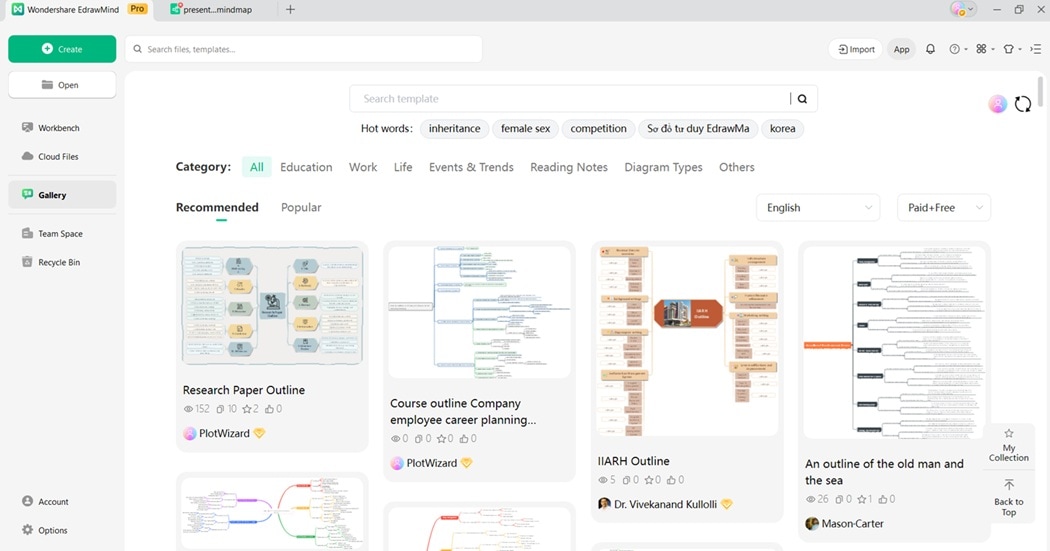
AI Presentation Business Negotiations Maker
Input your negotiation goal, and EdrawMind creates a structured outline. It suggests sections like objectives, interests, and concessions. This gives you a strong base to refine with details before the meeting.
File to Slide Negotiation Map
Upload notes, reports, or agreements, and EdrawMind converts them into a negotiation map. It organizes key points, making connections clear and helping you track evolving discussions.
Pic to Slide Negotiation Map
Take photos of whiteboard notes or brainstorming sessions. EdrawMind scans them and builds a clean map. This saves time and captures valuable ideas in a structured way.
AI Mapping
Type keywords like “price,” “terms,” or “partnership,” and EdrawMind creates a complete negotiation map. You can rearrange and edit points, ensuring all interests and options are represented.
Text to Mind Map Maker
Paste raw text from transcripts or notes. EdrawMind transforms it into a structured mind map. It highlights major issues and possible solutions. The feature makes complex negotiations easier to follow and manage.
How To Plan a Business Negotiation With EdrawMind
EdrawMind’s AI-powered Mind Map Generation tool makes negotiation planning faster and clearer. The AI helps you expand strategies and organize discussion paths in seconds. Here are the steps:
Step 1:
Download and install EdrawMind. Log in with your Wondershare account or register a new one. Once inside, create a new mind map project to begin.
 Try the app & get 500 free AI tokens


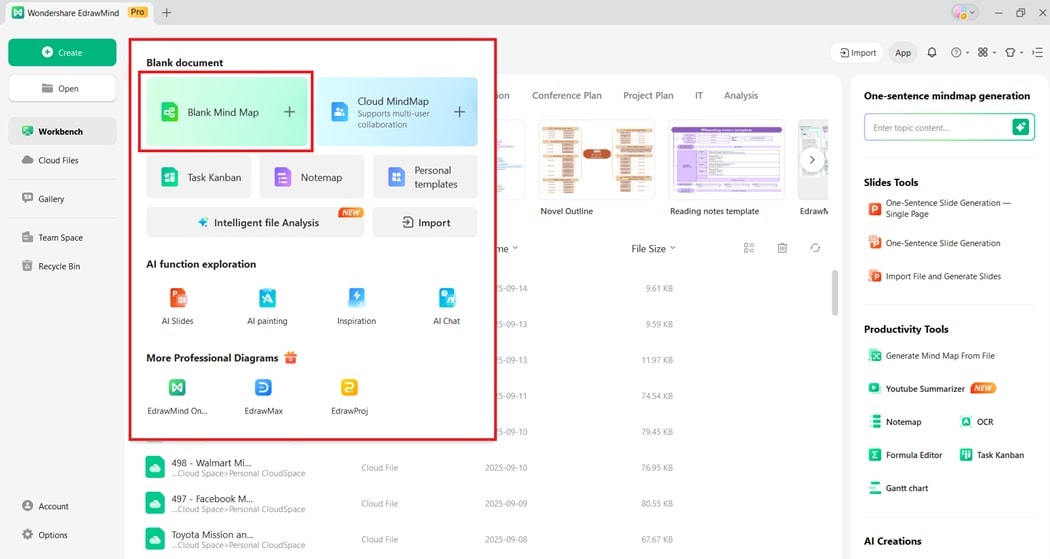
Step 2:
Select the AI Mind Map Generation tool from the top toolbar. Enter your negotiation topic or main objective. Wait for the AI to create a central node with related branches.
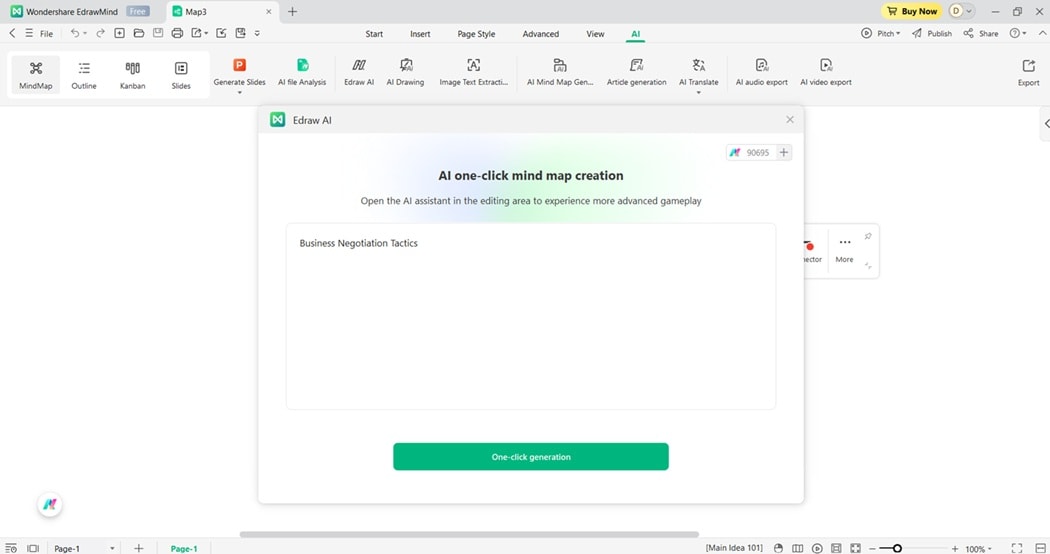
Step 3:
Wait for the AI to generate the mind map. Refine your main negotiation goal in the central node. Adjust supporting branches as needed.
Step 4:
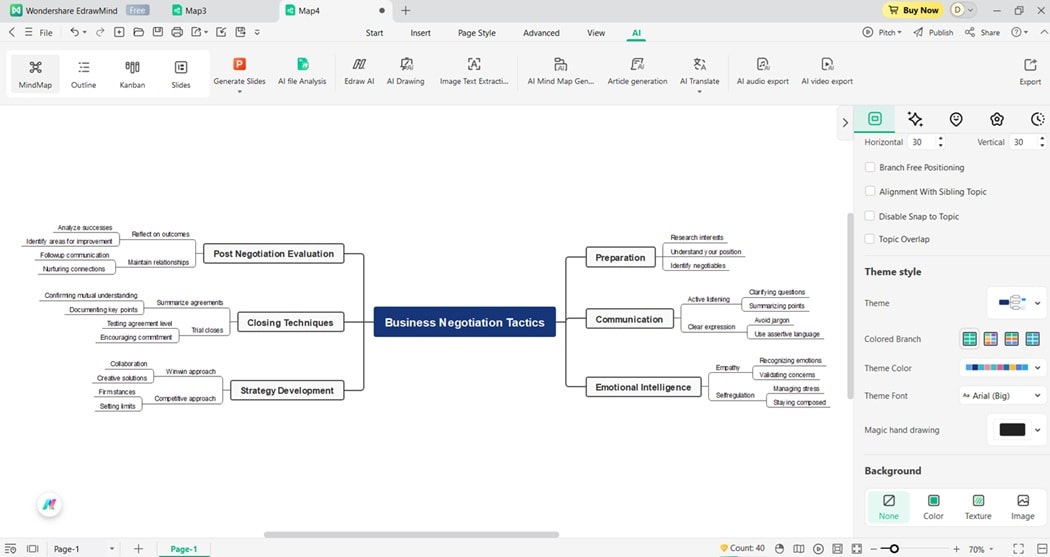
Add depth by asking AI to expand branches into preparation, discussion, and closing stages. You can also edit the subtopics manually.
Step 5:
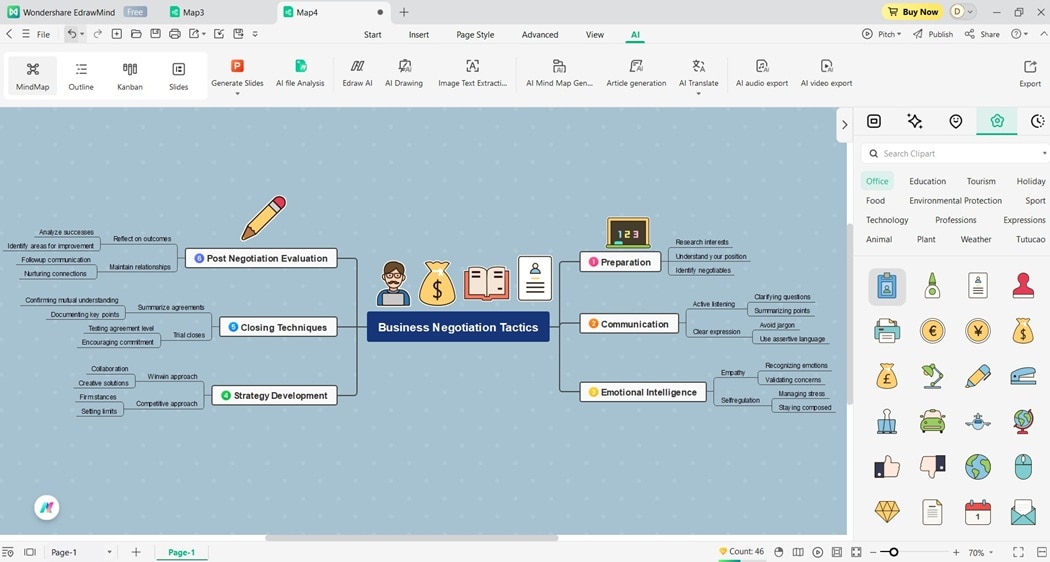
Enhance your map with icons, images, and color themes. Use the right-side panel to personalize your negotiation map. Highlight critical points visually.
Step 6:
Finalize and export your map. EdrawMind lets you save as PDF, Word, or image so you can collaborate, present, or refine drafts further.
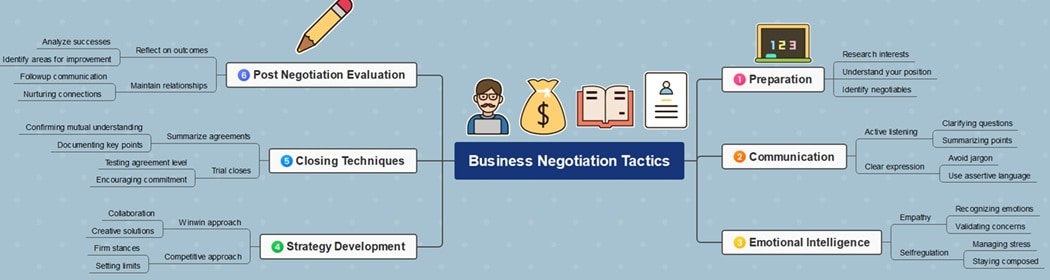
Free Business Negotiations Mind Map Templates
These free business negotiations mind map templates are from the EdrawMind Gallery. They help visualize strategies, key skills, and step-by-step processes. Use them to improve your business negotiation skills:
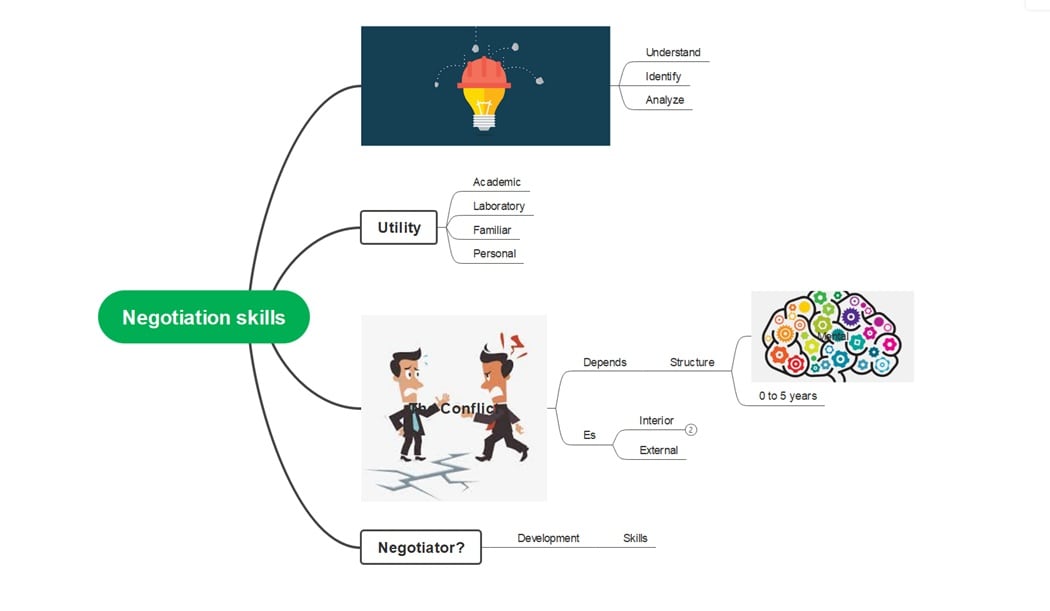
Negotiation Skills Mind Map Template
This mind map shows key negotiation skills, such as understanding and analyzing. It highlights how to use them in academic and laboratory settings and in familiar or personal situations.
It also covers conflict, its mental structure, and the early stages. Users can explore interior and external factors while developing skills to plan, assess, and strengthen negotiation abilities effectively.
The Process of Business Negotiation
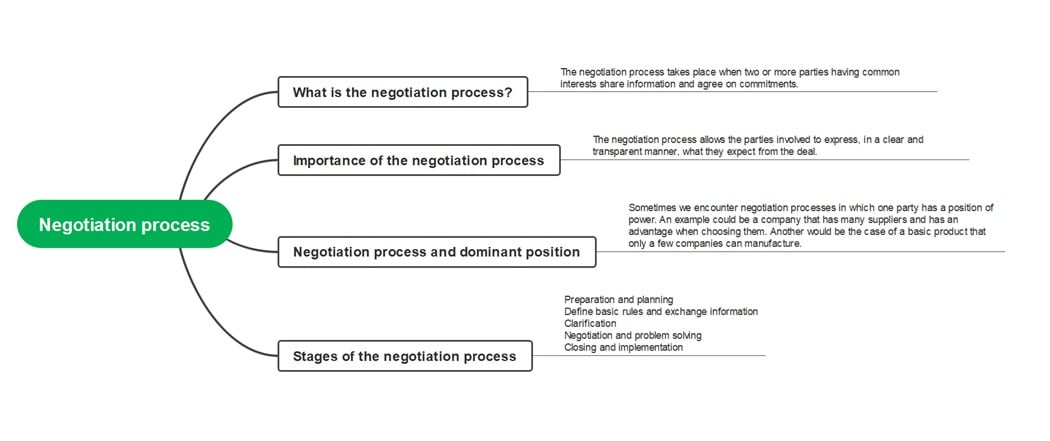
This template shows how business negotiations work from start to finish. It explains the process, why it is important, and how parties communicate. It also shows situations where one side may have more power than the other.
It breaks negotiations into stages. Users can follow preparation and planning and define rules. They can share information, seek clarification, engage in problem-solving, and finalize discussions. This layout helps learners understand each step and apply strategies to improve negotiation skills.
Business Negotiation Flow Template
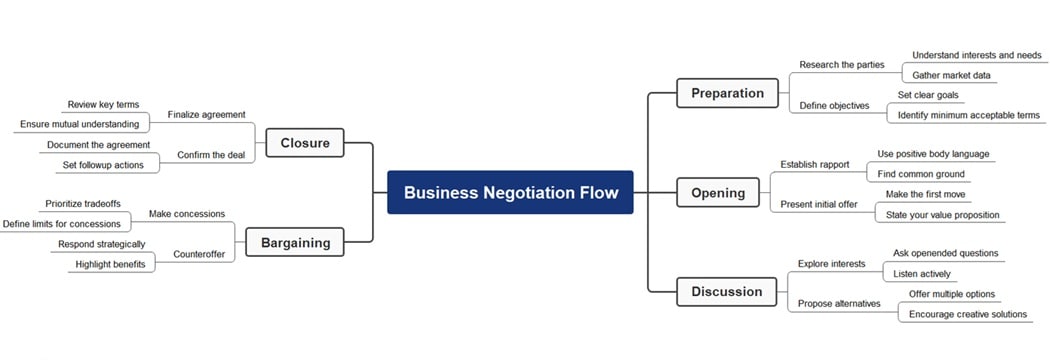
This template shows the step-by-step flow of a business negotiation. It guides users through preparation, opening, discussion, bargaining, and closure. Each stage explains key actions like researching parties, defining objectives, and establishing rapport for smoother negotiations.
It also details strategies for discussion and bargaining. Users learn to explore interests, propose alternatives, make concessions, and respond with counteroffers. The template ends with closure steps, ensuring agreements are finalized, documented, and followed up on for successful business outcomes.
Conclusion
Strong negotiations need structure for clarity and focus. Mind maps help organize goals, strategies, and outcomes. It uses a format that supports smooth communication and stronger deals.
Mind maps simplify planning by showing connections. They make it easier to track progress, refine strategies, and keep negotiation steps aligned with business goals.
EdrawMind enhances negotiation planning with ready-made templates and AI tools. It transforms raw ideas into clear negotiation maps. It helps you prepare with confidence, structure, and strategies that drive successful outcomes.
FAQS
-
Why use EdrawMind instead of manual negotiation notes?
EdrawMind provides templates, AI support, and export tools that streamline planning. Manual notes can be disorganized and hard to share. Meanwhile, EdrawMind keeps everything structured. This ensures faster preparation, smoother collaboration, and professional documents that strengthen negotiation strategies. -
How does visualization improve negotiation outcomes?
Visualization highlights connections between goals, tactics, and concessions. Seeing relationships prevents overlooking key issues and strengthens decision-making. Negotiators gain a clearer understanding of trade-offs. This makes it easier to achieve win-win agreements that satisfy both sides. -
Can mind maps shorten the preparation process?
Yes. Mind maps prevent wasted effort. It organizes negotiation elements into categories like priorities, tactics, and fallback options. This gives negotiators clarity, reduces uncertainty, and saves time. A strong map provides a roadmap that keeps preparations focused and effective.
 EdrawMind
AppsEdrawMind Online
EdrawMind
AppsEdrawMind Online