
As humans, language is one of the things that keeps us connected. Because of it, people can understand each other and build communities and friendships.
However, not everyone speaks the same language. Especially with the internet, it might be handy to learn a new language or two to keep the connections alive with people across the globe.
This article explores a new and different way to improve vocabulary in other languages: mind maps. These handy tools can be a force in learning and memorizing. Thus, it’s great for learning languages.


In this article
Why Improve Your Vocabulary?
While learning a new language, you should be more concerned about enhancing vocabulary by adding new words to your word bank, since that is where you get your wording to form your sentences or communicate with people.
The same principle also applies to your native language. You never know when you might need the new words, especially for academic writing.
Being thoroughly in a new language or having a good grasp of its vocabulary makes you more professional, or helps you relate to the culture created by its speakers.
You won’t understand what they mean without vocabulary. Now that you’ve established the importance of improving your vocabulary, you can explore how mind mapping can aid in this process, along with other methods.
Ways To Improve Your Vocabulary Effectively
Before you go through the benefits of mind mapping for improving your vocabulary, here’s a quick overview of some of the best methods. You’ll be focusing on the mind mapping option later on:
- Read regularly. Books, articles, and even short essays expose you to new words. The more you read, the more natural vocabulary learning becomes.
- Keep a vocabulary journal. Write down unfamiliar words along with their meanings. Reviewing these notes helps reinforce memory.
- Use new words in daily life. Practice makes learning stronger. Try using fresh vocabulary in conversations, emails, or short writing exercises.
- Learn in context. Instead of memorizing isolated words, understand how they are used in sentences. Context improves long-term retention.
- Make friends with those who speak the language. Some say that immersion is the best way to learn a language. So, consider ways to meet people who discuss the language you're interested in, such as through video games.
- Group words by theme. Learning related words together, such as travel vocabulary or business terms, makes them easier to remember.
- Use digital tools. Apps and online dictionaries provide examples, synonyms, and pronunciation guides that help deepen understanding.
- Practice active listening. Podcasts, news reports, or speeches expose you to vocabulary in natural usage. Listening sharpens recognition and comprehension.

Benefits of Using Mind Maps To Improve Vocabulary
When you start learning a new language, the biggest challenge you face is expanding your vocabulary and becoming proficient in the original language. Here are some benefits of using a mind map in developing your vocabulary.
Easy To Remember
When you put the new words on a mind map according to their category, it becomes easy to remember them by their classification.
Correlating those new words with your language and implementing them in day-to-day life is the secret to improving your vocabulary for a new language.
Detailed Information
By seeing a mind map, you get a detailed picture of the language you will learn and the meaning of one particular word in your language.
By expanding the branches from the main topic, you can add many subtopics that you will cover.
Logical Analysis
It is impossible to write down many words and create your vocabulary manually using a pen and paper.
With the mind map, you can quickly analyze the type of word you are looking for in a particular situation or conversation and remember it just by its properties.
Straightforward Categorization
You can categorize the words you are learning according to their place and time of use, and can quickly learn new words, such as food, color, shopping, clothing, animals, direction, etc.
Time-Saving
It saves you time compared to the traditional pen and paper method for improving your vocabulary, as you get everything on a single layout, and it doesn't take much time to prepare a mind map.
Mind maps work better, especially compared with traditional methods, such as noting down new words or learning using pen and paper, which can lead to confusion and a lengthy process.
How To Use EdrawMind’s Mind Maps To Improve Your Vocabulary
To learn a new language, it's essential to have a strong memory of its vocabulary, making it easier to write creative sentences and start speaking the language.
At this point, it’s best to introduce you to Wondershare EdrawMind. It’s an efficient tool that helps users create mind maps to revise or classify vocabulary productively.
Aside from mind mapping, it offers AI tools that can assist you, provided you can utilize them creatively. More on that later. Thus, you can first create a practical mind map to learn how to improve your vocabulary using EdrawMind.
How To Make a Mind Map for Improving Your Vocabulary
Here’s a sample workflow and steps with which you can improve your vocabulary with EdrawMind’s mind maps. The goal here is to make a continuing mind map that you can continuously edit as you learn the language:
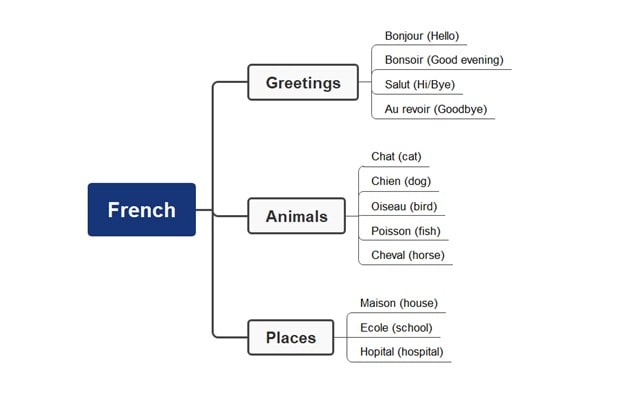
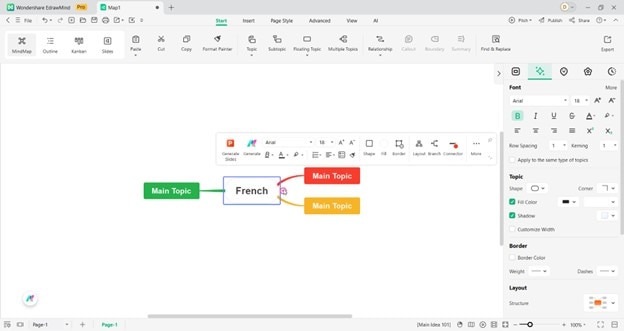
Step 1: First, create a central node.
It can refer to the name of the language you’re learning. In this example, “French” will be used.
 Try the app & get 500 free AI tokens


Step 2: Then, divide the main branches into the common groups of words.
It can be “Greeting,” “Animals,” “Places,” or more. You can even expand this for specific groups of words like adjectives, pronouns, etc.
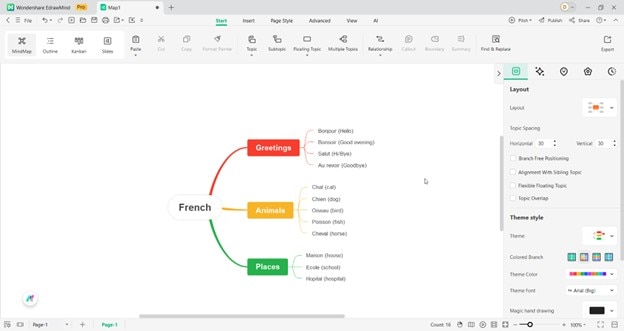
The goal here is to continue expanding the mind map with more subtopics for related words as you go.
Step 3: In the meantime, you can design your mind map to make it your own.

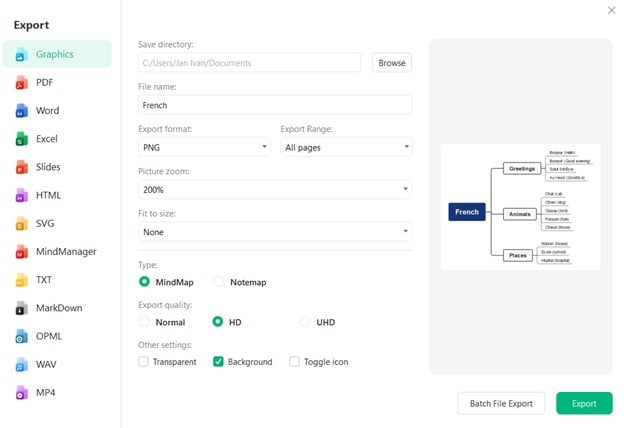
Step 4: If you like, you can export your mind map and share it with your friends as a PPT, JPG, PDF, or more.
EdrawMind isn’t just about mind mapping. It also hosts other features that you can use to assist you in different ways. Specifically, here are these AI features:
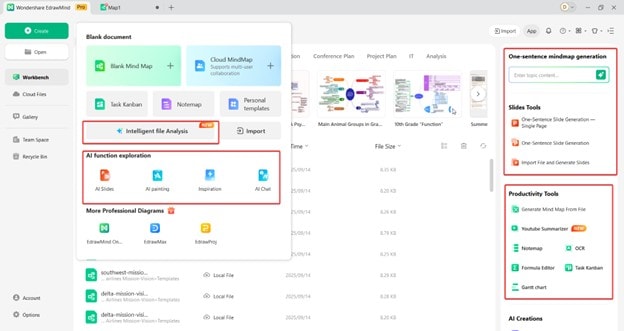
- AI Presentation. Use AI Presentation to transform vocabulary branches into review slides. Each slide shows the word, its definition, and an example sentence. You can even create themed quizzes for practice.
- File to Slide. Convert vocabulary lists or class notes into slides with one click. This feature organizes words from textbooks or articles without missing key terms.
- Pic to Slide. Upload images of places or objects, and Pic to Slide will label them with words. Linking terms like barista to a coffee shop helps build stronger memories through visuals.
- AI Mapping. Input a theme, such as Travel Vocabulary, and AI Mapping creates a mind map. It organizes words into clusters like transport or dining, including synonyms and examples.
- Concept Map Maker. Create diagrams showing how words connect. For example, link eat to food, kitchen, and restaurant. This helps you see how vocabulary fits into real sentences.
- Text to Mindmap Maker. Paste text from blogs, books, or articles. The tool pulls key vocabulary into categories like theme or part of speech, turning reading into an active learning process.
Conclusion
Mind maps provide practical and reliable ways to put your ideas in a more detailed map, from which you can extract sub-ideas and finally achieve your goal.
When learning a new language, you may feel confused about how to expand your vocabulary. Follow the above-described steps to create a mind map that will benefit you greatly. You can also explore EdrawMind’s other AI features to help you.
Here are some frequently asked questions related to improving vocabulary:
FAQs
-
1. What are the four types of vocabulary?
Vocabulary is generally divided into four: Listening vocabulary includes the words you recognize when you hear them. Speaking vocabulary covers the words you can use in conversation. Reading vocabulary refers to the words you understand in written form.
Writing vocabulary is often the smallest, since it requires precise recall when expressing ideas.
-
2. How do you fix a lack of vocabulary?
Read a variety of materials such as books, newspapers, and articles. Note down new words along with their meanings and example sentences. Practice using them in both conversations and writing exercises. Flashcards and vocabulary apps with spaced repetition strengthen memory.
Mind mapping is also useful. It groups words by themes or concepts, helping you create stronger visual connections between them.
-
3. What is the best age to learn vocabulary?
Children between two and seven learn words rapidly because their brains form connections quickly. Teenagers and young adults also acquire vocabulary fast due to ongoing cognitive development and school exposure.
Adults can still expand their vocabulary effectively, though progress depends on consistency. Motivation and regular practice matter more than age, and improvement is possible at every stage of life.
 EdrawMind
AppsEdrawMind Online
EdrawMind
AppsEdrawMind Online