

Choosing a career is one of the most important decisions in life. It is not only about income but also about passion, skills, and growth. With the right process, you can find a path that fits your goals.
Mind maps make career planning easier. They organize interests, skills, and opportunities into clear layouts. This helps you see strengths, explore options, and make smarter decisions. Instead of random choices, you follow a plan.
Wondershare EdrawMind supports career planning with AI tools. This article will explore how to choose a career using habits, frameworks, and ready-made templates.
In this article
What Does It Mean To Choose a Career?
Choosing a career means aligning your work with personal values, strengths, and opportunities. It is more than picking a job. It is about finding a long-term direction where you can grow and contribute.
A strong career path balances interest, skills, and real-world demand. People who choose carefully feel more motivated and fulfilled. They also adapt better as industries evolve and new opportunities appear.
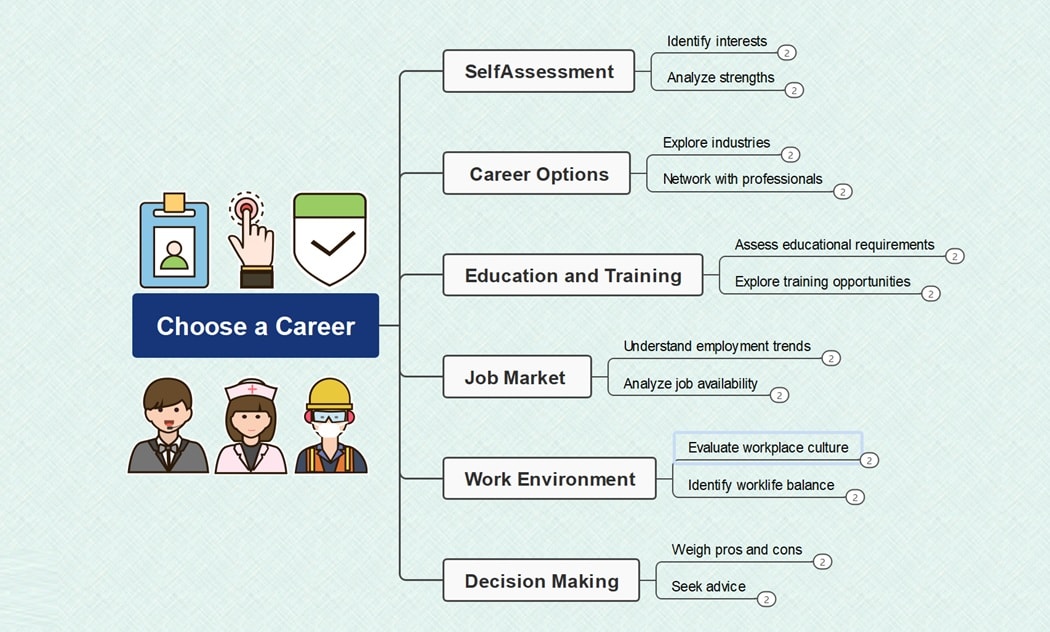
Here’s a career planning mind map made using Wondershare EdrawMind:
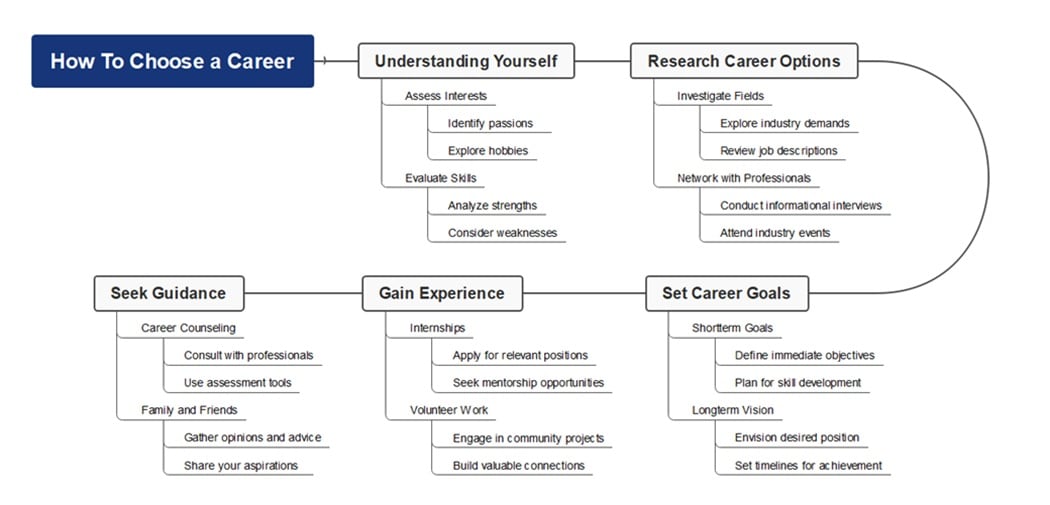


This map shows career choice as a process, not a single decision. It highlights steps like self-reflection, skill growth, and exploring industries. These make career planning more organized and less overwhelming.
It stresses flexibility and lifelong growth. Careers may shift, but with planning, you can adjust. This mindset keeps you prepared for change and open to new paths.
The diagram explains real-life value. People with clear plans manage choices better, prepare for risks, and find fulfilling opportunities. Career planning is practical, not only theoretical.
How Career Choices Shape Your Future
Career choices guide more than work. They influence lifestyle, opportunities, and personal growth. With clear direction, you develop skills, confidence, and habits that support long-term success.
Unclear or rushed choices often lead to dissatisfaction and missed chances. Taking time to plan builds resilience and focus. Strong career habits create clarity. It helps you move forward with confidence and meaningful progress.
10 Essential Tips To Choose the Right Career
Finding the right career takes patience and planning. Clear choices guide your growth and open new opportunities. These ten tips will help you select a career:

-
Read Career Guides and Resources
Books and articles on industries and professions expand your knowledge. They give insights into job demands, required skills, and growth trends. Regular reading builds awareness and helps narrow down your best options.
-
Limit Unproductive Online Activity
Scrolling can waste valuable time. Replace it with researching industries, attending webinars, or checking professional platforms. This small change gives you useful insights and connections that guide your career decision-making process.
-
Take Care of Your Health
Career decisions need focus and energy. Exercise, rest, and balanced meals improve concentration and clarity. A strong body supports a sharp mind.
-
Keep a Daily Career Journal
Writing helps organize thoughts and track ideas. Record what interests you, what skills you enjoy using, and what careers catch your attention. Over time, this journal reveals patterns that guide your career direction.
-
Train Your Decision-Making Skills
Puzzles, strategy games, and critical thinking tasks sharpen reasoning. These skills prepare you to weigh options and evaluate risks. Strong decision-making habits improve the way you choose a career path.
-
Use Mind Mapping
Mind maps display interests, skills, and opportunities in one place. They show connections you might miss with simple notes. Mapping career options with EdrawMind helps you compare, prioritize, and build a clearer plan.
-
Connect With Experienced People
Surround yourself with mentors, professionals, or peers who challenge and guide you. Conversations with them show real-world insights.
-
Step out of Routine
Exploring new activities, internships, or side projects introduces you to unfamiliar fields. Breaking routines helps you analyze your interests and build new skills.
-
Challenge Yourself at Work or School
Take on projects that push your abilities. Volunteering for tasks outside your comfort zone helps you discover which roles truly excite you and which ones don't. These challenges prepare you for future responsibilities.
-
Get Enough Rest
Clear thinking depends on sleep. Rested minds process information better and make stronger decisions. Prioritizing quality sleep helps you stay alert and focused.
Practical Steps To Find the Right Career
Improving career choices needs reflection and consistent effort. Follow these steps:
- Define your interests: List subjects, activities, or roles that excite you. Knowing what captures your energy and curiosity creates a foundation for career planning. This makes future decisions more meaningful and aligned with your passion.
- Organize skills and strengths: Know your strongest skills. Map them with tools like EdrawMind. Mind maps highlight your capabilities. It can help you match with careers that offer stability, growth, and satisfaction.
- Explore opportunities: Research industries, roles, and growth potential in detail. Learn about job requirements, work culture, and career paths. This knowledge prepares you to align personal goals with opportunities that suit your long-term development.
- Test options: Try internships, projects, or volunteering to gain real experience. Hands-on exposure builds clarity on workplace expectations and daily routines. It ensures you select a career that feels practical and rewarding.
- Review progress: Reflect on every experience and update your career plan. Ask what worked and what felt unsuitable. Regular review ensures growth and prevents missteps. It strengthens confidence in your long-term career direction.
Why Use EdrawMind When Choosing a Career?
Choosing a career needs clarity and structured thinking. Many people struggle to connect their skills with opportunities. EdrawMind simplifies this process by organizing your ideas into visual maps that show practical direction.
With mind mapping, you can compare interests and match strengths to career paths. EdrawMind helps transform overwhelming options into structured choices. The tool guides you toward a confident and informed decision.
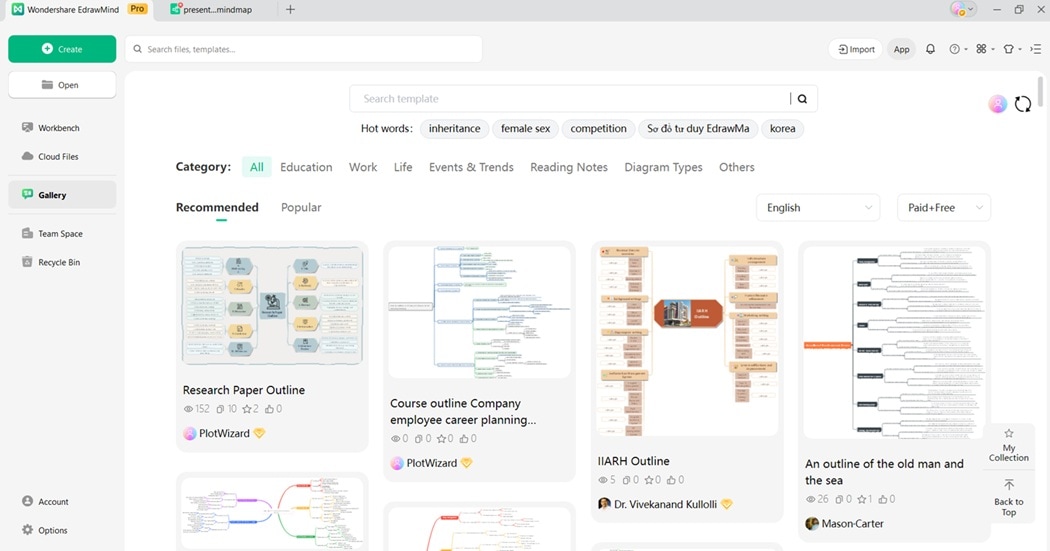
Below are EdrawMind’s key features:
- AI Career Path Maker
Type your career goal, and EdrawMind creates a structured outline. This gives you a base to expand and refine into a clear step-by-step career plan.
- File to Slide Career Map
Upload resumes, assessments, or notes. EdrawMind organizes them into a career map. It connects skills, strengths, and opportunities for easier decision-making.
- Pic to Slide Career Map
Take photos of whiteboards, coaching notes, or brainstorming sessions. EdrawMind scans them and builds a clean map. This saves time and captures valuable career insights in a structured way.
- AI Mapping
Type keywords like “interests,” “skills,” or “goals.” EdrawMind builds a complete career map. You can edit and adjust it to fit your ambitions and opportunities.
- Concept Map Maker
Create clear, connected webs of strengths, values, and job options. EdrawMind’s Concept Map Maker highlights relationships between skills and careers for smarter planning.
- Text to Mind Map Maker
Paste raw text from reflections or research. EdrawMind transforms it into an organized career map. This makes complex choices easier to compare and understand.
How To Plan a Business Negotiation With EdrawMind
EdrawMind’s AI Mind Map Generation helps you organize career ideas. It simplifies decision-making and creates diagrams that connect skills, goals, and opportunities. Follow the steps to begin:
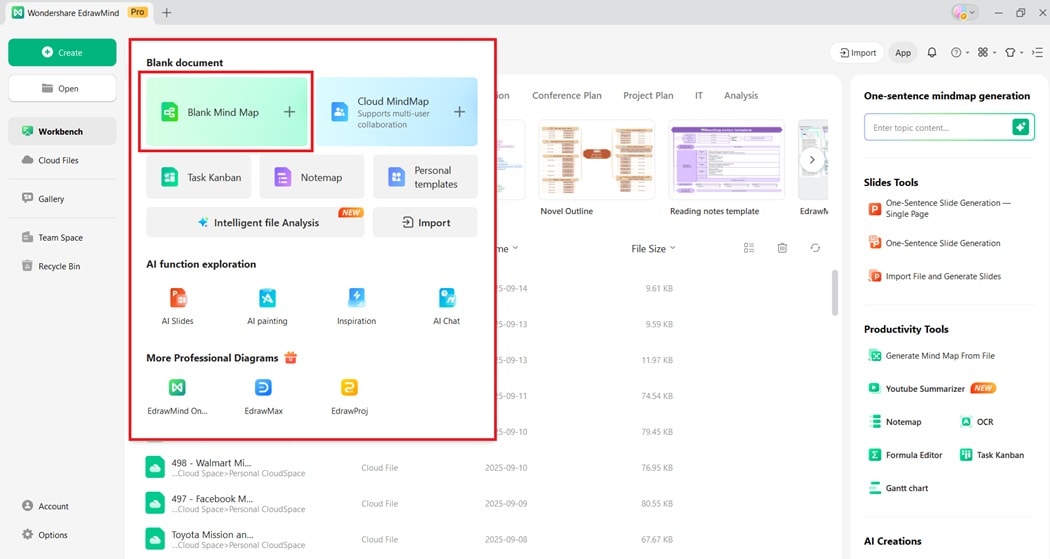
Step 1:
Download and install EdrawMind. Log in with your Wondershare account or register a new one. Once inside, create a new mind map project to begin.
 Try the app & get 500 free AI tokens


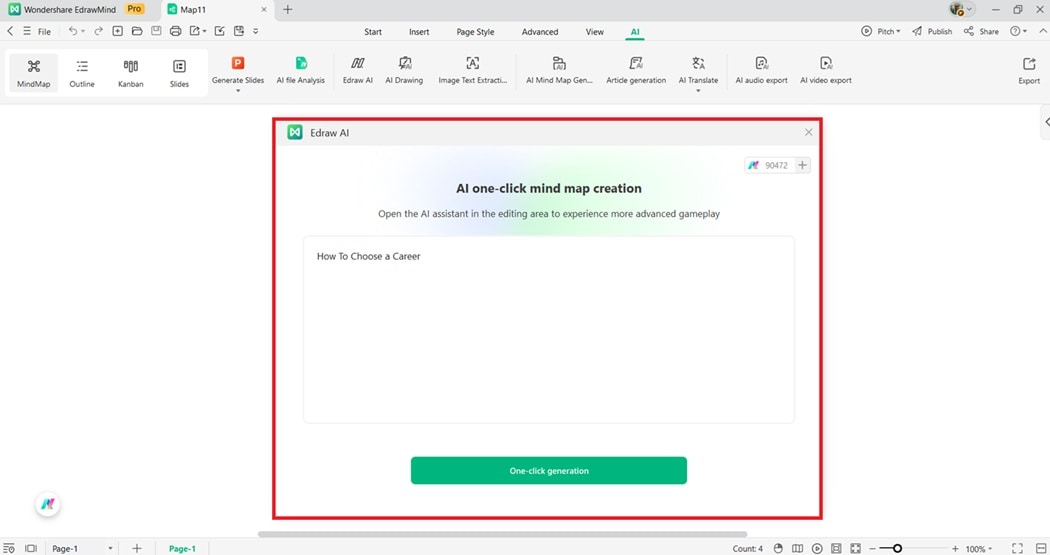
Step 2:
Select the AI Mind Map Generation tool from the top menu. Type your career goal, interest, or skill area. Wait for EdrawMind to build a central topic with connected branches.
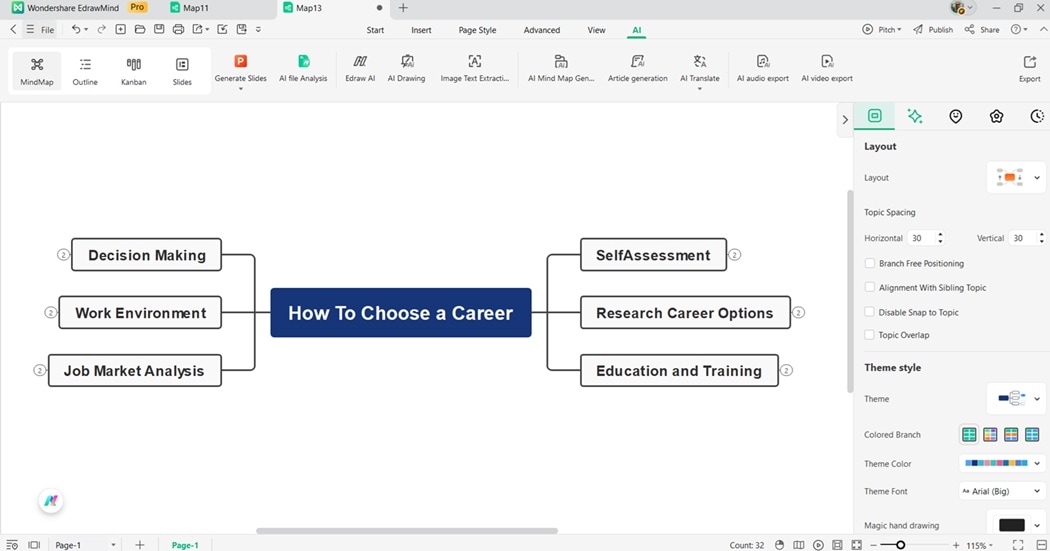
Step 3:
Review the generated map and start editing. Add your strengths, values, and possible career options as subtopics. Rearrange them to reflect your personal path.
Step 4:
Grow your map with extra layers such as industry research, required skills, and growth opportunities.
Step 5:
Customize your mind map. Change the layout, theme, and add icons, clipart, or images. Make the important details stand out for quick reference.
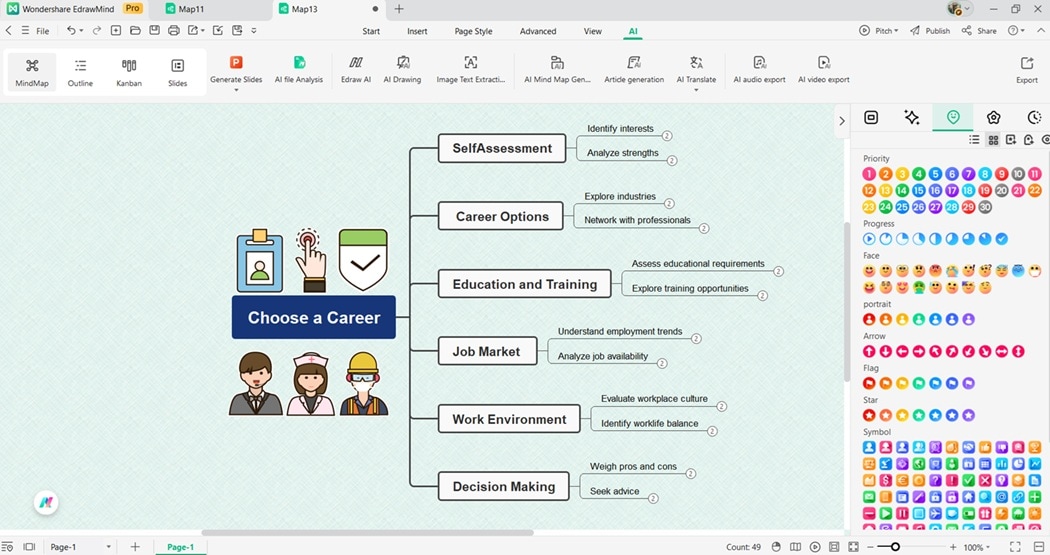
Step 6:
Finalize your map and review the content. Export it as a PDF, Word file, or image so you can revisit it. This makes career planning a guided, ongoing process.
Free Mind Map Templates for Career Planning
Free mind map templates make career planning easier and more structured. These ready-made designs are available in EdrawMind’s Gallery:
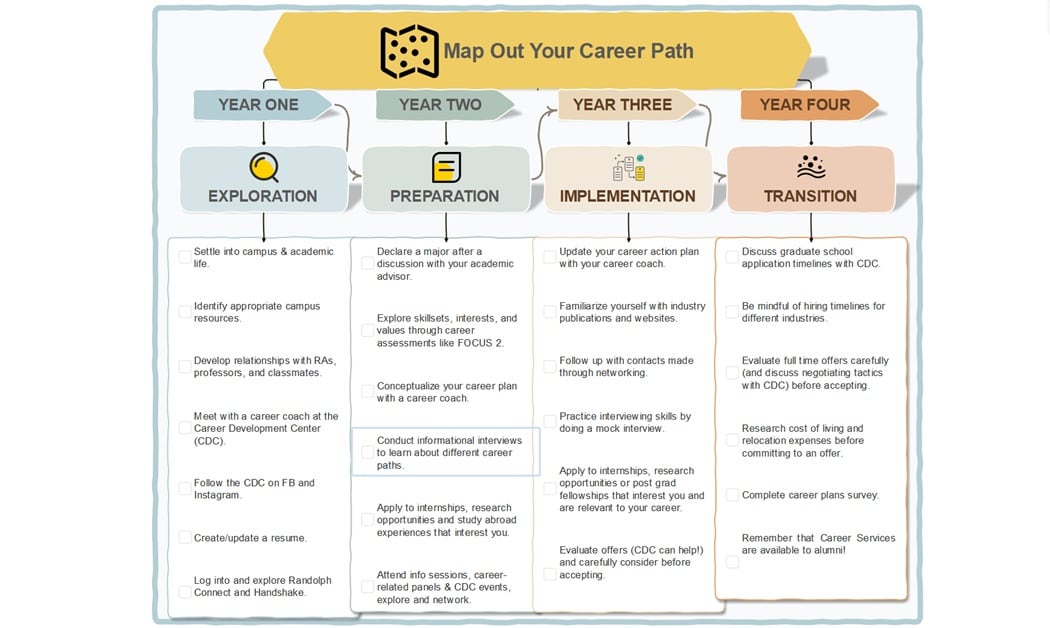
Map Out Your Career Path
This template goes through four stages: exploration, preparation, implementation, and transition. It helps you plan year by year. It starts with settling into college and choosing a major. It moves to securing internships, networking, and preparing for opportunities after graduation.
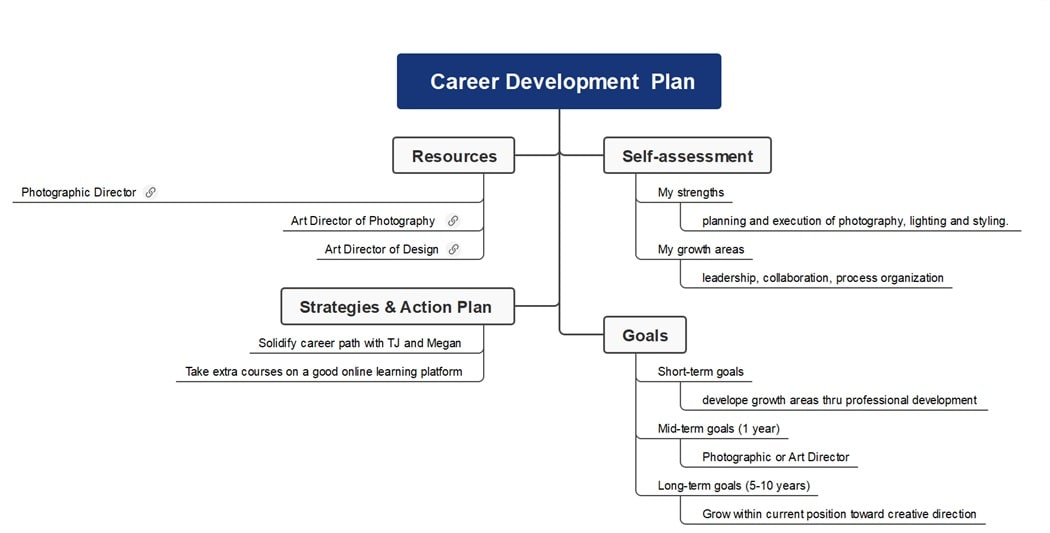
Career Development Plan
This editable template lets you assess strengths, set short, mid, and long-term goals. You can build a strategy with clear actions. It also lists resources to guide growth, making career direction more structured and achievable.
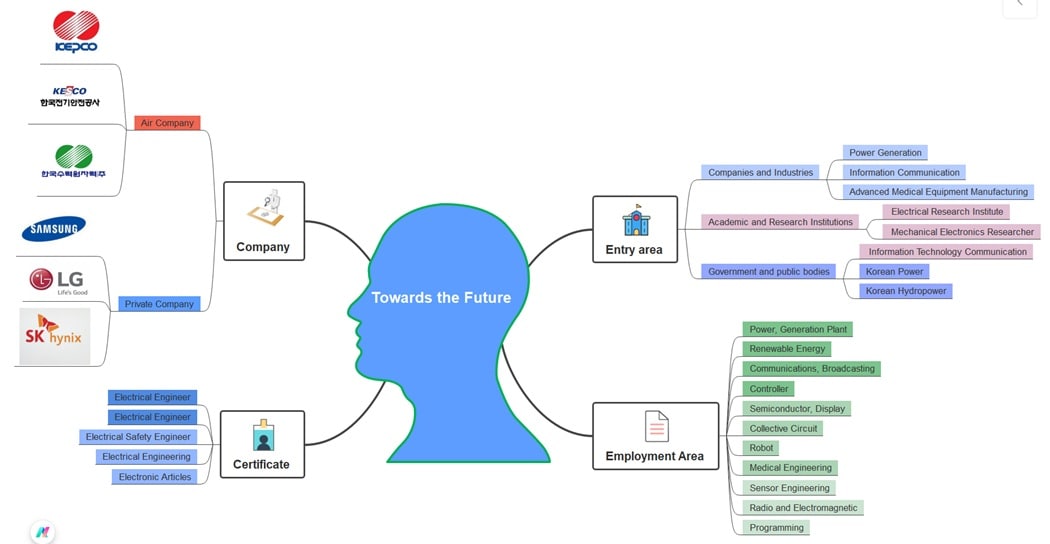
Choosing a Career Plan Template
This editable template outlines possible paths for building a future career. It highlights industries, research institutions, government bodies, and employment areas. It also includes certificates and company options. The template helps organize opportunities into a clear and actionable plan.
Strengthen Your Career Planning
Career planning takes steady effort. These ten tips help you set realistic goals that match your skills, values, and long-term growth.
- Read about industries. Explore job outlooks, company reports, and market trends. This prepares you to choose a career path with stability and growth potential.
- Take notes. Write down your strengths, skills, and values. Organizing these ideas makes career choices clearer.
- Practice focus. Dedicate distraction-free time for reflection.
- Use active recall. Reflect on questions about your goals instead of rereading notes. This deepens your understanding of your career direction.
- Ask mentors. Seek guidance from peers, advisors, or experienced professionals. Their insights help you avoid mistakes in your career journey.
- Teach others. Share career planning strategies with friends or peers. Explaining ideas sharpens your own thinking and builds confidence in applying lessons.
- Accept challenges. Step into new tasks and roles that push you outside your comfort zone. Growth comes from struggle, and challenges prepare you for bigger opportunities.
- Limit distractions. Remove clutter, silence notifications, and create a focused environment. This ensures your planning sessions remain productive and meaningful.
- Track progress. Record completed goals, lessons, and experiences. Reflection shows how far you’ve come and motivates you to keep moving forward.
- Stay consistent. Small daily actions create long-term results. Consistency builds momentum and makes career planning a lifelong habit.
With EdrawMind, you can organize career goals into structured visuals. Its AI-powered tools help you create clear, practical plans that adapt to growth. EdrawMind makes career planning easier and more effective.
Conclusion
Choosing a career needs reflection, structure, and effort. Mind maps simplify the process by showing skills, interests, and opportunities together. They make connections clear and decisions easier.
EdrawMind enhances this process with tools that organize complex choices into clear career maps. With structured layouts, you gain clarity and confidence in planning.
Use EdrawMind to guide career decisions, explore opportunities, and plan future goals. It gives you a structured way to grow, adapt, and succeed.
FAQ
-
Can passion alone guide a career choice?
Passion inspires motivation, but it needs balance. Without considering skills, job market demand, and growth potential, passion may not sustain a stable path. Combine enthusiasm with practical factors to ensure a stronger career foundation. -
How does networking help in career planning?
Networking introduces you to mentors, peers, and industry insights. These connections provide advice and open doors to opportunities. They help you test your ideas against real experiences. Strong networks make career planning more effective. -
Why is flexibility important in career planning?
Careers rarely follow a straight line. Industries change, and new roles appear. Flexibility allows you to adapt, learn new skills, and pivot when needed. This ensures stability even during uncertain times.
 EdrawMind
AppsEdrawMind Online
EdrawMind
AppsEdrawMind Online