About this Bank Reconciliation Difference Tracking Template
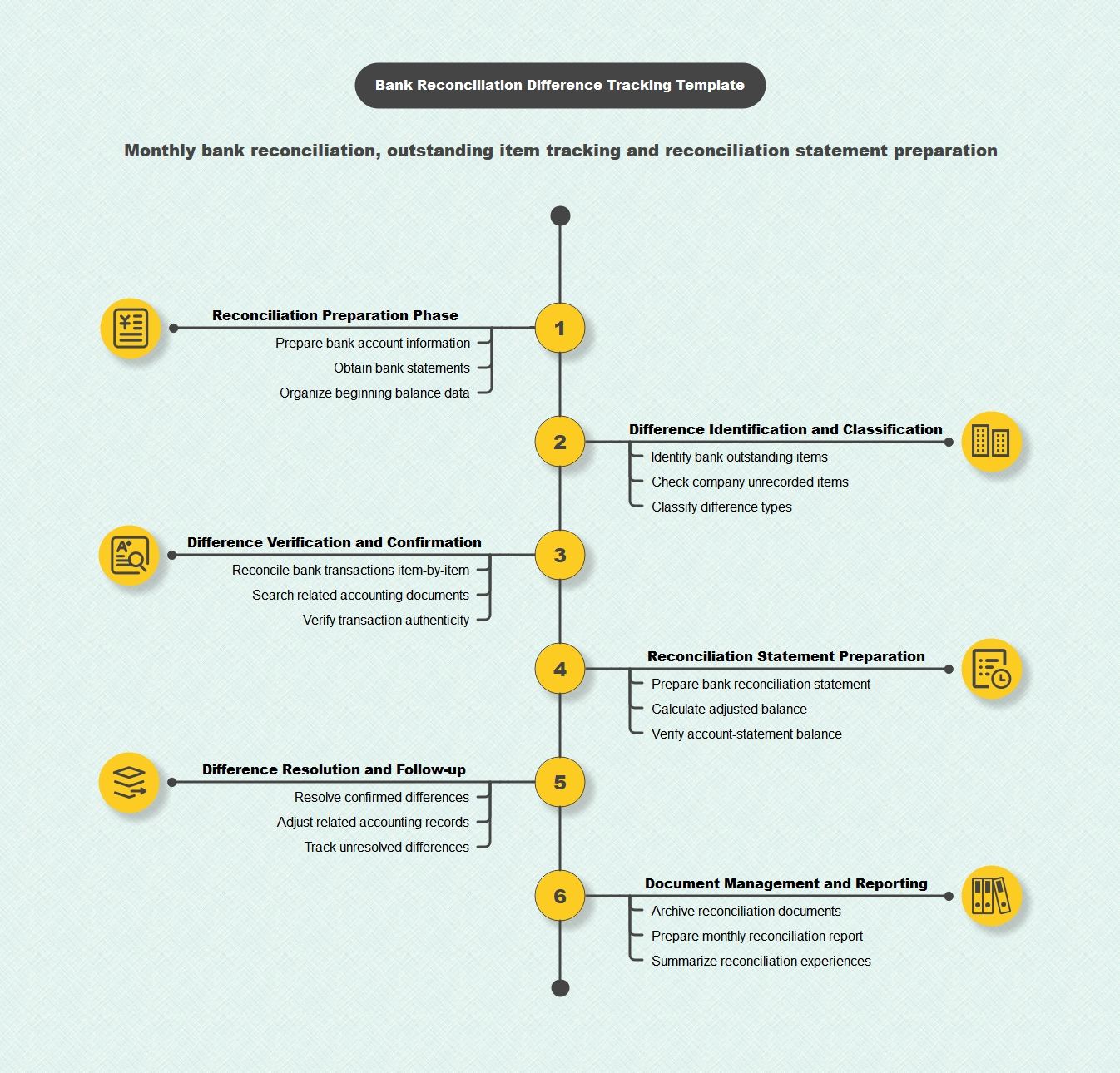
This template breaks the reconciliation process into clear finance-control stages instead of treating it as one generic checklist. It shows how teams move from preparation through difference identification, verification, statement preparation, issue resolution, and document reporting.
Reconciliation Preparation Phase
This branch covers the setup work needed before comparison starts. It includes preparing bank account information, obtaining bank statements, and organizing beginning balance data, which gives the reconciliation process a reliable starting point and reduces avoidable mismatches later.
Difference Identification and Classification
This section focuses on finding and sorting mismatches. It includes identifying outstanding bank items, checking unrecorded company items, and classifying difference types, which helps finance teams separate timing issues from posting omissions or other reconciliation problems.
Difference Verification and Confirmation
This branch moves from discovery to validation. The listed steps include reconciling bank transactions item by item, searching related accounting documents, and verifying transaction authenticity, which supports accurate confirmation before any adjustment or write-off decision is made.
Reconciliation Statement Preparation
This section covers the formal output stage. It shows the work of preparing the bank reconciliation statement, calculating the adjusted balance, and verifying the balance between books and statements, which helps turn the reconciliation review into a reportable result.
Difference Resolution and Follow-up
This branch focuses on what happens after confirmation. It includes resolving confirmed differences, adjusting related accounting records, and tracking unresolved items, which makes the template useful not only for review but also for closing the loop on open reconciliation issues.
Document Management and Reporting
This final section captures the recordkeeping side of the process. It includes archiving reconciliation documents, preparing the monthly reconciliation report, and summarizing reconciliation experience, which helps preserve audit trails and improve future finance controls.
FAQs about this Template
-
What is bank reconciliation?
Bank reconciliation is the process of comparing internal cash records with bank records to identify differences and confirm that balances are accurate. It is a basic but important control because small mismatches can reveal timing issues, posting errors, or more serious financial problems.
-
How do you track reconciliation differences clearly?
Teams usually track reconciliation differences by logging unmatched items clearly, checking the source of each variance, and following unresolved differences through to correction or explanation. A strong process makes it easier to see which gaps are routine and which ones signal a control issue.
-
Why does bank reconciliation matter?
Bank reconciliation matters because cash accuracy affects reporting, decision-making, and trust in financial records. Without regular reconciliation, errors can remain hidden long enough to distort reporting or create avoidable operational confusion.
-
What’s the difference between book balance and bank balance?
Book balance reflects what the organization’s internal records say the cash position is, while bank balance reflects what the bank reports at that moment. Differences between the two are common for timing reasons, but they still need to be understood and resolved properly.