



A politician. A visionary. A nation-builder. Lee Kuan Yew was born in 1923. He grew up during challenging times, including World War II and the Japanese Occupation. His love for learning and justice pushed him into politics, where he co-founded the People’s Action Party (PAP).
Lee Kuan served as Singapore’s first Prime Minister from 1959 to 1990, and turned a struggling colony into a prosperous, respected nation. Even after retiring, his ideas and guidance continued to influence the country until 2015.
This timeline explores the key milestones in Lee Kuan Yew’s life and shows how he built today’s Singapore.
Lee Kuan Yew Life Timeline
Vision. Struggle. Nation-building. Lee Kuan Yew’s journey was full of defining moments. From his student years to leading a newly independent Singapore, his choices shaped a nation’s destiny. This timeline takes you through the milestones that made him one of the most respected leaders of the 20th century.
Let’s get started!
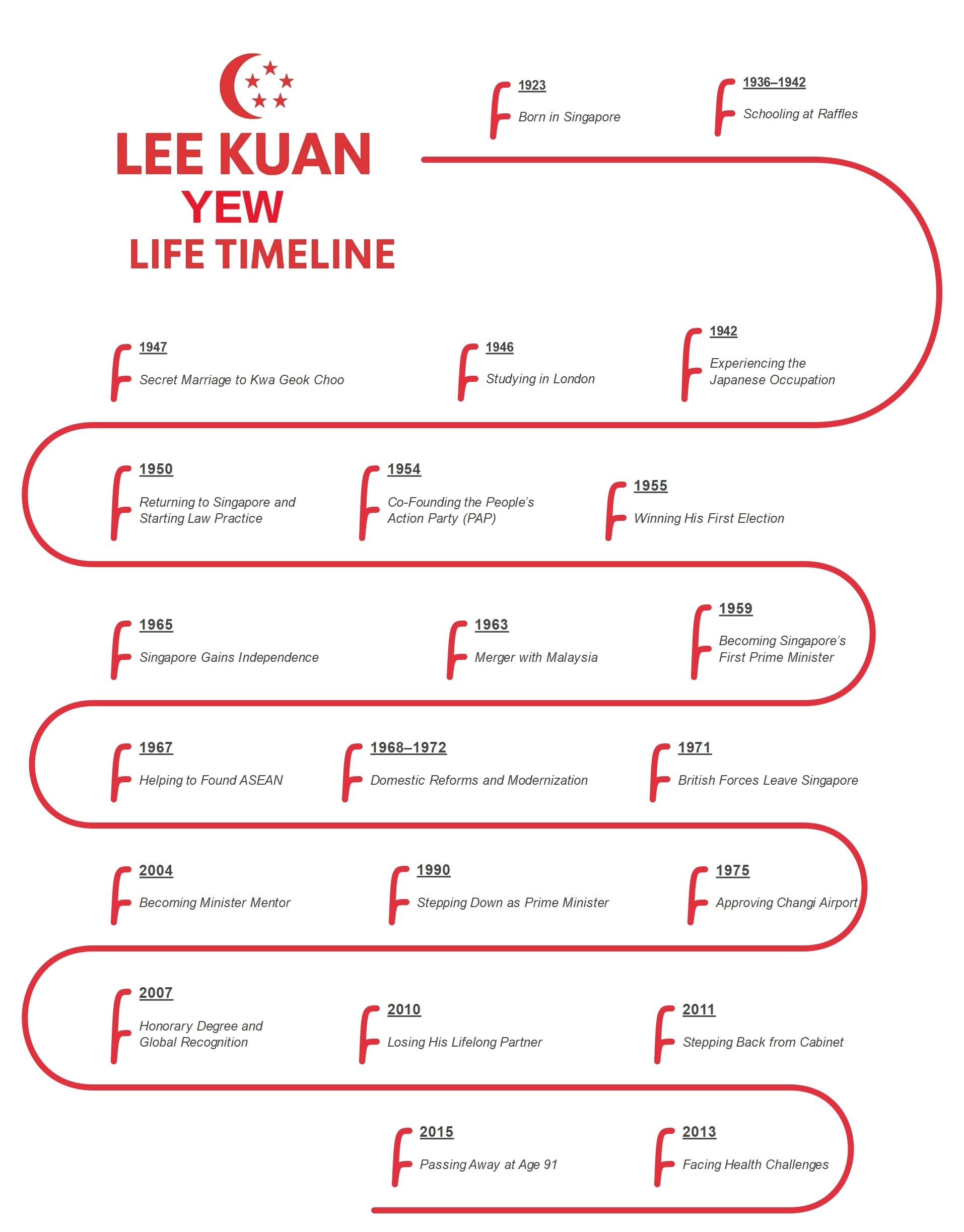


1923: Birth in Singapore
Lee Kuan Yew was born on September 16, 1923, in Singapore. His family was relatively well-off, so life was comfortable. But he remained hardworking. He stayed curious and worked hard, even as a kid. That mix of comfort and effort shaped him early. It prepared him for the leadership role he would play later.
1936-1942: Education at Raffles
Lee studied at Raffles Institution and then Raffles College. He was a brilliant student. Law and politics caught his eye. Those years taught him discipline and sharpened his focus. By the time he was done, he had a strong base. It was the kind of start that built leaders, not followers.
1942: Japanese Occupation
In 1942, the Japanese took over Singapore. Life changed fast and not in a good way. To get by, Lee worked at Hobudu, a Japanese propaganda office. It was tough and scary. But those dark years made him tougher. He learned what real hardship felt like. And that resilience stayed with him forever.
1946: Studies in London
After the war, Lee went to Britain. He first joined the London School of Economics, then Cambridge. Life in London was busy, full of debates and new ideas. He soaked it all in. Those years opened his mind and gave him confidence. They also gave him the tools he would later use to lead Singapore.
1947: Marriage to Kwa Geok Choo
While in Cambridge, Lee secretly married Kwa Geok Choo. She was his partner in everything. Smart, supportive, and ambitious, she matched his drive. Their bond was built on trust and respect. Honestly, without her, his story might have been very different. She played a big role in shaping his path.
1950: Return to Singapore
Lee came back home in 1950 after finishing his studies. He started working as a lawyer but soon entered politics. He was not the one to turn away from injustice. He wanted change. He spoke up against colonial rule and fought for the people. His sharp skills and bold vision made him stand out quickly as a leader.
1954: Founding of the PAP
In 1954, Lee co-founded the People’s Action Party. The goal was simple. Fight for independence and push for reform. His speeches inspired people. The party worked hard to win trust. Slowly, they became a force. You could feel momentum building. That year really kicked off the political journey that would shape Singapore forever.
1955: First Election Victory
Lee contested the 1955 elections and won his very first seat. He was not an ordinary politician. The man had a sharp tongue and fearless style. People noticed. As an opposition MP, he stood firm and spoke with clarity. This victory was small compared to what came later, but it was the first big step forward.
1959: Becoming Prime Minister
At just 35, Lee became Singapore’s first Prime Minister in 1959. It was a huge deal. The country had limited self-rule and plenty of problems. Still, he jumped right in. He pushed for unity, jobs, and stability. Well, this was the moment Singapore’s real transformation began, with Lee leading the way, full of energy and focus.
1963: Merger with Malaysia
Lee strongly believed Singapore would do better as part of Malaysia. So in 1963, the merger happened. At first, it looked like a win. But tensions soon grew. It wasn’t easy and sometimes very frustrating. Still, the experience taught him a lot. He learned lessons about identity, politics, and why Singapore might need to stand alone.
1965: Singapore’s Independence
In 1965, Singapore was forced out of Malaysia. Overnight, it became an independent republic. The future looked scary. No natural resources, no army, no certainty. But Lee didn’t back down. He focused on jobs, housing, and stability. It marked the start of Singapore's bold journey. Step by step, he began building a modern nation.
1967: Founding ASEAN
Two years later, Lee joined hands with nearby countries to create ASEAN. The idea was smart. Work together on trade, security, and peace. It made Singapore part of something bigger. For Lee, it wasn’t just politics. Well, it was survival. Cooperation gave the young nation strength and showed the world that Singapore was here to stay.
1968-1972: Domestic Reforms
These years were all about change at home. Lee pushed for fewer strikes, brought in foreign investors, and built housing fast. Family planning also became a priority. Roads, factories, and services grew quickly. Life was improving, and people saw significant positive changes. Life started improving. People could see real progress. This period gave Singapore its first taste of growth and, honestly, a glimpse of what was possible.
1971: British Withdrawal
In 1971, the last British troops left Singapore. For Lee, it was a serious wake-up call. The country had to defend itself. He built up national service and a strong military. It wasn’t easy, but it worked. What could have been a crisis turned into a chance to prove Singapore could stand firmly on its own.
1975: Changi Airport Project
In 1975, Lee made a bold move. He approved the Changi Airport project. Although some doubted the idea, his foresight enabled him to see long-term potential. He believed Singapore could be a global hub for travel. The decision paid off big time. Today, Changi is one of the world’s best airports, a clear sign of Lee’s vision.
1990: Stepping Down as Prime Minister
After decades of leading, Lee stepped down in 1990. He handed power to Goh Chok Tong but stayed on as Senior Minister. Even without the top job, his influence was strong. He led quietly from behind the scenes. Well, the transition was smooth, and Singapore kept moving forward without losing stability or direction.
2004: Minister Mentor
In 2004, Lee’s eldest son, Lee Hsien Loong, became Prime Minister. Lee Kuan Yew took on a new role as Minister Mentor. It suited him perfectly. He advised, guided, and kept shaping policies. Even in his later years, he stayed sharp. His presence kept Singapore steady and gave younger leaders confidence to lead.
2007: Global Recognition
By 2007, Lee’s reputation stretched far beyond Singapore. He received an honorary Doctor of Law from the Australian National University and met leaders like John Howard. These honors showed his global standing. People valued his wisdom and experience. Lee wasn’t just respected at home; he carried Singapore’s name proudly on the world stage.
2010: Loss of Kwa Geok Choo
In 2010, Lee lost his wife, Kwa Geok Choo, after a long illness. It was heartbreaking. She had been his partner in everything, home and politics. Her passing left a void, but he carried on with his public duties. Even in grief, he showed strength and courage.
2011: Stepping Back from Cabinet
After the 2011 elections, Lee left cabinet duties. But he didn’t retire completely. He stayed on as a Member of Parliament. His presence alone spoke volumes. People still looked up to him as a mentor. Even without a big title, his advice shaped leaders and kept Singapore moving in the right direction.
2013: Health Challenges
In 2013, Lee’s health began to decline. Heart problems and other issues slowed him down. But he stayed alert and followed the country’s progress closely. He still offered thoughts when he could. His spirit never faded. Even in tough times, he showed the same dedication and care for Singapore’s future.
2015: Passing Away
In February 2015, Lee was hospitalized with pneumonia. On March 23, he passed away at 91. The nation mourned deeply. Crowds lined up for days to say goodbye. For Singaporeans, it felt like losing a father. His vision had shaped everything. His legacy of strength and leadership continues to inspire even today.
How to Make a Life Timeline for a Celebrity?
Lee Kuan Yew’s story is full of big moments and interesting twists. Laying it out in a timeline makes it much easier to follow. With EdrawMind, you can create a timeline that shows his early life, key achievements, and all the steps that made him a legendary leader.
 Try the app & get 500 free AI tokens


Here’s how you can create a Lee Kuan Yew family timeline with EdrawMind:
Step1 Sign in & Start a New File
- Download and install the EdrawMind desktop version.
- Or visit EdrawMind online in your browser.
- Open EdrawMind and log in with your Wondershare account, or use a social media login.
- On the home screen, click New and choose Local Mindmap to start fresh.
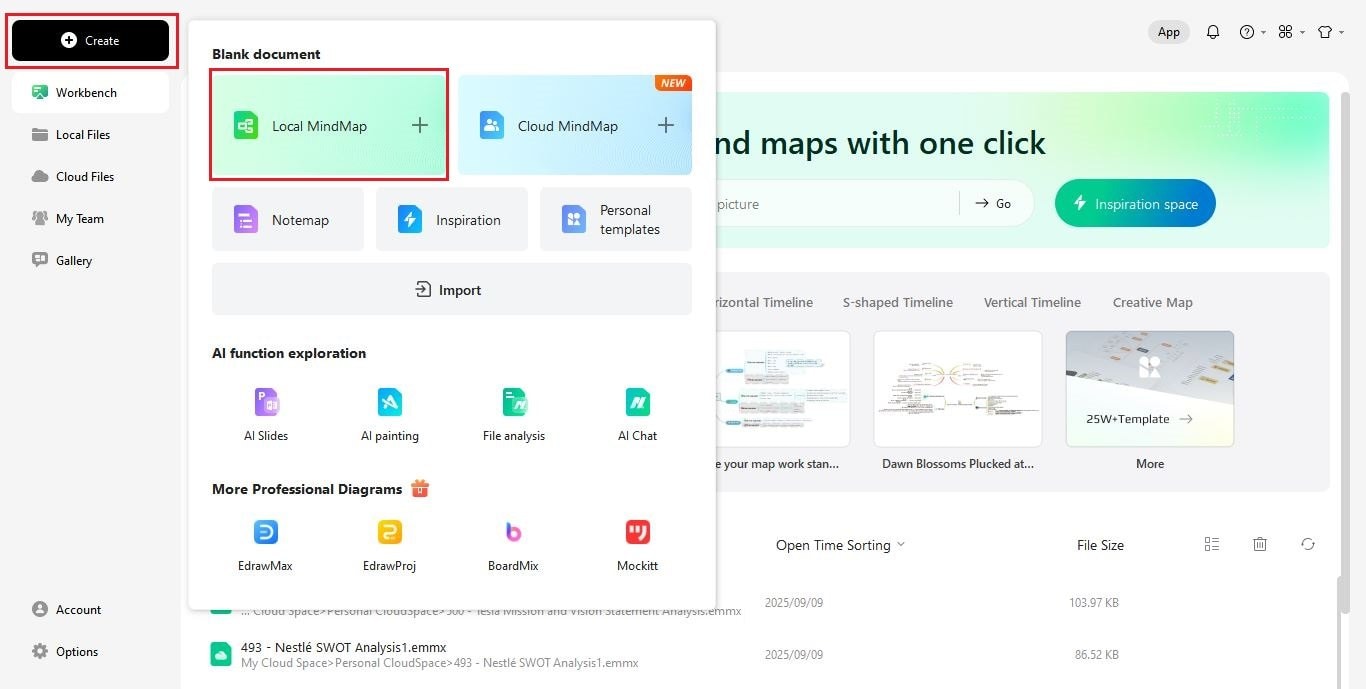
Step2 Change the Layout
- Click the Main Idea in your mind map.
- From the floating menu, select Layout.
- Choose Timeline (S-shape) to switch your project into a family timeline format.

Step3 Expand the Timeline
- Click the Main Idea and go to More from the floating menu. Now, select Topic from the drop-down menu to add a new entry.
- Similarly, select a Main Topic, go to More, and click Subtopic.
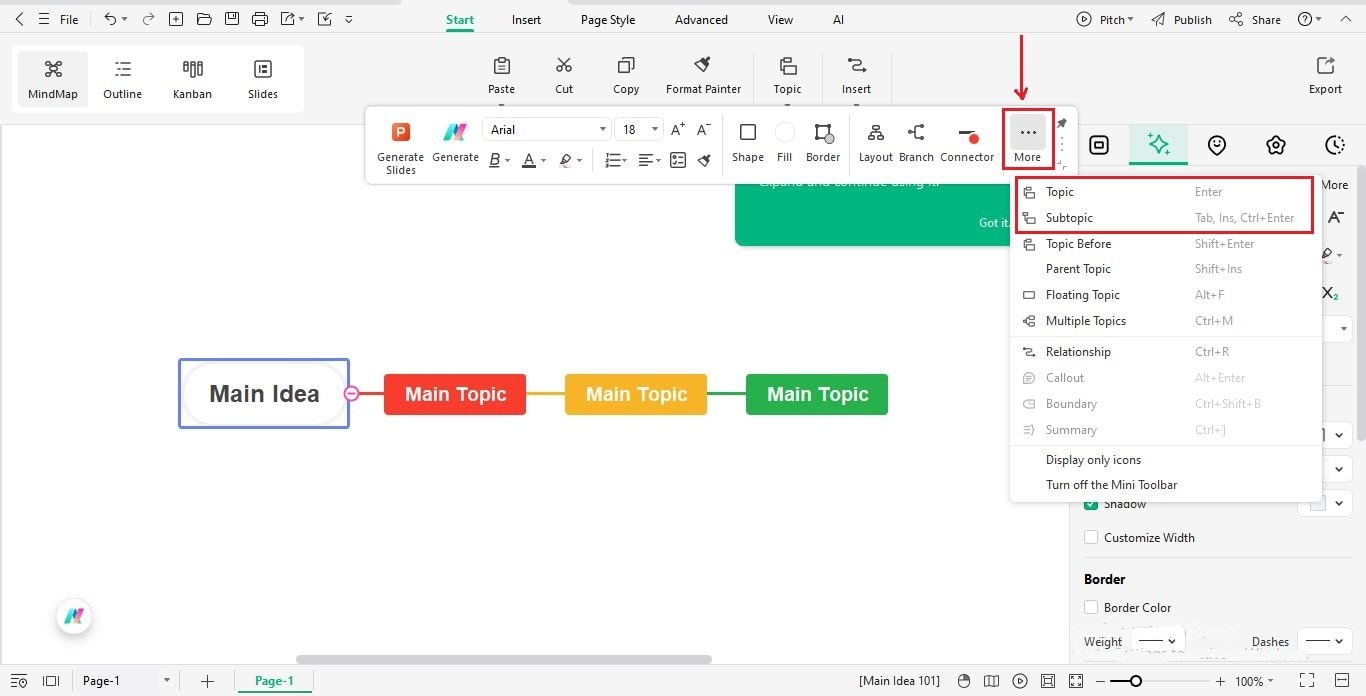
Step4 Add a Title
- Give your timeline a clear title.
- You can type it directly or use an image.
- We will use an image here. Click Insert > Picture and add a title banner.
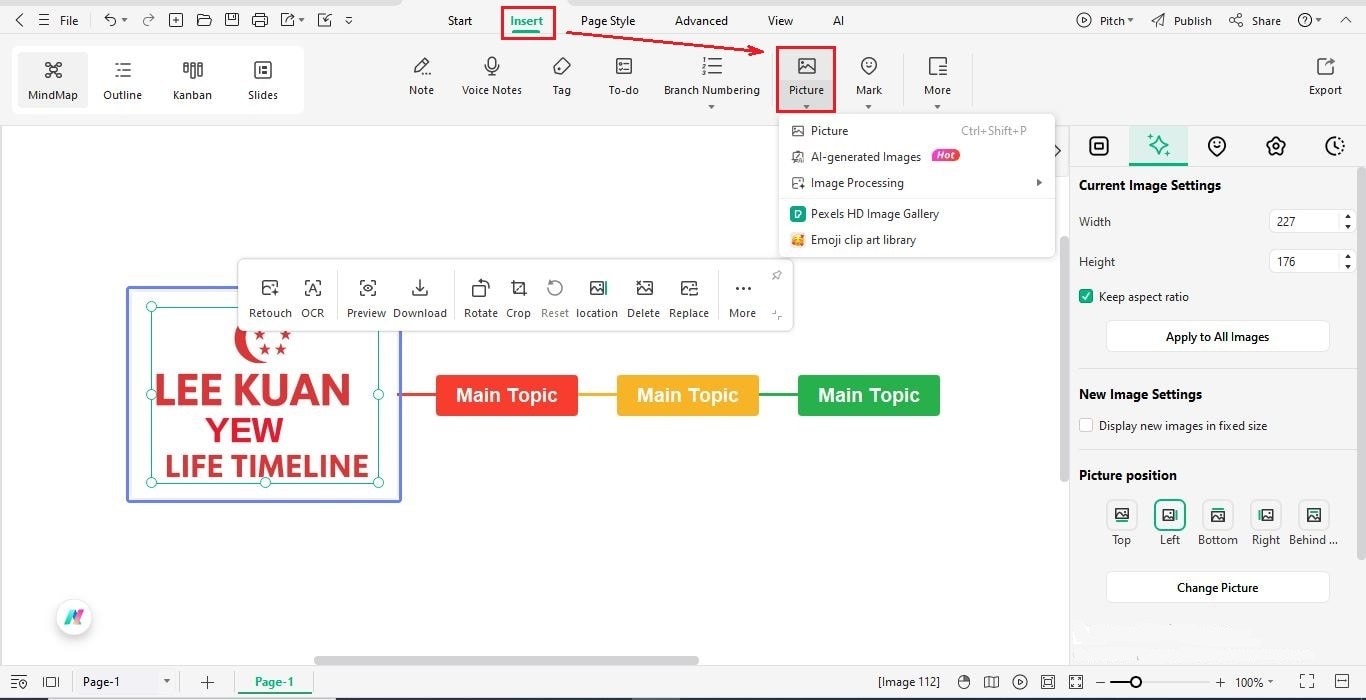
Step5 Customize Your Timeline
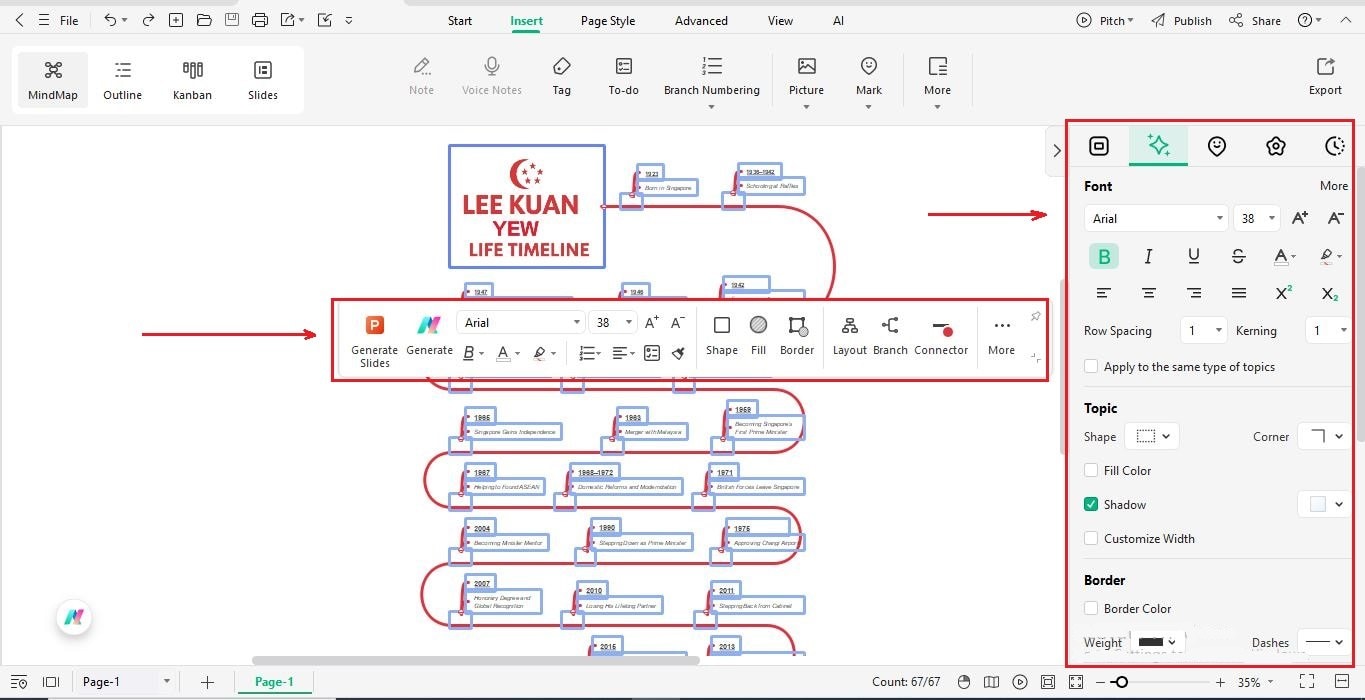
- Select any topic to change its color, shape, or style using the floating menu.
- Click inside a topic to type text for each family member or event.
- Use the right toolbar to adjust fonts and sizes.
Pro tip: Select multiple topics or the entire timeline to apply style changes at once.
Step6 Save, Export or Print
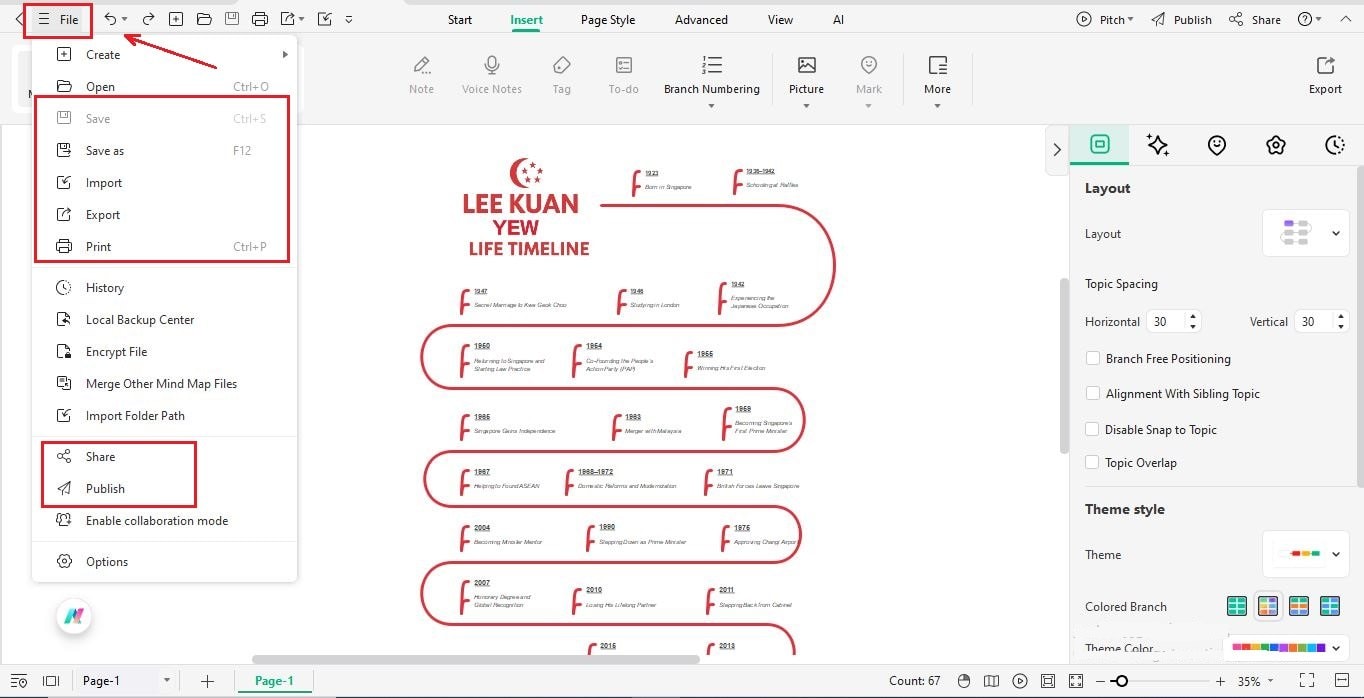
- Click the File button on the top left.
- Choose Save to store the file on your device.
- Or select Export to share your family timeline in PNG, JPG, PDF, Word, and more.
- Click Print if you want a hardcopy.
Final Thoughts
Lee Kuan Yew’s life was filled with vision, resilience, and transformation. His early struggles, education, and rise in politics showed determination to create a stronger, united Singapore. Every milestone in his timeline highlights how his leadership shaped the nation’s future and inspired countless people worldwide.
If you’d like to create a clear and engaging timeline like this, try EdrawMind. With its easy tools and templates, you can turn complex stories into simple visuals in minutes.
 EdrawMind
AppsEdrawMind Online
EdrawMind
AppsEdrawMind Online