About Weekly In-Depth Competitor Analysis Template
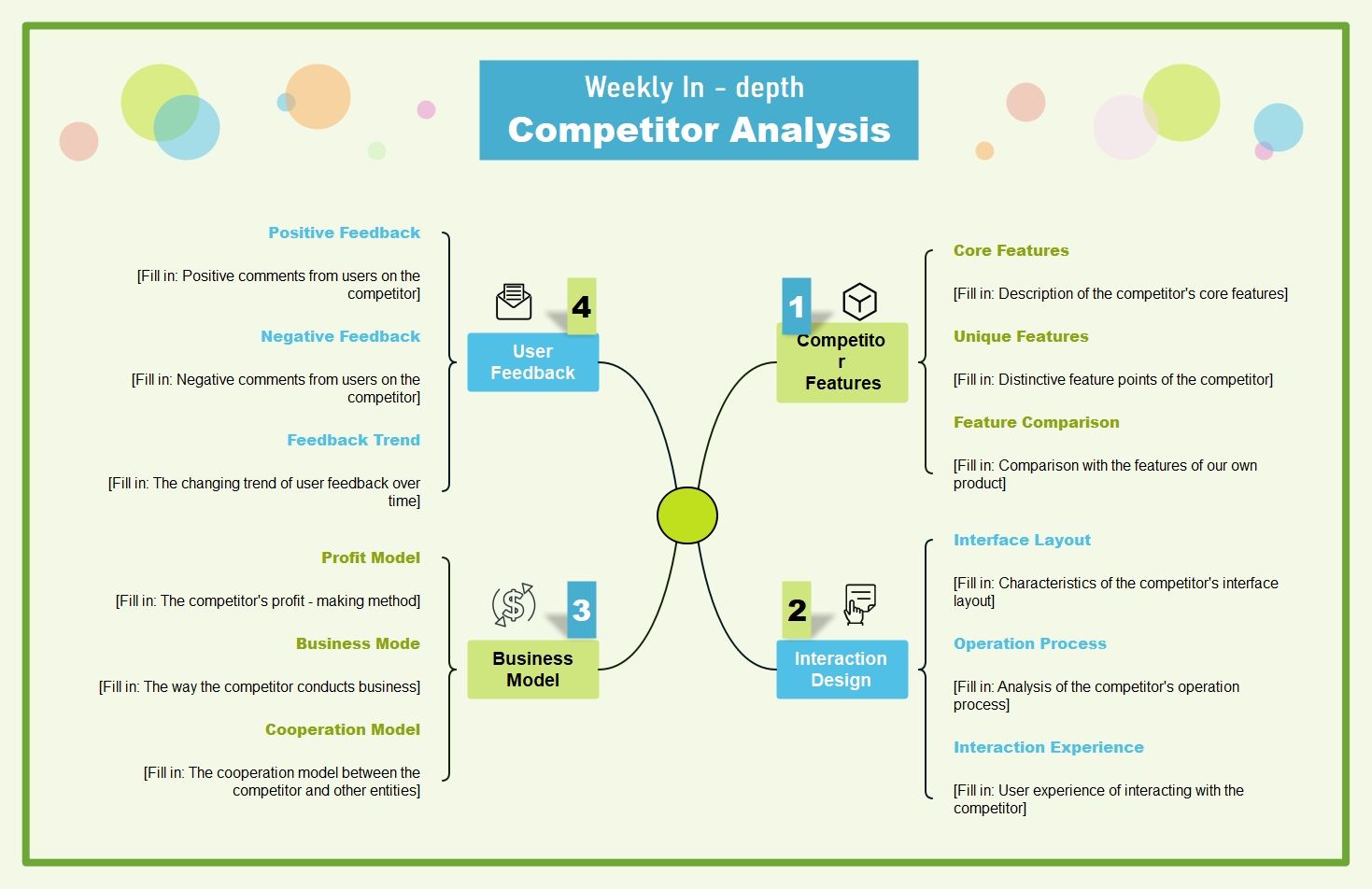
This template is designed to explain weekly in-depth competitor analysis through a clear branch structure rather than a vague general summary. It shows the main content areas directly inside the map, helping readers understand what the template includes and how each section contributes to the full topic.
Competitor Focus
This branch represents one of the main content areas shown in the template. It helps explain what information is included in this part of the image and why this section matters to the overall structure rather than functioning as a generic placeholder.
Market Signals
This branch represents one of the main content areas shown in the template. It helps explain what information is included in this part of the image and why this section matters to the overall structure rather than functioning as a generic placeholder.
Comparative Findings
This branch represents one of the main content areas shown in the template. It helps explain what information is included in this part of the image and why this section matters to the overall structure rather than functioning as a generic placeholder.
Action Suggestions
This branch represents one of the main content areas shown in the template. It helps explain what information is included in this part of the image and why this section matters to the overall structure rather than functioning as a generic placeholder.
FAQs about this Template
-
What is competitor analysis?
Competitor analysis is the process of comparing other companies, products, or market players to understand their positioning, strengths, weaknesses, and likely moves. It helps teams make better strategy decisions by grounding assumptions in observed market behavior rather than guesswork.
-
How do teams monitor competitors effectively?
Teams usually monitor competitors by reviewing product changes, pricing, campaigns, user sentiment, channel movement, and broader market signals on a regular schedule. Good monitoring is not just collecting updates. It should help people interpret what those changes mean for strategy and execution.
-
Which metrics matter most in competitive analysis?
Useful competitive metrics often include pricing movement, feature change, market share signals, traffic or visibility trends, conversion pressure, campaign activity, and customer perception. The right mix depends on the market, but the goal is always to compare meaningful movement rather than trivia.
-
Why is ongoing competitor monitoring important?
Ongoing competitor monitoring is important because markets change gradually until they suddenly look very different. Regular analysis helps teams respond earlier to shifts in positioning, messaging, or offer quality instead of reacting only after performance has already weakened.