About this Quarterly Technical Debt Repayment Plan Template
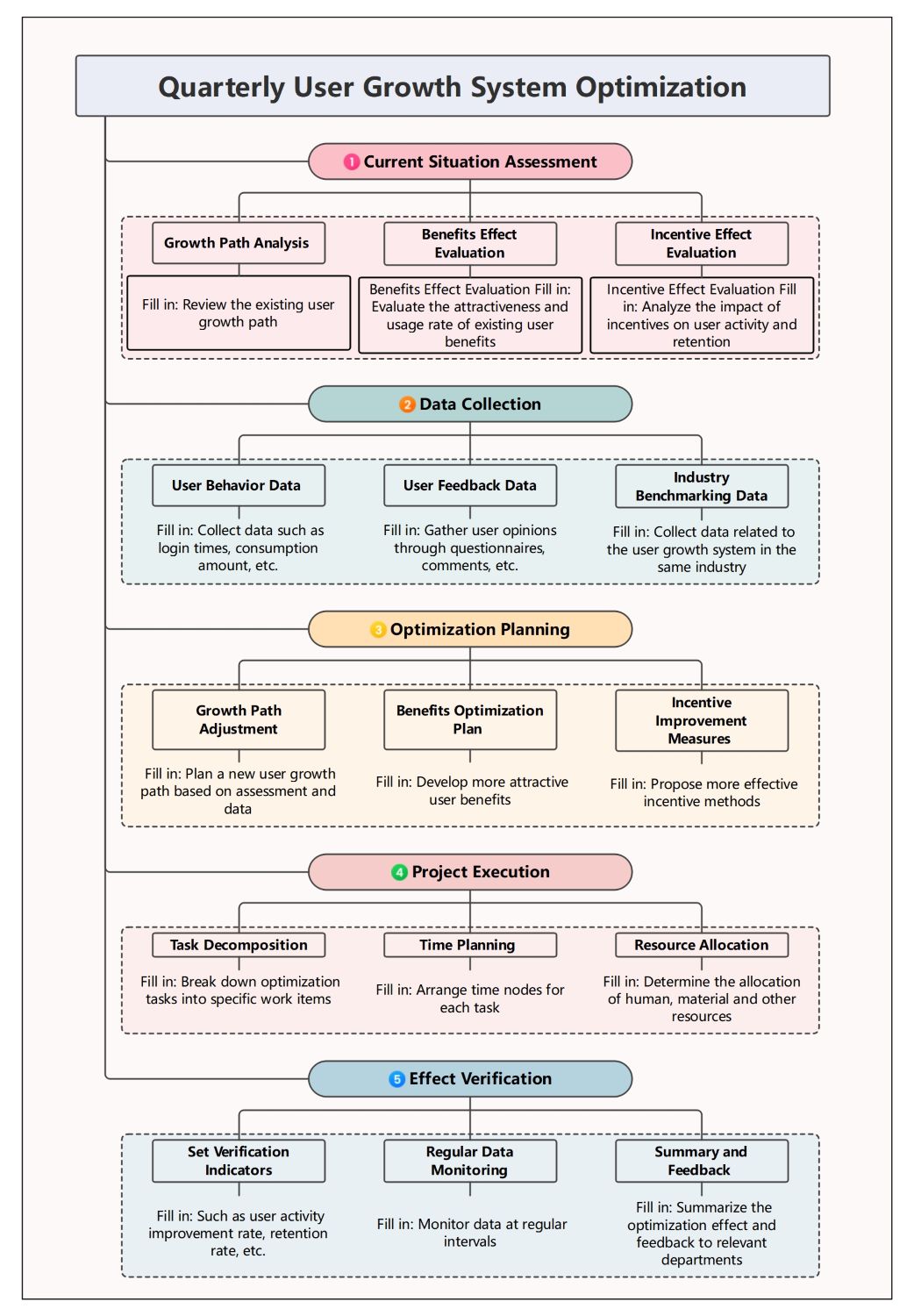
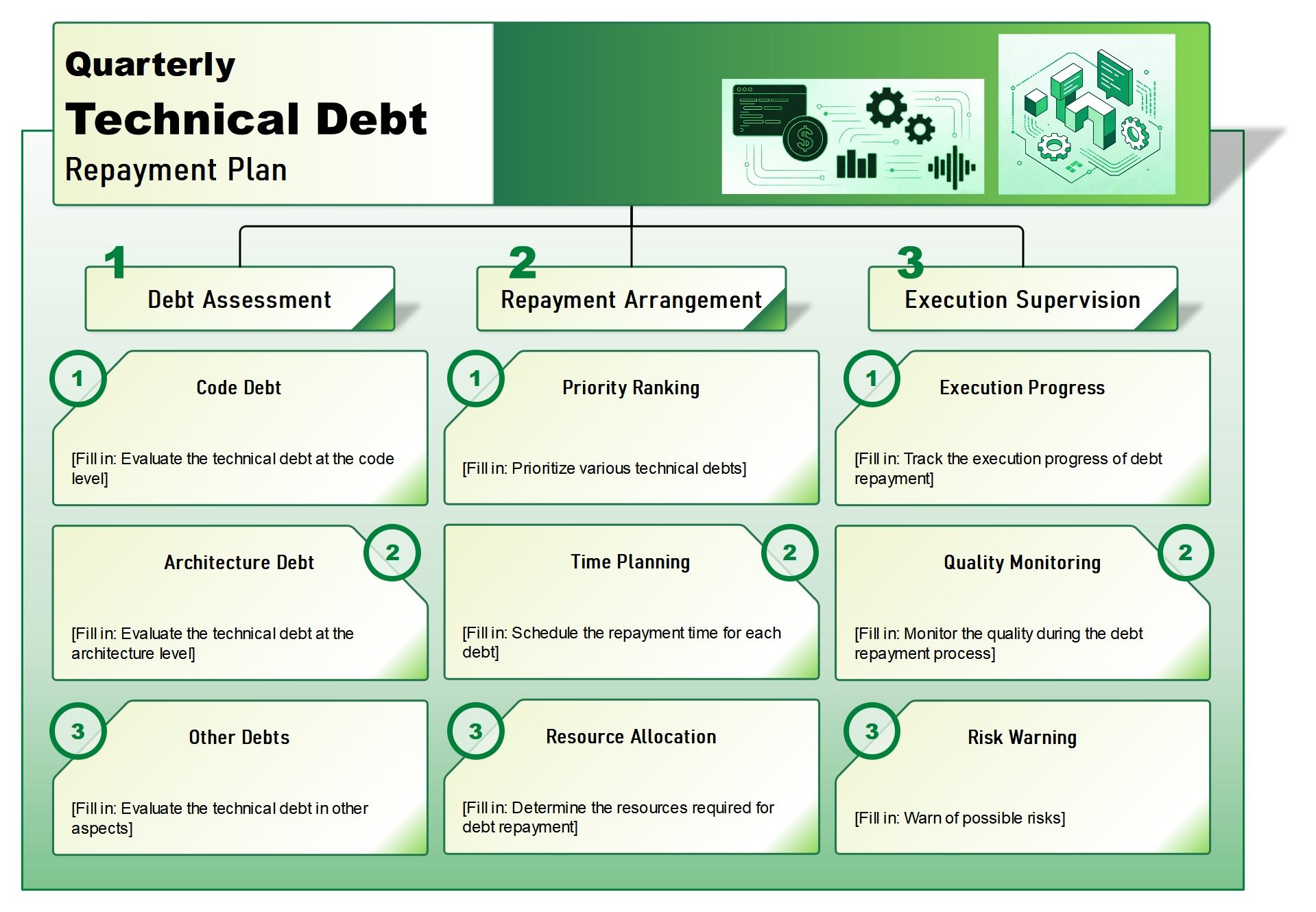
This “Quarterly Technical Debt Repayment Plan” template organizes technical debt work into review, prioritization, and repayment stages, making cleanup planning easier to manage over time.
Technical Debt Inventory
This branch captures the starting pool of debt items, giving the repayment plan a clear base before work is prioritized.
- Use this node to list the debt items under review.
- Keep repayment planning tied to a visible inventory.
Priority Ranking
This branch shows that repayment is selective rather than random, helping the map reflect trade-offs between urgency and value.
- Use this node to rank debt by impact or risk.
- Keep priority logic visible before scheduling work.
Repayment Scope
This branch defines what part of the debt backlog will actually be addressed in the quarter, turning a long list into an executable plan.
- Use this node to set the quarter’s actual cleanup boundary.
- Keep scope tied to realistic capacity.
Execution Schedule
This branch places remediation work into time, helping the structure move from decision to delivery.
- Use this node to map when debt repayment happens.
- Keep timing visible for tracking and review.
Risk Reduction Focus
This branch connects cleanup work to the engineering or product risks it is meant to reduce, making the plan more strategic.
- Use this node to explain why specific debt items matter.
- Keep repayment tied to system stability or delivery risk.
Review and Adjustment
This branch closes the loop by showing that the repayment plan should be checked and refined as the quarter progresses.
- Use this node to review execution and adapt the plan.
- Keep follow-up tied to what was completed or deferred.
FAQs about this Template
-
What is technical debt?
Technical debt refers to the cost and friction created when teams choose faster or easier implementation paths that later make maintenance, scaling, or change harder. It matters because product delivery can look efficient in the short term while becoming slower and riskier over time.
-
How do teams reduce technical debt effectively?
Teams usually reduce technical debt by identifying the highest-cost problem areas, prioritizing the most harmful debt, and planning repayment work alongside feature delivery instead of waiting for a perfect cleanup window that never arrives. A good plan connects debt work to real engineering risk and speed.
-
Why is technical debt planning important?
Technical debt planning is important because unresolved engineering shortcuts often reduce delivery speed, increase defects, and make future changes more expensive. Without explicit planning, debt tends to stay invisible until the system becomes painful to work with.
-
What's the difference between a bug fix and technical debt repayment?
A bug fix addresses a specific problem that is already visible, while technical debt repayment often improves the structure behind the system so future work becomes safer or easier. The two can overlap, but they are not always the same kind of engineering investment.