About this Product Roadmap Planning And Priority Strategy template
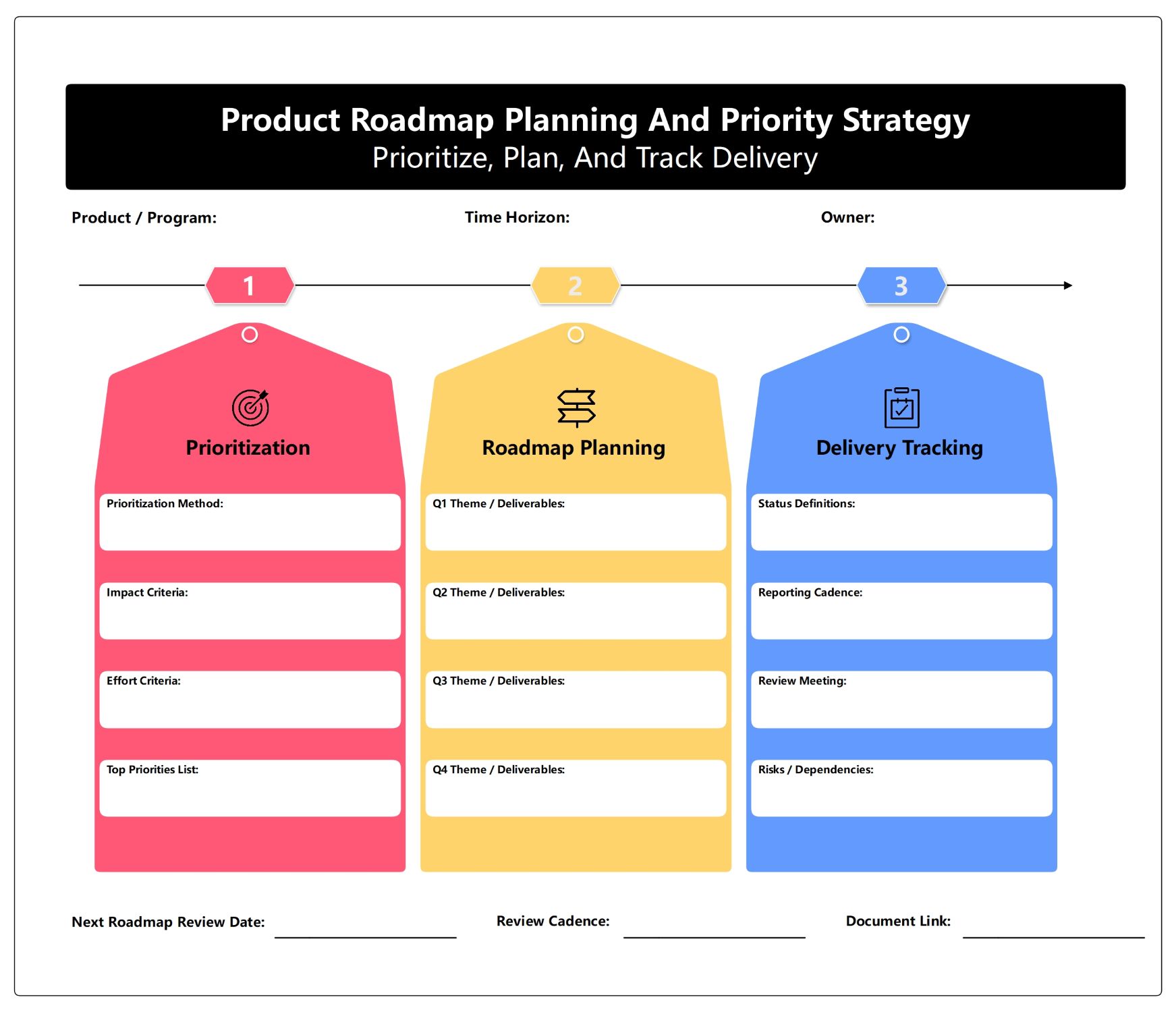
This template provides a clear framework for managers to organize their product vision. It helps you prioritize features and plan your quarterly roadmap effectively. Use this tool to track delivery and ensure your team stays focused on high-value goals.
Prioritization
Effective prioritization is the foundation of any successful product strategy. This section helps teams evaluate tasks based on their potential value and the resources required. It ensures that the most impactful features are built first.
- Prioritization Method
- Impact Criteria
- Effort Criteria
- Top Priorities List
Roadmap Planning
Roadmap planning allows you to visualize your product journey over time. By breaking down the year into quarters, you can set specific themes and deliverables. This helps in managing expectations and tracking progress toward major milestones.
- Q1 Theme / Deliverables
- Q2 Theme / Deliverables
- Q3 Theme / Deliverables
- Q4 Theme / Deliverables
Delivery Tracking
Delivery tracking is vital for maintaining transparency during the development phase. It involves monitoring project status, managing risks, and establishing a regular reporting schedule. This ensures that any blockers are identified early and resolved quickly.
- Status Definitions
- Reporting Cadence
- Review Meeting
- Risks / Dependencies
FAQs about this Template
-
What is the best method for prioritizing product features?
The best method often depends on your specific goals, but frameworks like RICE or MoSCoW are very popular. RICE stands for reach, impact, confidence, and effort, which provides a numerical score for each task. MoSCoW categorizes items into "must-have" or "could-have." Choosing one helps your team make objective decisions instead of relying on gut feelings.
-
How often should a product roadmap be reviewed?
You should review your product roadmap at least once a quarter to ensure it stays relevant. Market conditions and customer needs can change quickly, so flexibility is key. Some teams prefer monthly reviews for faster-moving projects. Regular updates help stakeholders stay informed and allow for adjustments if a specific goal or deadline needs to shift.
-
Why is tracking dependencies important in delivery?
Tracking dependencies is crucial because it identifies tasks that rely on other teams or projects to finish first. If one team falls behind, it can create a bottleneck for everyone else. By documenting these connections early, you can plan around potential delays. This proactive approach reduces stress and ensures that the final product delivery stays on schedule.