About this Quarterly User Growth System Optimization template
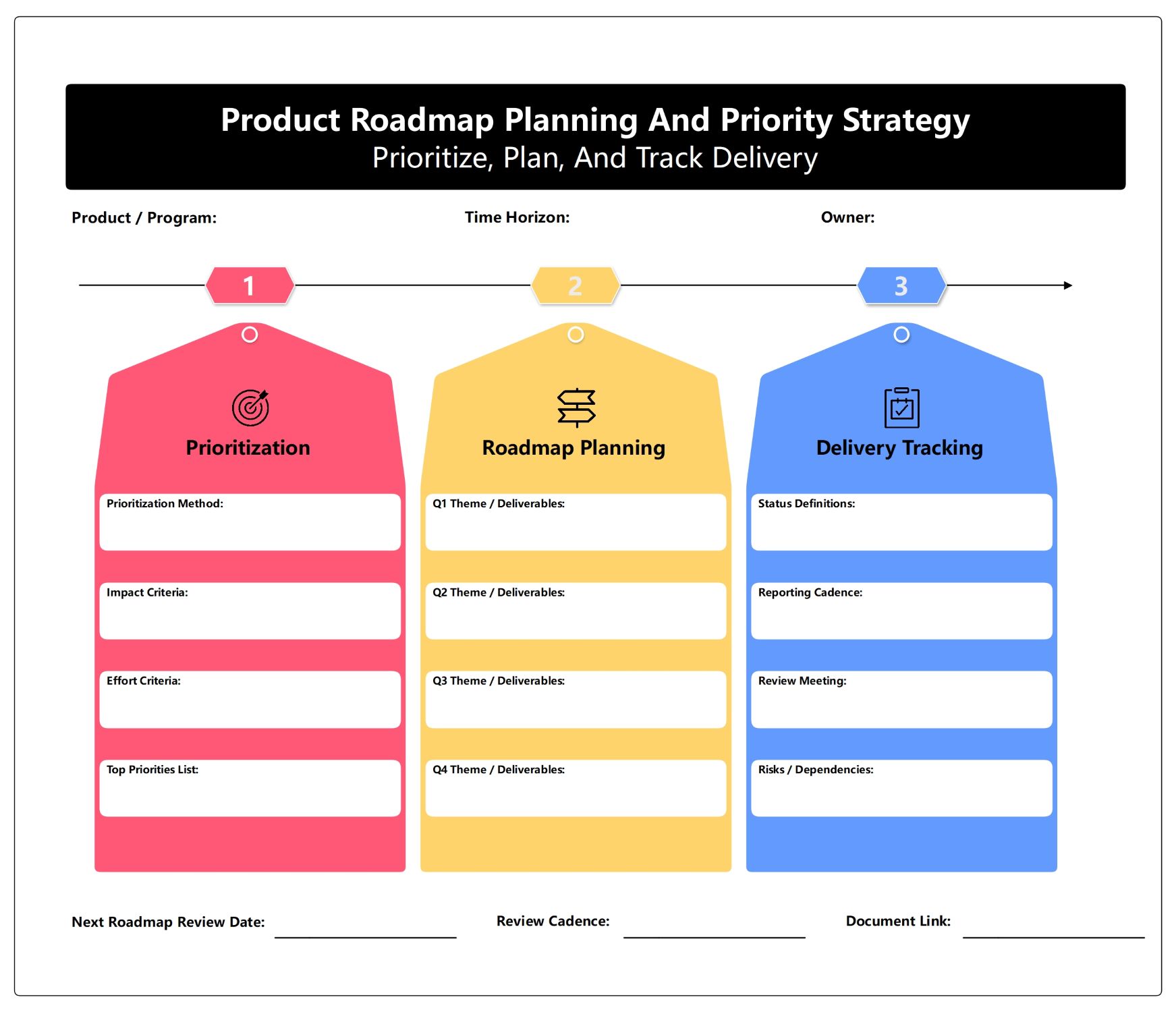
This template provides a clear roadmap for improving user growth systems every quarter. It guides teams through evaluation, data gathering, planning, execution, and verification steps to ensure continuous improvement and success.
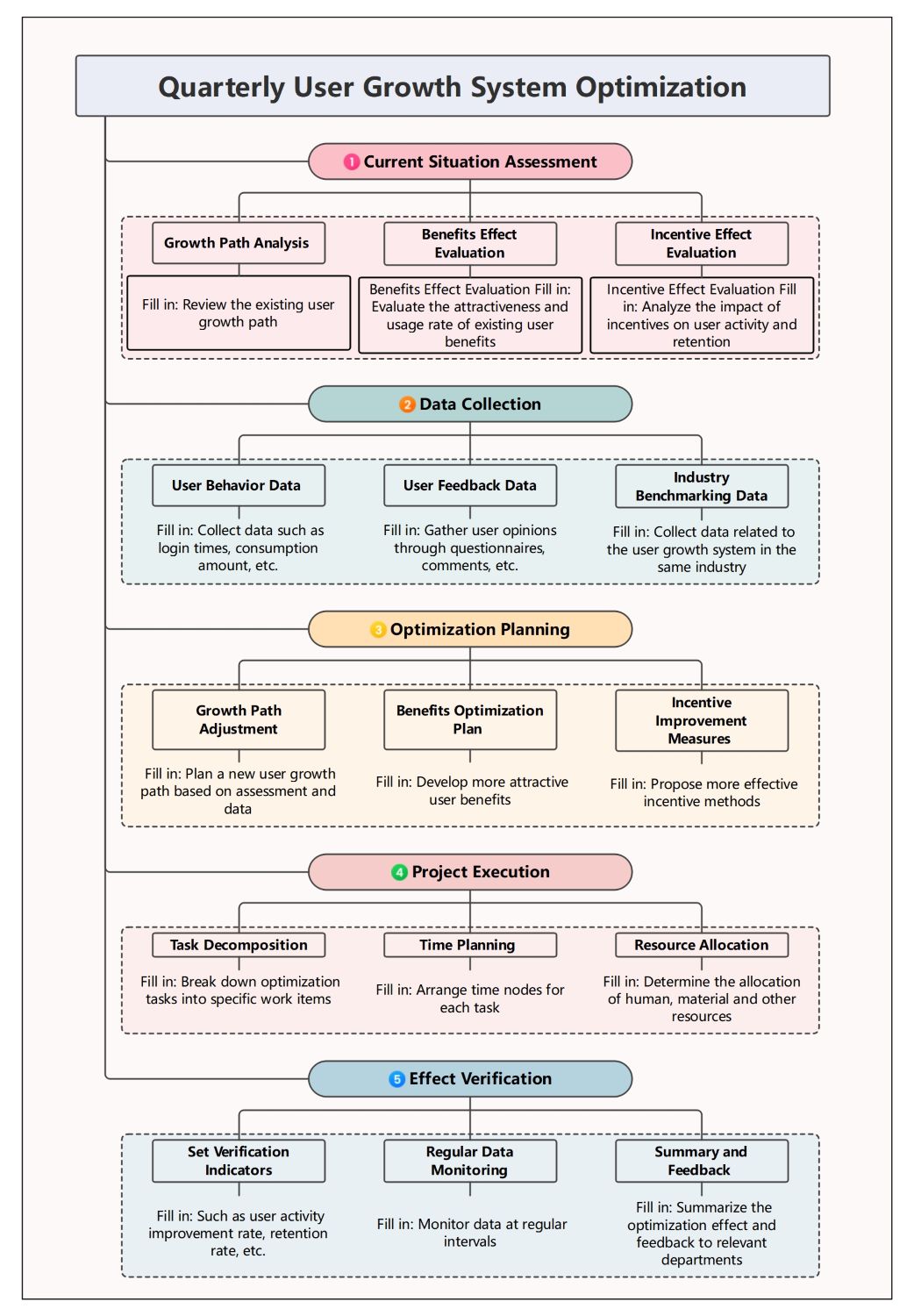
Current Situation Assessment
Start by reviewing your existing user growth framework to find strengths and weaknesses. This phase involves looking at current paths and measuring how well your benefits and incentives are working for users today.
- Growth Path Analysis
- Benefits Effect Evaluation
- Incentive Effect Evaluation
Data Collection
Gathering evidence is crucial for making informed decisions. You need to collect hard data on how users behave, what they say about your service, and how your competitors are performing in the industry.
- User Behavior Data
- User Feedback Data
- Industry Benchmarking Data
Optimization Planning
Use your data to build a new strategy for the upcoming quarter. This stage focuses on creating more attractive benefits and better incentive methods while adjusting the user journey to improve the overall experience.
- Growth Path Adjustment
- Benefits Optimization Plan
- Incentive Improvement Measures
Project Execution
Put your plans into action by breaking down large goals into small tasks. You must manage your time carefully and allocate human and material resources effectively to ensure the optimization project finishes on schedule.
- Task Decomposition
- Time Planning
- Resource Allocation
Effect Verification
Finalize the cycle by measuring the impact of your changes. Set clear performance indicators like retention rates. Monitor the results regularly and provide feedback to the rest of the team for future improvements.
- Set Verification Indicators
- Regular Data Monitoring
- Summary and Feedback
FAQs about this Template
-
Why is quarterly assessment important for user growth?
Quarterly assessments allow businesses to react quickly to changing market trends and user needs. By checking your growth systems every three months, you can identify which incentives are no longer effective and pivot your strategy. This regular cycle prevents stagnation, helps optimize your budget, and ensures that your user acquisition tactics remain competitive.
-
What data is most important for optimizing user growth systems?
The most critical data points include user behavior patterns like login frequency and consumption amounts. You should also focus on qualitative feedback gathered through surveys and questionnaires to understand the why behind user actions. Finally, benchmarking against industry standards helps you see where your growth system lags compared to competitors, providing clear areas for improvement.
-
How do I measure the success of a growth optimization project?
Success is measured through specific verification indicators like improved user activity rates and higher retention levels. After execution, you should monitor these metrics at regular intervals to ensure the changes have a lasting impact. A final summary report that links these data points back to the original optimization goals is essential for validating the project's overall return on investment.