About this Spring Travel Route Planning Template
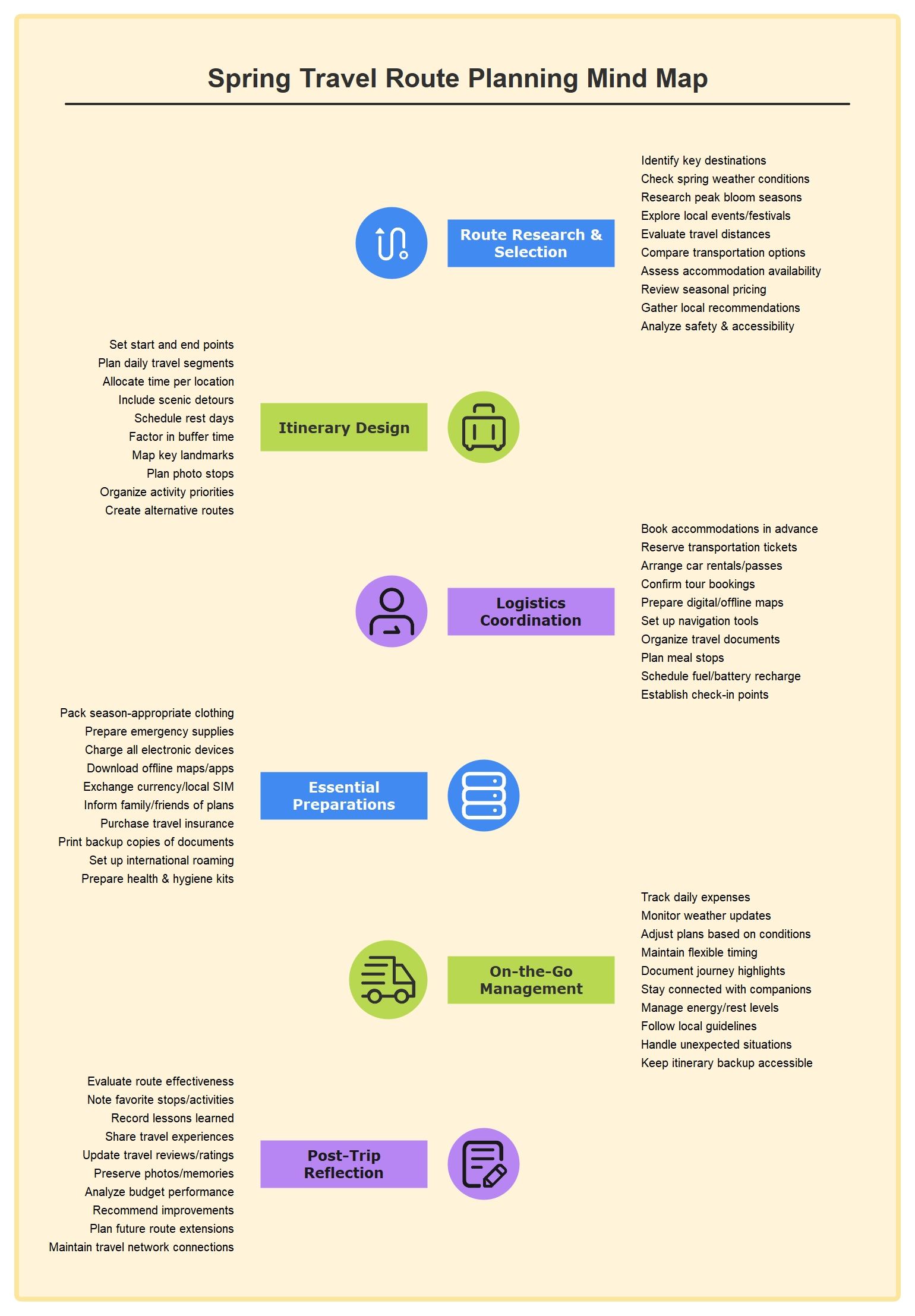
This template is structured as a route-planning workflow for spring travel. It helps users move from destination research into itinerary design, logistics preparation, and later travel management so the trip feels coordinated from start to finish.
Route Research and Selection
This branch focuses on exploring and comparing route options before the trip is finalized. It helps users evaluate destinations, transportation paths, and feasibility before committing to a travel plan.
Itinerary Design
This section turns route ideas into an actual trip structure. It is useful for arranging day-level movement, stop sequencing, and the balance between travel time and activity time.
Logistics Coordination
This branch covers the practical arrangements needed to make the route work, such as transport, lodging, tickets, or connection handling. It helps turn a good itinerary into an executable one.
Essential Preparations
This section gathers the items that need to be ready before departure. It helps users remember documents, packing, reservations, and other pre-trip setup that supports the route plan.
On-the-Go Management
This branch focuses on what happens once the trip begins. It gives the template a place for navigation, time adjustment, weather response, and practical coordination while traveling.
Travel Notes and Adjustments
This final section captures observations and route changes made during the trip. It helps keep the plan realistic when conditions shift and also makes the template more reusable for later travel review.
FAQs about this Template
-
How do you plan a visit route efficiently?
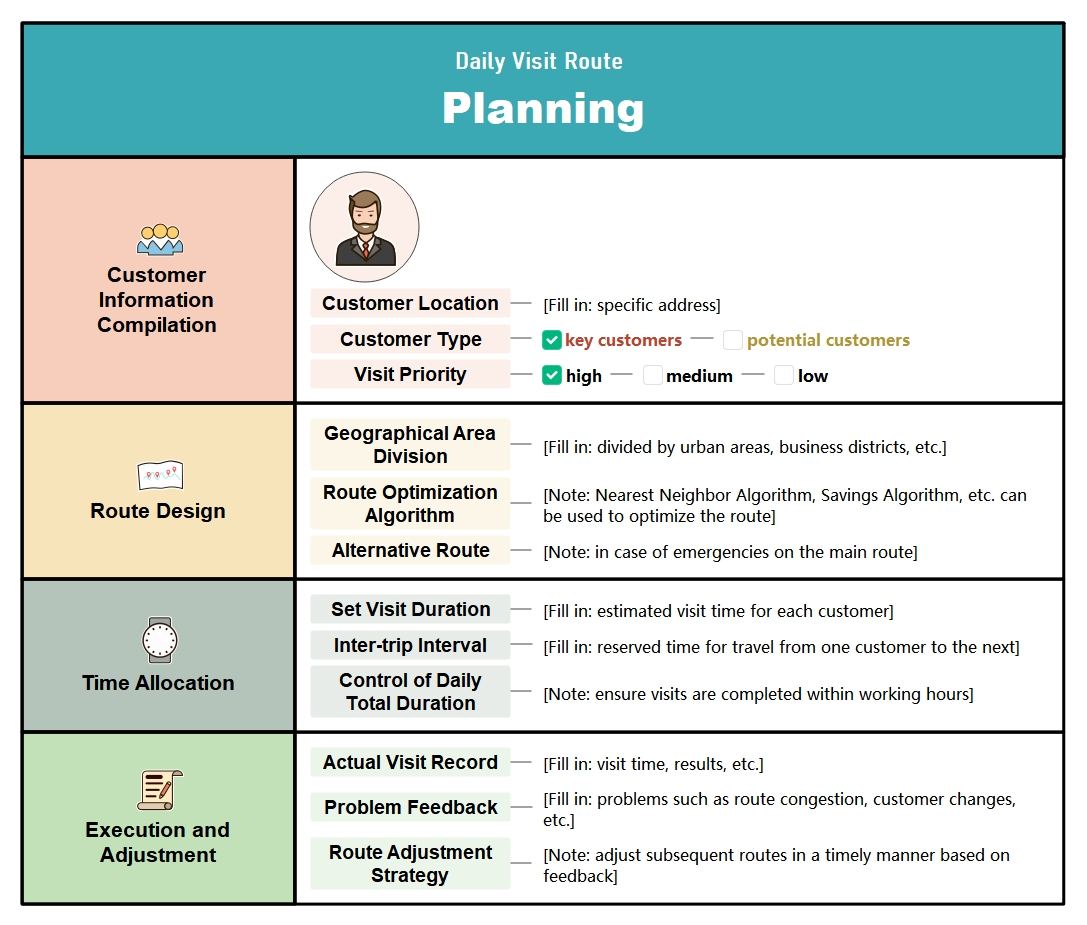
An efficient visit route usually balances destination priority, travel time, timing constraints, and practical sequencing so people can move with less wasted time. Good route planning is not just about distance. It also depends on purpose, timing, and the cost of poor sequencing.
-
What factors affect route planning most?
The main factors usually include distance, travel conditions, time windows, stop priority, geography, and whether the plan needs flexibility for unexpected changes. The right route often comes from balancing convenience with business or travel value rather than choosing the shortest line alone.
-
Why is route planning important?
Route planning is important because weak sequencing can waste time, increase travel cost, and reduce the number of useful stops or visits completed in a day. A better route often creates more value without requiring more effort or more resources.
-
What's the difference between route planning and itinerary planning?
Route planning focuses more on movement and sequencing between locations, while itinerary planning often includes a broader schedule of activities, timings, and supporting details around the trip or visit. The two overlap, but they are not identical.