About this Non-Disclosure Agreement Tips Template
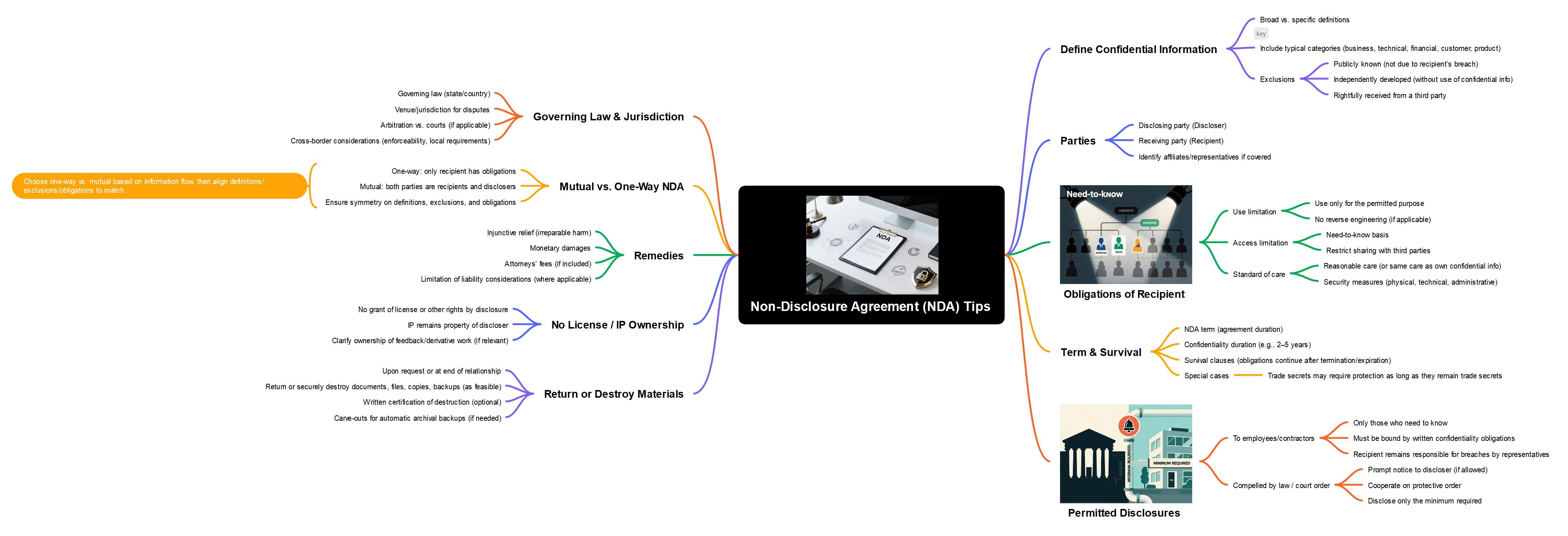
This template is built as a practical NDA review checklist rather than a generic legal note. It breaks the agreement into the clauses people usually miss first, including scope, recipient duties, permitted disclosures, return or destruction rules, remedies, and jurisdiction issues.
Define Confidential Information
This branch explains what the NDA is actually protecting. It highlights the difference between broad and specific definitions and points readers toward typical categories such as business, technical, financial, customer, and product information.
Obligations of Recipient
This section focuses on what the receiving side must do once confidential information is shared. The map covers use limitation, access limitation, standard of care, and practical security measures so the obligation clause can be reviewed in an operational way.
Term & Survival
This branch deals with timing. It distinguishes the agreement term from the confidentiality survival period and notes special cases such as trade secrets, where the protection obligation may continue as long as the information remains secret.
Permitted Disclosures
This section shows when disclosure may still be allowed. It includes sharing with employees or contractors on a need-to-know basis and disclosures compelled by law or court order, together with notice and minimum-disclosure safeguards.
Return or Destroy Materials
This branch explains what happens to documents, files, copies, and backups at the end of the relationship or on request. It helps readers check whether destruction certification, backup carve-outs, and exit handling are addressed clearly.
Mutual vs. One-Way NDA
This final branch helps users decide whether the agreement should be one-way or mutual. It makes the information flow visible and reminds reviewers to align the definitions, exclusions, and obligations with the actual direction of disclosure.
FAQs about this Template
-
What is a non-disclosure agreement?
A non-disclosure agreement, or NDA, is a legal contract used to protect confidential information from being shared without permission. It usually explains what information is covered, who must keep it private, how long confidentiality lasts, and what remedies may apply if the agreement is broken.
-
How do you understand NDA basics quickly?
The fastest way to understand NDA basics is to start with the purpose of confidentiality clauses, then review common contract terms such as scope, exceptions, duration, and remedies. Comparing narrow, practical NDAs with overly broad ones also helps people understand what makes a confidentiality agreement more workable and enforceable.
-
Why is an NDA important?
An NDA is important because it lets companies, employers, clients, and partners share sensitive information more safely during hiring, negotiation, or collaboration. It creates a clearer legal expectation around secrecy before valuable information is disclosed too widely or used in the wrong way.
-
What’s the difference between an NDA and a non-compete agreement?
An NDA focuses on keeping information confidential, while a non-compete agreement restricts certain competitive activities after a work or business relationship ends. They can appear together, but they serve different legal purposes and are often evaluated under different contract and employment law standards.