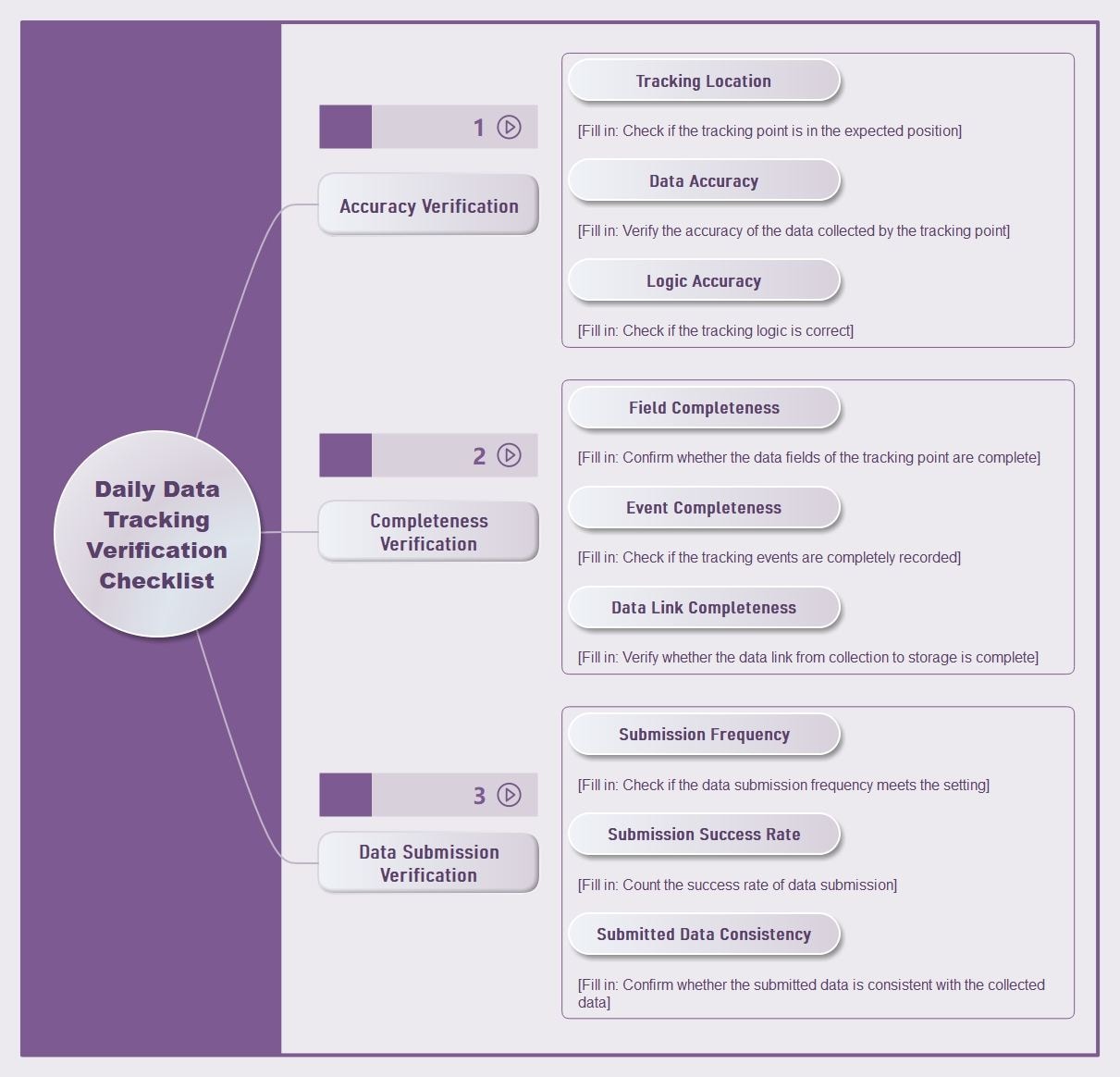
About this Daily Handling of Complaints and Emergencies Template
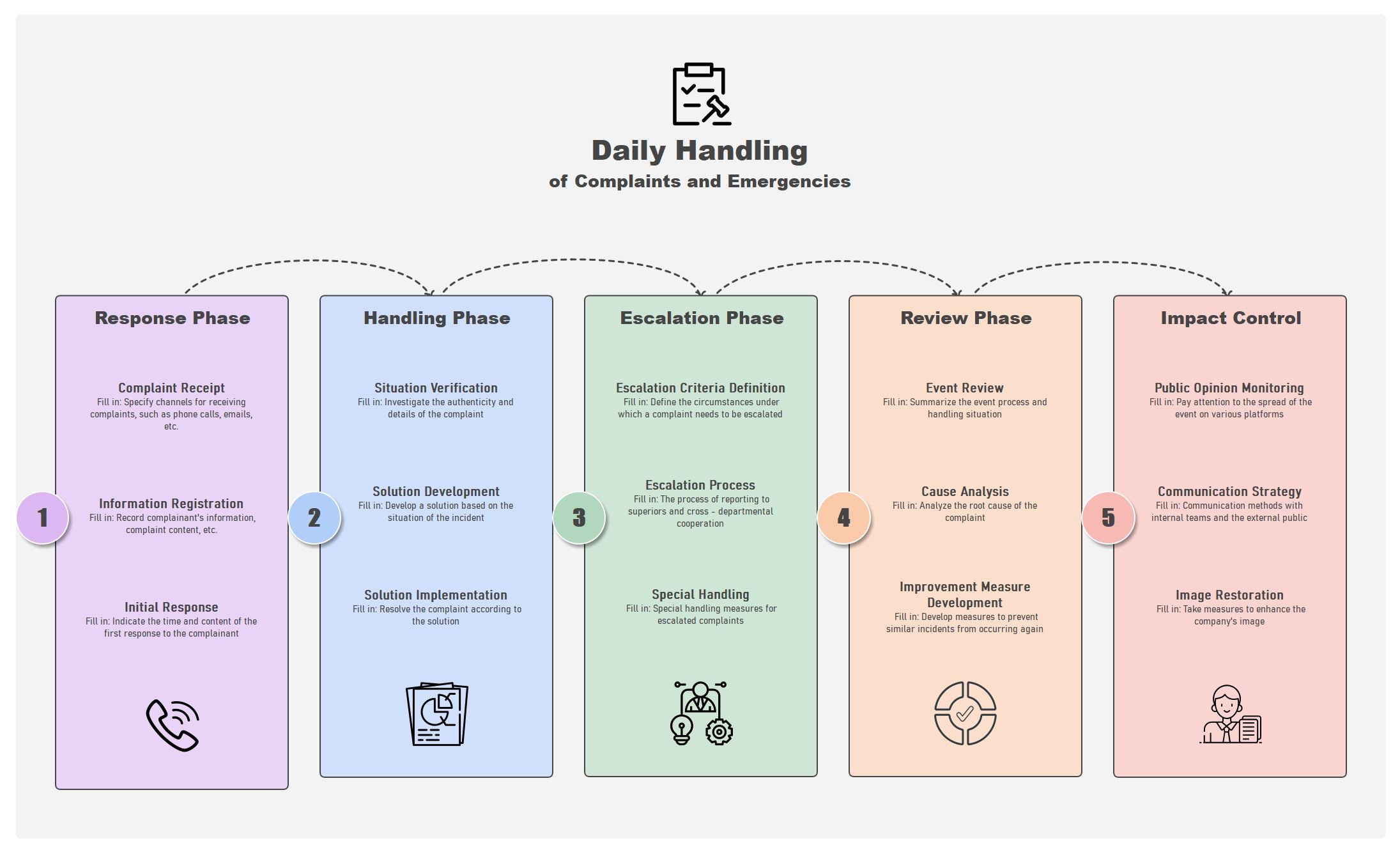
This “Daily Handling of Complaints and Emergencies” template turns response work into a step-by-step process map, making urgent handling and documentation easier to follow.
Complaint Receipt
This node marks the starting point of the process, showing where a complaint or emergency first enters the handling workflow.
- Use this branch to record how the issue was received.
- Keep the process anchored to the first intake event.
Information Registration
This branch captures the basic details that must be documented before the issue can be assessed or escalated further.
- Use this node to log names, contacts, and core issue details.
- Keep registration separate from later investigation work.
Fill in: Record complainant's information, complaint content, etc.
This node makes the registration step more explicit by showing exactly what kind of details need to be captured at intake.
- Use this branch to document the complainant and complaint clearly.
- Keep raw intake information preserved for later review.
Initial Response
This branch represents the first formal action after intake, showing that response speed is part of the handling structure.
- Use this node to map the first response action.
- Keep acknowledgement and early handling tied together.
Situation Verification
This branch shifts the workflow from intake to fact-checking, helping teams confirm what actually happened before deciding on the next step.
- Use this node to investigate the event or complaint.
- Keep verification separate from assumptions or early reactions.
Fill in: Investigate the authenticity and details of the complaint
This node clarifies the verification task by showing that the process requires both factual confirmation and detail gathering.
- Use this branch to record evidence and clarify the issue.
- Keep investigation results attached to the relevant complaint.
FAQs about this Template
-
How do you handle customer complaints effectively?
Customer complaints are handled most effectively when teams confirm the issue clearly, respond quickly, document the facts, and explain what will happen next. The strongest process balances empathy with structure so the problem is not only acknowledged, but also moved toward a usable resolution.
-
What should be included in an emergency response log?
An emergency response log should usually include the event description, timing, people involved, immediate actions taken, escalation path, outcome status, and any follow-up work still required. Good logging makes later review and accountability much easier.
-
Why is daily issue tracking important for complaints and emergencies?
Daily issue tracking is important because recurring service problems and urgent incidents can blur together if nobody reviews them with discipline. A regular tracking rhythm helps teams see patterns, respond faster, and avoid treating repeat failures like isolated events.
-
What's the difference between complaint handling and incident management?
Complaint handling is more focused on a customer-reported dissatisfaction or service problem, while incident management often deals with urgent operational disruption that needs structured response and escalation. The two can overlap, but they are not always the same type of workflow.