About this Daily Visit Route Planning Template
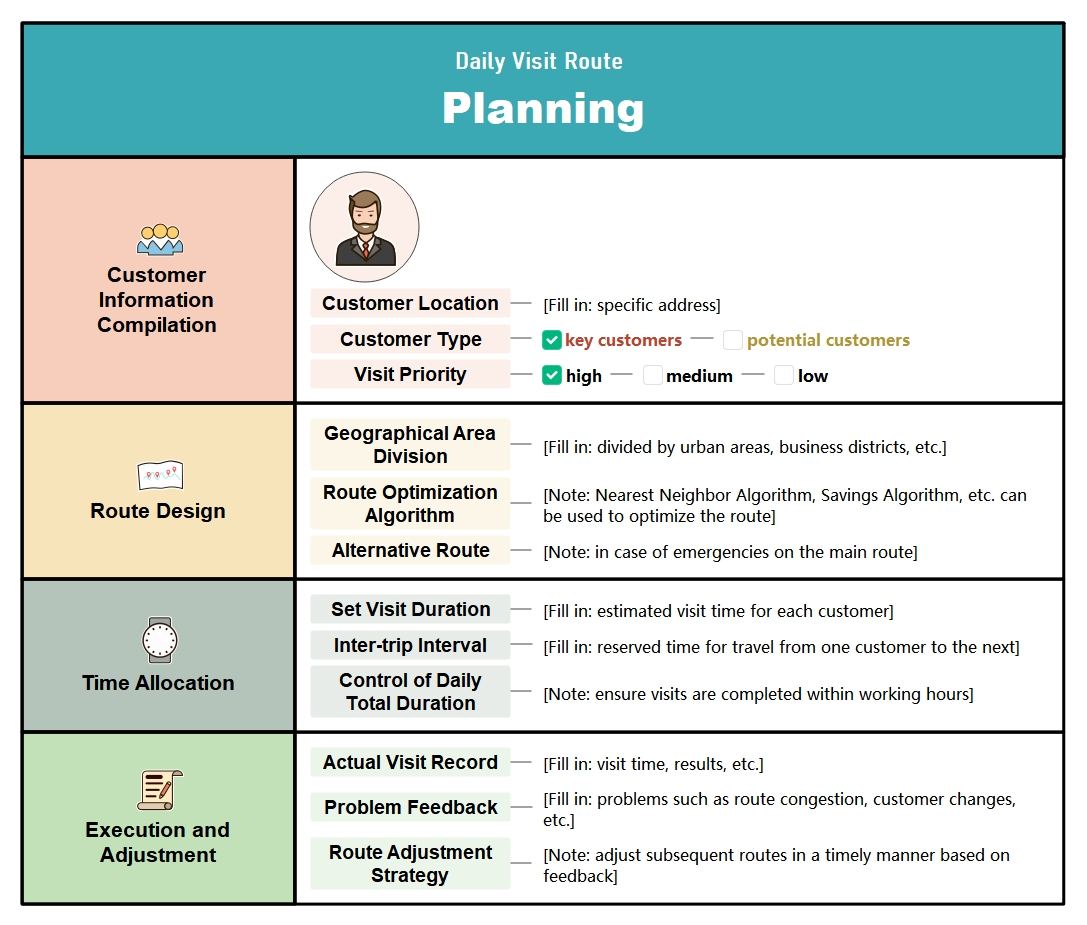
This “Daily Visit Route Planning” template breaks route planning into customer, location, and optimization nodes, making field visit scheduling easier to execute.
Customer Location
This node marks where the visit target is located, forming the geographic base for all route decisions in the plan.
- Use this node to record where each customer is based.
- Keep location data tied to route planning from the start.
Customer Type
This branch classifies the kind of customer involved, helping the route plan reflect different business needs and visit expectations.
- Use this branch to group customers by type or value.
- Let visit strategy change according to customer category.
Visit Priority
This node ranks the urgency or importance of each stop, helping teams decide which visits should happen first.
- Use this branch to distinguish high-priority and routine visits.
- Keep route order aligned with visit importance.
Geographical Area Division
This branch divides the territory into manageable zones so route planning becomes more practical and less repetitive.
- Use this node to cluster visits by region.
- Reduce unnecessary travel by grouping nearby stops.
Route Optimization Algorithm
This node shows that the plan is not just a list of stops but a route logic built around efficiency and travel sequence.
- Use this branch to support route efficiency decisions.
- Keep travel time and order tied to the route model.
Visit Execution Notes
This branch can hold practical reminders for the day, making the route useful during execution instead of only during planning.
- Use this node for reminders, constraints, or on-site instructions.
- Keep operational notes attached to the visit structure.
FAQs about this Template
-
How do you plan a visit route efficiently?
An efficient visit route usually balances destination priority, travel time, timing constraints, and practical sequencing so people can move with less wasted time. Good route planning is not just about distance. It also depends on purpose, timing, and the cost of poor sequencing.
-
What factors affect route planning most?
The main factors usually include distance, travel conditions, time windows, stop priority, geography, and whether the plan needs flexibility for unexpected changes. The right route often comes from balancing convenience with business or travel value rather than choosing the shortest line alone.
-
Why is route planning important?
Route planning is important because weak sequencing can waste time, increase travel cost, and reduce the number of useful stops or visits completed in a day. A better route often creates more value without requiring more effort or more resources.
-
What's the difference between route planning and itinerary planning?
Route planning focuses more on movement and sequencing between locations, while itinerary planning often includes a broader schedule of activities, timings, and supporting details around the trip or visit. The two overlap, but they are not identical.