About this Monthly Media Activity Schedule Template
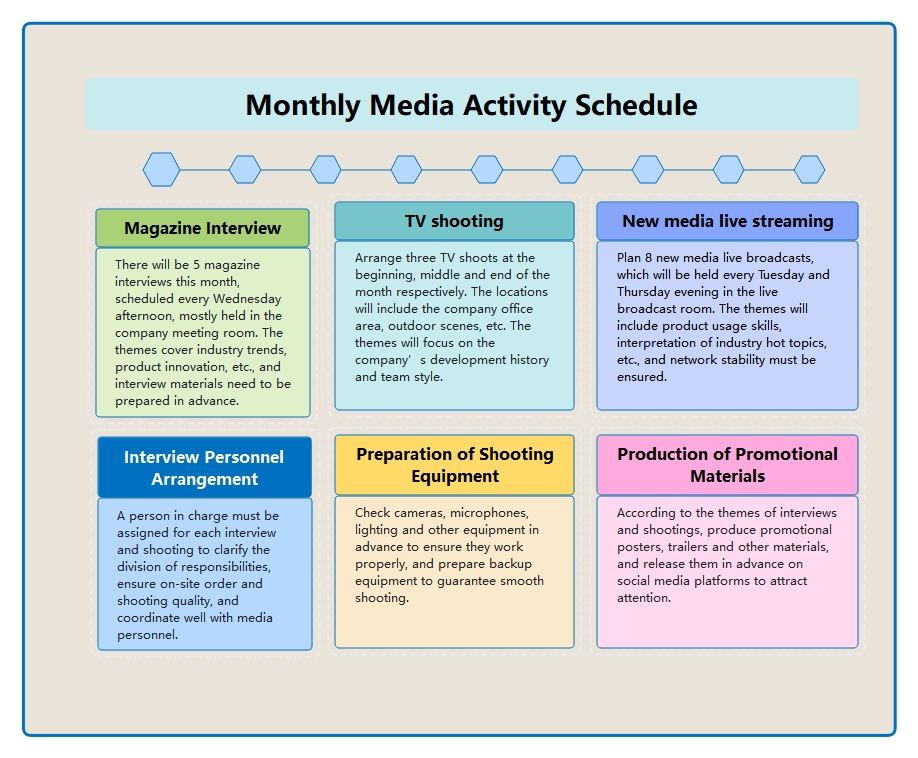
This template is structured as a media-production and outreach schedule for the month. It brings together content formats, shoot preparation, and personnel arrangement so media activities can be coordinated as a practical workflow rather than a loose event list.
Magazine Interview
This branch focuses on long-form or print-style interview activity. It is useful for planning editorial conversations, profile pieces, or scheduled interview content that requires preparation and message alignment.
TV Shooting
This section captures formal video production activity. It helps separate studio or filmed content work from other media formats so equipment and timing needs can be planned more clearly.
New Media Live Streaming
This branch highlights live digital activity such as real-time broadcasts, hosted streams, or social-first media sessions. It gives the schedule a space for faster, more interactive media formats.
Preparation of Shooting Equipment
This section covers the technical readiness side of the schedule. It helps users track cameras, lighting, audio, and other gear dependencies before the media activity begins.
Interview Personnel Arrangement
This branch focuses on who needs to appear, host, support, or coordinate the activity. It is useful when interview scheduling depends as much on people availability as on content timing.
Monthly Media Coordination
This final section represents the overall coordination logic behind the month. It helps connect the different content formats into one manageable production rhythm.
FAQs about this Template
-
What should a media activity schedule include?
A media activity schedule should usually include campaign timing, channel mix, key messages, content or asset deadlines, launch windows, and review points for performance. A useful schedule helps teams coordinate media work as a timed system instead of separate disconnected actions.
-
How do teams plan monthly media campaigns?
Teams usually plan monthly media campaigns by aligning goals, target audiences, timing, budget windows, and creative preparation before the month begins. Good planning makes it easier to balance consistency with responsiveness when performance or market context changes mid-cycle.
-
Why is media scheduling important?
Media scheduling is important because timing influences reach, cost, coordination quality, and whether campaigns reinforce each other or compete for attention. Without a schedule, even strong media ideas can become chaotic or inefficient in execution.
-
What's the difference between a media plan and a content calendar?
A media plan is usually broader and includes channel strategy, timing, and distribution logic, while a content calendar focuses more specifically on what content will be published and when. They are related, but they do not solve exactly the same planning problem.